Penilevel 500 mg hard capsules
Spain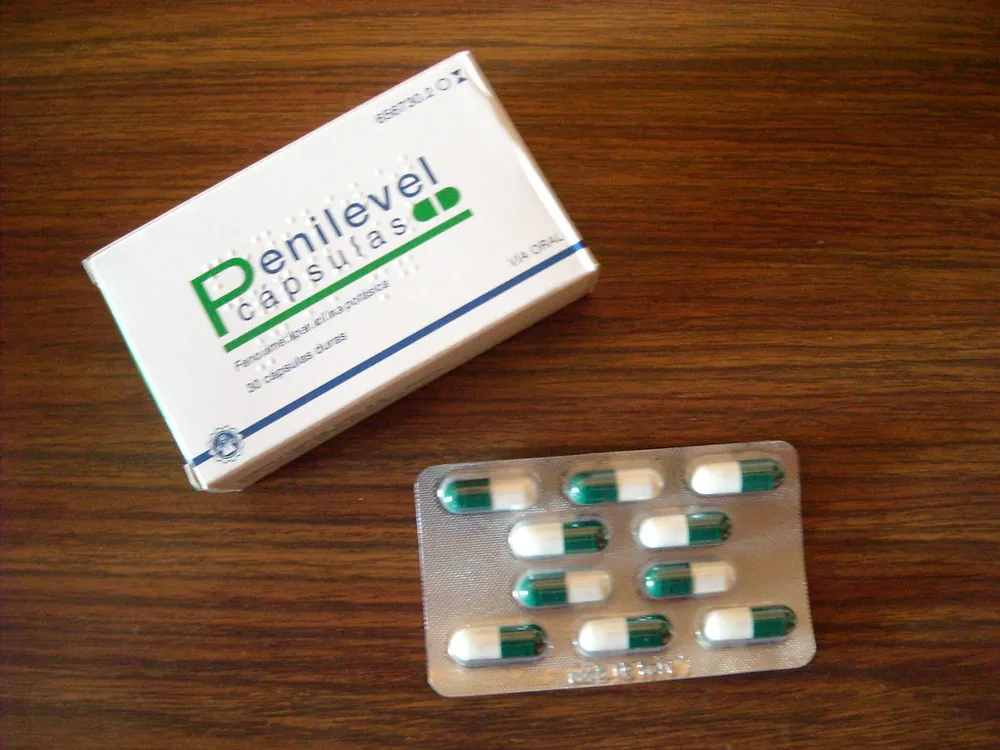
Table of Contents
Patient Information Leaflet
Introduction
Patient Information Leaflet
Penilevel 500 mg hard capsules
Phenoxymethylpenicillin potassium
Read the entire leaflet carefully before you start taking this medicine, as it contains important information for you.
- Keep this leaflet, as you may need to read it again.
- If you have any questions, consult your doctor or pharmacist.
- This medicine has been prescribed for you only, and you should not give it to other people, even if they have the same symptoms as you, because it may harm them.
- If you experience any adverse effects, consult your doctor or pharmacist, even if they are adverse effects not listed in this leaflet. See section 4.
Package leaflet
- What Penilevel is and what it is used for
- What you need to know before taking Penilevel
- How to take Penilevel
- Possible side effects
- Storage of Penilevel
- Contents of the pack and other information
1. What Penilevel is and what it is used for
Penilevel contains phenoxymethylpenicillin as the active substance. Phenoxymethylpenicillin is used to treat certain infections caused by bacteria. It is effective only against specific strains of bacteria.
Antibiotics are used to treat bacterial infections and are not effective against viral infections such as influenza or the common cold. It is important to follow your doctor's instructions regarding dosage, dosing intervals, and duration of treatment. Do not keep or reuse this medicine. If you have any antibiotic left over after completing the treatment, return it to the pharmacy for proper disposal. Do not dispose of medicines by flushing them down the drain or throwing them in the trash. |
Penilevel is used for the treatment of the following infections:
Adults
- Respiratory tract infections: Acute streptococcal pharyngotonsillitis (group A).
- Acute bacterial skin and skin structure infections: Scarlet fever, ecthyma, furuncle, impetigo, erysipelas, and erysipeloid.
- Odontogenic infections: Dental abscesses with disseminated cellulitis.
Adolescents aged 12 years and older
- Respiratory tract infections: Acute streptococcal pharyngotonsillitis (group A).
- Bacterial skin and skin structure infections: Scarlet fever, ecthyma, furuncle, impetigo, erysipelas, and cellulitis.
- Odontogenic infections: Dental abscesses with disseminated cellulitis.
2. What you need to know before starting to take Penilevel
Do not take Penilevel
If you are allergic to phenoxymethylpenicillin or to any of the other components of this medicine (see section 6) or to other beta-lactam antibiotics (penicillins or cephalosporins).
Warnings and precautions
Consult your doctor before starting to take Penilevel, especially if you have previously experienced any hypersensitivity or allergic reaction to any penicillin or other beta-lactam antibiotics.
Penicillins may cause serious allergic reactions, which may even be fatal.
If you have impaired kidney function, consult your doctor, as dose reduction may be necessary.
Repeated and prolonged use of antibiotics should be avoided, as this may lead to the development of resistance and the emergence of other infections.
Patients with renal insufficiency or those on low-potassium diets should be aware that this medicine contains 55 mg (1.4 mmol) of potassium per capsule.
Other medicines and Penilevel
Inform your doctor or pharmacist if you are taking, have recently taken, or might need to take any other medicines.
In particular, inform your doctor or pharmacist about any of the following medicines:
- Methotrexate (a medicine used to treat cancer and psoriasis): Penicillins may increase the risk of toxicity by reducing methotrexate excretion.
- Oral contraceptives (birth control pills): Penicillins may reduce the effectiveness of oral contraceptives, so additional contraceptive measures may be necessary (for example, use of male condoms).
- Probenecid or Sulfinpyrazone (medicines used to treat gout).
Taking Penilevel with food, drinks and alcohol
Penilevel may be taken with or without food, although it is preferable to take it on an empty stomach, either 1 hour before or 2 hours after meals.
Pregnancy, breastfeeding and fertility
If you are pregnant or breastfeeding, think you may be pregnant, or are planning to become pregnant, consult your doctor or pharmacist before using this medicine.
Driving and using machines
The effect on the ability to drive or use machinery is none or negligible.
3. How to take Penilevel
Your doctor will explain exactly how much Penilevel you should take, how often, and for how long. This will depend on the type of infection you have, its severity, and your body weight. Always follow the administration instructions for this medicine as given by your doctor or pharmacist. If in doubt, consult your doctor or pharmacist again.
Recommended dose:
Adults
Indication |
Dosage |
Duration of treatment |
|
Acute streptococcal pharyngotonsillitis (group A) |
500 mg every 12 hours |
10 days |
|
Acute bacterial skin infections and skin structure infections |
Scarlet fever |
500 mg every 12 hours |
10 days |
Impetigo |
125–500 mg every 6 hours |
10 days |
|
Boil (furuncle) |
125–500 mg every 6 hours |
10 days |
|
Impetigo |
125–500 mg every 6 hours |
10 days |
|
Erysipelas |
250–500 mg every 6 hours |
5 days |
|
Erysipeloid |
500 mg every 6 hours |
7–10 days |
|
Odontogenic infections |
Dental abscess with spreading cellulitis |
1,000 mg (initial dose) |
3–7 days |
Adolescents 12 years of age and older
The doctor will determine the correct dose for your child::
Indication |
Dosage |
Duration of treatment |
|
Acute streptococcal pharyngotonsillitis (group A) |
500 mg every 12 hours |
10 days |
|
Acute bacterial skin infections and skin structure infections |
Scarlet fever |
500 mg every 12 hours |
10 days |
Impetigo |
25–50 mg/kg/day (maximum dose: 3 g/day) every 6 hours |
10 days |
|
Boil (furuncle) |
25–50 mg/kg/day (maximum dose: 3 g/day) every 6 hours |
10 days |
|
Impetigo |
25–50 mg/kg/day (maximum dose: 3 g/day) every 6 hours |
10 days |
|
Erysipelas |
25–50 mg/kg/day (maximum dose: 3 g/day) every 6 hours |
5 days |
|
Cellulitis |
25–50 mg/kg/day (maximum dose: 3 g/day) every 6 hours |
5 days |
|
Odontogenic infections |
Dental abscess with spreading cellulitis |
25–50 mg/kg/day (maximum dose: 3 g/day) every 6 hours |
5 – 7 days |
Due to the size of the capsules, Penilevel 500 mg hard capsules should not be used in children under 12 years of age or in patients who cannot swallow the capsules whole. For children under 12 years of age, a sachet formulation is available (Penilevel 250 mg sachets).
The capsules must be swallowed whole with a glass of water. The capsules should not be opened. Penilevel can be taken with or without food, although it is preferable to take it on an empty stomach or 1 hour before or 2 hours after meals.
If you take more Penilevel than you should
In case of overdose or accidental ingestion, contact your doctor or pharmacist immediately or call the Toxicology Information Service at telephone number 91 562 04 20, indicating the medication and the amount taken.
If you forget to take Penilevel
If you forget to take a daily dose, take the next dose as usual. Do not take a double dose to make up for the missed dose.
If you stop taking Penilevel
It is important to continue taking Penilevel unless your doctor tells you to stop treatment.
If you have any further questions about the use of this medicine, ask your doctor or pharmacist.
4. Possible adverse effects
Like all medicines, Penilevel may cause adverse effects, although not everybody gets them.
The most frequently occurring adverse effects are gastrointestinal disorders and allergic reactions.
Stop taking the medicine and consult your doctor immediately if you experience any of the following reactions:
- Allergic reaction accompanied by rapid and laboured breathing, flushing and itching, hives (wheals), skin swelling (especially of the lips, face and tongue), chills or fever,
- Urticaria and skin reactions,
- Tremors,
- Acute and profuse diarrhoea, usually accompanied by blood and mucus, stomach pain and fever.
If you experience any of the following adverse effects on a regular basis (stomach pain, nausea, vomiting and diarrhoea), discuss them with your doctor or pharmacist.
Reporting of adverse effects
If you experience any type of adverse effect, consult your doctor or pharmacist, even if it is a possible adverse effect not listed in this leaflet. You can also report them directly via the Spanish Pharmacovigilance System for Human Medicinal Products: https://www.notificaram.es. By reporting adverse effects, you can help provide more information on the safety of this medicine.
5. Storage of Penilevel
Keep this medicine out of the sight and reach of children.
Store below 25°C. Keep in the original packaging to protect from moisture.
Do not use this medicine after the expiry date stated on the carton and blister pack after "EXP". The expiry date refers to the last day of the month indicated.
Medicines should not be disposed of via wastewater or household waste. Dispose of unused medicines and their containers at the SIGRE point at your pharmacy. If you are unsure how to dispose of unused medicines or their packaging, ask your pharmacist. This will help protect the environment.
6. Contents of the pack and other information
Composition of Penilevel
- The active substance is potassium phenoxymethylpenicillin (potassium penicillin V), equivalent to 500 mg of phenoxymethylpenicillin.
- The other components are: microcrystalline cellulose, talc, magnesium stearate, gelatin, titanium dioxide (E-171), indigotine (E-132) and quinoline yellow (E-104).
Appearance of the product and contents of the pack
Penilevel 500 mg hard capsules is available in packs containing 20, 40 and 500 capsules, in PVDC/PVC-aluminum blisters of 10 capsules.
Marketing Authorization Holder
LABORATORIOS ERN, S.A.
Perú, 228
08020 Barcelona, Spain.
Manufacturer
LABORATORIOS ERN, S.A.
Gorgs Lladó, 188
08210 Barberà del Vallès, Barcelona, Spain.
Date of the most recent revision of this leaflet: October 2018
Detailed and up-to-date information on this medicinal product is available on the website of the Spanish Agency for Medicines and Health Products (AEMPS) http://www.aemps.gob.es/