Paracetamol Stada 1 g tablets EFG
Spain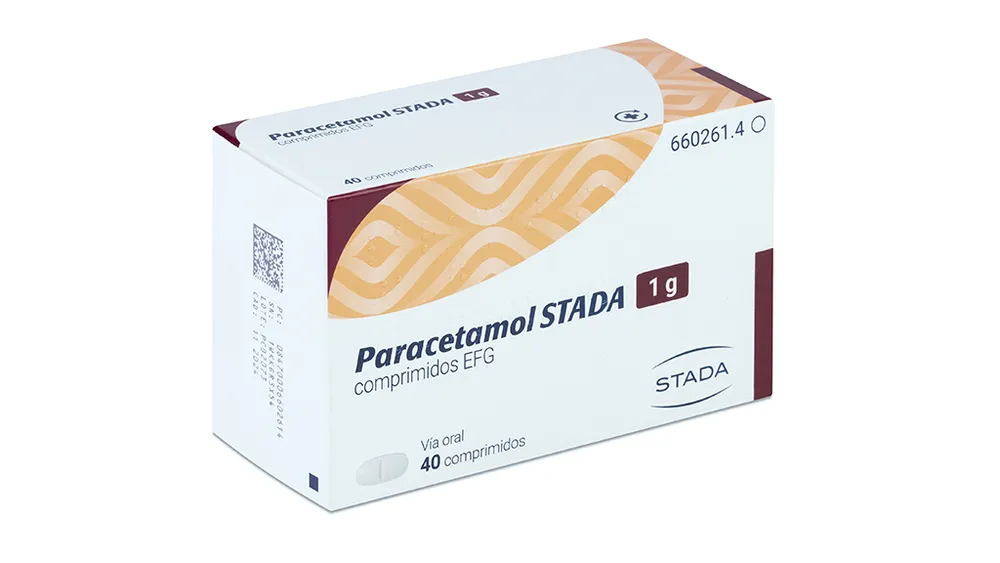
Table of Contents
- Package leaflet: Information for the user
- Introduction
- 1. What Paracetamol Stada is and what it is used for
- 2. What you need to know before taking Paracetamol Stada
- 3. How to take Paracetamol Stada
- 4. Possible adverse effects
- 5. Storage of Paracetamol Stada
- 6. Contents of the pack and other information
Package leaflet: Information for the user
Introduction
Package leaflet: information for the patient
Paracetamol STADA 1 g tablets EFG
Read this entire leaflet carefully before you start taking this medicine, because it contains important information for you.
- Keep this leaflet, as you may need to read it again.
- If you have any questions, consult your doctor or pharmacist.
- This medicine has been prescribed for you only, and you should not give it to other people, even if they have the same symptoms as you, because it could harm them.
- If you experience any adverse effects, consult your doctor or pharmacist, even if they are adverse effects not listed in this leaflet. See section 4.
Contents of the leaflet:
- What Paracetamol STADA is and what it is used for
- What you need to know before taking Paracetamol STADA
- How to take Paracetamol STADA
- Possible adverse effects
- How to store Paracetamol STADA
- Contents of the pack and other information
1. What Paracetamol Stada is and what it is used for
Paracetamol belongs to a group of medicines called analgesics and antipyretics.
Paracetamol Stada is used for the symptomatic treatment of moderate-intensity pain and febrile conditions.
2. What you need to know before taking Paracetamol Stada
Do not take Paracetamol Stada
- If you are allergic to paracetamol or to any of the other ingredients of this medicine (listed in section 6).
- If you have any liver disease.
Warnings and precautions
Consult your doctor or pharmacist before taking Paracetamol Stada.
Do not take more than the recommended dose.
During treatment with Paracetamol Stada, inform your doctor immediately if:
You have serious underlying conditions such as severe renal failure, sepsis (when bacteria and their toxins circulate in the blood, causing organ damage), malnutrition, chronic alcoholism, or if you are also taking flucloxacillin (an antibiotic). A serious condition known as metabolic acidosis (an abnormality in blood and body fluids) has been reported in patients under these circumstances when paracetamol is used at regular doses over a prolonged period or when paracetamol is taken concomitantly with flucloxacillin. Symptoms of metabolic acidosis may include: severe difficulty breathing with deep and rapid breathing, drowsiness, feeling unwell (nausea), and vomiting.
If you have kidney, heart, or lung disease, or if you have anaemia (reduced haemoglobin levels in the blood, with or without a reduction in red blood cells), you should consult your doctor before taking this medicine.
In chronic alcoholics, caution should be taken not to exceed 2 grams/day of paracetamol.
If pain persists for more than 10 days, fever for more than 3 days, or if pain or fever worsen or new symptoms appear, treatment should be discontinued and medical advice sought.
For children under 15 years of age, consult your doctor or pharmacist, as other formulations with doses adapted to this patient group are available.
Taking Paracetamol Stada with other medicines
Inform your doctor or pharmacist if you are taking, have recently taken, or might need to take any other medicines.
Paracetamol may interact with the following medicines:
-
Antibiotics (chloramphenicol)
-
Anticoagulants (used for the treatment of thromboembolic disorders)
-
Antiepileptics (used for the treatment of epileptic seizures)
-
Contraceptives
-
Diuretics (used to increase urine elimination)
-
Isoniazid (used for the treatment of tuberculosis)
-
Lamotrigine (used for the treatment of epilepsy)
-
Probenecid (used for the treatment of gout)
-
Propranolol (used for the treatment of hypertension, cardiac arrhythmias)
-
Rifampicin (used for the treatment of tuberculosis)
-
Anticholinergics (used to relieve spasms or contractions of the stomach, intestine, and bladder)
-
Zidovudine (used for the treatment of HIV infections)
-
Cholestyramine (used to lower blood cholesterol levels)
-
Flucloxacillin (antibiotic), due to a serious risk of blood and fluid disturbances (metabolic acidosis with high anion gap) that requires urgent treatment (see section 2).
Do not use with other analgesics (medicines that reduce pain) without consulting your doctor.
As a general rule for any medicine, it is advisable to systematically inform your doctor or pharmacist if you are taking any other treatment. In patients taking oral anticoagulants, paracetamol may occasionally be used as the analgesic of choice.
Interactions with diagnostic tests
Consult your doctor if you are due to undergo blood or urine tests.
Taking Paracetamol Stada with food, drinks and alcohol
The use of paracetamol in patients who habitually consume alcohol (three or more alcoholic drinks per day—beer, wine, spirits, etc.) may cause liver damage.
Pregnancy and breast-feeding
If you are pregnant or breast-feeding, think you may be pregnant, or are planning to become pregnant, consult your doctor or pharmacist before using this medicine.
Pregnancy
Consult your doctor or pharmacist before using any medicine.
IMPORTANT FOR WOMEN
If you are pregnant or breast-feeding, think you may be pregnant, or are planning to become pregnant, consult your doctor or pharmacist before using this medicine. Taking medicines during pregnancy may be hazardous to the embryo or foetus and should be monitored by your doctor.
Paracetamol may be used during pregnancy if necessary. Use the lowest possible dose that relieves pain or fever, and take it for the shortest possible duration. Contact your doctor or midwife if pain or fever do not improve or if you need to take the medicine more frequently.
Breast-feeding
Consult your doctor or pharmacist before using any medicine.
Small amounts of paracetamol may pass into breast milk; therefore, it is recommended that you consult your doctor or pharmacist before taking this medicine.
Driving and using machines
No effects affecting the ability to drive or operate machinery have been reported.
3. How to take Paracetamol Stada
Follow exactly the dosing instructions for this medicine provided in this leaflet or those given by your doctor or pharmacist. If in doubt, consult your doctor or pharmacist.
Remember to take your medicine.
This medicine is for oral use. Depending on your preference, the tablets may be taken whole or split in half with water, milk, or fruit juice. Consult your doctor or pharmacist if you have any questions.
Recommended dose:
Adults and adolescents over 15 years of age (and weighing more than 50 kg): the usual dose is 1 tablet (1 gram of paracetamol) 3–4 times daily. Doses should be spaced at least 4 hours apart. Do not take more than 4 tablets (4 grams) in 24 hours.
Patients with liver or kidney disease: must consult their doctor.
Elderly patients: must consult their doctor.
If you feel that the effect of this medicine is too strong or too weak, inform your doctor or pharmacist.
When doses lower than 1 gram of paracetamol per dose are required, other paracetamol formulations suitable for the required dosage should be used.
The tablet may be divided into equal doses.
If you take more Paracetamol Stada than you should
If you have taken more paracetamol than you should, contact your doctor or the Toxicology Information Service immediately, telephone number 915 620 420. If you have taken an overdose, you must go immediately to a medical center even if you have no symptoms, as symptoms often do not appear until three days after the overdose, even in cases of severe poisoning. Symptoms of overdose may include dizziness, vomiting, loss of appetite, yellowing of the skin and eyes (jaundice), and abdominal pain.
Treatment of overdose is most effective if started within 4 hours of taking the medicine.
Patients undergoing treatment with barbiturates or who suffer from chronic alcoholism may be more susceptible to paracetamol overdose.
If you forget to take Paracetamol Stada
Do not take a double dose to make up for forgotten doses. Simply take the missed dose as soon as you remember, then take the following doses at the recommended intervals (at least 4 hours apart).
If you have any further questions about the use of this medicine, ask your doctor or pharmacist.
4. Possible adverse effects
Like all medicines, this medicine can cause adverse effects, although not everybody gets them.
Paracetamol Stada may cause the following adverse effects:
-
Rare (may affect up to 1 in 1,000 people): malaise, low blood pressure (hypotension), and increased blood transaminase levels.
-
Very rare (may affect up to 1 in 10,000 people): kidney disorders, cloudy urine, allergic dermatitis (skin rash), jaundice (yellowing of the skin), blood disorders (agranulocytosis, leucopenia, neutropenia, haemolytic anaemia), and hypoglycaemia (low blood sugar). Cases of serious skin reactions have been reported.
-
Frequency not known (cannot be estimated from available data): A serious condition that may cause the blood to become more acidic (called metabolic acidosis) in seriously ill patients using paracetamol (see section 2).
Paracetamol can damage the liver when taken in high doses or during prolonged treatment.
Reporting of adverse effects
If you experience any type of adverse effect, consult your doctor or pharmacist, even if it is a possible adverse effect not listed in this leaflet. You can also report them directly via the Spanish Pharmacovigilance System for Human Medicines: https://www.notificaram.es. By reporting adverse effects, you can help provide more information on the safety of this medicine.
5. Storage of Paracetamol Stada
Keep out of sight and reach of children.
This medicine does not require special storage conditions.
Do not use this medicine after the expiry date stated on the packaging, after EXP. The expiry date is the last day of the month indicated.
Medicines should not be disposed of via wastewater or household waste. Dispose of containers and unused medicines at the SIGRE Point in your pharmacy. Ask your pharmacist how to dispose of containers and medicines you no longer need. This way, you will help protect the environment.
6. Contents of the pack and other information
Composition of Paracetamol Stada
-
The active substance is paracetamol. Each tablet contains 1 g of paracetamol.
-
The other components are: pregelatinized corn starch, stearic acid, povidone, crospovidone, microcrystalline cellulose, and magnesium stearate of vegetable origin.
Appearance of the medicine and contents of the pack
Paracetamol Stada 1 g tablets are oblong, white tablets, scored on both sides. Each pack contains 20 or 40 tablets, presented in blisters.
Only certain pack sizes may be marketed.
Marketing Authorization Holder and Manufacturer:
Marketing Authorization Holder
Laboratorio STADA, S.L.
Frederic Mompou, 5
08960 Sant Just Desvern
(Barcelona)
Manufacturer
SAG MANUFACTURING S.L.U.
Carretera Nacional I, Km. 36
28750 San Agustin de Guadalix,
Spain
Date of the most recent review of this leaflet: February 2025
Detailed and up-to-date information on this medicine is available on the website of the Spanish Agency for Medicines and Health Products (AEMPS) http://www.aemps.gob.es/