Palonosetron Accord 250 micrograms solution for injection EFG
Spain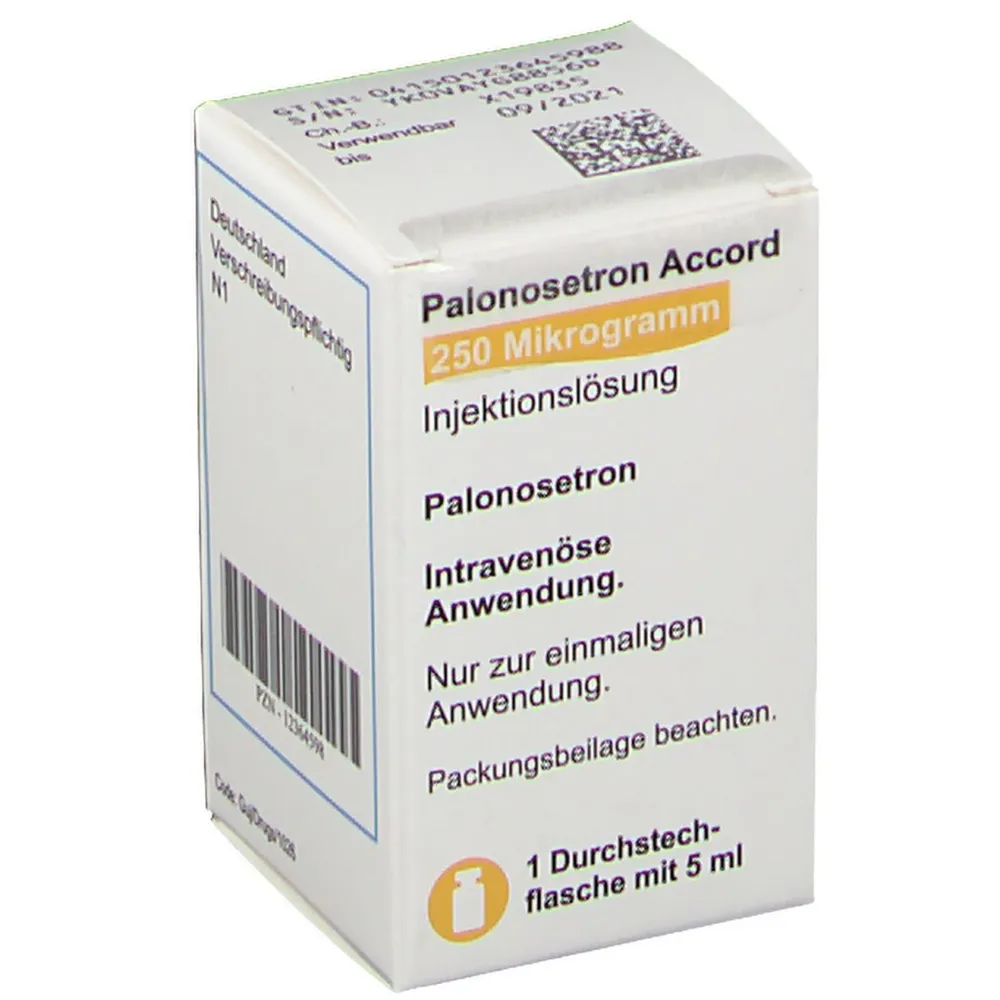
Table of Contents
- Package leaflet: Information for the user
- Introduction
- 1. What Palonosetron Accord is and what it is used for
- 2. What you need to know before Palonosetron Accord is administered to you
- 3. How Palonosetron Accord is administered
- 4. Possible adverse effects
- 5. Storage of Palonosetron Accord
- 6. Package contents and other information
Package leaflet: Information for the user
Introduction
Package leaflet: information for the patient
Palonosetron Accord 250 micrograms solution for injection EFG
palonosetron
Read all of this leaflet carefully before you are given this medicine, because it contains important information for you.
- Keep this leaflet, as you may need to read it again.
- If you have any questions, ask your doctor, pharmacist, or nurse.
- If you experience any side effects, talk to your doctor, pharmacist, or nurse, even if they are side effects not listed in this leaflet. See section 4.
Contents of the leaflet
- What Palonosetron Accord is and what it is used for
- What you need to know before it is administered to you
- How Palonosetron Accord is administered
- Possible side effects
- How to store Palonosetron Accord
- Contents of the pack and other information
1. What Palonosetron Accord is and what it is used for
Palonosetron Accord belongs to a group of medicines known as serotonin (5HT3) antagonists.
These medicines are capable of blocking the action of a chemical substance called serotonin, which can cause nausea and vomiting.
Palonosetron Accord is used for the prevention of nausea and vomiting associated with antineoplastic chemotherapy in adults, adolescents, and children over one month of age.
2. What you need to know before Palonosetron Accord is administered to you
Do not use Palonosetron Accord:
- if you are allergic to palonosetron or to any of the other ingredients of this medicine (listed in section 6).
Warnings and precautions
Consult your doctor, pharmacist or nurse before starting to use Palonosetron Accord
- if you have acute intestinal obstruction or a history of recurrent constipation.
- if you are using Palonosetron Accord together with other medicines that may cause abnormal heart rhythm, such as amiodarone, nicardipine, quinidine, moxifloxacin, erythromycin, haloperidol, chlorpromazine, quetiapine, thioridazine, domperidone.
- if you have a personal or family history of heart rhythm disorders (QT interval prolongation).
- if you have other heart problems.
- if you have an untreated imbalance of certain blood minerals such as potassium and magnesium.
Use of Palonosetron Accord is not recommended on days following chemotherapy unless it is for another cycle of chemotherapy.
Use of Palonosetron Accord with other medicines
Inform your doctor or pharmacist if you are taking, have recently taken or might need to take any other medicines, including:
selective serotonin reuptake inhibitors (SSRIs) used to treat depression and/or anxiety, such as fluoxetine, paroxetine, sertraline, fluvoxamine, citalopram and escitalopram; serotonin-norepinephrine reuptake inhibitors (SNRIs) used to treat depression and/or anxiety, such as venlafaxine and duloxetine.
Pregnancy and breastfeeding
Pregnancy
If you are pregnant or think you might be pregnant, your doctor will not administer Palonosetron Accord unless clearly necessary.
It is unknown whether Palonosetron Accord causes harmful effects when used during pregnancy.
Consult your doctor or pharmacist before using any medicine if you are pregnant or think you might be pregnant.
Breastfeeding
It is unknown whether Palonosetron Accord passes into breast milk.
Consult your doctor or pharmacist before using Palonosetron Accord if you are breastfeeding.
Driving and using machines
Palonosetron Accord may cause dizziness or fatigue. If affected, do not drive or operate tools or machinery.
Palonosetron Accord contains sodium
This medicine contains less than 1 mmol of sodium (23 mg) per vial and is therefore considered essentially "sodium-free".
3. How Palonosetron Accord is administered
Normally, a doctor or nurse will inject Palonosetron Accord about 30 minutes before the start of chemotherapy.
Adults
The recommended dose of Palonosetron Accord is 250 micrograms given as a rapid intravenous injection.
Children and adolescents (from 1 month to 17 years of age)
The doctor will determine the dose based on body weight; however, the maximum dose is 1500 micrograms.
Palonosetron Accord will be administered as a slow intravenous infusion.
If you have any further questions about the use of this medicine, ask your doctor, pharmacist, or nurse.
4. Possible adverse effects
Like all medicines, this medicine can cause adverse effects, although not everyone will experience them.
Adults
Frequent
may affect up to 1 in 10 people
- headache
- dizziness
- constipation and diarrhoea
Uncommon
may affect up to 1 in 100 people
- high or low blood pressure
- abnormal heartbeat or reduced blood flow to the heart
- change in the colour of the vein and/or veins becoming enlarged
- abnormally high or low levels of potassium in the blood
- high blood sugar levels or sugar in the urine
- low levels of calcium in the blood
- high levels of the pigment bilirubin in the blood
- high levels of certain liver enzymes
- euphoria or feeling anxious
- drowsiness or trouble sleeping
- decreased or loss of appetite
- weakness, fatigue, fever or flu-like symptoms
- numbness, burning, itching or tingling sensation on the skin
- itchy rash
- visual disturbances or eye irritation
- motion sickness
- ringing in the ears
- hiccups, flatulence, dry mouth or dyspepsia
- abdominal pain (stomach ache)
- difficulty urinating
- joint pain
- abnormalities in the electrocardiogram (ECG) (prolongation of the QT interval)
Very rare
may affect up to 1 in 10,000 people
- Allergic reactions to Palonosetron Accord.
Signs may include swelling of the lips, face, tongue or throat, with difficulty breathing or collapse; you may also notice itching, skin rash with wheals (urticaria), burning or pain at the site of administration.
Children and adolescents:
Frequent
may affect up to 1 in 10 people
- headache
Uncommon
may affect up to 1 in 100 people
- dizziness
- spasmodic movements
- abnormal heartbeat
- cough or shortness of breath
- nosebleed
- itchy rash or urticaria
- fever
- pain at the site of infusion
Reporting of adverse effects
If you experience any adverse effect, talk to your doctor, pharmacist or nurse, even if it is a possible adverse effect not listed in this leaflet. You can also report them directly through the national reporting system listed in Appendix V. By reporting adverse effects, you can help provide more information on the safety of this medicine.
5. Storage of Palonosetron Accord
Keep this medicine out of the sight and reach of children.
Do not use this medicine after the expiry date stated on the carton and vial after EXP. The expiry date refers to the last day of the month indicated.
No special storage conditions are required.
For single use only; discard any unused portion of the solution.
6. Package contents and other information
Composition of Palonosetron Accord
- The active substance is palonosetron (as hydrochloride).
Each ml of solution contains 50 micrograms of palonosetron. Each 5 ml vial of solution contains 250 micrograms of palonosetron.
- The other components are mannitol, disodium edetate, sodium citrate, citric acid monohydrate, sodium hydroxide (to adjust pH), concentrated hydrochloric acid (to adjust pH) and water for injections. (See section 2: Palonosetron Accord contains sodium)
Description of the product and contents of the container
Palonosetron Accord solution for injection is a clear, colourless solution supplied in a 6 ml glass vial with a chlorobutyl rubber stopper and sealed with a removable aluminium cap. Each vial contains one dose.
Pack size: one vial.
Marketing Authorisation Holder
Accord Healthcare S.L.U.
World Trade Center, Moll de Barcelona, s/n,
Edifici Est 6th floor,
08039 Barcelona,
Spain
Manufacturers
Accord Healthcare B.V.,
Winthontlaan 200,
3526 KV Utrecht,
The Netherlands
Accord Healthcare Polska Sp. z o.o.,
ul. Lutomierska 50, 95-200 Pabianice, Poland
Date of the most recent revision of this leaflet:
Other sources of information
Detailed information about this medicine is available on the website of the European Medicines Agency: http://www.ema.europa.eu.