Omjjara 150 mg film-coated tablets
Spain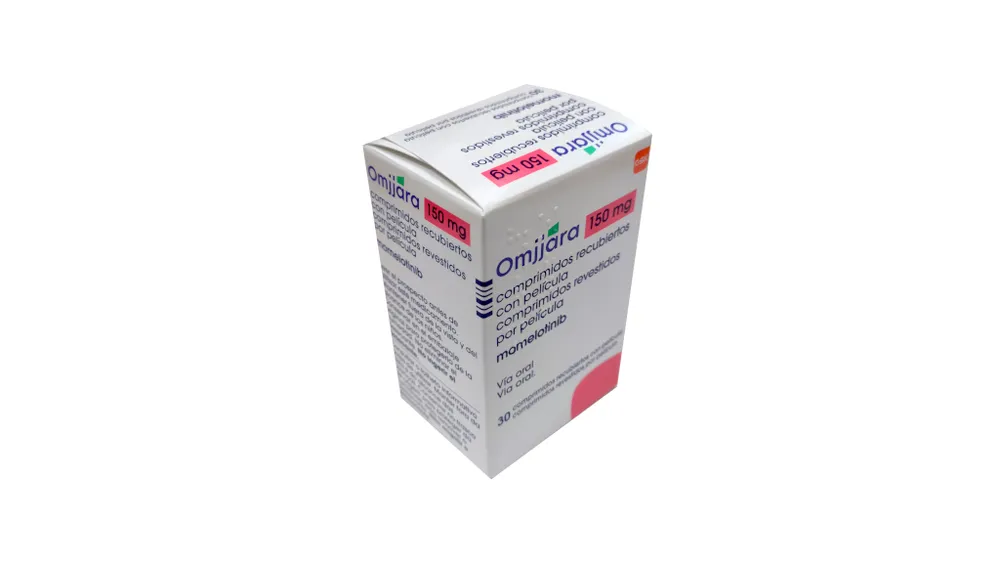
Table of Contents
Package leaflet: Information for the user
Introduction
Package leaflet: information for the patient
Omjjara 100mg film-coated tablets
Omjjara 150mg film-coated tablets
Omjjara 200mg film-coated tablets
momelotinib
This medicinal product is subject to additional monitoring, which will allow for faster identification of new safety information. You can help by reporting any side effects you may experience. Section 4 includes information on how to report side effects.
Read the entire leaflet carefully before starting to take this medicine, as it contains important information for you.
- Keep this leaflet, as you may need to read it again.
- If you have any questions, ask your doctor, pharmacist, or nurse.
- This medicine has been prescribed for you only and must not be given to other people, even if they have the same symptoms as you, as it may harm them.
- If you experience any side effects, consult your doctor, pharmacist, or nurse, even if they are side effects not listed in this leaflet. See section 4.
Leaflet contents
- What Omjjara is and what it is used for
- What you need to know before taking Omjjara
- How to take Omjjara
- Possible side effects
- How to store Omjjara
- Contents of the pack and other information
1. What Omjjara is and what it is used for
Omjjara contains the active substance called momelotinib. Momelotinib is a type of medicine known as a protein kinase inhibitor.
Omjjara is used to treat adult patients with an enlarged spleen or other symptoms related to myelofibrosis, a rare form of blood cancer, and with moderate to severe anaemia.
In myelofibrosis, the bone marrow is replaced by scar tissue and is classified as:
- primary myelofibrosis, which develops in people who previously had no problems with their bone marrow, or;
- secondary myelofibrosis, which develops in people who have other blood cancers, causing their body to produce too many red blood cells (secondary myelofibrosis to polycythaemia vera) or platelets, which help blood to clot (secondary myelofibrosis to essential thrombocythaemia).
How Omjjara works
One of the features of myelofibrosis is enlargement of the spleen. Myelofibrosis is a bone marrow disorder in which the marrow is replaced by fibrous (scar) tissue. The altered bone marrow cannot produce enough normal blood cells, and as a result the spleen becomes significantly enlarged. Omjjara blocks the action of certain proteins called Janus kinases (JAK1, JAK2) and activin A receptor type 1 (ACVR1), which helps prevent overproduction of cytokines and reduces inflammation. Thus, Omjjara reduces the size of the enlarged spleen, improves anaemia, and alleviates symptoms such as fever, night sweats, bone pain, and weight loss caused by myelofibrosis.
2. What you need to know before taking Omjjara
Do not take Omjjara
- if you are allergic to momelotinib or any of the other ingredients of this medicine (listed in section 6). If you are unsure whether this applies to you, do not take Omjjara until you have consulted your doctor
- if you are pregnant or breastfeeding.
Warnings and precautions
Tell your doctor
Talk to your doctor, pharmacist, or nurse before starting Omjjara or during treatment with Omjjara:
- if you have an infection or have frequent infections — signs of infection may include fever, chills, cough, breathing problems, diarrhoea, vomiting, pain or burning when urinating
- if you have had long-term (chronic) hepatitis B, as hepatitis B may become active again
- if you have unusual bleeding or bruising under the skin, prolonged bleeding after a blood draw, or bleeding from the gums — these may be signs of low platelet levels in the blood (components that help blood to clot), also known as thrombocytopenia
- if you have any liver problems. Your doctor may prescribe a lower dose of Omjjara.
With other types of medicines similar to Omjjara used to treat rheumatoid arthritis, heart problems, blood clots, and cancer have been observed. Consult your doctor or pharmacist before or during your treatment:
-
if you are over 65 years old. Patients aged 65 years or older have a higher risk of heart problems, including heart attack, and certain types of cancer
-
if you have or have had heart problems
-
if you have or have had cancer
-
if you smoke or have previously smoked
-
if you have previously had blood clots in the veins of your legs (deep vein thrombosis) or lungs (pulmonary embolism), or if you have a higher risk of developing these, for example if:
-
you recently had major surgery
-
you use hormonal contraceptives/hormone replacement therapy
-
you or a close relative have been diagnosed with a blood clotting disorder.
Tell your doctor immediately if you have:
- sudden shortness of breath or difficulty breathing
- chest pain or upper back pain
- swelling of the leg or arm
- pain or tenderness in the leg
- redness or discoloration in the leg or arm.
These may be signs of blood clots in the veins.
- if you notice new skin growths or changes in existing skin growths. Your doctor may recommend regular skin examinations while you are taking Omjjara.
Your doctor will discuss with you whether Omjjara is suitable for you.
Blood tests
Before and during treatment, your doctor will perform blood tests to monitor levels of blood cells (red blood cells, white blood cells, and platelets) as well as liver function. Based on the results of these blood tests, your doctor may adjust the dose or interrupt treatment.
Children and adolescents
Omjjara is not indicated for use in children or adolescents under 18 years of age, as it has not been studied in this age group.
Other medicines and Omjjara
Tell your doctor, pharmacist, or nurse if you are taking, have recently taken, or might need to take any other medicines, including herbal products and over-the-counter medicines. This is because Omjjara may affect how other medicines work. In addition, some medicines may affect how Omjjara works.
It is particularly important to mention any medicine containing any of the following active substances, as your doctor may need to adjust the dose of Omjjara or the other medicine.
The following medicines may increase the risk of adverse effects with Omjjara:
- cyclosporine (used to prevent transplant rejection).
The following medicines may reduce the effectiveness of Omjjara:
- carbamazepine (used to treat epilepsy and prevent seizures)
- phenobarbital (used to treat epilepsy and prevent seizures)
- phenytoin (used to treat epilepsy and prevent seizures)
- St John’s wort (hypericum perforatum), a herbal remedy.
Omjjara may affect the following medicines:
- rosuvastatin (a statin used to lower cholesterol)
- sulfasalazine (used to treat rheumatoid arthritis)
- metformin (used to lower blood sugar levels)
- theophylline (used to treat breathing problems)
- tizanidine (used to treat muscle spasms)
- cyclophosphamide (used to treat cancer).
Pregnancy, breastfeeding, and fertility
You must not take Omjjara during pregnancy. If you are pregnant, think you may be pregnant, or plan to become pregnant, do not take this medicine, as it could harm your baby. Talk to your doctor before using this medicine.
If you are a woman who could become pregnant, you must use highly effective contraceptive methods while taking Omjjara and continue using these highly effective contraceptive methods for at least one week after taking the last dose. It is currently unknown whether Omjjara could reduce the effectiveness of hormonal contraceptives, so it is recommended to add a barrier method during treatment and for at least one week after taking the last dose of Omjjara. Your doctor may ask you to take a pregnancy test before starting treatment to confirm you are not pregnant.
If you become pregnant while taking Omjjara, inform your doctor immediately.
You must not take Omjjara while breastfeeding. It is unknown whether the medicine passes into breast milk. Risk to breastfed infants cannot be excluded.
Tell your doctor if you are breastfeeding before taking this medicine.
It is unknown whether Omjjara affects male or female fertility in humans. Omjjara has effects on fertility in animals. If you or your partner plan to become pregnant, consult your doctor before or while taking this medicine.
Driving and using machines
Omjjara may cause adverse effects that affect your ability to drive. If you feel dizzy or have blurred vision, do not drive or operate machinery until these adverse effects have resolved.
Omjjara contains lactose and sodium
Omjjara contains lactose (milk sugar). If your doctor has told you that you have an intolerance to certain sugars, consult with them before taking this medicine.
This medicine contains less than 1 mmol of sodium (23 mg) per tablet; this is, essentially “sodium-free”.
3. How to take Omjjara
Follow exactly the instructions for administering this medicine as given by your doctor or pharmacist. If in doubt, consult your doctor or pharmacist again.
How much medicine to take
The recommended starting dose of Omjjara is 200 mg taken once daily by oral administration.
Your doctor may recommend a lower dose if you have liver problems.
If you experience certain adverse effects (such as unusual bleeding or bruising, diarrhea, or nausea) while taking Omjjara, your doctor may recommend a lower dose, or temporarily or permanently discontinue treatment (see section 4).
How to take the medicine
Take Omjjara every day at the same time, with or without food.
How long to take the medicine
Continue taking Omjjara for as long as your doctor has instructed you. This is a long-term treatment.
Your doctor will periodically monitor your condition to ensure the treatment is having the desired effect.
If you have any questions about how long to take Omjjara, speak with your doctor.
If you take more Omjjara than you should
If you accidentally take more Omjjara than your doctor has prescribed, contact your doctor immediately.
If you forget to take Omjjara
Take your next dose at the usual time the following day. Do not take a double dose to make up for forgotten doses.
If you stop taking Omjjara
Do not stop treatment with Omjjara unless agreed with your doctor.
If you have any further questions about the use of this medicine, ask your doctor, pharmacist, or nurse.
4. Possible adverse effects
Like all medicines, this medicine can cause adverse effects, although not everyone experiences them.
Consult your doctor, pharmacist, or nurse if you experience any adverse effect that concerns you.
Serious adverse effects
Some adverse effects can be serious. Seek immediate medical attention before taking your next scheduled dose if you experience any of the following serious adverse effects:
Very common adverse effects
May affect more than 1 in 10 people:
- infections — signs or symptoms may include fever, chills, cough, breathing problems, diarrhea, vomiting, pain or burning sensation when urinating
- low platelet count in the blood (thrombocytopenia) which may cause bruising or bleeding longer than usual if injured.
Other adverse effects
Other possible adverse effects are listed below:
Very common adverse effects
May affect more than 1 in 10 people:
- dizziness
- headache
- cough
- diarrhea
- feeling sick (nausea)
- stomach ache (abdominal pain)
- feeling weak (asthenia)
- tiredness (fatigue).
Common adverse effects
May affect up to 1 in 10 people:
- low level of a type of white blood cells (neutropenia) which may increase the risk of infection
- deficiency of vitamin B1 (thiamine) which may cause loss of appetite, lack of energy, irritability
- numbness, tingling sensation, or weakness in arms, hands, legs, or feet (peripheral neuropathy)
- abnormal tingling sensation (paresthesia)
- fainting (syncope)
- sensation of spinning (vertigo)
- blurred vision
- sudden redness of the face, neck, or upper chest (flushing)
- localized bleeding under the skin (hematoma)
- low blood pressure which may cause dizziness when standing up (hypotension)
- constipation
- vomiting
- rash (redness, swelling, or pain in the skin)
- joint pain (arthralgia)
- pain in limbs, hands, or feet
- fever (pyrexia)
- changes in blood test results (elevated alanine aminotransferase and elevated aspartate aminotransferase). These may be signs of liver problems
- bruises (contusion).
Tell your doctor, pharmacist, or nurse if any of these adverse effects become severe or bothersome, or if you notice any adverse effect not listed in this leaflet.
Reporting of adverse effects
If you experience any type of adverse effect, talk to your doctor, pharmacist, or nurse, even if it is a possible adverse effect not listed in this leaflet. You may also report them directly through the national reporting system included in Appendix V. By reporting adverse effects, you can help provide more information on the safety of this medicine.
5. Conservation of Omjjara
Keep this medicine out of the sight and reach of children.
Do not use this medicine after the expiry date stated on the label of the bottle and the outer packaging after EXP. The expiry date is the last day of the month indicated.
Store in the original packaging to protect it from moisture. Do not remove the desiccant. Do not ingest the desiccant. This medicine does not require any special storage temperature.
Medicines should not be disposed of via wastewater or household waste. Ask your pharmacist how to dispose of medicines and containers you no longer need. This will help protect the environment.
6. Contents of the container and other information
Composition of Omjjara
The active substance is momelotinib.
- Each 100 mg film-coated tablet contains momelotinib dihydrochloride monohydrate equivalent to 100 mg of momelotinib.
- Each 150 mg film-coated tablet contains momelotinib dihydrochloride monohydrate equivalent to 150 mg of momelotinib.
- Each 200 mg film-coated tablet contains momelotinib dihydrochloride monohydrate equivalent to 200 mg of momelotinib.
- The other excipients are:
Tablet core: microcrystalline cellulose, lactose monohydrate, sodium carboxymethyl starch (type A), magnesium stearate, colloidal anhydrous silica, and propyl gallate.
Tablet coating: Opadry II brown, which contains polyvinyl alcohol, macrogols, titanium dioxide (E 171), talc, yellow iron oxide (E 172), and red iron oxide (E 172).
See section 2: Omjjara contains lactose and sodium.
Appearance of the product and contents of the container
Omjjara 100 mg film-coated tablets are brown, round-shaped tablets, engraved with an underlined “M” on one side and “100” on the other side.
Omjjara 150 mg film-coated tablets are brown, triangular-shaped tablets, engraved with an underlined “M” on one side and “150” on the other side.
Omjjara 200 mg film-coated tablets are brown, capsule-shaped tablets, engraved with an underlined “M” on one side and “200” on the other side.
Omjjara film-coated tablets are available in a white bottle with a child-resistant cap and seal. Each bottle contains 30 tablets, a silica gel desiccant, a polyester filler, and is packaged in a cardboard box.
Marketing Authorisation Holder and Manufacturer
GlaxoSmithKline Trading Services Limited
12 Riverwalk
Citywest Business Campus
Dublin 24
Ireland
For further information about this medicinal product, please contact the local representative of the Marketing Authorisation Holder:
Belgium/Belgium/Belgium GlaxoSmithKline Pharmaceuticals s.a./n.v. Tel/Tel: + 32 (0)10 85 52 00 | Lithuania GlaxoSmithKline (Ireland) Limited Tel: + 370 80000334 |
Bulgaria GlaxoSmithKline (Ireland) Limited Tel: + 359 80018205 | Luxembourg/Luxembourg GlaxoSmithKline Pharmaceuticals s.a./n.v. Belgium/Belgium Tel/Tel: + 32 (0)10 85 52 00 |
Czech Republic GlaxoSmithKline, s.r.o. Tel: + 420 222 001 111 | Hungary GlaxoSmithKline (Ireland) Limited Tel.: + 36 80088309 |
Denmark GlaxoSmithKline Pharma A/S Tlf.: + 45 36 35 91 00 | Malta GlaxoSmithKline Trading Services Limited Tel: + 356 80065004 |
Germany GlaxoSmithKline GmbH & Co. KG Tel.: + 49 (0)89 36044 8701 | Netherlands GlaxoSmithKline BV Tel: + 31 (0)33 2081100 |
Estonia GlaxoSmithKline (Ireland) Limited Tel: + 372 8002640 | Norway GlaxoSmithKline AS Tlf: + 47 22 70 20 00 |
Greece GlaxoSmithKline Μονοπρόσωπη A.E.B.E. Tel: + 30 210 68 82 100 | Austria GlaxoSmithKline Pharma GmbH Tel: + 43 (0)1 97075 0 |
Spain GlaxoSmithKline, S.A. Tel: + 34 900 202 700 | Poland GSK Services Sp. Z o.o. Tel.: + 48 (0)22 576 9000 |
France GlaxoSmithKline Laboratory Tel: + 33 (0)1 39 17 84 44 | Portugal GlaxoSmithKline – Pharmaceutical Products, Lda. Tel: + 351 21 412 95 00 |
Croatia GlaxoSmithKline (Ireland) Limited Tel: + 385 800787089 | Romania GlaxoSmithKline Trading Services Limited Tel: + 40 800672524 |
Ireland GlaxoSmithKline (Ireland) Limited Tel: + 353 (0)1 4955000 | Slovenia GlaxoSmithKline (Ireland) Limited Tel: + 386 80688869 |
Iceland Vistor hf. Tel: +354 535 7000 | Slovakia GlaxoSmithKline (Ireland) Limited Tel: + 421 800500589 |
Italy GlaxoSmithKline S.p.A. Tel: + 39 (0)45 7741 111 | Finland GlaxoSmithKline Oy Tel: + 358 (0)10 30 30 30 |
Cyprus GlaxoSmithKline Trading Services Limited Tel: + 357 80070017 | Sweden GlaxoSmithKline AB Tel: + 46 (0)8 638 93 00 |
Latvia GlaxoSmithKline (Ireland) Limited Tel: + 371 80205045 |
Date of the most recent review of this leaflet: MM/YYYY
Other sources of information
Detailed information on this medicinal product is available on the website of the European Medicines Agency: https://www.ema.europa.eu. There are also links to other websites about rare diseases and orphan medicinal products.