Olopatadine Abamed 1 mg/ml eye drops solution
Spain
Table of Contents
- Patient Information Leaflet
- Introduction
- **Read the entire leaflet carefully before you start using this medicine, as it contains important information for you.**
- **Package leaflet**
- 1. What Olopatadina Abamed is and what it is used for
- 2. What you need to know before starting to use Olopatadina Abamed
- **Do not use Olopatadine Abamed**
- 3. How to use Olopatadina Abamed
- 4. Possible adverse effects
- **Frequency not known** (cannot be estimated from the available data):
- 5. Storage of Olopatadine Abamed
- 6. Contents of the pack and other information
- **Composition of olopatadine abamed**
Patient Information Leaflet
Introduction
Package Leaflet: Information for the patient
Olopatadine Abamed 1 mg/ml eye drops, solution
Olopatadine
Read the entire leaflet carefully before you start using this medicine, as it contains important information for you.
- Keep this leaflet, as you may need to read it again.
- If you have any questions, consult your doctor or pharmacist.
- This medicine has been prescribed for you only, and you should not give it to others, even if they have the same symptoms as you, as it may harm them.
- If you experience any adverse effects, consult your doctor or pharmacist, even if they are adverse effects not listed in this leaflet. See section 4.
Package leaflet
- What Olopatadina Abamed is and what it is used for
- What you need to know before using Olopatadina Abamed
- How to use Olopatadina Abamed
- Possible side effects
- How to store Olopatadina Abamed
Contents of the pack and other information
1. What Olopatadina Abamed is and what it is used for
Olopatadina Abamed belongs to a group of medicines used to treat allergic eye conditions. It works by reducing the intensity of the allergic reaction.
Olopatadina Abamed is indicated for the treatment of signs and symptoms of seasonal allergic conjunctivitis.
In allergic conjunctivitis, certain elements (called allergens), such as pollen, house dust, or animal hair, may cause allergic reactions leading to itching and redness, as well as inflammation of the surface of the eyes.
2. What you need to know before starting to use Olopatadina Abamed
Do not use Olopatadine Abamed
- If you are allergic (hypersensitive) to olopatadine or to any of the other components of this medicine (listed in section 6).
- If you are breastfeeding.
Warnings and precautions
Consult your doctor or pharmacist before starting to use Olopatadine Abamed.
If you wear contact lenses, you must remove them before using Olopatadine Abamed.
Children
Do not administer this medicine to children under 3 years of age, as its safety and efficacy have not been established.
Use of Olopatadine Abamed with other medicines
Inform your doctor or pharmacist if you are taking, have recently taken, or might need to take any other medicines.
If you are using another eye drop or ophthalmic ointment, wait at least 5 minutes between the application of each medicine. Ophthalmic ointments should be administered last.
Pregnancy, breastfeeding, and fertility
If you are pregnant, think you may be pregnant, or are planning to become pregnant, consult your doctor or pharmacist before using this medicine.
You must not use Olopatadine Abamed if you are breastfeeding; consult your doctor before using this medicine.
Driving and use of machines
Immediately after applying Olopatadine Abamed, you may experience blurred vision. Do not drive or operate machinery until this effect has disappeared.
Olopatadine Abamed contains benzalkonium chloride, which may:
- cause eye irritation
- alter the colour of soft contact lenses
It is recommended to:
- avoid contact with soft contact lenses
remove contact lenses before instilling the eye drops and wait at least 15 minutes before reinserting them.
3. How to use Olopatadina Abamed
Follow exactly the instructions for administering this medicine given by your doctor or pharmacist. If in doubt, consult your doctor or pharmacist again. Remember to use your medicine.
The recommended dose is one drop in one eye or in both eyes, twice daily: in the morning and in the evening.
Use this amount unless your doctor gives you other instructions. Olopatadina Abamed should only be applied to both eyes if your doctor has specifically instructed you to do so. Continue treatment for the length of time indicated by your doctor.
Remember that this medicine should only be applied to the eyes.
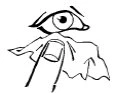
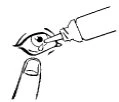
Instructions for the proper use of Olopatadina Abamed:
To facilitate the administration of the eye drops, it may be helpful the first few times to sit in front of a mirror so that you can see what you are doing.
| |||||||||
| |||||||||
| |||||||||
| |||||||||
| |||||||||
| |||||||||
If a drop misses the eye, try again. If you use more Olopatadina Abamed than you shouldIf you have administered too much Olopatadina Abamed into your eyes, you can remove it by rinsing your eyes with lukewarm water. In this case, do not administer any further drops until your next scheduled dose. In case of accidental ingestion, contact your doctor immediately, go to the nearest hospital emergency department, or call the Toxicology Information Service at (91) 562 04 20, indicating the medication and the amount taken. If you forget to use Olopatadina AbamedApply one drop of the eye drops as soon as you remember, and then use the next dose at your usual scheduled time. However, if it is almost time for your next dose, do not take the missed dose and continue with your next scheduled dose. Do not use a double dose to make up for the missed dose. If you stop using Olopatadina AbamedDo not stop using this medicine without first consulting your doctor. If you have any further questions about the use of this medicine, consult your doctor or pharmacist. |


4. Possible adverse effects
Like all medicines, Olopatadina Abamed can cause adverse effects, although not everyone will experience them.
The adverse effects observed during the use of this eye drop are:
Frequent (may affect up to 1 in 10 people):
- Eye effects: eye pain, eye irritation, dry eye, abnormal sensation in the eye, eye discomfort.
- General effects: headache, fatigue, dry nose, bad taste in the mouth.
Uncommon (may affect up to 1 in 100 people):
- Eye effects: blurred, decreased or abnormal vision, corneal disorder, inflammation of the eye surface with or without surface damage, conjunctival infection or inflammation, eye discharge, light sensitivity, increased tear production, eye itching, eye redness, eyelid abnormalities, itching, redness, swelling or crusting of the eyelid.
- General effects: decreased or abnormal perception of stimuli, dizziness, runny nose, dry skin, skin inflammation.
Frequency not known (cannot be estimated from the available data):
- Eye effects: eye swelling, swelling of the cornea, change in pupil size.
- General effects: difficulty breathing, increased allergic symptoms, facial swelling, numbness, generalized weakness, nausea, vomiting, sinus infection, skin redness and itching.
In very rare cases, some patients with a serious injury to the transparent layer at the front of the eye (the cornea) have developed darkened spots on the cornea due to calcium accumulation during treatment.
Reporting of adverse effects
If you experience any adverse effects, consult your doctor or pharmacist, even if they are possible adverse effects not listed in this leaflet. You can also report them directly through the Spanish Pharmacovigilance System for Human Medicinal Products: www.notificaram.es. By reporting adverse effects, you can help provide more information on the safety of this medicine.
5. Storage of Olopatadine Abamed
Keep this medicine out of the sight and reach of children.
No special storage conditions are required.
To prevent infection, discard the bottle four weeks after first opening and use a new bottle. Record the date of opening in the space provided on the label of each bottle and on the carton.
Do not use this medicine after the expiry date stated on the bottle (after EXP.:). The expiry date refers to the last day of the month indicated.
Medicines must not be disposed of via wastewater or household waste. Dispose of containers and unused medicines at a SIGRE point in your pharmacy. If you have any doubts, ask your pharmacist how to dispose of containers and medicines you no longer need. This will help protect the environment.
6. Contents of the pack and other information
Composition of olopatadine abamed
-
The active substance is olopatadine. Each millilitre of eye drops contains 1 mg of olopatadine (as hydrochloride).
-
The other components are benzalkonium chloride, sodium chloride, disodium hydrogen phosphate dodecahydrate (E-339), hydrochloric acid (E-507) and/or sodium hydroxide (E-524), and water for injection.
Appearance of the product and contents of the container
Olopatadine Abamed is a colourless, transparent solution. Each bottle contains 5 ml of eye drops.
Marketing Authorisation Holder:
Qualix Pharma, S.L.
c/ Botánica, 137-139
08908 L’Hospitalet de Llobregat
(Barcelona)
Spain
Manufacturer:
Labiana Pharmaceuticals, S.L.U.
c/ Casanova 27-31
08757 Corbera de Llobregat
(Barcelona)
Spain
Date of the most recent revision of this leaflet: November 2018
Detailed and up-to-date information on this medicinal product is available on the website of the Spanish Agency of Medicines and Health Products (AEMPS) http://www.aemps.gob.es/