Olanzapine Combix 10 mg film-coated tablets EFG
Spain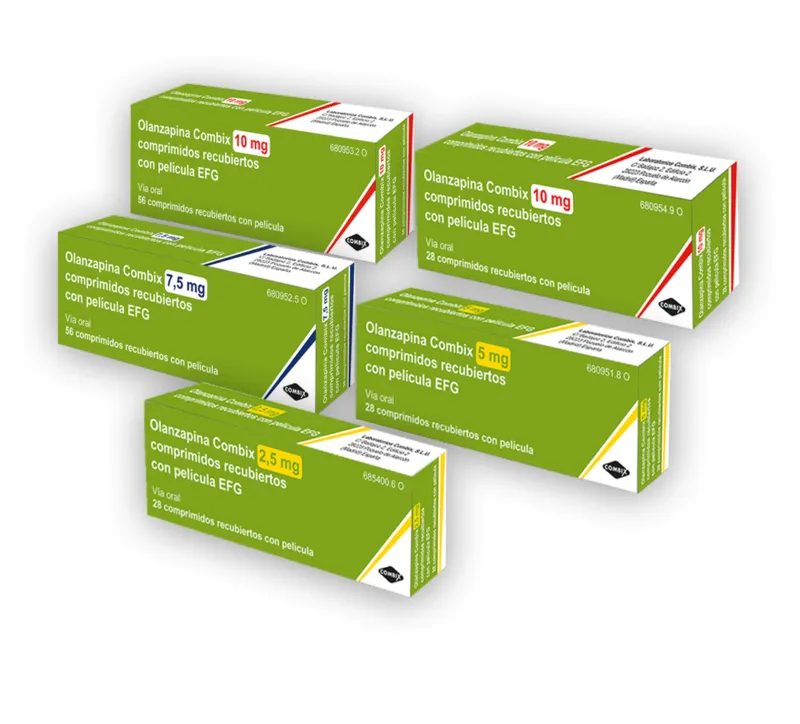
Table of Contents
Package leaflet: Information for the user
Introduction
PACKAGE LEAFLET: INFORMATION FOR THE USER
Olanzapina Combix 10 mg film-coated tablets EFG
Olanzapine
Read the entire leaflet carefully before you start taking this medicine.
- Keep this leaflet, as you may need to read it again.
- If you have any questions, ask your doctor or pharmacist.
- This medicine has been prescribed for you only and must not be given to other people, even if they have the same symptoms as you, because it could be harmful to them.
- If you think any of the side effects you experience is severe or if you notice any side effects not mentioned in this leaflet, inform your doctor or pharmacist.
Leaflet contents:
- What Olanzapina Combix is and what it is used for
- Before you take Olanzapina Combix
- How to take Olanzapina Combix
- Possible side effects
- How to store Olanzapina Combix
- Further information
1. What Olanzapina Combix is and what it is used for
Olanzapina Combix belongs to a group of medicines called antipsychotics.
Olanzapina Combix is indicated for the treatment of a condition whose symptoms include hearing, seeing, or feeling things that are not real, false beliefs, unusual suspiciousness, and social withdrawal. People with this condition may also experience depression, tension, or anxiety.
Olanzapina Combix is used to treat a disorder characterized by symptoms such as feeling euphoric, having excessive energy, needing much less sleep than usual, speaking very rapidly with racing thoughts, and sometimes marked irritability. It is also a mood stabilizer that helps prevent extreme changes in mood.
2. Before taking Olanzapina Combix
Do not take Olanzapina Combix
- if you are allergic (hypersensitive) to olanzapine or to any of the other components of Olanzapina Combix. The allergic reaction may manifest as rash, itching, swelling of the face or lips, or difficulty breathing. If this happens to you, tell your doctor.
- if you have previously been diagnosed with eye problems such as certain types of glaucoma (increased pressure in the eye).
Take special care with Olanzapina Combix
- If you or a family member has a history of blood clots, these medicines may be associated with clot formation.
- Medicines of this type may cause unusual movements, especially in the face or tongue. If this happens after taking Olanzapina Combix, tell your doctor.
- Very rarely, medicines of this type cause a combination of fever, rapid breathing, sweating, muscle stiffness, and mental confusion or drowsiness.
If this occurs, contact your doctor immediately.
The use of Olanzapina Combix in elderly patients with dementia is not recommended, as it may cause serious adverse effects.
If you have any of the following conditions, inform your doctor as soon as possible:
- Diabetes
- Heart disease
- Liver or kidney disease
- Parkinson's disease
- Epilepsy
- Prostate problems
- Intestinal blockage (paralytic ileus)
- Blood disorders
- Stroke or transient ischemic attack (temporary stroke-like symptoms).
If you suffer from dementia, you or your caregiver or family member should inform your doctor if you have ever had a stroke or transient ischemic attack.
As a routine precaution, if you are over 65 years old, your doctor should monitor your blood pressure.
Olanzapina Combix must not be used in patients under 18 years of age.
Use of other medicines
Only use other medicines at the same time as Olanzapina Combix if your doctor authorizes it. You may feel drowsiness if Olanzapina Combix is combined with antidepressants or medications for anxiety or sleep (tranquilizers).
You must inform your doctor if you are taking fluvoxamine (an antidepressant) or ciprofloxacin (an antibiotic), as it may be necessary to adjust your dose of Olanzapina Combix.
Inform your doctor or pharmacist if you are using or have recently used any other medicines, including those obtained without a prescription. Especially inform your doctor if you are taking medication for Parkinson's disease.
Taking Olanzapina Combix with food and drinks
You should not drink alcohol while taking Olanzapina Combix, as the combination of Olanzapina Combix and alcohol may cause drowsiness.
Pregnancy and breastfeeding
Tell your doctor as soon as possible if you are pregnant or think you might be pregnant. You should not take this medicine during pregnancy unless your doctor advises you to do so. You should not take this medicine while breastfeeding, as small amounts of Olanzapina Combix may pass into breast milk.
Newborns of mothers who have taken Olanzapina Combix during the last trimester of pregnancy may experience the following symptoms: tremors, muscle stiffness and/or weakness, drowsiness, agitation, breathing difficulties, and feeding problems. If your newborn shows any of these symptoms, contact your doctor.
Driving and using machines
Olanzapina Combix may cause symptoms such as drowsiness, dizziness, or vision disturbances, and may reduce reaction ability. These effects, as well as the underlying illness itself, may impair your ability to drive or operate machinery. Therefore, do not drive, operate machinery, or perform other activities requiring special attention until your doctor has assessed your response to this medicine.
Important information about some of the components of Olanzapina Combix
This medicine contains lactose. If your doctor has told you that you have an intolerance to certain sugars, consult with him before taking this medicine.
3. How to take Olanzapine Combix
Follow exactly the administration instructions for Olanzapine Combix given by your doctor. Consult your doctor or pharmacist if you have any doubts.
Your doctor will tell you how many Olanzapine Combix tablets you should take and for how long. The daily dose of Olanzapine Combix ranges between 5 and 20 mg. Consult your doctor if your symptoms return, but do not stop taking Olanzapine Combix unless your doctor tells you to.
You should take your Olanzapine Combix tablets once daily, as directed by your doctor. Try to take the tablets at the same time every day. You may take them with or without food. Olanzapine Combix tablets are for oral administration. Swallow the tablets whole with water.
If you take more Olanzapine Combix than you should
Patients who have taken more Olanzapine Combix than they should have experienced the following symptoms: rapid heartbeat, agitation/aggression, speech disorders, unusual movements (especially of the face and tongue), and reduced level of consciousness. Other symptoms may include: acute confusion, seizures (epilepsy), coma, a combination of fever, rapid breathing, sweating, muscle rigidity, drowsiness or lethargy, slowed breathing, aspiration, increased blood pressure or decreased blood pressure, and abnormal heart rhythms. Contact your doctor immediately or go to the hospital right away. Show the doctor the tablet packaging.
If you forget to take Olanzapine Combix
Take your tablet as soon as you remember. Do not take a double dose to make up for forgotten doses.
If you stop taking Olanzapine Combix
Do not stop treatment simply because you feel better. It is very important that you continue taking Olanzapine Combix for as long as your doctor tells you to.
If you stop taking Olanzapine Combix suddenly, symptoms such as sweating, inability to sleep, tremor, anxiety, or nausea and vomiting may occur. Your doctor may advise you to gradually reduce the dose before stopping treatment.
If you have any further questions about the use of this medicine, ask your doctor or pharmacist.
4. Possible adverse effects
Like all medicines, Olanzapina Combix may cause adverse effects, although not everyone experiences them.
Very common adverse effects: affecting 1 in every 10 patients
- Weight gain.
- Drowsiness.
- Increased levels of prolactin in the blood.
Common adverse effects: affecting between 1 and 10 in every 100 patients
- Changes in levels of certain blood cells and circulating lipids.
- Increased levels of sugar in blood and urine.
- Increased appetite.
- Dizziness.
- Agitation.
- Tremor.
- Muscle rigidity or spasms (including eye movements).
- Speech disturbances.
- Unusual movements (especially of the face or tongue).
- Constipation.
- Dry mouth.
- Skin rash.
- Loss of strength.
- Excessive tiredness.
- Fluid retention causing swelling of the hands, ankles, or feet.
- In the early stages of treatment, some people may experience dizziness or fainting (with slower heartbeats), especially when standing up from a lying or sitting position.
This sensation usually disappears spontaneously, but if it does not, inform your doctor.
- Sexual dysfunction such as decreased libido in men and women or erectile dysfunction in men.
Uncommon adverse effects: affecting between 1 and 10 in every 1,000 patients
- Slow pulse.
- Sensitivity to sunlight.
- Urinary incontinence.
- Hair loss.
- Absence or reduction of menstrual periods.
- Changes in the breast gland in men and women such as abnormal milk production or abnormal growth.
- Restless legs syndrome.
- Excessive salivation.
Other possible adverse effects: frequency cannot be estimated from available data
- Allergic reaction (e.g. swelling of the mouth and throat, itching, skin rash).
- Diabetes or worsening of diabetes, occasionally associated with ketoacidosis (acetone in blood and urine) or coma.
- Decrease in normal body temperature.
- Seizures; in most cases, these are related to a history of seizures (epilepsy).
- A combination of fever, rapid breathing, sweating, muscle stiffness, and mental confusion or drowsiness.
- Spasms in the eye muscles causing circular eye movements.
- Abnormal heart rhythm.
- Sudden unexplained death.
- Blood clots such as deep vein thrombosis in the legs and blood clots in the lungs.
- Inflammation of the pancreas, causing severe stomach pain, fever, and malaise.
- Liver disease, with yellowing of the skin and whites of the eyes.
- Muscle disorder presenting as unexplained muscle pain.
- Difficulty urinating.
- Prolonged and/or painful erection.
- Blood clots in the veins, especially in the legs (symptoms include swelling, pain, and redness in the leg); these clots may travel through blood vessels to the lungs, causing chest pain and difficulty breathing. If you experience any of these symptoms, contact your doctor immediately.
During treatment with olanzapine, elderly patients with dementia may experience stroke, pneumonia, urinary incontinence, falls, extreme fatigue, visual hallucinations, increased body temperature, skin redness, and difficulty walking. Some deaths have been reported in this particular group of patients.
Olanzapina Combix may worsen symptoms in patients with Parkinson's disease.
Rarely, women who have been taking this type of medication for a long period of time may experience milk secretion from the breast, absence of menstrual periods, or irregular periods. If this condition persists, consult your doctor. Very rarely, babies born to mothers who took Olanzapina Combix during the last stage of pregnancy (third trimester) may experience tremor, drowsiness, or lethargy.
Severe allergic reactions have been reported, such as Drug Reaction with Eosinophilia and Systemic Symptoms (DRESS). DRESS initially presents with flu-like symptoms, facial skin rash that spreads to other areas, fever, swollen lymph nodes, elevated liver enzymes in blood tests, and an increase in a type of white blood cell (eosinophilia).
Reporting of adverse effects
If you experience any adverse effect, consult your doctor or pharmacist, even if they are possible adverse effects not listed in this leaflet. You may also report them directly via the Spanish Pharmacovigilance System for Human Medicinal Products: https://www.notificaram.es. By reporting adverse effects, you can help provide more information on the safety of this medicine.
5. Storage of Olanzapine Combix
Keep out of the reach and sight of children.
Do not use Olanzapine Combix after the expiry date stated on the packaging after "EXP". The expiry date refers to the last day of the month indicated.
Store in the original packaging.
Medicines should not be disposed of via wastewater or household waste. Dispose of unused medicines and their containers at the SIGRE point in your pharmacy. If you have any doubts, ask your pharmacist how to properly dispose of unused medicines and their containers. This will help protect the environment.
6. Additional Information
Composition of Olanzapina Combix
The active substance is olanzapine. Each Olanzapina Combix tablet contains 10 mg of olanzapine.
The other components are monohydrate lactose, crospovidone, hypromellose (E-464), magnesium stearate, coating agent (polyvinyl alcohol, titanium dioxide (E-171), talc, soya lecithin (E-322), xanthan gum (E-415)).
Appearance of the product and contents of the pack
Olanzapina Combix 10 mg tablets are film-coated, white or almost white, round, biconvex tablets, marked with "ZF31" on one side and smooth on the other.
Olanzapina Combix 10 mg is available in packs containing 28 or 56 film-coated tablets.
Olanzapina Combix is also available as 7.5 mg tablets in packs containing 56 film-coated tablets and as 5 mg tablets in packs containing 28 film-coated tablets.
Only certain pack sizes may be marketed.
Marketing Authorization Holder
Laboratorios Combix, S.L.U.
C/ Badajoz 2, Edificio 2
28223 Pozuelo de Alarcón (Madrid), Spain
Manufacturer
Zydus France
25, parc d’activités des Peupliers
92000 Nanterre
France
or
Centre Spécialités Pharmaceutiques
ZAC des Suzots
35 rue de la Chapelle
63450 Saint Amant Tallende
France
This patient information leaflet was last reviewed in February 2020
Detailed and up-to-date information on this medicine is available on the website of the Spanish Agency of Medicines and Health Products (AEMPS) http://www.aemps.gob.es/