Netenax 3 mg/ml eye drops solution
SpainTable of Contents
Package leaflet: Information for the user
Introduction
Package leaflet: information for the patient
Netenax 3mg/ml eye drops solution
netilmicin
Read the entire leaflet carefully before you start using this medicine, because it contains important information for you.
-
Keep this leaflet, as you may need to read it again.
-
If you have any questions, ask your doctor or pharmacist.
-
This medicine has been prescribed for you only, and you should not give it to other people, even if they have the same symptoms as you, because it could harm them.
- If you experience any adverse effects, consult your doctor or pharmacist, even if these are adverse effects not listed in this leaflet. See section 4.
Contents of the leaflet
- What Netenax is and what it is used for
- What you need to know before using Netenax
- How to use Netenax
- Possible adverse effects
- How to store Netenax
- Contents of the pack and other information
1. What Netenax is and what it is used for
This medicine contains the active substance netilmicin, an antibiotic belonging to a group called aminoglycosides, which kills bacteria.
Antibiotics are used to treat bacterial infections and are not effective against viral infections. It is important to follow your doctor's instructions regarding dosage, dosing interval, and duration of treatment. Do not store or reuse this medicine. If you have leftover antibiotic after completing the treatment, return it to the pharmacy for proper disposal. Medicines must not be disposed of via wastewater or household waste. |
It is indicated in adults for the topical treatment of external eye infections and surrounding areas caused by bacteria sensitive to netilmicin.
You should consult a doctor if the condition worsens or does not improve.
2. What you need to know before using Netenax
Do not use Netenax:
- if you are allergic to netilmicin, any aminoglycoside antibiotic (such as gentamicin, tobramycin, kanamycin, etc.), or to any of the other ingredients of this medicine (listed in section 6).
Warnings and precautions
Talk to your doctor or pharmacist before using Netenax.
If you use antibiotics for a prolonged period, you may become more susceptible to ocular infections.
Aminoglycoside antibiotics may cause serious ear and kidney problems. If you are receiving another antibiotic treatment, even orally, in combination with this medicine, consult your doctor.
This medicine is not for injection. Therefore, it must not be injected into the eye or introduced into the front part (anterior chamber) of the eye.
In all the above cases, or if you experience allergic reactions with this medicine, stop using it and consult your doctor.
Children and adolescents
The safety and efficacy of this medicine in children or adolescents has not been established.
Other medicines and Netenax
Tell your doctor or pharmacist if you are taking, have recently taken, or might need to take any other medicines.
This medicine may be used together with other ophthalmic medicines, but it is important to follow the instructions in section 3.
Tell your doctor or pharmacist if you are taking:
- any other antibiotic, particularly polymyxin B, colistin, viomycin, streptomycin, vancomycin, or cephaloridine. The simultaneous use of this medicine with other aminoglycoside antibiotics may increase the risk of kidney problems, ear problems, or may affect the effectiveness of the other antibiotics;
- cisplatin (used in anticancer therapy);
- diuretics (medicines that reduce fluid retention) such as ethacrynic acid and furosemide.
Pregnancy and breastfeeding
If you are pregnant or breastfeeding, think you may be pregnant, or are planning to become pregnant, consult your doctor before using this medicine.
Pregnancy
This medicine should only be used if your doctor considers it appropriate.
Breastfeeding
The use of this medicine during breastfeeding is not recommended, as this medicine is excreted in breast milk in small amounts.
Driving and using machines
You may experience temporary blurred vision after using this medicine. Do not drive or operate machinery until your vision is clear again.
Netenax 3 mg/ml eye drops solution in multidose container contains benzalkonium chloride
This medicine contains 0.05 mg of benzalkonium chloride per ml.
Benzalkonium chloride may be absorbed by soft contact lenses, altering their color. Remove contact lenses before using this medicine and wait 15 minutes before reinserting them.
Benzalkonium chloride may cause ocular irritation, especially if you have dry eye or other corneal diseases (the transparent layer at the front of the eye). Consult your doctor if you experience a foreign body sensation, stinging, or pain in the eye after using this medicine.
3. How to use Netenax
Follow exactly the instructions for administration of this medicine as given by your doctor or pharmacist. If in doubt, consult your doctor or pharmacist again.
The recommended dose is 1 or 2 drops in the affected eye 3 times a day, or as directed by your physician.
If you wear contact lenses
The use of contact lenses is not recommended during treatment of a superficial ocular infection.
If you wear contact lenses, you must remove them before using Netenax eye drops. After using this medicine, wait 15 minutes before reinserting your contact lenses.
Instructions for use
- Wash/clean your hands thoroughly.
- Screw the cap down firmly to pierce the tip of the bottle.

- Unscrew the cap, invert the bottle, and gently squeeze to release a single drop into the affected eye(s). Do not touch the eye, eyelids, or any other surface with the tip of the bottle to avoid contamination.

- Replace the cap on the dropper and screw it on tightly.

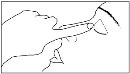
Keep the affected eye closed and press the tip of your finger against the tear duct of the closed eye, holding for 1 minute. This is important because it reduces the amount of drug passing into the rest of your body.
If you use more Netenax than you should
Overdose cases have never been reported with the use of this medicine.
If accidentally more drops are instilled than recommended, it is unlikely that you will experience any problems. Apply the next dose as scheduled.
In case of overdose or accidental ingestion, consult your doctor, pharmacist, or contact the Toxicology Information Service immediately at telephone 91 562 04 20, indicating the medicine and the amount taken.
If you forget to use Netenax
Do not use a double dose to make up for forgotten doses.
If you stop using Netenax
If you have any further questions about the use of this medicine, ask your doctor, pharmacist, or nurse.
If you use Netenax with other eye medicines
If you are using any other eye medication, you should wait 5 minutes between using one medicine and another.
Eye ointments should be used last.
4. Possible adverse effects
Like all medicines, this medicine may cause adverse effects, although not everyone will experience them. Most people treated with this eye drop do not experience any side effects.
The following side effects have occurred with netilmicin. Frequency is unknown (cannot be estimated from the available data):
- eye irritation
- redness of the eyes
- eyelid rash
- swelling of the eyelid
- itching of the eyes
- allergic reaction
- hives
Reporting of adverse effects
If you experience any type of adverse effect, consult your doctor or pharmacist, even if it is a possible adverse effect not listed in this leaflet. You may also report them directly via the Spanish Pharmacovigilance System for Human Medicines: https://www.notificaram.es. By reporting adverse effects, you can help provide more information on the safety of this medicine.
5. Storage of Netenax
Keep this medicine out of the sight and reach of children.
Do not use this medicine after the expiry date stated on the label and the carton after EXP. The expiry date refers to the last day of the month indicated for the product when unopened and properly stored.
This medicine can be used for up to 28 days after first opening.
Do not store above 25°C.
Keep the bottle in the outer packaging to protect it from light.
Medicines must not be disposed of via wastewater or household waste. Instead, dispose of containers and unused medicines at the SIGRE point in your pharmacy. If in doubt, please ask your pharmacist how to dispose of containers and unused medicines. This will help protect the environment.
6. Contents of the pack and other information
Composition of Netenax
- The active substance is netilmicin. Each ml of solution contains 3 mg of netilmicin (as netilmicin sulfate).
- The other components are sodium chloride, benzalkonium chloride, sodium hydroxide (for pH adjustment), purified water.
Appearance of the product and contents of the container
Netenax is a clear, colourless or pale yellow solution contained in a 5 ml bottle supplied within a cardboard box.
Marketing Authorization Holder and Manufacturer
SIFI S.p.A.
Via Ercole Patti 36
95025 Aci Sant'Antonio (CT)
Italy
Local representative:
Faes Farma, S.A.
Autonomia Etorbidea, 10
48940 Leioa (Bizkaia)
Spain
Date of the most recent revision of this leaflet: November 2019
Detailed and up-to-date information on this medicinal product is available on the website of the Spanish Agency of Medicines and Medical Devices (AEMPS) http://www.aemps.es