Neparvis 97 mg/103 mg film-coated tablets
Spain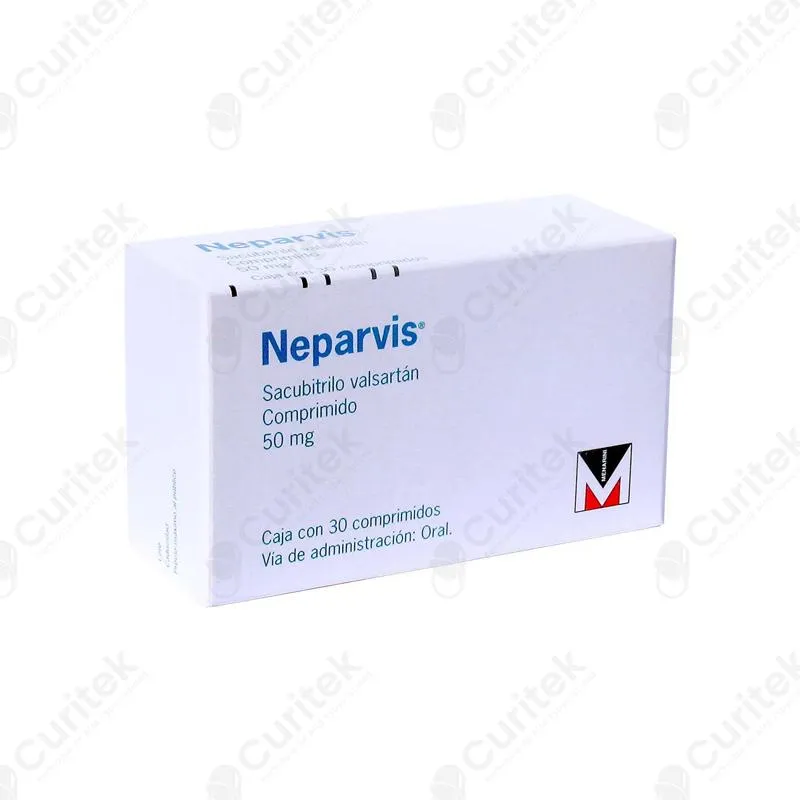
Table of Contents
Package leaflet: Information for the user
Introduction
Package leaflet: information for the patient
Neparvis 24 mg/26 mg film-coated tablets
Neparvis 49 mg/51 mg film-coated tablets
Neparvis 97 mg/103 mg film-coated tablets
sacubitril/valsartan
Read the entire leaflet carefully before you start taking this medicine, because it contains important information for you.
- Keep this leaflet. You may need to read it again.
- If you have any questions, ask your doctor, pharmacist, or nurse.
- This medicine has been prescribed for you only. Do not pass it on to others. It may harm them, even if their symptoms are the same as yours.
- If you experience any side effects, talk to your doctor or pharmacist, even if they are side effects not listed in this leaflet. See section 4.
Leaflet contents
- What Neparvis is and what it is used for
- What you need to know before taking Neparvis
- How to take Neparvis
- Possible side effects
- How to store Neparvis
- Contents of the pack and other information
1. What Neparvis is and what it is used for
Neparvis is a heart medication that contains a neprilysin inhibitor and an angiotensin receptor blocker. It provides two active substances, sacubitril and valsartan.
Neparvis is used to treat a type of heart failure in adults, children, and adolescents (from one year of age).
This type of heart failure occurs when the heart is weak and cannot pump enough blood to the lungs and the rest of the body. The most common symptoms of heart failure are shortness of breath, fatigue, tiredness, and swelling of the ankles.
2. What you need to know before taking Neparvis
Do not take Neparvis
- if you are allergic to sacubitril, valsartan, or any of the other ingredients of this medicine (listed in section 6).
- if you are taking another type of medicine called angiotensin-converting enzyme (ACE) inhibitors (for example enalapril, lisinopril, or ramipril), which are used to treat high blood pressure or heart failure. If you have been taking ACE inhibitors, wait 36 hours after taking your last dose before starting Neparvis (see “Other medicines and Neparvis”).
- if you have ever had a reaction called angioedema (rapid swelling under the skin in areas such as the face, throat, arms, and legs, which can be life-threatening if swelling in the throat blocks the airway) when taking an ACE inhibitor or angiotensin receptor antagonists (ARA) (such as valsartan, telmisartan, or irbesartan).
- if you have had hereditary angioedema or angioedema of unknown cause (idiopathic).
- if you have diabetes or impaired kidney function and are being treated with a blood pressure-lowering medicine containing aliskiren (see “Other medicines and Neparvis”).
- if you have severe liver disease.
- if you are more than 3 months pregnant (see “Pregnancy and breastfeeding”).
If you are in any of these situations, do not take Neparvis and speak with your doctor.
Warnings and precautions
Talk to your doctor, pharmacist, or nurse before starting or while taking Neparvis:
- if you are being treated with an angiotensin receptor antagonist (ARA) or aliskiren (see “Do not take Neparvis”).
- if you have ever had angioedema (see “Do not take Neparvis” and section 4 “Possible side effects”).
- if you experience abdominal pain, nausea, vomiting, or diarrhea after taking Neparvis. Your doctor will decide whether to continue treatment. Do not stop taking Neparvis on your own.
- if you have low blood pressure or are taking any other medicine that lowers your blood pressure (for example, a medicine that increases urine production (diuretic)), or if you have vomiting or diarrhea, especially if you are over 65 years old, or if you have liver disease and low blood pressure.
- if you have kidney disease.
- if you are dehydrated.
- if the arteries to your kidneys are narrowed.
- if you have renal disease.
- if you experience hallucinations, paranoia, or changes in sleep patterns while taking Neparvis.
- if you have hyperkalemia (high levels of potassium in the blood).
- if you suffer from heart failure classified as NYHA IV (inability to carry out any physical activity without discomfort and may experience symptoms even at rest).
If you are in any of these situations, speak with your doctor, pharmacist, or nurse before taking Neparvis.
Your doctor may check the levels of potassium and sodium in your blood at regular intervals during treatment with Neparvis. Additionally, your doctor may monitor your blood pressure at the start of treatment and when doses are increased.
Children and adolescents
Do not give this medicine to children under 1 year of age, as it has not been studied in this age group. For children aged 1 year and older with a body weight below 40 kg, this medicine will be administered as granules (instead of tablets).
Taking Neparvis with other medicines
Tell your doctor, pharmacist, or nurse if you are taking, have recently taken, or might need to take any other medicines. It may be necessary to adjust doses, take additional precautions, or even stop taking one of the medicines. This is especially important for the following medicines:
- ACE inhibitors. Do not take Neparvis with ACE inhibitors. If you have been taking an ACE inhibitor, wait 36 hours after taking your last dose of the ACE inhibitor before starting Neparvis (see “Do not take Neparvis”). If you stop taking Neparvis, wait 36 hours after taking your last dose of Neparvis before starting an ACE inhibitor.
- other medicines used to treat heart failure or lower blood pressure, such as angiotensin receptor antagonists or aliskiren.
- certain medicines known as statins used to lower high cholesterol levels (e.g., atorvastatin).
- sildenafil, tadalafil, vardenafil, or avanafil, which are medicines used to treat erectile dysfunction or pulmonary hypertension.
- medicines that increase potassium levels in the blood. This includes potassium supplements, salt substitutes containing potassium, potassium-sparing medicines, and heparin.
- a type of painkillers called non-steroidal anti-inflammatory drugs (NSAIDs) or selective cyclooxygenase-2 (Cox-2) inhibitors. If you are taking one of these medicines, your doctor may want to check your kidney function when starting or adjusting your treatment (see “Warnings and precautions”).
- lithium, a medicine used to treat certain psychiatric conditions.
- furosemide, which belongs to a group of medicines called diuretics, used to increase the amount of urine you produce.
- nitroglycerin, a medicine used to treat angina pectoris.
- certain types of antibiotics (rifamycin group), cyclosporine (used to prevent rejection of transplanted organs), or antivirals such as ritonavir (used to treat HIV/AIDS).
- metformin, a medicine used to treat diabetes.
If you are in any of these situations, speak with your doctor or pharmacist before taking Neparvis.
Pregnancy and breastfeeding
If you are pregnant or breastfeeding, think you may be pregnant, or plan to become pregnant, consult your doctor or pharmacist before using this medicine.
Pregnancy
Inform your doctor if you think you are (or might become) pregnant. Your doctor will usually advise you to stop taking this medicine before becoming pregnant or as soon as you know you are pregnant, and will recommend an alternative medicine instead of Neparvis.
This medicine is not recommended during early pregnancy and must not be taken after the first 3 months of pregnancy, as it may cause serious harm to your baby if used beyond the third month of pregnancy.
Breastfeeding
Neparvis is not recommended for breastfeeding mothers. Inform your doctor if you are breastfeeding or about to start breastfeeding.
Driving and using machines
Before driving a vehicle, using tools, operating machinery, or engaging in other activities requiring concentration, make sure you know how Neparvis affects you. If you feel dizzy or very tired while taking this medicine, do not drive a vehicle, ride a bicycle, or use machinery.
Neparvis contains sodium
This medicine contains less than 1 mmol of sodium (23 mg) per 97 mg/103 mg dose; therefore, it is essentially “sodium-free”.
3. How to take Neparvis
Follow exactly the instructions for using this medicine as given by your doctor or pharmacist. If in doubt, please consult your doctor or pharmacist again.
Adults
You will usually start by taking one tablet of 24 mg/26 mg or 49 mg/51 mg twice daily (one tablet in the morning and one tablet in the evening). Your doctor will decide your exact starting dose based on which medicine you have previously been taking and your blood pressure. Your doctor will then adjust the dose every 2–4 weeks, depending on how you respond to treatment, until the best dose for you is found.
The recommended target dose is 97 mg/103 mg twice daily (one tablet in the morning and one tablet in the evening).
Children and adolescents (one year and older)
Your doctor (or your child’s doctor) will decide the initial dose based on body weight and other factors, including any previous medications taken. The doctor will adjust the dose every 2–4 weeks until the best dose is found.
Neparvis should be taken twice daily (one tablet in the morning and one tablet in the evening).
Neparvis film-coated tablets must not be used in children weighing less than 40 kg. For these patients, Neparvis granules are available.
Patients taking Neparvis may develop low blood pressure (dizziness, feeling lightheaded), high potassium levels in the blood (which may be detected during blood tests performed by your doctor), or reduced kidney function. If this occurs, your doctor may reduce the dose of any other medicines you are taking, temporarily reduce the dose of Neparvis, or completely stop your treatment with Neparvis.
Swallow the tablets with a glass of water. You may take Neparvis with or without food. It is not recommended to split or crush the tablets.
If you take more Neparvis than you should
If you have accidentally taken too many Neparvis tablets, or if someone else has taken your tablets, contact your doctor immediately. If you experience severe dizziness and/or fatigue, inform your doctor as soon as possible and lie down.
If you forget to take Neparvis
It is recommended that you take your medicine at the same time each day. However, if you forget to take Neparvis, simply take the next dose at the scheduled time. Do not take a double dose to make up for forgotten doses.
If you stop taking Neparvis
If you stop treatment with Neparvis, your condition may worsen. Do not stop taking this medicine unless instructed by your doctor.
If you have any further questions about the use of this medicine, ask your doctor or pharmacist.
4. Possible adverse effects
Like all medicines, this medicine can cause adverse effects, although not everyone experiences them.
Some adverse effects may be serious
- Stop taking Neparvis and seek immediate medical attention if you notice swelling of the face, lips, tongue and/or throat, which may cause difficulty breathing or swallowing. These could be signs of angioedema (an uncommon adverse effect that may affect up to 1 in 100 people).
Other possible adverse effects:
If any of the adverse effects listed below become severe, inform your doctor or pharmacist.
Very common (may affect more than 1 in 10 people)
- low blood pressure, which may cause symptoms such as dizziness and lightheadedness (hypotension)
- high levels of potassium in the blood, detected in blood tests (hyperkalaemia)
- reduced kidney function (renal impairment).
Common (may affect up to 1 in 10 people)
- cough
- dizziness
- diarrhoea
- low red blood cell count, detected in a blood test (anaemia)
- tiredness (fatigue)
- sudden inability of the kidney to function properly (acute renal failure)
- low level of potassium in the blood, detected in a blood test (hypokalaemia)
- headache
- fainting (syncope)
- weakness (asthenia)
- feeling sick (nausea)
- low blood pressure (dizziness, lightheadedness) when moving from sitting or lying down to standing
- gastritis (stomach pain, nausea)
- sensation of spinning (vertigo)
- low blood sugar level, detected in a blood test (hypoglycaemia)
Uncommon (may affect up to 1 in 100 people)
- allergic reaction with rash and itching (hypersensitivity)
- dizziness when changing position from sitting to standing (postural dizziness)
- low level of sodium in the blood, detected in a blood test (hyponatraemia)
Rare (may affect up to 1 in 1,000 people)
- seeing, hearing or feeling things that are not there (hallucinations)
- changes in sleep pattern (sleep disorder)
Very rare (may affect up to 1 in 10,000 people)
-
paranoia
-
Intestinal angioedema: swelling in the intestine accompanied by symptoms such as abdominal pain, nausea, vomiting and diarrhoea
Frequency not known (cannot be estimated from the available data)
- involuntary muscle jerks (myoclonus)
Reporting of adverse effects
If you experience any type of adverse effect, talk to your doctor, pharmacist or nurse, even if it is a possible adverse effect not listed in this leaflet. You can also report them directly through the national reporting system detailed in Appendix V. By reporting adverse effects, you can help provide more information on the safety of this medicine.
5. Storage of Neparvis
Keep this medicine out of the sight and reach of children.
Do not use this medicine after the expiry date stated on the packaging and blister after CAD/EXP. The expiry date refers to the last day of the month indicated.
This medicine does not require any special storage temperature conditions.
Store in the original packaging to protect it from moisture.
Do not use this medicine if you notice that the packaging is damaged or shows signs of tampering.
Medicines must not be disposed of via wastewater or household waste. Ask your pharmacist how to properly dispose of unused medicines and their packaging. This will help protect the environment.
6. Contents of the pack and other information
Composition of Neparvis
-
The active substances are sacubitril and valsartan.
-
Each 24 mg/26 mg film-coated tablet contains 24.3 mg of sacubitril and 25.7 mg of valsartan (as a salt complex of sacubitril, valsartan and sodium).
-
Each 49 mg/51 mg film-coated tablet contains 48.6 mg of sacubitril and 51.4 mg of valsartan (as a salt complex of sacubitril, valsartan and sodium).
-
Each 97 mg/103 mg film-coated tablet contains 97.2 mg of sacubitril and 102.8 mg of valsartan (as a salt complex of sacubitril, valsartan and sodium).
-
The other components in the tablet core are microcrystalline cellulose, low-substituted hydroxypropylcellulose, crospovidone, magnesium stearate, talc and colloidal silicon dioxide (see end of section 2 under ‘Neparvis contains sodium’).
-
The coatings of the 24 mg/26 mg and 97 mg/103 mg tablets contain hypromellose, titanium dioxide (E171), Macrogol (4000), talc, red iron oxide (E172) and black iron oxide (E172).
-
The coating of the 49 mg/51 mg tablets contains hypromellose, titanium dioxide (E171), Macrogol (4000), talc, red iron oxide (E172) and yellow iron oxide (E172).
Appearance of the product and contents of the pack
Neparvis 24 mg/26 mg film-coated tablets are violet-white, oval tablets with the inscription “NVR” on one side and “LZ” on the other. Approximate tablet dimensions are 13.1 mm x 5.2 mm.
Neparvis 49 mg/51 mg film-coated tablets are pale yellow, oval tablets with the inscription “NVR” on one side and “L1” on the other. Approximate tablet dimensions are 13.1 mm x 5.2 mm.
Neparvis 97 mg/103 mg film-coated tablets are light pink, oval tablets with the inscription “NVR” on one side and “L11” on the other. Approximate tablet dimensions are 15.1 mm x 6.0 mm.
The tablets are supplied in packs containing 14, 20, 28 or 56 tablets and in multiple packs containing 7 packs, each with 28 tablets. The 49 mg/51 mg and 97 mg/103 mg tablets are also available in multiple packs containing 3 packs, each with 56 tablets.
Only certain pack sizes may be marketed.
Marketing Authorisation Holder
Novartis Europharm Limited
Vista Building
Elm Park, Merrion Road
Dublin 4
Ireland
Manufacturer
Novartis Pharmaceutical Manufacturing LLC
Verovskova Ulica 57
1000 Ljubljana
Slovenia
Novartis Farma S.p.A
Via Provinciale Schito 131
80058 Torre Annunziata (NA)
Italy
Novartis Pharma GmbH
Roonstrasse 25
90429 Nuremberg
Germany
LEK farmacevtska družba d. d., Poslovna enota PROIZVODNJA LENDAVA
Trimlini 2D
Lendava 9220
Slovenia
Novartis Pharma GmbH
Sophie-Germain-Strasse 10
90443 Nürnberg
Germany
For further information about this medicinal product, please contact the local representative of the Marketing Authorisation Holder:
Belgium/Belgium/Belgium Novartis Pharma N.V. Tel/Tel: +32 2 246 16 11 | Lithuania SIA „Novartis Baltics“ Lietuvos filialas Tel: +370 5 269 16 50 |
| Luxembourg/Luxembourg Novartis Pharma N.V. Tel/Tel: +32 2 246 16 11 |
Czech Republic Novartis s.r.o. Tel: +420 225 775 111 | Hungary Novartis Hungária Kft. Tel.: +36 1 457 65 00 |
Denmark Novartis Healthcare A/S Tlf.: +45 39 16 84 00 | Malta Novartis Pharma Services Inc. Tel: +356 2122 2872 |
Germany Novartis Pharma GmbH Tel: +49 911 273 0 | Netherlands Novartis Pharma B.V. Tel: +31 88 04 52 111 |
Estonia SIA Novartis Baltics Eesti filiaal Tel: +372 66 30 810 | Norway Novartis Norge AS Tlf: +47 23 05 20 00 |
Greece Novartis (Hellas) A.E.B.E. Tel: +30 210 281 17 12 | Austria Novartis Pharma GmbH Tel: +43 1 86 6570 |
Spain Laboratorios Farmacéuticos ROVI, S.A. Tel: +34 91 375 62 30 | Poland Novartis Poland Sp. z o.o. Tel.: +48 22 375 4888 |
France Novartis Pharma S.A.S. Tél: +33 1 55 47 66 00 | Portugal Servier Portugal - Especialidades Farmacêuticas, Lda. Tel: +351 21 312 2000 |
Croatia Novartis Hrvatska d.o.o. Tel. +385 1 6274 220 | Romania Novartis Pharma Services Romania SRL Tel: +40 21 31299 01 |
Ireland Novartis Ireland Limited Tel: +353 1 260 12 55 | Slovenia Novartis Pharma Services Inc. Tel: +386 1 300 75 50 |
Iceland Vistor hf. Sími: +354 535 7000 | Slovakia Novartis Slovakia s.r.o. Tel: +421 2 5542 5439 |
Italy Novartis Farma S.p.A. Tel: +39 02 96 54 1 | Finland Novartis Finland Oy Puh/Tel: +358 (0)10 6133 200 |
Cyprus Novartis Pharma Services Inc. Tel: +357 22 690 690 | Sweden Novartis Sverige AB Tel: +46 8 732 32 00 |
Latvia SIA Novartis Baltics Tel: +371 67 887 070 |
Date of the most recent review of this leaflet:
Other sources of information
Detailed information on this medicinal product is available on the website of the European Medicines Agency: https://www.ema.europa.eu.