Multibic 2 mmol/L potassium solution for hemodialysis and hemofiltration
Spain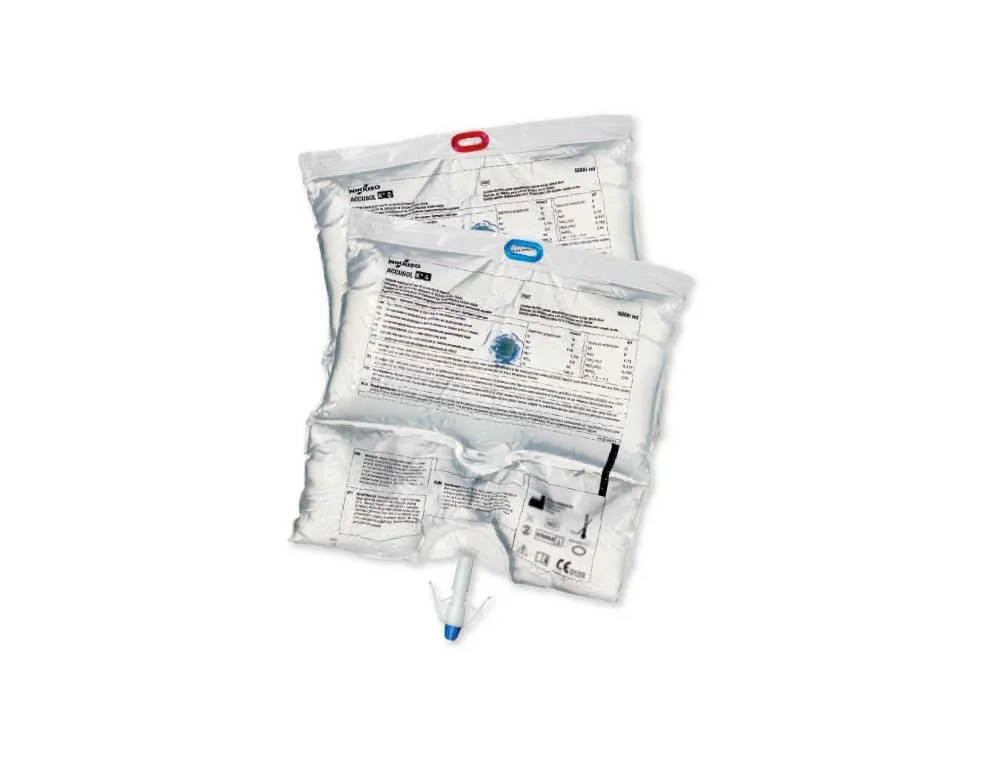
Table of Contents
- Package leaflet: Information for the user
- Introduction
- 1. What multiBic 2 mmol/l potassium is and what it is used for
- 2. What you need to know before starting to use multiBic 2 mmol/l potassium
- 3. How to use multiBic 2 mmol/l potassium
- 4. Possible adverse effects
- 5. Storage of multiBic 2 mmol/l potassium
- 6. Contents of the pack and other information
Package leaflet: Information for the user
Introduction
Package leaflet: information for the user
multiBic 2 mmol/l potassium solution for hemodialysis and hemofiltration
Read all of this leaflet carefully before you start using this medicine because it contains important information for you.
- Keep this leaflet. You may need to read it again.
- If you have any questions, ask your doctor or nurse.
- If you experience any adverse reactions, talk to your doctor or nurse, even if it is an adverse reaction not listed in this leaflet. See section 4.
Contents of the leaflet
- What multiBic 2 mmol/l potassium is and what it is used for
- What you need to know before using multiBic 2 mmol/l potassium
- How to use multiBic 2 mmol/l potassium
- Possible adverse effects
- How to store multiBic 2 mmol/l potassium
Contents of the container and additional information
1. What multiBic 2 mmol/l potassium is and what it is used for
multiBic 2 mmol/l potassium is a continuous renal replacement therapy solution for removing waste products from the body in people with kidney disease. It is used in patients with renal injury and also for the treatment of poisonings. The type of solution administered depends on the amount of potassium (a salt) in the blood. Your doctor will monitor your potassium levels regularly.
2. What you need to know before starting to use multiBic 2 mmol/l potassium
Do not use multiBic 2 mmol/l potassium if
- you are allergic to the active substances or to any of the other components of this medicine (listed in section 6).
- you have hypokalemia (your potassium levels are too low).
- you suffer from metabolic alkalosis (when you have too much bicarbonate in your blood).
- you cannot achieve sufficient blood flow through the hemofilter (filter used in blood filtration).
- you have a high risk of bleeding related to the medications required to prevent clotting in the hemofilter.
Warnings and precautions
Talk to your doctor before starting to use multiBic 2 mmol/l potassium
- Do not use before mixing the two solutions in a dual-chamber bag (two compartments).
- Must not be used if the solution temperature is below room temperature.
- The administration tubing used for delivering the ready-to-use solution must be inspected every 30 minutes.
If a precipitate (solid material) is observed within these tubing lines, the bags and tubing must be replaced immediately, and the patient must be carefully monitored.
- Your doctor will monitor your hydration status (amount of water in your body), levels of potassium, sodium, other salts, certain waste products, and blood sugar levels. Your doctor may also give you advice regarding your diet.
Children
The use of multiBic 2 mmol/l potassium has not been established in children.
Use of multiBic 2 mmol/l potassium with other medicines
Tell your doctor if you are taking, have recently taken, or might need to take any other medicines.
The following interactions may occur:
- Toxic effects of digitalis (medicines used to treat heart conditions).
- Electrolyte replacement, parenteral nutrition (intravenous feeding), and other infusion therapies. When using this therapy, its effect on serum blood concentration and fluid status must be taken into account.
- This therapy may reduce blood concentrations of certain medicines. A dose adjustment may be necessary.
Pregnancy and breastfeeding
If you are pregnant or breastfeeding, think you may be pregnant, or plan to become pregnant, consult your doctor before using this medicine.
There are no data or data are limited regarding the use of multiBic 2 mmol/l potassium in pregnant and breastfeeding women.
This medicine should only be used during pregnancy if your doctor considers treatment necessary.
Breastfeeding is not recommended during treatment with multiBic 2 mmol/l potassium.
3. How to use multiBic 2 mmol/l potassium
multiBic 2 mmol/l potassium will be administered to you in a hospital or clinic. Your doctor knows how to use this medicine.
If you have any further questions about the use of this medicine, ask your doctor.
4. Possible adverse effects
Like all medicines, this medicine may cause adverse effects, although not everyone experiences them.
Adverse effects of multiBic 2 mmol/l potassium include:
- nausea
- vomiting
- muscle cramps
- changes in blood pressure
Some adverse effects may be caused by having too much fluid or too little fluid. These include:
- difficulty breathing
- swelling of the ankles and legs
- dehydration (e.g., dizziness, muscle cramps, feeling thirsty)
- blood disorders (e.g., abnormal salt concentrations in the blood)
The exact frequency of these events is unknown (cannot be estimated from the available data).
Reporting of adverse effects
If you experience any type of adverse effect, consult your doctor or pharmacist, even if it is a possible adverse effect not listed in this leaflet. You may also report them directly through the Spanish Pharmacovigilance System for Human Medicines: www.notificaRAM.es. By reporting adverse effects, you can help provide more information on the safety of this medicine.
5. Storage of multiBic 2 mmol/l potassium
Keep this medicine out of the sight and reach of children.
Do not store below 4 °C.
Storage conditions after mixing the two compartments:
The ready-to-use solution must not be stored above 30 °C and should be used within 48 hours.
Do not use this medicine after the expiry date stated on the packaging after EXP. The expiry date refers to the last day of the month indicated.
6. Contents of the pack and other information
Composition of multiBic 2 mmol/l potassium
-
The active substances are potassium chloride, sodium chloride, sodium bicarbonate, calcium chloride, magnesium chloride hexahydrate and glucose monohydrate.
-
The other components are water for injections, 25% hydrochloric acid, carbon dioxide, and disodium hydrogen phosphate dihydrate.
Appearance of the product and contents of the pack
multiBic 2 mmol/l potassium is available in a dual-chamber bag (two compartments containing different solutions). Mixing the solutions from the two compartments produces the ready-to-use solution.
Each bag contains a total of 5,000 ml of solution. The ready-to-use solution is clear and colourless.
Each bag is equipped with an HF connector, a Luer lock connector, an injection port, and is covered with a protective foil.
Pack size:
2 bags of 5,000 ml
Marketing Authorization Holder and Manufacturer
Marketing Authorization Holder
Fresenius Medical Care Deutschland GmbH, Else-Kröner-Straße 1, 61352 Bad Homburg v.d.H., Germany
Manufacturer
Fresenius Medical Care Deutschland GmbH, Frankfurter Straße 6-8, 66606 St. Wendel, Germany
Local Representative
Fresenius Medical Care España S.A.
C/ Ronda de Poniente, 8, planta baja, Parque Empresarial Euronova,
28760 Tres Cantos (Madrid)
Spain
Date of the most recent revision of this summary: March 2025
Detailed and up-to-date information on this medicinal product is available on the website of the Spanish Agency of Medicines and Medical Devices (AEMPS) http://www.aemps.gob.es/.
Information intended exclusively for healthcare professionals, see end of this summary.
The following information is intended exclusively for healthcare professionals:
1,000 ml of ready-to-use solution contains:
Potassium chloride | 0.1491 g |
Sodium chloride | 6.136 g |
Sodium bicarbonate | 2.940 g |
Calcium chloride dihydrate | 0.2205 g |
Magnesium chloride hexahydrate | 0.1017 g |
Glucose monohydrate | 1.100 g |
(Glucose) | (1.000 g) |
K+ | 2.0 mmol/l |
Na+ | 140 mmol/l |
Ca2+ | 1.5 mmol/l |
Mg2+ | 0.50 mmol/l |
Cl- | 111 mmol/l |
HCO3- | 35 mmol/l |
Glucose | 5.55 mmol/l |
pH ≈ 7.4
Theoretical osmolarity: 296 mOsm/L
Do not use if the solution is not clear and colorless, or if the bag or connectors are damaged.
For single use only. Any unused solution remaining must be discarded.
Use only via an integrated pump within the extracorporeal blood purification device.
Instructions for use
Hemodialysis and hemofiltration solution must be administered in three steps:
- Removal of the overwrap and careful inspection of the bag
The overwrap must be removed only immediately before administration.
Plastic containers may occasionally be damaged during transport from the manufacturing site to the clinic or within the clinic itself. This may lead to contamination and microbial or fungal growth in the solution. Therefore, careful visual inspection of the bag and solution must be performed before use. Particular attention must be paid to even minor defects in the closure, seals, and edges of the bag.
- Mixing of the two compartments
The two solutions must be mixed immediately before use to obtain the ready-to-use solution.
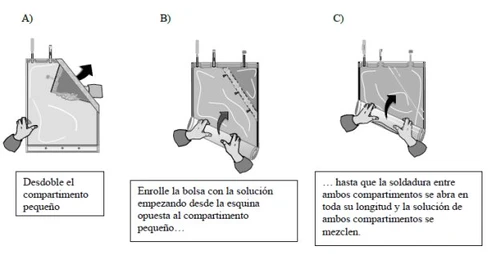
After both compartments have been mixed, it must be verified that the seal is fully open, that the solution is clear and colorless, and that the container does not leak.
- Administration of the ready-to-use solution
The ready-to-use solution must be used immediately and within 48 hours after mixing.
Any addition to the ready-to-use solution must only be performed after the ready-to-use solution has been completely mixed. After an addition has been made, the ready-to-use solution must be thoroughly mixed again before use.
Addition of sodium chloride solution (up to 30%) or alternatively water for injections is compatible with this medicinal product and may be used to adjust the sodium concentration if necessary to limit the rate of sodium concentration changes in cases of severe hypernatremia or hyponatremia. For further details, see the Summary of Product Characteristics.
Unless otherwise prescribed, the ready-to-use solution must be warmed immediately before infusion to 36.5°C – 38.0°C. The exact temperature should be selected according to clinical requirements and the technical equipment used.