MuciBrón 3 mg/ml oral solution
Spain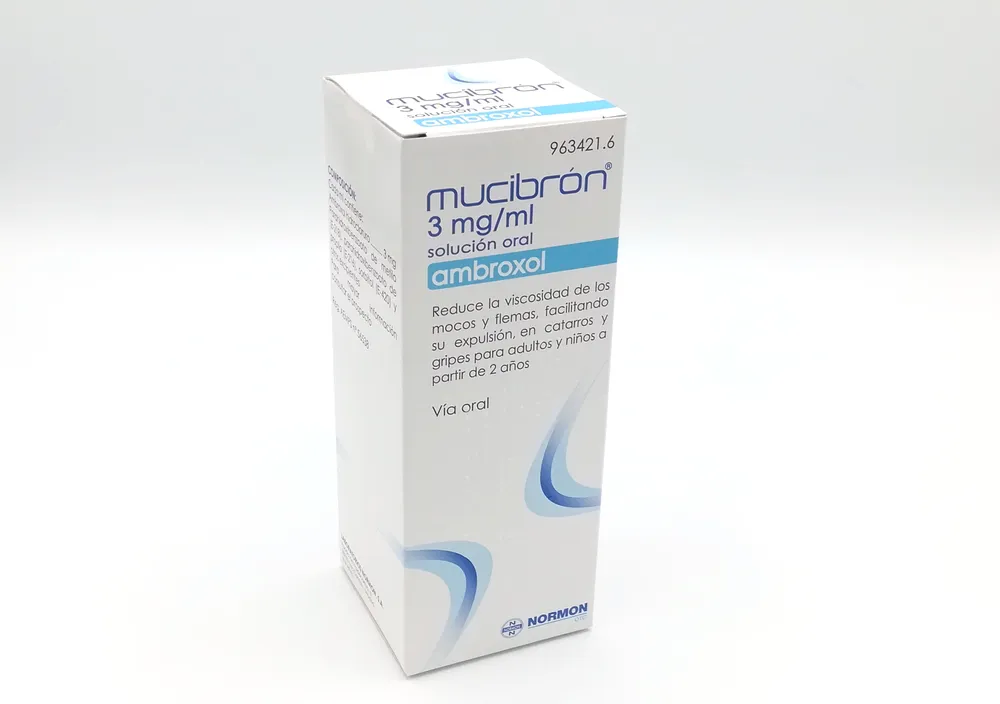
Table of Contents
- Patient Information Leaflet
- Introduction
- 1. What Mucibrón is and what it is used for
- 2. What you need to know before taking mucibrón
- 3. How to take mucibrón
- 4. Possible adverse effects
- 5. Storage of Mucibrón
- Medicines should not be disposed of via drains or with household waste. Dispose of unused medicines and their packaging at the SIGRE Point in your pharmacy. If in doubt, ask your pharmacist how to properly dispose of medicines and packaging you no longer need. This way, you will help protect the environment.
- 6. Contents of the container and additional information
- The active substance is ambroxol hydrochloride. Each ml of solution contains 3 mg of ambroxol hydrochloride.
- The other components (excipients) are: Tartaric acid, citric acid monohydrate, disodium edetate, hydroxyethylcellulose, methylparaben (E-218), propylparaben (E-216), sodium citrate, sorbitol (E-420), strawberry flavour (containing glucose in maltodextrin from maize and benzyl alcohol) and purified water.
Patient Information Leaflet
Introduction
Patient Information Leaflet
Mucibrón 3 mg/ml
oral solution
Ambroxol hydrochloride
Read this entire leaflet carefully before you start taking this medicine, as it contains important information for you.
Follow exactly the instructions for use provided in this leaflet or those given by your pharmacist.
- Keep this leaflet, as you may need to read it again.
- If you need advice or further information, consult your pharmacist.
- If you experience any adverse effects, consult your doctor or pharmacist, even if they are not listed in this leaflet.
If symptoms worsen or persist after 5 days of treatment, or if fever, skin rashes, persistent headache or sore throat occur, you should consult a doctor.
Contents of this leaflet
- What Mucibrón is and what it is used for
- What you need to know before taking Mucibrón
- How to take Mucibrón
- Possible side effects
- Storage of Mucibrón
- Contents of the pack and other information
1. What Mucibrón is and what it is used for
Mucibrón belongs to a group of medicines called mucolytics.
The active substance in this medicine, ambroxol, works by reducing the viscosity of mucus, making it less thick and easier to expel.
It reduces the viscosity of mucus and phlegm, facilitating its elimination in colds and flu in adults and children from 2 years of age.
You should consult a doctor if your condition worsens or does not improve after 5 days of treatment.
2. What you need to know before taking mucibrón
Do not take mucibrón
If you are allergic to ambroxol or to any of the other components of this medicine (listed in section 6).
Warnings and precautions
Talk to your doctor or pharmacist before taking mucibrón.
Reports of serious skin reactions associated with ambroxol administration have been received. If you develop a skin rash (including lesions of mucous membranes such as in the mouth, throat, nose, eyes, and genitals), stop using mucibrón and consult your doctor immediately. If you have problems with bronchial function, you should avoid taking mucolytics.
If you have liver or kidney problems, or a history of stomach or duodenal ulcer, consult your doctor before using this medicine, as your dose may need to be reduced.
Patients with known histamine intolerance should avoid treatment with this medicine during prolonged treatment periods. Symptoms of intolerance include headache, rhinitis, and itching.
Interaction of mucibrón with other medicines
Inform your doctor or pharmacist if you are taking, have recently taken, or might need to take any other medicines.
Concomitant use of this medicine with cough suppressants (antitussives) may lead to accumulation of pulmonary secretions due to reduced cough reflex.
Administration of this medicine together with antibiotics (amoxicillin, cefuroxime, erythromycin, doxycycline) increases the concentration of the antibiotic in lung tissue.
Interaction of mucibrón with food and drink
This medicine should not be taken with meals and should be taken with a glass of water. Drinking more fluids may enhance the effect of this medicine.
Pregnancy, breastfeeding and fertility
If you are pregnant or breastfeeding, think you may be pregnant, or are planning to become pregnant, consult your doctor or pharmacist before using this medicine.
Ambroxol will only be used during pregnancy, especially during the first trimester, if specifically prescribed by your doctor.
Breastfeeding mothers should only take this medicine if instructed by their doctor.
Driving and use of machines
No effects on the ability to drive or operate machinery have been observed.
Mucibrón contains sorbitol
This medicine contains 350 mg of sorbitol (E-420) per millilitre of oral solution.
Sorbitol is a source of fructose. If your doctor has informed you (or your child) that you have an intolerance to certain sugars, or if you (or your child) have been diagnosed with hereditary fructose intolerance (HFI), a rare genetic disorder in which the body cannot break down fructose, consult your doctor before taking this medicine.
Sorbitol may cause gastrointestinal discomfort and a mild laxative effect.
Mucibrón contains methylparahydroxybenzoate and propylparahydroxybenzoate
May cause allergic reactions (possibly delayed) as it contains methylparahydroxybenzoate (E-218) and propylparahydroxybenzoate (E-216).
Mucibrón contains benzyl alcohol
This medicine contains 0.00012 mg of benzyl alcohol per millilitre of oral solution.
Benzyl alcohol may cause allergic reactions.
Consult your doctor or pharmacist if you are pregnant or breastfeeding. This is because large amounts of benzyl alcohol may accumulate in your body and cause adverse effects (metabolic acidosis).
Consult your doctor or pharmacist if you have liver or kidney disease. This is because large amounts of benzyl alcohol may accumulate in the body and cause adverse effects (metabolic acidosis).
Benzyl alcohol has been associated with the risk of serious adverse effects, including respiratory problems ("gasping syndrome"), in children.
Do not administer this medicine to your newborn (up to 4 weeks of age) unless specifically recommended by your doctor.
This medicine should not be used for longer than one week in children under 3 years of age unless directed by your doctor or pharmacist.
Mucibrón contains sodium
This medicine contains less than 23 mg of sodium (1 mmol) per millilitre of oral solution; therefore, it is essentially "sodium-free".
3. How to take mucibrón
Follow exactly the dosage instructions provided in this leaflet or those given by your doctor or pharmacist. If in doubt, consult your pharmacist.
The recommended dose is:
Adults and adolescents aged 12 years and over:
The normal dose is 10 ml (30 mg), 3 times daily (every 8 hours).
Use in children
Children under 2 years of age
Contraindicated.
Children aged 2 to 5 years
The normal dose is 2.5 ml up to 3 times daily.
Children aged 6 to 12 years
The normal dose is 5 ml up to 3 times daily.
Patients with kidney and/or liver disease: If you have kidney and/or liver disease, your doctor may prescribe a lower than usual dose.
How to take:
This medicine is taken orally.
Measure the amount of medicine to take using the dosing device provided in the package. Drink directly from the dosing device and then take a glass of liquid (preferably water). After each dose, wash the dosing device.
Do not take with food.
If symptoms worsen or persist for more than 5 days of treatment, or if fever, skin rash, persistent headache, or sore throat occur, consult a doctor.
If you take more mucibrón than you should
If you take more medicine than you should, you may experience short-term restlessness and diarrhea.
Accidental or intentional overdose may cause increased salivation, nausea, vomiting, and low blood pressure.
In case of overdose or accidental ingestion, contact your doctor or pharmacist immediately, or call the Toxicology Information Service at telephone number 91 562 04 20, indicating the medicine and the amount ingested.
If you forget to take mucibrón:
Do not take a double dose to make up for the missed dose.
If symptoms persist, resume taking the medicine as indicated in section 3. How to take mucibrón.
If you have any further questions about the use of this medicine, ask your pharmacist.
4. Possible adverse effects
Like all medicines, Mucibrón may cause adverse effects, although not everyone experiences them.
Uncommon – may affect up to 1 in 100 patients: nausea, vomiting, stomach pain, fever.
Rare – may affect up to 1 in 1,000 people: hypersensitivity reactions, exanthema, urticaria.
Frequency not known (cannot be estimated from available data): anaphylactic reactions, such as anaphylactic shock, angioedema (rapidly progressive swelling of the skin, subcutaneous tissues, mucous membranes, or submucosal tissues), and pruritus. Serious cutaneous adverse reactions (such as erythema multiforme, Stevens-Johnson syndrome/toxic epidermal necrolysis, and acute generalized exanthematous pustulosis).
At the first sign of an allergic reaction, stop taking the medicine and consult your doctor or pharmacist.
If you experience any adverse effects, consult your doctor or pharmacist, even if they are adverse effects not listed in this leaflet.
Reporting of adverse effects
If you experience any type of adverse effect, consult your doctor, pharmacist, or nurse, even if it is a possible adverse effect not mentioned in this leaflet. You may also report them directly through the Spanish Pharmacovigilance System for Human Medicinal Products: https://www.notificaram.es. By reporting adverse effects, you can help provide more information on the safety of this medicine.
5. Storage of Mucibrón
Keep this medicine out of sight and reach of children.
Do not use this medicine after the expiry date stated on the packaging after EXP. The expiry date is the last day of the month indicated.
This medicine does not require any special storage conditions.
Medicines should not be disposed of via drains or with household waste. Dispose of unused medicines and their packaging at the SIGRE Point in your pharmacy. If in doubt, ask your pharmacist how to properly dispose of medicines and packaging you no longer need. This way, you will help protect the environment.
6. Contents of the container and additional information
Composition of Mucibrón
The active substance is ambroxol hydrochloride. Each ml of solution contains 3 mg of ambroxol hydrochloride.
The other components (excipients) are: Tartaric acid, citric acid monohydrate, disodium edetate, hydroxyethylcellulose, methylparaben (E-218), propylparaben (E-216), sodium citrate, sorbitol (E-420), strawberry flavour (containing glucose in maltodextrin from maize and benzyl alcohol) and purified water.
Appearance of the medicinal product and contents of the container
Mucibrón 3 mg/ml oral solution is presented as a solution. It is slightly viscous, transparent or slightly opalescent, practically colourless or slightly coloured, with a strawberry odour. Each container holds 200 ml in a topaz-coloured polyethylene terephthalate bottle. A dosing device is included with markings for: 2.5, 5, 7.5, 10 and 15 ml.
Marketing Authorisation Holder and Manufacturer
LABORATORIOS NORMON, S.A.
Ronda de Valdecarrizo, 6 – 28760 Tres Cantos – Madrid (SPAIN)
Date of the most recent revision of this leaflet: October 2021
Detailed and up-to-date information on this medicine is available on the website of the Spanish Agency for Medicines and Health Products (AEMPS) http://www.aemps.gob.es/