Micardis 80 mg tablets
Spain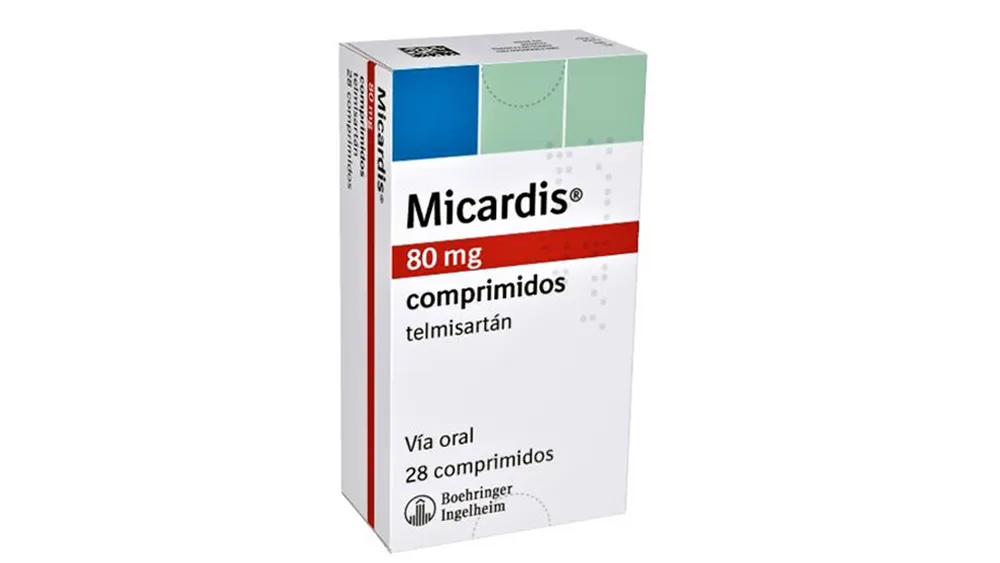
Table of Contents
Package leaflet: Information for the user
Introduction
Package leaflet: information for the user
Micardis 80 mg tablets
telmisartan
Read the entire leaflet carefully before you start taking this medicine, because it contains important information for you.
- Keep this leaflet, as you may need to read it again.
- If you have any questions, ask your doctor or pharmacist.
- This medicine has been prescribed for you only, and you should not give it to other people, even if they have the same symptoms as you, because it could harm them.
- If you experience any adverse effects, consult your doctor or pharmacist, even if they are effects not listed in this leaflet. See section 4.
Contents of the leaflet
- What Micardis is and what it is used for
- What you need to know before taking Micardis
- How to take Micardis
- Possible side effects
- How to store Micardis
- Contents of the pack and other information
1. What Micardis is and what it is used for
Micardis belongs to a class of medicines known as angiotensin II receptor blockers. Angiotensin II is a substance produced in your body that causes your blood vessels to narrow, thereby increasing your blood pressure. Micardis blocks the effect of angiotensin II, allowing your blood vessels to relax and thereby reducing your blood pressure.
Micardis is used to treat essential hypertension (high blood pressure) in adults. "Essential" means that the high blood pressure is not due to any other identifiable cause.
If left untreated, high blood pressure can damage blood vessels in various organs, which may eventually lead, in some cases, to heart attacks, heart or kidney failure, strokes, or blindness. High blood pressure generally does not cause symptoms before such damage occurs. Therefore, it is important to measure your blood pressure regularly to ensure it remains within the normal range.
Micardis is also used to reduce cardiovascular events (e.g., heart attacks or strokes) in adults who are at risk because their blood supply to the heart or legs is reduced or blocked, or who have had a stroke, or who are at high risk of developing diabetes. Your doctor will inform you if you are at high risk of such events.
2. What you need to know before taking Micardis
Do not take Micardis
-
if you are allergic to telmisartan or to any of the other ingredients of this medicine (listed in section 6).
-
if you are more than 3 months pregnant. (In any case, it is better to avoid taking Micardis also in early pregnancy – see Pregnancy section).
-
if you have severe liver problems such as cholestasis or biliary obstruction (problems with bile drainage from the liver and gallbladder) or any other severe liver disease.
-
if you have diabetes or kidney failure and are being treated with a blood pressure-lowering medicine containing aliskiren.
If any of the above apply to you, inform your doctor or pharmacist before starting Micardis.
Warnings and precautions
Talk to your doctor before starting Micardis if you are suffering from or have ever had any of the following conditions or diseases:
- Kidney disease or kidney transplant.
- Renal artery stenosis (narrowing of the blood vessels to one or both kidneys).
- Liver disease.
- Heart problems.
- High levels of aldosterone (water and salt retention in the body along with imbalance of several blood minerals).
- Low blood pressure (hypotension), which may occur if you are dehydrated (excessive loss of body water) or have salt depletion due to, for example, diuretic treatment, low-salt diet, diarrhoea or vomiting.
- High levels of potassium in the blood.
- Diabetes.
Talk to your doctor before starting Micardis:
-
if you are taking any of the following medicines used to treat high blood pressure (hypertension):
-
an angiotensin-converting enzyme inhibitor (ACE inhibitor) (e.g. enalapril, lisinopril, ramipril), particularly if you have kidney problems related to diabetes.
-
aliskiren.
Your doctor may monitor your kidney function, blood pressure and blood electrolyte levels (e.g. potassium) at regular intervals. See also information under the heading “Do not take Micardis”.
- if you are taking digoxin.
Talk to your doctor if you experience abdominal pain, nausea, vomiting or diarrhoea after taking Micardis. Your doctor will decide whether to continue treatment. Do not stop taking Micardis on your own.
You must inform your doctor if you think you are (or might become) pregnant. Use of Micardis is not recommended in early pregnancy and must not be given after 3 months of pregnancy because it may cause serious harm to your baby if used during this stage (see Pregnancy section).
If you are undergoing surgery or anaesthesia, inform your doctor that you are taking Micardis.
Micardis may be less effective in lowering blood pressure in patients of black race.
Children and adolescents
The use of Micardis is not recommended in children and adolescents up to 18 years of age.
Other medicines and Micardis
Tell your doctor or pharmacist if you are taking, have recently taken or might need to take any other medicines. Your doctor may need to adjust the dose of these other medicines or take other precautions. In some cases, you may have to stop taking one of the medicines. This particularly applies to the following medicines when taken together with Micardis:
- Medicines containing lithium used to treat certain types of depression.
- Medicines that may increase blood potassium levels such as potassium-containing salt substitutes, potassium-sparing diuretics, ACE inhibitors, angiotensin II receptor blockers, NSAIDs (non-steroidal anti-inflammatory drugs, e.g., acetylsalicylic acid or ibuprofen), heparin, immunosuppressants (e.g., cyclosporine or tacrolimus) and the antibiotic trimethoprim.
- Diuretics, especially if taken in high doses together with Micardis, may cause excessive loss of body water and low blood pressure (hypotension).
- If you are taking an angiotensin-converting enzyme inhibitor (ACE inhibitor) or aliskiren (see also information under the headings “Do not take Micardis” and “Warnings and precautions”).
- Digoxin.
The effect of Micardis may be reduced when you take NSAIDs (non-steroidal anti-inflammatory drugs, e.g., acetylsalicylic acid or ibuprofen) or corticosteroids.
Micardis may enhance the blood pressure-lowering effect of other medicines used to treat high blood pressure or medicines that may potentially lower blood pressure (e.g., baclofen, amifostine). In addition, the reduction in blood pressure may be worsened by alcohol, barbiturates, narcotics or antidepressants. You may notice this effect as dizziness when standing up. Consult your doctor if you need to adjust the dose of any of your other medicines while taking Micardis.
Pregnancy and breast-feeding
Pregnancy
Inform your doctor if you think you are (or might become) pregnant. Your doctor will usually advise you to stop taking Micardis before becoming pregnant or as soon as you know you are pregnant, and will recommend an alternative medicine. Use of Micardis is not recommended during early pregnancy and must not be administered from the third month of pregnancy onwards, as it may cause serious harm to your baby if used from that time.
Breast-feeding
Inform your doctor if you are planning to breast-feed or are currently breast-feeding. Micardis is not recommended for mothers who are breast-feeding, and your doctor may choose another treatment for you if you wish to breast-feed, especially if your baby is newborn or premature.
Driving and using machines
Some people may experience adverse effects such as fainting or dizziness (vertigo) when taking Micardis. If you experience these adverse effects, do not drive or operate machinery.
Micardis contains sorbitol
This medicine contains 337.28 mg of sorbitol in each tablet. Sorbitol is a source of fructose. If your doctor has told you that you have an intolerance to certain sugars, or if you have been diagnosed with hereditary fructose intolerance (HFI), a rare genetic disorder in which patients cannot break down fructose, consult your doctor before taking this medicine.
Micardis contains sodium
This medicine contains less than 1 mmol of sodium (23 mg) per tablet; this is essentially “sodium-free”.
3. How to take Micardis
Follow exactly the instructions for use of this medicine as given by your doctor. If in doubt, consult your doctor or pharmacist again.
The recommended dose is one tablet daily. Try to take the tablet at the same time each day.
You may take Micardis with or without food. The tablets should be swallowed whole with a small amount of water or other non-alcoholic drink. It is important that you take Micardis every day unless your doctor tells you otherwise. If you think that the effect of Micardis is too strong or too weak, inform your doctor or pharmacist.
For the treatment of high blood pressure, the usual dose of Micardis for most patients is one 40 mg tablet once daily, to control blood pressure over 24 hours. However, your doctor may sometimes recommend a lower dose of 20 mg or a higher dose of 80 mg. Micardis may also be used in combination with diuretics such as hydrochlorothiazide, which has been shown to exert an additive blood pressure-lowering effect with Micardis.
For reduction of cardiovascular events, the usual dose of Micardis is one 80 mg tablet once daily. At the start of preventive treatment with Micardis 80 mg, blood pressure should be monitored frequently.
If your liver is not functioning properly, the usual dose should not exceed 40 mg once daily.
If you take more Micardis than you should
If you accidentally take too many tablets, contact your doctor, pharmacist, or the nearest hospital emergency department immediately.
If you forget to take Micardis
If you forget to take a dose, do not worry. Take it as soon as you remember and continue as before. If you miss a day, take your normal dose the next day. Do not take a double dose to make up for missed doses.
If you have any further questions about the use of this medicine, ask your doctor or pharmacist.
4. Possible adverse effects
Like all medicines, this medicine can cause adverse effects, although not everyone experiences them.
Some adverse effects may be serious and require immediate medical attention
If you experience any of the following symptoms, you must see your doctor immediately:
Sepsis* (commonly called "blood infection", a serious infection involving a systemic inflammatory response) and rapid swelling of the skin and mucous membranes (angioedema); these adverse effects are rare (may affect up to 1 in 1,000 people) but are extremely serious, and patients must stop taking the medicine and see their doctor immediately. If these adverse effects are not treated, they may be fatal.
Possible adverse effects of Micardis
Frequent adverse effects (may affect up to 1 in 10 people)
Low blood pressure (hypotension) in patients treated for reduction of cardiovascular events.
Uncommon adverse effects (may affect up to 1 in 100 people)
Urinary tract infections, upper respiratory tract infections (e.g., sore throat, sinusitis, common cold), reduced red blood cells (anaemia), elevated potassium levels, difficulty sleeping (insomnia), feeling of sadness (depression), fainting (syncope), sensation of loss of balance (vertigo), slow heart rate (bradycardia), low blood pressure (hypotension) in patients treated for high blood pressure, dizziness upon standing (orthostatic hypotension), difficulty breathing, cough, abdominal pain, diarrhoea, stomach pain, abdominal distension, vomiting, itching, increased sweating, drug rash (skin reaction to medicines), back pain, muscle cramps, muscle pain (myalgia), renal failure (including acute renal failure), chest pain, feeling of weakness, and elevated blood creatinine levels.
Rare adverse effects (may affect up to 1 in 1,000 people)
Sepsis* (commonly called "blood infection", a serious infection involving a systemic inflammatory response that may be fatal), increase in certain white blood cells (eosinophilia), low platelet count (thrombocytopenia), severe allergic reaction (anaphylactic reaction), allergic reaction (e.g., rash, itching, difficulty breathing, wheezing, facial swelling, or low blood pressure), low blood sugar levels (in diabetic patients), feeling of anxiety, drowsiness, vision disturbances, increased heart rate (tachycardia), dry mouth, abdominal discomfort, taste disturbances (dysgeusia), abnormal liver function (Japanese patients show a higher tendency to experience this adverse effect), sudden swelling of the skin and mucous membranes that may be fatal (angioedema including fatal outcome), eczema (a skin disorder), redness of the skin, hives (urticaria), severe drug rash, joint pain (arthralgia), pain in the limbs, tendon pain, pseudoinfluenza-like illness, decreased haemoglobin (a blood protein), increased uric acid levels, increased liver enzymes or creatine phosphokinase in blood, low sodium levels.
Very rare adverse effects (may affect up to 1 in 10,000 people)
Progressive fibrosis of lung tissue (interstitial lung disease)**.
Frequency not known (cannot be estimated from available data)
Intestinal angioedema: swelling of the intestine with symptoms such as abdominal pain, nausea, vomiting, and diarrhoea has been reported with use of similar products.
- This may have been an incidental finding or related to a mechanism currently unknown.
** Cases of progressive fibrosis of lung tissue have been reported during treatment with telmisartan. However, it is unknown whether telmisartan was the cause.
Reporting of adverse effects
If you experience any adverse effect, talk to your doctor or pharmacist, even if it is a possible adverse effect not listed in this leaflet. You can also report them directly through the national reporting system detailed in Appendix V. By reporting adverse effects, you can help provide more information on the safety of this medicine.
5. Storage of Micardis
Keep this medicine out of the sight and reach of children.
Do not use this medicine after the expiry date stated on the carton after “EXP”. The expiry date refers to the last day of the month indicated.
This medicine does not require special storage temperature conditions. Store in the original packaging to protect it from moisture. Remove your Micardis tablet from the blister pack just before taking it.
Medicines must not be disposed of via wastewater or household waste. Ask your pharmacist how to dispose of medicines and packaging that you no longer need. This will help protect the environment.
6. Contents of the pack and other information
Composition of Micardis
The active substance is telmisartan. Each tablet contains 80 mg of telmisartan.
The other components are povidone (K25), meglumine, sodium hydroxide, sorbitol (E420), and magnesium stearate.
Appearance of the product and contents of the pack
Micardis 80 mg are white, oblong tablets, with the code “52H” engraved on one side and the company logo on the other.
Micardis is available in blister packs containing 14, 28, 56, 84, or 98 tablets, in unit-dose blisters containing 28 × 1, 30 × 1, or 90 × 1 tablets, or in multiple packs containing 360 tablets (4 packs of 90 × 1).
Only certain pack sizes may be marketed.
Marketing Authorization Holder Boehringer Ingelheim International GmbH Binger Str. 173 55216 Ingelheim am Rhein Germany | Manufacturer Responsible Boehringer Ingelheim Hellas Single Member S.A. 5th km Paiania‑Markopoulo Koropi Attiki, 19441 Greece Rottendorf Pharma GmbH Ostenfelder Straße 51 - 61 59320 Ennigerloh Germany Boehringer Ingelheim France 100‑104 Avenue de France 75013 Paris France |
You can request further information about this medicinal product by contacting the local representative of the marketing authorization holder.
Belgium/Belgium/Belgium Boehringer Ingelheim SComm | Lithuania Boehringer Ingelheim RCV GmbH & Co KG |
| Luxembourg/Luxembourg Boehringer Ingelheim SComm |
Czech Republic Boehringer Ingelheim spol. s r.o. | Hungary Boehringer Ingelheim RCV GmbH & Co KG Hungarian Branch |
Denmark Boehringer Ingelheim Danmark A/S | Malta Boehringer Ingelheim Ireland Ltd. |
Germany Boehringer Ingelheim Pharma GmbH & Co. KG | Netherlands Boehringer Ingelheim B.V. |
Estonia Boehringer Ingelheim RCV GmbH & Co KG | Norway Boehringer Ingelheim Danmark |
Greece Boehringer Ingelheim Hellas Monoprosopi E.E. | Austria Boehringer Ingelheim RCV GmbH & Co KG |
Spain Boehringer Ingelheim España, S.A. | Poland Boehringer Ingelheim Sp. z o.o. |
France Boehringer Ingelheim France S.A.S. | Portugal Boehringer Ingelheim Portugal, Lda. |
Croatia Boehringer Ingelheim Zagreb d.o.o. | Romania Boehringer Ingelheim RCV GmbH & Co KG Vienna - Bucharest Branch |
Ireland Boehringer Ingelheim Ireland Ltd. | Slovenia Boehringer Ingelheim RCV GmbH & Co KG |
Iceland Vistor ehf. | Slovakia Boehringer Ingelheim RCV GmbH & Co KG |
Italy Boehringer Ingelheim Italia S.p.A. | Finland Boehringer Ingelheim Finland Ky |
Cyprus Boehringer Ingelheim Hellas Monoprosopi E.E. | Sweden Boehringer Ingelheim AB |
Latvia Boehringer Ingelheim RCV GmbH & Co KG |

Date of the most recent review of this leaflet: {MM/YYYY}.
Other sources of information
Detailed information on this medicine is available on the European Medicines Agency website: https://www.ema.europa.eu.