Meropenem Kabi 1000 mg powder for injection or for infusion EFG
Spain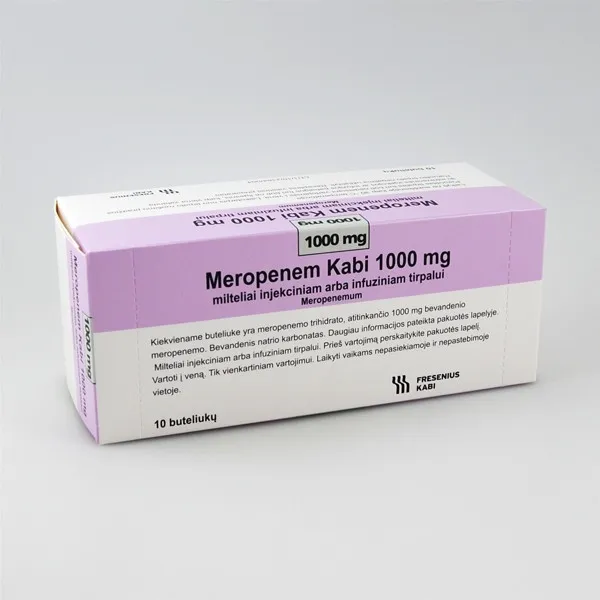
Table of Contents
- Package leaflet: Information for the user
- Introduction
- 1. What Meropenem Kabi 1,000 mg is and what it is used for
- 2. What you need to know before using Meropenem Kabi 1,000 mg
- 3. How to use Meropenem Kabi 1,000 mg
- 4. Possible adverse effects
- 5. Storage of Meropenem Kabi 1,000 mg
- 6. Contents of the pack and other information
Package leaflet: Information for the user
Introduction
PACKAGE LEAFLET: INFORMATION FOR THE USER
Meropenem Kabi 1,000 mg powder for solution for injection and infusion EFG
Meropenem
Read all of this leaflet carefully before you start using this medicine, because it contains important information for you.
- Keep this leaflet, as you may need to read it again.
- If you have any questions, ask your doctor or nurse.
- This medicine has been prescribed for you only, and you should not give it to other people, even if they have the same symptoms as you, because it may harm them.
- If you experience any adverse reactions, consult your doctor or nurse, even if they are adverse reactions not listed in this leaflet. See section 4.
Contents of the leaflet:
- What Meropenem Kabi 1,000 mg is and what it is used for
- What you need to know before using Meropenem Kabi 1,000 mg
- How to use Meropenem Kabi 1,000 mg
- Possible side effects
- How to store Meropenem Kabi 1,000 mg
- Contents of the pack and other information
1. What Meropenem Kabi 1,000 mg is and what it is used for
Meropenem Kabi belongs to a group of medicines called carbapenem antibiotics. It works by killing bacteria that can cause serious infections.
Antibiotics are used to treat bacterial infections and are not effective against viral infections such as influenza or the common cold.
It is important that you follow your doctor's instructions regarding dose, dosing interval, and duration of treatment.
Do not store or reuse this medicine. If you have any antibiotic left over after completing your treatment, return it to the pharmacy for proper disposal. Do not dispose of medicines via wastewater or household waste.
Meropenem is used to treat the following infections in adults and children from 3 months of age:
- Infection affecting the lungs (pneumonia)
- Bronchial and lung infections in patients with cystic fibrosis
- Complicated urinary tract infections
- Complicated abdominal infections
- Infections that you may acquire during or after childbirth
- Complicated skin and soft tissue infections
- Acute bacterial infection of the brain (meningitis)
Meropenem Kabi may be used to treat febrile neutropenic patients in whom a bacterial infection is suspected.
Meropenem can be used to treat bacterial blood infection (bacteraemia) that may be associated with one of the types of infection mentioned above.
2. What you need to know before using Meropenem Kabi 1,000 mg
Do not use Meropenem Kabi
- If you are allergic (hypersensitive) to meropenem or to any of the other ingredients of this medicine (listed in section 6).
- If you are allergic (hypersensitive) to other antibiotics such as penicillins, cephalosporins, or carbapenems, as you may also be allergic to Meropenem.
Warnings and precautions
Talk to your doctor or nurse before starting to use Meropenem Kabi:
- If you have health problems, such as liver or kidney problems.
- If you have had severe diarrhoea after taking other antibiotics.
Liver problems
Tell your doctor if you notice yellowing of the skin or eyes, itching of the skin, dark-coloured urine, or pale-coloured stools. These may be signs of liver problems that your doctor should check.
You may develop a positive reaction in a test (Coombs test), indicating the presence of antibodies that can destroy red blood cells. Your doctor will discuss this with you.
You may develop signs and symptoms of serious skin reactions (see section 4). If this happens, inform your doctor or nurse immediately so that symptoms can be treated.
If you are in any of these situations, or if you have any doubts, consult your doctor or nurse before using Meropenem Kabi.
Using Meropenem Kabi with other medicines
Tell your doctor about any other medicines you are taking, have recently taken, or might need to take.
Meropenem Kabi may affect how some medicines work, and some of these may affect Meropenem Kabi.
In particular, inform your doctor or nurse if you are taking any of the following medicines:
- Probenecid (used to treat gout).
- Valproic acid/sodium valproate/valpromide (used to treat epilepsy). Meropenem Kabi should not be used, as it may reduce the effect of sodium valproate.
- Oral anticoagulants (used to treat or prevent blood clots).
Pregnancy, breast-feeding and fertility
If you are pregnant, think you may be pregnant, or plan to become pregnant, consult your doctor or pharmacist before using this medicine. It is preferable to avoid the use of meropenem during pregnancy.
Your doctor will decide whether you should use meropenem.
It is important that you inform your doctor if you are breastfeeding or plan to breastfeed before receiving treatment with meropenem. A small amount of this medicine may pass into breast milk. Therefore, your doctor will decide whether you should use meropenem during breastfeeding.
Driving and using machines
No studies have been conducted on the effects on the ability to drive and use machines. However, Meropenem Kabi has been associated with headache, tingling or pricking sensations of the skin (paraesthesia), and involuntary muscle movements leading to rapid, uncontrolled body agitation (seizures), which are usually accompanied by loss of consciousness. Any of these side effects could affect your ability to drive or use machines. Do not drive or operate machinery if you experience this adverse effect.
Meropenem Kabi contains sodium.
This medicine contains 90.25 mg of sodium (the main component of table/cooking salt) in each vial. This corresponds to 4.5% of the maximum daily recommended sodium intake for an adult.
If you have a condition that requires you to control your sodium intake, inform your doctor or nurse.
3. How to use Meropenem Kabi 1,000 mg
Follow exactly the instructions for administration of this medicine given by your doctor or pharmacist. If in doubt, consult your doctor or pharmacist again.
Use in adults
- The dose depends on the type of infection you have, the location in the body, and its severity. Your doctor will decide the appropriate dose for you.
- The usual dose in adults ranges from 500 mg (milligrams) to 2 g (grams). Normally, a dose is administered every 8 hours. However, if your kidneys are not functioning properly, you may receive the dose less frequently.
Use in children and adolescents
- The dose for children over 3 months and up to 12 years of age is determined based on the child's age and weight. The usual dose is between 10 mg and 40 mg of Meropenem Kabi per kilogram (kg) of body weight. Doses are normally administered every 8 hours. Children weighing more than 50 kg will receive an adult dose.
How to use Meropenem Kabi
- Meropenem Kabi will be administered to you as an injection or infusion into a large vein.
- Usually, Meropenem Kabi is administered by your doctor or nurse.
- However, some patients, parents, or caregivers are trained to administer Meropenem Kabi at home. Instructions for this are provided in this leaflet (in the section titled “Instructions for administering Meropenem Kabi to yourself or another person at home”). Follow exactly the administration instructions for Meropenem Kabi given by your doctor. Consult your doctor if you have any doubts.
- Your injection must not be mixed with or added to solutions containing other medicines.
- The injection may last approximately 5 minutes or between 15 and 30 minutes. Your doctor will inform you how Meropenem Kabi is to be administered.
- Injections should normally be given at the same time each day.
If you use more Meropenem Kabi than you should
If you accidentally use more than the prescribed dose, contact your doctor or go to the nearest hospital immediately.
If you forget to use Meropenem Kabi
If you miss an injection, you should receive it as soon as possible. However, if it is almost time for your next scheduled dose, do not take the missed dose.
Do not use a double dose (two injections at once) to make up for a forgotten dose.
If you stop using Meropenem Kabi
Do not stop using Meropenem Kabi unless instructed by your doctor.
If you have any further questions about the use of this medicine, ask your doctor or nurse.
4. Possible adverse effects
Like all medicines, this medicine can cause adverse effects, although not everyone experiences them.
Severe allergic reactions
If you experience a severe allergic reaction, stop treatment with Meropenem Kabi and seek medical attention immediately. You may require urgent medical treatment. Symptoms may include sudden onset of:
- Severe rash, itching, or hives on the skin.
- Swelling of the face, lips, tongue, or other parts of the body.
- Shortness of breath, wheezing, or difficulty breathing.
- Severe skin reactions including:
- Severe hypersensitivity reactions with fever, skin rashes, and changes in blood test results monitoring liver function (increased levels of liver enzymes), increase in a type of white blood cells (eosinophilia), and enlargement of lymph nodes. These may be signs of a multi-organ hypersensitivity disorder known as DRESS syndrome.
- Severe red, scaly rash, skin lesions containing pus, blisters, or skin peeling, which may be associated with high fever and joint pain.
- Severe skin reactions that may appear as red, circular spots, often with central blisters on the trunk, skin peeling, and ulcers in the mouth, throat, nose, genitals, and eyes, possibly preceded by fever and flu-like symptoms (Stevens-Johnson syndrome) or a more severe form (toxic epidermal necrolysis).
Damage to red blood cells (frequency not known)
Symptoms include:
- Unexpected shortness of breath.
- Red or brown urine.
If you notice any of the above, seek medical attention immediately.
Other possible adverse effects:
Frequent (may affect up to 1 in 10 people)
- Abdominal pain (stomach pain).
- Nausea.
- Vomiting.
- Diarrhea.
- Headache.
- Skin rash, itching.
- Pain and inflammation.
- Increased number of platelets in the blood (detected in a blood test).
- Changes in blood tests, including tests showing how well your liver is functioning.
Uncommon (may affect up to 1 in 100 people)
-
Changes in your blood. These include a decrease in the number of platelets (which may make you bruise more easily), increase in certain white blood cells, decrease in other white blood cells, and increase in a substance called "bilirubin". Your doctor may perform periodic blood tests.
-
Changes in blood tests, including tests showing how well your kidneys are functioning.
- Decreased levels of potassium in the blood (which may cause weakness, muscle cramps, tingling, and changes in heart rhythm).
- Liver problems. Yellowing of the skin and eyes, skin itching, dark urine, or pale stools. If you notice these signs or symptoms, consult a doctor immediately.
-
Tingling sensation (pins and needles).
-
Mouth or vaginal fungal infections (thrush).
-
Inflammation of the intestine with diarrhea.
-
Pain in the veins where Meropenem Kabi is injected.
-
Other changes in your blood. Symptoms include frequent infections, fever, and sore throat. Your doctor may perform periodic blood tests.
Rare (may affect up to 1 in 1000 people)
- Seizures (fits).
- Acute disorientation and confusion (delirium).
Reporting of adverse effects
If you experience any type of adverse effect, consult your doctor or pharmacist, even if it is a possible adverse effect not listed in this leaflet. You may also report them directly through the Spanish Pharmacovigilance System for Human Medicinal Products: https://www.notificaram.es. By reporting adverse effects, you can help provide more information on the safety of this medicine.
5. Storage of Meropenem Kabi 1,000 mg
Keep out of the sight and reach of children.
Do not use this medicine after the expiry date stated on the packaging after EXP. The expiry date refers to the last day of the month indicated.
Do not store above 30°C.
Injection
After reconstitution: Reconstituted solutions for injection should be used immediately. The time interval between the start of reconstitution and the end of injection must not exceed:
-
3 hours if stored at a temperature up to 25°C;
-
12 hours when stored under refrigerated conditions (2–8°C).
Infusion
After reconstitution: Reconstituted solutions for infusion should be used immediately. The time interval between the start of reconstitution and the end of infusion must not exceed:
-
6 hours if stored at a temperature up to 25°C when Meropenem Kabi is dissolved in 0.9% sodium chloride;
-
24 hours if stored under refrigerated conditions (2–8°C) when Meropenem Kabi is dissolved in 0.9% sodium chloride;
-
1 hour if stored at a temperature up to 25°C when Meropenem Kabi is dissolved in 5% dextrose solution;
-
8 hours if stored under refrigerated conditions (2–8°C) when Meropenem Kabi is dissolved in 5% dextrose solution.
From a microbiological point of view, unless the method of opening/reconstitution/dilution excludes the risk of microbial contamination, the product should be used immediately.
If not used immediately, the storage times and conditions of use are the responsibility of the user.
Do not freeze the reconstituted solution.
Medicines should not be disposed of via wastewater or household waste. If you are unsure how to dispose of unused medicines or packaging, consult your pharmacist. This will help protect the environment.
6. Contents of the pack and other information
Composition of Meropenem Kabi
- The active substance is meropenem (trihydrate). Each 20 ml vial or 50 ml or 100 ml bottle contains 1,000 mg of meropenem (anhydrous).
- The other component is sodium carbonate.
Appearance of the product and contents of the pack
Meropenem Kabi is a white or pale yellow powder for injectable solution or infusion in a vial.
It is available in 20 ml glass vials and 50 ml or 100 ml glass bottles.
Pack sizes of 1 or 10 vials/bottles.
Only certain pack sizes may be marketed.
Marketing Authorization Holder and Manufacturer
Marketing Authorization Holder
Fresenius Kabi España, S.A.U.
Marina 16-18, 08005 – Barcelona
Spain
Manufacturer
ACS Dobfar S.p.A.
Nucleo Industriale S. Atto, S. Nicolò a Tordino, 64100 Teramo
Italy
or
LABESFAL – Laboratórios Almiro S.A. (Fresenius Kabi Group)
Lagedo, 3465-157 Santiago de Besteiros
Portugal
This medicinal product is authorized in the Member States of the European Economic Area under the following names:
Austria Meropenem Kabi 1 g Pulver zur Herstellung einer Injektions- bzw. Infusionslösung
Belgium Meropenem Fresenius Kabi 1 g powder for solution for injection or infusion / poudre pour solution injectable ou pour perfusion / Pulver zur Herstellung einer Injektionslösung oder Infusionslösung
Bulgaria Meropenem Kabi 1 g
Cyprus Meropenem Kabi 1000 mg, κόνις για ενέσιμο διάλυμα ή διάλυμα για έγχυση/έγχυση
Czech Republic Meropenem Kabi
Denmark Meropenem Fresenius Kabi
Estonia Meropenem Kabi 1000 mg
Germany Meropenem Kabi 1 g Pulver zur Herstellung einer Injektions- bzw. Infusionslösung
Greece Meropenem Kabi 1g, κόνις για διάλυμα προς ένεση ή έγχυση
Hungary Meropenem Kabi 1 g
Ireland Meropenem 1 g powder for solution for injection or infusion
Latvia Meropenem Kabi 1000 mg pulveris injekciju vai infūziju šķīduma pagatavošanai
Lithuania Meropenem Kabi 1000 mg milteliai injekciniam arba infuziniam tirpalui
Meropenem Kabi 1 g Pulver zur Herstellung einer Injektionslösung oder Infusionslösung
Luxembourg | Concentrate for solution for infusion | |
Meropenem Fresenius Kabi 1 g powder for solution for injection or | ||
Netherlands | infusion |
Meropenem Fresenius Kabi 1 g, powder for solution for injection/infusion, solution
Norway
Poland Meropenem Kabi
Portugal Meropenem Kabi
Romania Meropenem Kabi 1 g powder for injectable or perfusion solution
Spain Meropenem Kabi 1 g powder for injectable solution or for infusion
Meropenem Fresenius Kabi 1 g, powder for injection solution or
Sweden infusion solution, solution
Meropenem Kabi 1 g powder for injection or infusion solution
Slovenia
Meropenem Kabi 1 g
Slovakia
United Kingdom Meropenem 1 g powder for solution for injection or infusion
This leaflet has been reviewed in August 2025.
Health advice/education
Antibiotics are used to treat infections caused by bacteria. They have no effect against infections caused by viruses.
Sometimes, a bacterial infection does not respond to treatment with an antibiotic. One of the most common reasons for this is that the bacteria causing the infection are resistant to the antibiotic being taken. This means they can survive and even multiply despite the antibiotic.
Bacteria can become resistant to antibiotics for many reasons. Using antibiotics cautiously can help reduce the chances of bacteria becoming resistant to them.
When your doctor prescribes you an antibiotic treatment, it is intended only for your current illness. Paying attention to the following advice will help prevent the emergence of resistant bacteria that could stop the antibiotic from working.
- It is very important that you receive the correct dose of the antibiotic at the correct times and for the correct number of days. Read the labelling instructions carefully and, if you do not understand something, ask your doctor or pharmacist.
- You should not take an antibiotic unless it has been specifically prescribed for you, and you should use it only for the infection it was prescribed for.
- You should not take antibiotics that have been prescribed for other people, even if they had an infection similar to yours.
- You should not give other people antibiotics that were prescribed for you.
- If you have leftover antibiotics after completing your treatment as directed by your doctor, you should return them to a pharmacy for proper disposal.
Detailed and up-to-date information on this medicine is available on the website of the Spanish Agency of Medicines and Health Products (AEMPS) http://www.aemps.gob.es/
This information is intended for healthcare professionals only:
Instructions for administering Meropenem Kabi to yourself or another person at home
Some patients, parents and caregivers are trained to administer Meropenem Kabi at home.
Warning – You should only administer this medicine to yourself or another person at home after being trained by a doctor or nurse.
How to prepare this medicine
- The medicine must be mixed with another liquid (the diluent). Your doctor will tell you how much diluent to use.
- Use the medicine immediately after preparation. Do not freeze it.
- Wash your hands thoroughly and dry them well. Prepare a clean work area.
- Remove the vial of Meropenem Kabi from its packaging. Check the vial and the expiration date. Ensure the vial is intact and undamaged.
- Remove the coloured cap and clean the rubber stopper with an alcohol-impregnated cotton swab. Allow the rubber stopper to dry.
- Attach a new sterile needle to a new sterile syringe without touching the ends.
- Draw up the recommended amount of sterile “Water for Injection” into the syringe. The amount of liquid required is shown in the following table:
Dose of Meropenem Kabi Amount of ‘Water for Injection’ needed for dilution
500 mg (milligrams) 10 ml (millilitres)
1 g (gram) 20 ml
1.5 g 30 ml
2 g 40 ml
Note that: If the prescribed dose of Meropenem Kabi is greater than 1 g, you will need to use more than one vial of Meropenem Kabi. You may then draw the liquid from multiple vials into a single syringe.
- Insert the needle through the centre of the rubber stopper and inject the recommended amount of “Water for Injection” into the Meropenem Kabi vial(s).
- Remove the needle from the vial and shake it well for about 5 seconds, or until all the powder has dissolved. Clean the rubber stopper again with a new alcohol-impregnated cotton swab and allow it to dry.
- With the plunger fully depressed, reinsert the needle through the rubber stopper. Hold the syringe and vial together and invert the vial.
- Keeping the tip of the needle in the liquid, pull back the plunger to withdraw all the liquid from the vial into the syringe.
- Remove the needle and syringe from the vial and dispose of the empty vial in an appropriate container.
- Hold the syringe vertically with the needle pointing upwards. Gently tap the syringe to allow any air bubbles to rise to the top.
- Expel air from the syringe by gently pushing the plunger until the air has been removed.
- If you are using Meropenem Kabi at home, properly dispose of used needles and infusion lines. If your doctor decides to discontinue your treatment, properly dispose of any unused Meropenem Kabi.
Administration of the injection
You may administer this medicine through a peripheral intravenous catheter, or via a port or central line.
Administration of Meropenem Kabi via peripheral intravenous catheter
- Remove the needle from the syringe and carefully dispose of it in an authorised sharps container.
- Clean the end of the peripheral intravenous catheter with an alcohol-impregnated cotton swab and allow it to dry. Open the cannula cap and connect the syringe.
- Slowly push the syringe plunger to administer the antibiotic steadily over approximately 5 minutes.
- Once the antibiotic has been administered and the syringe is empty, remove it and flush the line as instructed by your doctor or nurse.
- Replace the cannula cap and carefully dispose of the syringe in an authorised sharps container.
Administration of Meropenem Kabi via port or central line
-
Remove the cap from the port or line, clean the end with an alcohol-impregnated cotton swab and allow it to dry.
-
Connect the syringe and slowly push the plunger to administer the antibiotic steadily over approximately 5 minutes.
-
After completing administration, remove the syringe and flush the line as instructed by your doctor or nurse.
-
Place a new clean cap on the central line and carefully dispose of the syringe in an authorised sharps container.