Mektovi 45 mg film-coated tablets
Spain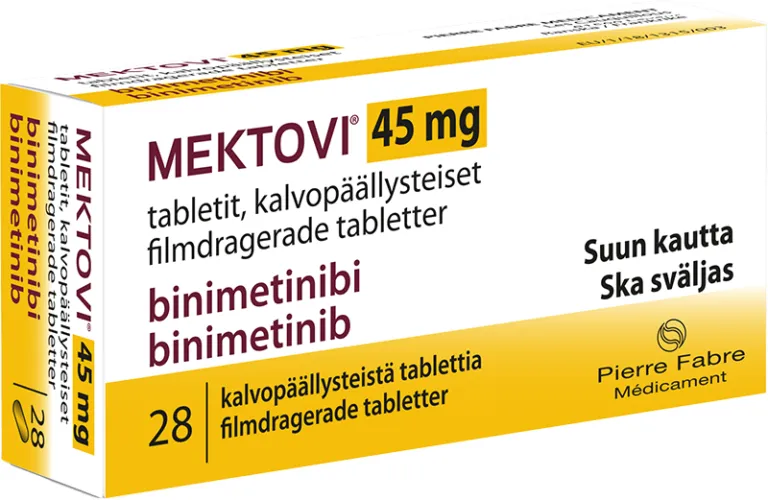
Table of Contents
Patient Information Leaflet
Introduction
Package leaflet: Information for the patient
Mektovi 15 mg film-coated tablets
Mektovi 45 mg film-coated tablets
binimetinib
Read the entire leaflet carefully before you start taking this medicine, as it contains important information for you.
- Keep this leaflet, as you may need to read it again.
- If you have any questions, ask your doctor, pharmacist, or nurse.
- This medicine has been prescribed for you only and must not be given to other people, even if they have the same symptoms as you, since it could harm them.
- If you experience any adverse effects, consult your doctor, pharmacist, or nurse, even if they are adverse effects not listed in this leaflet. See section 4.
Leaflet contents
- What Mektovi is and what it is used for
- What you need to know before taking Mektovi
- How to take Mektovi
- Possible side effects
- How to store Mektovi
- Contents of the pack and other information
1. What Mektovi is and what it is used for
Mektovi is an anticancer medicine that contains binimetinib as the active substance. It is used in adults in combination with another medicine containing encorafenib to treat a type of skin cancer called melanoma or a type of lung cancer called non-small cell lung cancer (NSCLC) when the cancer:
- has a specific alteration (mutation) in a gene responsible for producing a protein called BRAF, and
- has spread to other parts of the body or cannot be removed by surgery.
Mutations in the BRAF gene can produce proteins that cause cancer growth. Mektovi acts on another protein called "MEK" that stimulates the growth of cancer cells. When Mektovi is used in combination with encorafenib (which acts on the altered "BRAF" protein), the combination slows down or even stops cancer growth.
2. What you need to know before starting Mektovi
Before starting treatment, your doctor will check for the BRAF mutation.
Since Mektovi is used in combination with encorafenib, carefully read the encorafenib package leaflet in addition to this one.
Do not take Mektovi:
- if you are allergic to binimetinib or any of the components of this medicine (listed in section 6).
Warnings and precautions
Talk to your doctor, pharmacist, or nurse before starting Mektovi, and inform them about all your health conditions, especially if you have:
-
heart problems
-
bleeding problems or if you are taking any medicine that may cause bleeding
-
eye problems, including glaucoma or increased intraocular pressure
-
muscle problems
-
high blood pressure
-
blood clots
-
lung or breathing problems
-
liver problems
Inform your doctor if you have ever had blockage of the vein draining the eye (retinal vein occlusion), as Mektovi is not recommended in such cases.
Inform your doctor if you have ever had any other cancer besides melanoma or NSCLC, as binimetinib, when taken with encorafenib, may worsen other types of cancer.
Contact your doctor, pharmacist, or nurse immediately if you experience any of the following conditions while taking this medicine:
-
Heart problems: Mektovi may cause your heart to function less effectively or worsen existing heart problems. Your doctor will monitor your heart function before, during, and after treatment with this medicine. Contact your doctor immediately if you experience any symptoms of heart problems such as dizziness, fatigue, lightheadedness, shortness of breath, strong or rapid heartbeat, irregular heartbeat, or swelling in the legs.
-
Bleeding problems: Mektovi may cause serious bleeding problems. Contact your doctor immediately if you notice any signs of bleeding such as coughing up blood, blood clots, vomiting blood or material that looks like "ground coffee," red or black, tarry stools, blood in the urine, abdominal pain, unusual vaginal bleeding. Also inform your doctor if you have headache, dizziness, or weakness.
-
Eye problems: Mektovi may cause serious eye problems. Contact your doctor immediately if you experience blurred vision, vision loss, or other vision changes (e.g., seeing colored spots), halos (seeing blurred outlines around objects). Your doctor will examine your eyes for any vision problems while you are taking Mektovi.
-
Muscle problems: Mektovi may cause destruction of muscle fibers (rhabdomyolysis). Your doctor will request blood tests to detect and/or monitor muscle problems before and during treatment. As a precaution, drink plenty of fluids during treatment. Contact your doctor immediately if you experience muscle pain, cramps, stiffness, spasms, or dark urine.
-
High blood pressure: Mektovi may increase blood pressure. Your doctor or nurse will monitor your blood pressure before and during treatment with Mektovi. Contact your doctor immediately if you experience severe headaches, dizziness, lightheadedness, or, if you normally monitor your blood pressure at home with a blood pressure device, if your readings are much higher than usual.
-
Blood clots: Mektovi may cause blood clots to form in the arms or legs; if a clot travels to the lungs, it could be fatal. Contact your doctor immediately if you experience chest pain, sudden shortness of breath, difficulty breathing, leg pain with or without swelling, swelling in arms and legs, or a cold, pale arm or leg. If necessary, your doctor may interrupt or permanently discontinue treatment.
-
Lung or breathing problems: this medicine may cause lung or breathing problems, such as lung inflammation (pneumonitis or interstitial lung disease); signs and symptoms may include cough, shortness of breath, or fatigue. If necessary, your doctor may interrupt or permanently discontinue treatment.
-
Skin changes: Mektovi, when taken with encorafenib, may cause other types of skin cancer, such as cutaneous squamous cell carcinoma. Your doctor will examine your skin before starting treatment, every 2 weeks during treatment, and for up to 6 months after stopping these medicines, to check for any new skin cancers. Contact your doctor immediately if you notice any skin changes during or after treatment, such as new warts, skin ulcers, or red nodules that bleed or do not heal, or changes in size or color of moles.
Additionally, your doctor will need to examine your head, neck, mouth, and lymph nodes for cutaneous squamous cell carcinoma, and regular CT scans are recommended. This is precautionary in case a squamous cell carcinoma develops in your body. Genital (in women) and anal examinations are also recommended before starting and after stopping treatment.
- Liver problems: Mektovi may cause abnormalities in blood tests related to liver function (elevated liver enzymes). Your doctor will request blood tests to monitor your liver before and during treatment.
If you experience any of the following symptoms, contact your doctor immediately, as this may be a potentially life-threatening condition: nausea, difficulty breathing, irregular heartbeat, muscle cramps, seizures, cloudy urine, reduced urine output, and fatigue. These may be caused by a group of metabolic complications that can occur during cancer treatment due to breakdown products from dying cancer cells (tumor lysis syndrome (TLS)) and may lead to changes in kidney function (see also section 4: Possible side effects).
Children and adolescents
Mektovi is not recommended for children and adolescents under 18 years of age. This medicine has not been studied in this age group.
Other medicines and Mektovi
Inform your doctor, pharmacist, or nurse if you are taking, have recently taken, or might need to take any other medicine.
Some medicines may affect how Mektovi works or increase the risk of side effects. In particular, consult your doctor if you are taking any of the following medicines or any other:
-
medicines to treat bacterial infections such as rifampicin, ciprofloxacin
-
medicines typically used to treat epilepsy such as phenobarbital, phenytoin, carbamazepine
-
medicines to treat HIV such as indinavir, atazanavir
-
a medicine used to treat carcinoma called sorafenib
-
an herbal treatment for depression: St. John's wort
-
medicines used to treat depression such as duloxetine
-
medicines typically used for high cholesterol such as pravastatin
-
a medicine used to treat breathing problems, theophylline
Pregnancy
Mektovi is not recommended during pregnancy. It may cause permanent harm to the fetus or congenital defects.
If you are pregnant, think you might be pregnant, or plan to become pregnant, consult your doctor before using this medicine.
If you are a woman of childbearing potential, you must use a reliable contraceptive method while taking Mektovi, and continue using it for at least 1 month after the last dose. Contact your doctor immediately if you become pregnant while taking Mektovi.
Breast-feeding
Mektovi is not recommended during breast-feeding. It is unknown whether Mektovi passes into breast milk. If you are breast-feeding or plan to breast-feed, consult your doctor before taking this medicine.
Driving and using machines
Mektovi may affect your ability to drive or use machines. Avoid driving or operating machinery if you have vision problems or any other adverse effects that may impair your ability to drive or use machines (see section 4) while taking Mektovi. Consult your doctor if you are unsure whether you can drive.
Mektovi contains lactose
If your doctor has informed you that you have an intolerance to certain sugars, consult with them before taking this medicine.
This medicine contains less than 1 mmol of sodium (23 mg) per dose unit; hence, it is essentially "sodium-free".
3. How to take Mektovi
How much to take
Follow exactly the instructions for using this medicine given by your doctor or pharmacist. If in doubt, check again with your doctor or pharmacist.
The recommended dose of Mektovi is 45 mg (three 15 mg tablets or one 45 mg tablet) twice daily, approximately 12 hours apart, corresponding to a total daily dose of 90 mg. You will also be receiving treatment with another medicine, encorafenib.
If you experience serious adverse effects (such as heart, eye, or skin problems), your doctor may reduce your dose or temporarily or permanently discontinue treatment.
How to take Mektovi
Swallow the tablets whole with water. Mektovi may be taken with food or between meals.
If you cannot swallow the tablets whole, you may disperse the 15 mg Mektovi tablets in a small glass (approximately 10 ml, about 2 teaspoons) of water, orange juice, or apple juice and take it immediately. Rinse the glass with another 10 ml (approximately 2 teaspoons) of water, orange juice, or apple juice and drink the contents immediately. If not used within 30 minutes, discard the mixture and prepare a new one.
If you vomit
If you vomit at any time after taking Mektovi, do not take an additional dose. Take your next dose at the scheduled time.
If you take more Mektovi than you should
If you take more tablets than you should, contact your doctor, pharmacist, or nurse immediately. If possible, show them this leaflet and the medicine package.
If you forget to take Mektovi
If you have forgotten to take a dose of Mektovi, take it as soon as you remember. However, if more than 6 hours have passed since the time you were supposed to take the missed dose, skip it and take the next dose at the scheduled time. After that, continue taking the tablets as usual.
Do not take a double dose to make up for a missed dose.
If you stop taking Mektovi
It is important that you take Mektovi for as long as your doctor has prescribed. Do not stop taking this medicine unless instructed by your doctor.
If you have any further questions about the use of this medicine, ask your doctor, pharmacist, or nurse.
4. Possible adverse effects
Like all medicines, this medicine can cause adverse effects, although not everyone experiences them.
Serious adverse effects
Mektovi may cause serious adverse effects. Contact your doctor immediately if you experience any of the following adverse effects for the first time, or if existing symptoms worsen (see also section 2):
Heart problems: Mektovi may affect how your heart functions (reduction in left ventricular ejection fraction); signs and symptoms may include:
- feeling dizzy, tired, or lightheaded
- shortness of breath
- feeling that your heart is beating strongly, rapidly, or irregularly
- swollen legs
Increased blood pressure: Mektovi may increase blood pressure. Contact your doctor immediately if you have a severe headache, feel dizzy, or if you regularly monitor your blood pressure at home using a blood pressure device and find it is much higher than usual.
Blood clots: Mektovi may cause blood clots (venous thromboembolism, including pulmonary embolism); signs and symptoms may include:
- chest pain
- sudden shortness of breath or difficulty breathing
- leg pain, with or without swelling
- swollen arms and legs
- a cold, pale arm or leg
Eye problems: Mektovi may cause fluid accumulation under the retina, which can lead to detachment of certain layers (retinal pigment epithelial detachment), possibly resulting in:
- blurred vision, vision loss, or other changes (such as seeing colored spots)
- halos (blurred outlines of objects)
- eye pain, swelling, or redness
Muscle problems: Mektovi may cause destruction of muscle fibers (rhabdomyolysis), which can lead to kidney damage and may be fatal; signs and symptoms may include:
- muscle pain, cramps, stiffness, or spasms
- dark-colored urine
Bleeding problems: Mektovi may cause serious bleeding problems. Contact your doctor immediately if you notice any bleeding or unusual signs of bleeding, such as:
- headaches, dizziness, or weakness
- coughing up blood or blood clots
- vomiting blood or material that looks like "coffee grounds"
- red or black, tarry stools
- blood in the urine
- stomach (abdominal) pain
- unusual vaginal bleeding
Other skin cancers: When Mektovi is taken with encorafenib, patients may develop different types of skin cancer, such as cutaneous squamous cell carcinoma. These skin cancers (see section 2) usually affect a small area and can be removed surgically, and treatment with Mektovi (and encorafenib) can continue without interruption.
Tumor lysis syndrome: Mektovi may cause rapid breakdown of cancer cells, which in some people can be fatal. Symptoms may include nausea, difficulty breathing, irregular heartbeats, muscle cramps, seizures, cloudy urine, reduced urine output, and fatigue.
Adverse effects when Mektovi is taken with encorafenib
In addition to the serious adverse effects listed above, people taking Mektovi with encorafenib may also experience the following adverse effects.
Very common (may affect more than 1 in 10 people)
- decreased number of red blood cells (anemia)
- nerve problems causing pain, loss of sensation, or tingling in hands and feet
- headache
- dizziness
- bleeding in various parts of the body
- vision problems (visual impairment)
- stomach pain
- diarrhea
- vomiting
- nausea
- constipation
- itching
- dry skin
- hair loss or thinning (alopecia)
- skin rash of various types
- thickening of the outer layers of the skin
- joint pain (arthralgia)
- muscle disorders
- back pain
- limb pain
- fever
- swelling of hands or feet (peripheral edema), localized swelling
- fatigue
- abnormal blood test results for liver function
- abnormal blood test results related to creatine kinase, indicating damage to the heart and skeletal muscle
Common (may affect up to 1 in 10 people)
- certain types of skin tumors, such as cutaneous papilloma
- allergic reaction, which may include facial swelling and difficulty breathing
- changes in taste sensation
- eye inflammation (uveitis)
- inflammation of the colon (colitis)
- redness, cracking, or splitting of the skin
- inflammation of the fatty layer beneath the skin, with symptoms such as soft nodules under the skin
- skin rash with flat or raised spots resembling acne (acneiform dermatitis)
- redness, peeling, or blisters on the hands and feet (palmoplantar erythrodysesthesia or hand-foot syndrome)
- kidney failure
- abnormal kidney function tests (increased creatinine)
- abnormal liver function tests (alkaline phosphatase)
- abnormal blood tests for pancreatic function (amylase, lipase)
- increased skin sensitivity to sunlight
Uncommon (may affect up to 1 in 100 people)
- certain types of skin cancers such as basal cell carcinoma
- weakness and paralysis of facial muscles
- inflammation of the pancreas (pancreatitis), causing severe abdominal pain
Reporting of adverse effects
If you experience any adverse effect, talk to your doctor, pharmacist, or nurse, even if it is a possible adverse effect not listed in this leaflet. You can also report them directly through the national reporting system detailed in Appendix V. By reporting adverse effects, you can help provide more information on the safety of this medicine.
5. Storage of Mektovi
Keep this medicine out of the sight and reach of children.
Do not use this medicine after the expiry date stated on the blister and carton following EXP. The expiry date is the last day of the month indicated.
This medicine does not require any special storage conditions.
Medicines should not be disposed of via wastewater or household waste. Ask your pharmacist how to dispose of medicines and packaging that you no longer need. This will help protect the environment.
6. Package contents and other information
Composition of Mektovi
- The active substance is binimetinib.
Mektovi 15 mg film-coated tablets: each film-coated tablet contains 15 mg of binimetinib.
Mektovi 45 mg film-coated tablets: each film-coated tablet contains 45 mg of binimetinib.
-
The other components are:
-
Tablet core: lactose monohydrate, microcrystalline cellulose (E460i), colloidal anhydrous silica (E551), sodium croscarmellose (E468) and magnesium stearate (E470b). See section 2 “Mektovi contains lactose”.
-
Film coating:
Mektovi 15 mg film-coated tablets: polyvinyl alcohol (E1203), macrogol 3350 (E1521), titanium dioxide (E171), talc (E533b), yellow iron oxide (E172) and black iron oxide (E172).
Mektovi 45 mg film-coated tablets: polyvinyl alcohol (E1203), macrogol 4000 (E1521), calcium carbonate (E170), talc (E533b).
Appearance of the product and contents of the pack
Mektovi 15 mg film-coated tablets
The film-coated tablets are oval, yellow to dark yellow, biconvex, film-coated tablets without a breakline, marked with an “A” on one side and “15” on the other.
Mektovi 15 mg film-coated tablets are supplied in boxes of 84 tablets (7 blisters of 12 tablets each) or 168 tablets (14 blisters of 12 tablets each).
Only some pack sizes may be marketed.
Mektovi 45 mg film-coated tablets
The film-coated tablets are oval, white to off-white, biconvex, film-coated tablets without a breakline, marked with “45” on one side.
Mektovi 45 mg film-coated tablets are supplied in boxes of 28 tablets (2 blisters of 14 tablets each) or 56 tablets (4 blisters of 14 tablets each).
Only some pack sizes may be marketed.
Marketing Authorization Holder
PIERRE FABRE MEDICAMENT
Les Cauquillous
81500 Lavaur
France
Manufacturer
PIERRE FABRE MEDICAMENT PRODUCTION
Site Progipharm, rue du Lycée
45500 GIEN
France
Date of the most recent revision of this leaflet:
Detailed information on this medicine is available on the European Medicines Agency website: https://www.ema.europa.eu.