Mastical D Unidia 1000 mg/800 IU chewable tablets
Spain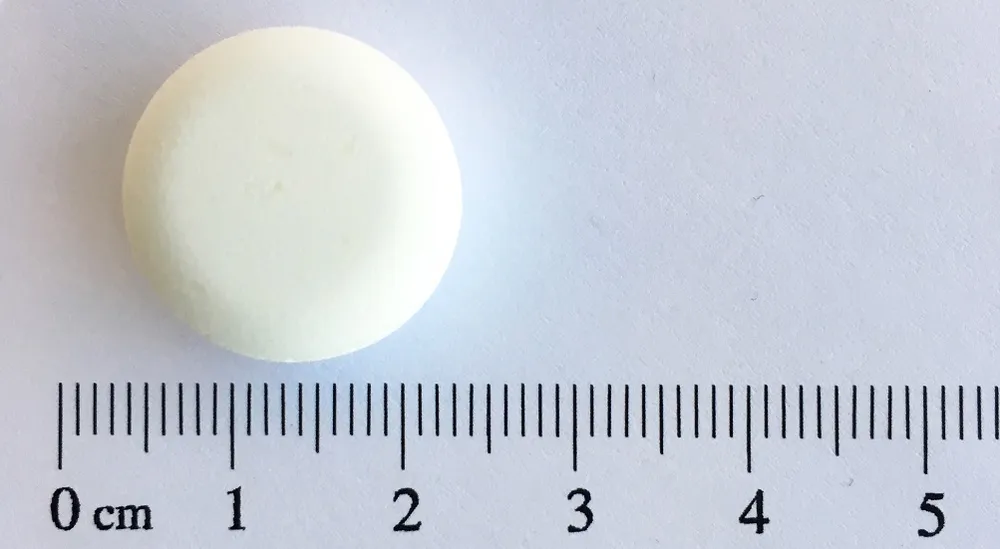
Table of Contents
- Package leaflet: Information for the user
- Introduction
- **Mastical D Unidia 1000 mg / 800 IU chewable tablets**
- **Read the entire leaflet carefully before you start taking this medicine, as it contains important information for you.**
- 1. What Mastical D Unidia is and what it is used for
- 2. What you need to know before taking Mastical D Unidia
- 3. How to take Mastical D Unidia
- 4. Possible adverse effects
- 5. Storage of Mastical D Unidia
- 6. Package contents and other information
Package leaflet: Information for the user
Introduction
Package leaflet: information for the user
Mastical D Unidia 1000 mg / 800 IU chewable tablets
calcium/colecalciferol (Vitamin D3)
Read the entire leaflet carefully before you start taking this medicine, as it contains important information for you.
- Keep this leaflet, as you may need to read it again.
- If you have any questions, consult your doctor or pharmacist.
- This medicine has been prescribed for you only, and you should not give it to others, even if they have the same symptoms as you, because it could harm them.
- If you experience any adverse effects, consult your doctor or pharmacist, even if these are adverse effects not listed in this leaflet. See section 4.
Contents of the leaflet
- What Mastical D Unidia is and what it is used for
- What you need to know before taking Mastical D Unidia
- How to take Mastical D Unidia
- Possible adverse effects
- How to store Mastical D Unidia
- Contents of the pack and other information
1. What Mastical D Unidia is and what it is used for
Mastical D Unidia are chewable tablets containing calcium and vitamin D3, both of which are important for bone formation. Mastical D Unidia is used for the prevention and treatment of calcium and vitamin D deficiency in adults at risk of calcium and vitamin D deficiency, and as a supplement to specific treatment of osteoporosis.
2. What you need to know before taking Mastical D Unidia
Do not take Mastical D Unidia
- if you are allergic to calcium, vitamin D, or any of the components of this medicine (listed in section 6).
- if you have severe kidney problems.
- if you have excessive levels of calcium in your blood or urine.
- if you have kidney stones.
- if you have excessive levels of vitamin D in your blood.
Warnings and precautions
Consult your doctor or pharmacist before starting to take Mastical D Unidia:
- if you are undergoing long-term treatment, especially if you are taking diuretics (used to treat high blood pressure or edema) or cardiac glycosides (used to treat heart conditions).
- if you have signs of impaired kidney function or a tendency to develop kidney stones.
- if you have sarcoidosis (an immune system disorder that may increase vitamin D levels in the body).
- if you have osteoporosis and are also unable to move around independently.
- if you are taking other products containing vitamin D. Additional doses of calcium and vitamin D should be taken only under strict medical supervision.
Children and adolescents
Mastical D Unidia is not indicated for use in children and adolescents.
Taking Mastical D Unidia with other medicines
Inform your doctor or pharmacist if you are taking, have recently taken, or might need to take any other medicines.
If you are also taking tetracyclines (a type of antibiotic), they should be taken at least 2 hours before or 4–6 hours after taking Mastical D. Calcium carbonate may interfere with the absorption of tetracycline preparations if taken at the same time.
Medicines containing bisphosphonates (used in the treatment of osteoporosis) should be taken at least one hour before taking Mastical D Unidia.
Calcium may reduce the effect of levothyroxine (used to treat thyroid hormone deficiency). Therefore, levothyroxine should be taken at least four hours before or four hours after taking Mastical D Unidia.
The effects of quinolone antibiotics may be reduced if taken simultaneously with calcium. Take quinolone antibiotics two hours before or six hours after taking Mastical D Unidia.
Calcium salts may reduce the absorption of iron, zinc, and strontium ranelate. Therefore, iron, zinc, or strontium ranelate preparations should be taken at least two hours before or after Mastical D Unidia.
Other medicines that may interact or may be affected when taking Mastical D Unidia include:
- thiazide diuretics (used to treat hypertension or edema)
- cardiac glycosides (used to treat heart conditions)
Orlistat (used to treat obesity) may alter the absorption of fat-soluble vitamins, such as vitamin D3.
If you are taking any of the medicines mentioned above, your doctor will provide you with further instructions.
Taking Mastical D Unidia with food and drinks
Mastical D Unidia can be taken with or without food and drinks.
Pregnancy, breastfeeding, and fertility
If you are pregnant or breastfeeding, think you may be pregnant, or are planning to become pregnant, consult your doctor or pharmacist before using this medicine.
If you are pregnant, you may use Mastical D Unidia in case of calcium and vitamin D deficiency. During pregnancy, you should not take more than 2500 mg of calcium and 4000 IU of vitamin D per day, as overdosing may affect the fetus.
Mastical D Unidia may be taken during breastfeeding. Calcium and vitamin D3 pass into breast milk. This should be taken into account when administering additional vitamin D to the infant.
Driving and use of machines
Mastical D Unidia has no known influence on the ability to drive or operate machinery.
Mastical D Unidia contains isomalt and sucrose
This medicine contains sucrose (1.5 mg), which may cause dental caries. The tablets also contain isomalt (E953). If your doctor has informed you of an intolerance to certain sugars, consult with him before taking this medicine.
Mastical D Unidia is essentially sodium-free
This medicine contains less than 23 mg of sodium (1 mmol) per tablet, which is considered essentially "sodium-free".
3. How to take Mastical D Unidia
Follow exactly the instructions for use of this medicine provided by your doctor. If in doubt, consult your doctor or pharmacist again.
Dosage:
The recommended dose is 1 tablet once daily. The tablet may be chewed or sucked.
Use in children and adolescents
This medicine is not intended for use in children and adolescents.
If you take more Mastical D Unidia than you should
If you have taken more Mastical D Unidia than you should, consult your doctor or pharmacist immediately.
In case of overdose or accidental ingestion, contact the Toxicology Information Service at telephone number 91 562 04 20, indicating the product and the amount ingested. Take this leaflet with you.
If you forget to take Mastical D Unidia
Do not take a double dose to make up for the forgotten dose.
If you have any further questions about the use of this medicine, ask your doctor or pharmacist.
4. Possible adverse effects
Like all medicines, this medicine may cause adverse effects, although not everyone will experience them.
Hypersensitivity reactions have occurred with unknown frequency (cannot be estimated from available data). If you experience the following symptoms, contact your doctor immediately: swelling of the face, tongue or lips (angioedema) or swelling of the throat (laryngeal edema).
Uncommon adverse effects (may affect up to 1 in 100 people)
You may experience high levels of calcium in the blood (hypercalcaemia) or in the urine at high doses (hypercalciuria).
Rare adverse effects (may affect up to 1 in 1,000 people)
Constipation, dyspepsia, flatulence, nausea, abdominal pain and diarrhoea.
Very rare adverse effects (may affect up to 1 in 10,000 people)
Pruritus, rash and urticaria. Milk-alkali syndrome (also known as Burnett's syndrome, which generally only occurs after excessive intake of calcium). Symptoms include urgent need to urinate frequently, headache, loss of appetite, nausea or vomiting, unusual tiredness or weakness, together with high levels of calcium in the blood and impaired kidney function.
If you have renal insufficiency, you may be at risk of experiencing an increase in blood phosphate levels, kidney stone formation, and increased calcium deposits in the kidneys.
Reporting of adverse effects
If you experience any type of adverse effect, consult your doctor or pharmacist, even if it is a possible adverse effect not listed in this leaflet. You can also report them directly via the Spanish Pharmacovigilance System for Human Medicines: www.notificaRAM.es. By reporting adverse effects, you can help provide more information on the safety of this medicine.
5. Storage of Mastical D Unidia
Keep this medicine out of the sight and reach of children.
Do not use this medicine after the expiry date stated on the packaging after EXP. The expiry date is the last day of the month indicated.
Plastic bottle: Do not store above 30 °C. Keep in the original packaging to protect from light. Keep the container tightly closed to protect from moisture.
Blister pack: Do not store above 25 °C. Keep in the original packaging to protect from moisture. Keep the blister in the outer packaging to protect from light.
Medicines must not be disposed of via wastewater or household waste. Dispose of unused medicines and their containers at the SIGRE point in your pharmacy. If in doubt, ask your pharmacist how to dispose of medicines and containers you no longer need. This will help protect the environment.
6. Package contents and other information
Composition of Mastical D Unidia
The active substances are:
- 2,500 mg calcium carbonate (equivalent to 1,000 mg calcium).
- 800 IU colecalciferol (vitamin D3) (20 micrograms).
The other components are xylitol (E967), povidone, isomalt (E953), lemon flavoring, magnesium stearate, sucralose (E955), mono- and diglycerides of fatty acids, all-rac-alpha-tocopherol, sucrose, modified corn starch, medium-chain triglycerides, sodium ascorbate and anhydrous colloidal silica.
Appearance of the product and contents of the pack
Mastical D Unidia are round, white chewable tablets. They may have small specks.
Pack sizes:
HDPE plastic screw-cap bottle: 15, 30, 40, 60 and 90 tablets.
Blister pack: 7, 14, 28, 50 single-dose units, 56, 84, 112, 140 and 168 tablets.
Not all pack sizes may be marketed.
Marketing Authorization Holder and Manufacturer
Marketing Authorization Holder:
CHEPLAPHARM Arzneimittel GmbH
Ziegelhof 24
17489 Greifswald
Germany
Manufacturers:
Tablets packed in plastic bottles:
Asker Contract Manufacturing AS
Drammensveien 852
NO-1383 Asker
Norway
Blister packaging:
Delpharm Novara S.r.l.
Via Crosa 86
Cerano 28065, Italy
or
Orifarm Manufacturing Poland Sp. z o.o.
Ul. Ksiezstwa Lowickiego 12, 99-420 Lyszkowice, Poland
Local representative:
Laboratorios Rubió, S.A.
Industria, 29 - Pol. Ind. Comte de Sert
08755 Castellbisbal (Barcelona)
Spain
This medicinal product is authorized in the European Economic Area Member States under the following names:
Germany: Calcimagon-D3 uno
Austria: Cal-D-or 1000 mg/800 I.E. - Kautabletten
Belgium: Steovit Forte citroen 1000 mg/800 I.E. - kauwtabletten
Spain: Mastical D Unidia 1000 mg / 800 UI chewable tablets
Slovakia: Calcichew-D3 Citron 1000 mg/800 IU
Greece: Calcioral D3®1000 mg + 20 μg (800 IU) μασημενο δισκιο
Hungary: Calcichew-D3 1000 mg/800 NE rágótabletta
Ireland: Calcichew-D3 Forte Double Strength 1000 mg/800IU Chewable Tablets
Lithuania: Calcigran Forte 1000 mg/800 TV kramtomosios tabletės
Luxembourg: Steovit Forte citron 1000 mg/800 U.I. comprimés à croquer
Norway: Calcigran Forte 1000mg/ 800 IE tyggetabletter
Netherlands: Calci-Chew D3 1000mg/ 800 I.E., kauwtabletten
United Kingdom: Calcichew-D3 1000mg/ 800 IU Once Daily Chewable tablets
Czech Republic: Calcichew D3 Lemon 800 IU žvýkací tablety
Sweden: Calcichew-D3 Citron 1000mg/ 800 IE tuggtablett
Date of latest revision of this leaflet: 01/2019
Detailed information on this medicinal product is available on the website of the Spanish Agency of Medicines and Health Products (AEMPS) http://www.aemps.gob.es.