Lorazepam CINFA 5 mg tablets EFG
Spain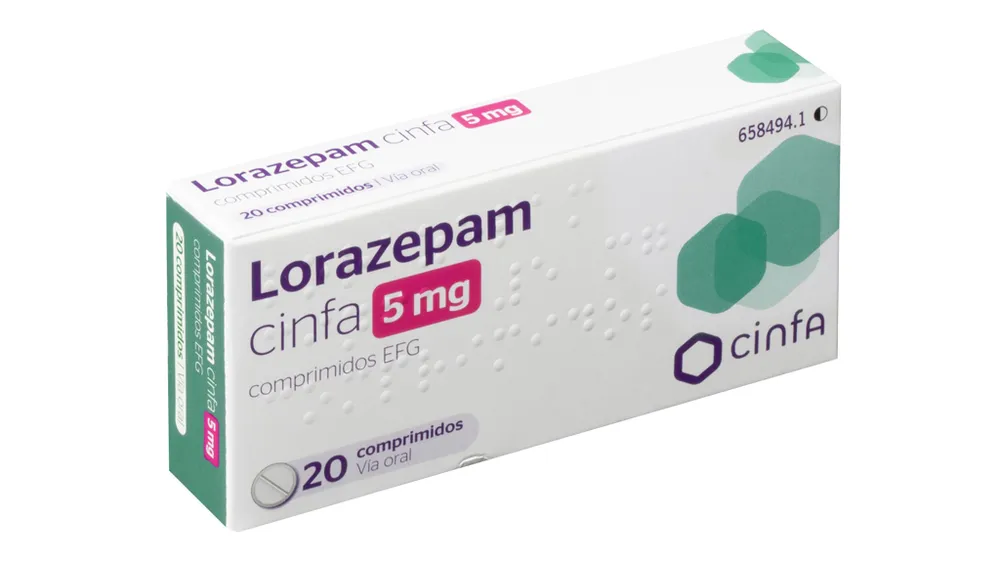
Table of Contents
Patient Information Leaflet
Introduction
Package leaflet: Information for the user
lorazepam cinfa 5 mg tablets EFG
Read the entire leaflet carefully before you start taking this medicine, as it contains important information for you.
- Keep this leaflet as you may need to read it again.
- If you have any questions, ask your doctor or pharmacist.
- This medicine has been prescribed for you only. Do not pass it on to other people, even if they have the same symptoms as you, as it may harm them.
- If you experience any side effects, talk to your doctor or pharmacist, including any possible side effects not listed in this leaflet. See section 4.
Contents of the leaflet
- What lorazepam cinfa is and what it is used for
- What you need to know before taking lorazepam cinfa
- How to take lorazepam cinfa
- Possible side effects
- How to store lorazepam cinfa
- Contents of the pack and other information
1. What lorazepam cinfa is and what it is used for
Lorazepam cinfa is an anxiolytic-sedative (prevents nervousness and anxiety) used for:
- Short-term treatment of all anxiety states associated with insomnia, depression, emotional disturbances, and those related to surgical and/or diagnostic procedures, as well as in pre-anesthesia.
Benzodiazepines are indicated only for the treatment of severe disorders that significantly limit the patient's activity or subject the patient to considerable stress.
2. What you need to know before starting to take lorazepam cinfa
Do not take lorazepam cinfa:
- If you are allergic to lorazepam or to any of the other ingredients of this medicine (listed in section 6).
- If you have ever had an allergic reaction (hypersensitivity) after taking benzodiazepines (a group of medicines to which lorazepam belongs).
- If you have been diagnosed with Myasthenia gravis (an autoimmune neuromuscular disease characterized by very weak or fatigued muscles).
- If you have severe respiratory insufficiency (difficulty breathing or severe chest discomfort).
- If you have sleep apnea (temporary cessation of breathing during sleep).
- If you have a severe liver disease.
- If you are being treated simultaneously with opioids, barbiturates, neuroleptics, or similar medicines.
Warnings and precautions
Consult your doctor or pharmacist before starting to take lorazepam cinfa:
-
If you have impaired liver function.
-
If your doctor has prescribed long-term treatment, periodic blood tests and liver function tests are advisable.
-
If you become pregnant during treatment, inform your doctor immediately.
-
Use in children under 6 years of age is not recommended.
Dependence
Continuous use of benzodiazepines for several weeks may lead to a certain loss of efficacy regarding hypnotic effects. It may also lead to dependence. This occurs mainly after prolonged, uninterrupted use of the medicine. To minimize this risk as much as possible, the following instructions should be observed:
- Benzodiazepines should only be taken under medical prescription (never because they worked for other patients), and you should never recommend them to others.
- Do not increase the doses prescribed by your doctor, nor extend the treatment beyond the recommended duration.
- Consult your doctor regularly so they can decide whether treatment should continue.
- Treatment duration should be as short as possible.
- Discontinuation of treatment should be gradual, following your doctor's instructions.
Tolerance
After continuous use for several weeks, a certain degree of reduced efficacy regarding hypnotic effects may be observed.
Amnesia
Benzodiazepines may cause amnesia. This is more likely to occur several hours after taking the medicine; therefore, to reduce the associated risk, patients should ensure they sleep uninterrupted for 7–8 hours after taking the tablet.
Psychiatric and paradoxical reactions
When treating with benzodiazepines, pre-existing depression may reappear or worsen. Additionally, suicidal tendencies in depressed patients may be masked, which should be closely monitored in these patients.
Taking lorazepam cinfa with other medicines
Inform your doctor or pharmacist if you are taking, have recently taken, or might need to take any other medicines.
It should be noted that all benzodiazepines produce central nervous system (CNS) depressant effects, which may be enhanced when taken together with barbiturates or alcohol.
When lorazepam cinfa is taken with other medicines acting on the CNS, the combination may cause increased drowsiness. These medicines include:
- Medicines used to treat mental illnesses (antipsychotics, hypnotics, anxiolytics/sedatives, antidepressants)
- Medicines used to relieve severe pain (narcotic analgesics)
- Medicines used to treat seizures or epileptic attacks (antiepileptic medicines)
- Anesthetics and barbiturates (sedatives)
- Medicines used to treat allergies (antihistamines)
Likewise, concomitant administration of lorazepam with other medicines may alter lorazepam's effect, prolonging or reducing its activity. These medicines include:
- Clozapine (treatment of schizophrenia)
- Valproate (treatment of epilepsy and bipolar disorders)
- Probenecid (treatment of gout)
- Theophylline or aminophylline (anti-asthmatic, bronchodilators)
Taking lorazepam cinfa with food, drinks, and alcohol:
lorazepam cinfa can be taken with or without food.
Alcohol increases the sedative effect of this medicine; therefore, consumption of alcoholic beverages is not recommended.
Pregnancy and breastfeeding
Pregnancy:
If you are pregnant or breastfeeding, think you may be pregnant, or are planning to become pregnant, consult your doctor or pharmacist before using this medicine.
The use of benzodiazepines appears to be associated with a possible increased risk of congenital malformations during the first trimester of pregnancy. Passage of benzodiazepines and their metabolites across the placenta has been detected.
If, on medical advice, the product is administered during late pregnancy or at high doses during labor, effects on the newborn such as hypoactivity, hypothermia (decreased body temperature), hypotonia (reduced muscle tone), apnea (periods of no breathing), moderate respiratory depression, feeding difficulties, and impaired metabolic response to cold stress may be expected.
Infants born to mothers who have taken benzodiazepines chronically for several weeks during pregnancy or during the last stage of pregnancy may develop physical dependence and experience withdrawal symptoms in the postnatal period.
Breastfeeding:
This medicine should not be used during breastfeeding, as benzodiazepines are excreted in breast milk. Cases of sedation and inability to suckle have been reported in neonates whose mothers were being treated with benzodiazepines. These newborns should be monitored for any of the pharmacological effects mentioned (sedation and irritability).
Use in children, elderly patients, and debilitated patients:
Benzodiazepines are not recommended in children under 6 years of age unless strictly necessary; treatment duration should be as short as possible. Elderly patients and debilitated patients should receive a lower dose, as they are more susceptible to the drug's effects.
Use in patients with respiratory insufficiency
Lower doses are recommended in patients with chronic respiratory insufficiency due to the risk of respiratory depression, such as in patients with chronic obstructive pulmonary disease (COPD) or sleep apnea syndrome.
Driving and use of machines
Lorazepam may impair your ability to drive or operate machinery, as it may cause drowsiness, reduce attention, or impair reaction capacity. These effects are more likely at the beginning of treatment or when the dose is increased. Do not drive or operate machinery if you experience any of these effects.
Lorazepam cinfa contains lactose.
If your doctor has informed you that you have an intolerance to certain sugars, consult with them before taking this medicine.
Lorazepam cinfa contains sodium.
This medicine contains less than 23 mg of sodium (1 mmol) per tablet; thus, it is essentially "sodium-free".
3. How to take lorazepam cinfa
Follow exactly the administration instructions for this medicine as given by your doctor or pharmacist. If in doubt, consult your doctor or pharmacist again.
Your doctor will determine the duration of your treatment. Do not stop treatment prematurely, as it may not achieve the desired effect.
The recommended initial dose for anxiety states is 0.5 to 3 mg daily, divided into several doses. This dose may be increased or decreased according to the patient's needs or age and at the physician’s discretion, without exceeding the recommended maximum dose of 10 mg, divided into several doses.
The tablet may be split into equal doses.
Lorazepam Cinfa 1 mg tablets are available to achieve doses lower than 2.5 mg.
The duration of treatment should be as short as possible. The patient should be reassessed at regular intervals, including the need to continue treatment, especially in patients who are symptom-free. In general, total treatment duration should not exceed 8–12 weeks, including gradual withdrawal. Your doctor will indicate the dose you should take at each stage.
In certain cases, it may be necessary to extend treatment beyond the recommended period; this decision can only be made by your doctor.
Paediatric population
There are no data available in children (under 6 years of age), and therefore, lorazepam is not recommended for use in young children.
Elderly patients and patients with renal and/or hepatic impairment
Elderly patients and patients with renal and/or hepatic impairment may respond to lower doses, with half the adult dose being sufficient.
If you take more lorazepam cinfa than you should
In case of overdose or accidental ingestion, contact your doctor or pharmacist immediately or call the Toxicology Information Service, telephone 91 562 04 20, indicating the medicine and the amount ingested.
As with other benzodiazepines, overdose is generally not life-threatening unless taken concomitantly with other central depressants (including alcohol).
In case of accidental overdose, vomiting should be induced (within one hour) if the patient is conscious.
Overdose with benzodiazepines generally manifests as varying degrees of central nervous system depression, ranging from drowsiness to coma. In moderate cases, symptoms may include drowsiness, confusion, and lethargy. In more severe cases, ataxia (impaired coordination due to nervous system dysfunction), hypotonia (reduced muscle tone), hypotension, respiratory depression, coma, and very rarely death may occur.
If you forget to take lorazepam cinfa
Do not take a double dose to make up for forgotten doses.
If you have any further questions about the use of this medicine, ask your doctor or pharmacist.
4. Possible adverse effects
Like all medicines, this medicine can cause adverse effects, although not everyone experiences them.
The adverse effects listed below are described according to their frequency of occurrence in patients treated:
Very common: May affect more than 1 in 10 people.
Common: May affect up to 1 in 10 people.
Uncommon: May affect up to 1 in 100 people.
Rare: May affect up to 1 in 1,000 people.
Very rare: May affect up to 1 in 10,000 people.
Frequency not known: Cannot be estimated from the available data.
Blood and lymphatic system disorders
Frequency not known: Thrombocytopenia (reduced blood platelets), agranulocytosis (reduction in neutrophils, a type of white blood cell), and pancytopenia (marked reduction in all blood cells).
Immune system disorders
Frequency not known: Hypersensitivity and anaphylactic/anaphylactoid (allergic) reactions.
Endocrine disorders
Frequency not known: Syndrome of inappropriate antidiuretic hormone secretion.
Metabolism and nutrition disorders
Frequency not known: Hyponatremia (low sodium levels).
Psychiatric disorders
Common: Confusion, depression, unmasking of depression.
Uncommon: Change in libido (sexual desire), reduced orgasms.
Frequency not known: Disinhibition, euphoria, suicidal thoughts and attempts, paradoxical reactions such as anxiety, agitation, excitement, hostility, aggressiveness, rage, sleep disturbances/insomnia, increased sexual desire, and hallucinations.
Nervous system disorders
Very common: Feeling of suffocation.
Common: Ataxia (motor incoordination and speech difficulties), dizziness.
Frequency not known: Extrapyramidal symptoms: tremor, dysarthria (difficulty articulating words), headache, seizures, amnesia, coma, attention/concentration disturbances, balance disorders.
Eye disorders
Frequency not known: Visual disturbances (double vision and blurred vision).
Ear and labyrinth disorders
Frequency not known: Vertigo.
Vascular disorders
Frequency not known: Hypotension (low blood pressure).
Respiratory, thoracic and mediastinal disorders
Frequency not known: Respiratory failure, apnea, worsening of sleep apnea.
Worsening of chronic obstructive pulmonary disease (COPD).
Gastrointestinal disorders
Uncommon: Nausea.
Frequency not known: Constipation.
Hepatobiliary disorders
Frequency not known: Jaundice (yellowing of the whites of the eyes and skin).
Skin and subcutaneous tissue disorders
Frequency not known: Angioedema (swelling under the skin of the tongue, glottis, or larynx that may cause airway obstruction and can be fatal), skin allergic reactions, alopecia (hair loss).
Musculoskeletal and connective tissue disorders
Common: Muscle weakness.
Reproductive system and breast disorders
Uncommon: Impotence.
General disorders and administration site conditions
Very common: Feeling of suffocation.
Common: Asthenia (fatigue, tiredness).
Frequency not known: Hypothermia (decreased body temperature).
Additional investigations
Frequency not known: Increased bilirubin, increased transaminases, and increased alkaline phosphatase (liver enzymes).
As indicated above, discontinuation of the product may lead to the reappearance of certain symptoms as a result of dependence development.
Reporting of adverse effects
If you experience any type of adverse effect, consult your doctor or pharmacist, even if they are possible adverse effects not listed in this leaflet. You may also report them directly via the Spanish Pharmacovigilance System for Human Medicines: https://www.notificaram.es. By reporting adverse effects, you can help provide more information on the safety of this medicine.
5. Lorazepam cinfa storage
Keep this medicine out of sight and reach of children.
Do not store above 30°C.
Do not use this medicine after the expiry date stated on the packaging after EXP. The expiry date refers to the last day of the month indicated.
Medicines should not be disposed of via wastewater drains or household waste. Dispose of unused medicines and their containers at the SIGRE collection point at your pharmacy. If you are unsure, ask your pharmacist how to dispose of medicines and containers you no longer need. This will help protect the environment.
6. Package contents and other information
Composition of lorazepam cinfa
- The active substance is lorazepam. Each tablet contains 5 mg of lorazepam.
- The other components are: lactose monohydrate, microcrystalline cellulose (E-460), sodium croscarmellose, sodium lauryl sulfate, and magnesium stearate.
Description of the product and contents of the pack
lorazepam cinfa is presented as white, cylindrical, biconvex, scored tablets with the logo L5 on one side.
It is packaged in PVC-PVDC/Aluminum blisters.
Each pack contains 20 or 500 tablets (hospital pack).
Only certain pack sizes may be marketed.
Marketing Authorization Holder and Manufacturer:
Laboratorios Cinfa, S.A.
Carretera Olaz-Chipi, 10. Polígono Industrial Areta
31620 Huarte (Navarra) - Spain
Date of the most recent review of this leaflet: May 2020
Detailed and up-to-date information on this medicinal product is available on the website of the Spanish Agency of Medicines and Medical Devices (AEMPS) http://www.aemps.gob.es/
You can access detailed and up-to-date information about this medicine by scanning with your mobile phone (smartphone) the QR code included in the package leaflet and carton. You can also access this information at the following internet address: https://cima.aemps.es/cima/dochtml/p/68478/P_68478.html
QR code to: https://cima.aemps.es/cima/dochtml/p/68478/P_68478.html