Lopid 900 mg film-coated tablets
Spain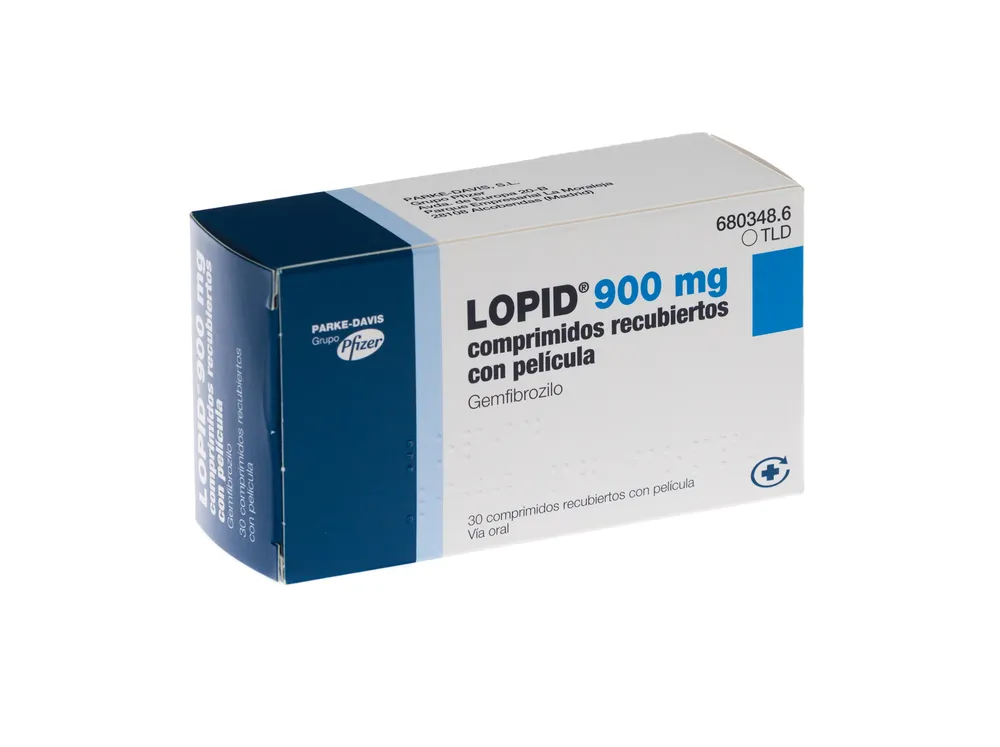
Table of Contents
Patient Information Leaflet
Introduction
Package leaflet: Information for the patient
LOPID 900 mg film-coated tablets
Gemfibrozil
Read the entire leaflet carefully before you start taking this medicine, as it contains important information for you.
- Keep this leaflet, as you may need to read it again.
- If you have any questions, ask your doctor or pharmacist.
- This medicine has been prescribed for you only, and you should not give it to other people, even if they have the same symptoms, as it may harm them.
- If you experience any adverse effects, consult your doctor or pharmacist, even if the effects are not listed in this leaflet. See section 4.
Leaflet contents
- What Lopid is and what it is used for
- What you need to know before taking Lopid
- How to take Lopid
- Possible side effects
- How to store Lopid
- Contents of the pack and other information
1. What Lopid is and what it is used for
Lopid contains the active substance gemfibrozil, which belongs to a group of medicines commonly known as fibrates. These medicines are used to reduce the level of fats (lipids) in the blood, such as triglycerides.
Lopid is used, together with a low-fat diet and other non-medical treatments such as exercise and weight loss, to reduce fat levels in the blood. Lopid may be used when other medicines [statins] are not suitable, to reduce the occurrence of heart problems in men at high risk and whose “bad cholesterol” is elevated.
Lopid may also be prescribed to reduce cholesterol levels in people who cannot be prescribed other lipid-lowering medicines.
2. What you need to know before taking Lopid
Do not take Lopid
- if you are allergic to gemfibrozil or to any of the other ingredients of this medicine (listed in section 6)
- if you have liver disease
- if you have severe kidney disease
- if you have a history of gallstones or gallbladder disease (biliary tract disease)
- if you previously experienced photosensitivity or phototoxic reactions (an allergic reaction triggered by exposure to sunlight) during treatment with fibrates
- if you are taking a medicine called repaglinide (a medicine used to lower blood sugar levels), simvastatin or rosuvastatin 40 mg (medicines that reduce cholesterol levels), dasabuvir (a medicine used to treat hepatitis C infection), or selexipag (a medicine used to treat pulmonary hypertension)
Warnings and precautions
Talk to your doctor or pharmacist before starting Lopid.
Inform your doctor if you have any of the following conditions so they can determine whether Lopid is suitable for you:
- high risk of muscle breakdown (rhabdomyolysis): risk factors include kidney impairment; underactive thyroid; being over 70 years old; excessive alcohol use; history of muscle pain and weakness (muscle toxicity) with another fibrate or statin; history of inherited muscle disorders; use of Lopid in combination with statins, which are used to reduce bad cholesterol and triglycerides and increase good cholesterol, such as rosuvastatin and simvastatin (for simvastatin and rosuvastatin 40 mg, see “Do not take Lopid” and “Other medicines and Lopid”)
- mild or moderate kidney disease
- underactive thyroid
- diabetes
Other medicines and Lopid
Tell your doctor or pharmacist if you are taking, have recently taken, or might need to take any other medicines.
- antidiabetic medicines, especially rosiglitazone or repaglinide (used to lower blood sugar levels) (for repaglinide, see “Do not take Lopid”)
- dasabuvir, a medicine used to treat hepatitis C infection (see “Do not take Lopid” above)
- selexipag, a treatment for pulmonary hypertension (see “Do not take Lopid” above)
- statins used to reduce levels of bad cholesterol and triglycerides and increase levels of good cholesterol, such as atorvastatin, lovastatin, pravastatin, rosuvastatin, and simvastatin (for simvastatin and rosuvastatin 40 mg, see “Do not take Lopid”)
- dabrafenib, a treatment for melanoma
- loperamide, a treatment for diarrhea
- montelukast, a treatment for asthma
- pioglitazone, a treatment used for diabetes
- warfarin, acenocoumarol, and phenprocoumon (anticoagulants used to thin the blood)
- colestipol granules for the treatment of high fat (cholesterol) levels in your blood
- bexarotene medication for the treatment of skin cancer
- colchicine for the treatment of gout
- paclitaxel, a cancer treatment
- enzalutamide, a treatment for prostate cancer
Pregnancy and breastfeeding
If you are pregnant, breastfeeding, think you may be pregnant, or plan to become pregnant, consult your doctor before using this medicine.
Breastfeeding
Lopid is not recommended during breastfeeding.
Driving and using machines
Rarely, Lopid may cause dizziness and affect your vision. If this happens, do not drive or operate machinery until you feel well again.
Low-sodium diet
This medicine contains less than 23 mg of sodium (1 mmol) per tablet; this is essentially "sodium-free".
3. How to take Lopid
Follow exactly the instructions given by your doctor or pharmacist for taking this medicine. If you have any doubts, consult your doctor or pharmacist.
Your blood lipid levels will be closely and regularly monitored before and during treatment with Lopid. If you are diabetic or have thyroid problems, your doctor will need to treat these conditions before starting treatment. Your doctor will also advise you on diet, exercise, smoking cessation, reducing alcohol consumption, and, if necessary, weight loss.
Lopid is taken orally. It is recommended to swallow the tablets with a glass of water, as they have an unpleasant taste if crushed.
Taking Lopid with food and drink
Lopid should be taken half an hour before meals.
Adults and elderly patients
The usual initial dose is between 900 and 1200 mg per day. Your doctor will decide the best dose for you; follow the instructions in this leaflet.
If you are instructed to take a 1200 mg dose, you must take 600 mg half an hour before breakfast and another 600 mg half an hour before dinner.
If you are instructed to take a 900 mg dose, you must take the single dose half an hour before dinner.
Adults with mild to moderate renal impairment
Your doctor will assess your condition before and during treatment with Lopid. Treatment will start at 900 mg per day and may be increased up to 1200 mg depending on response. Lopid must not be used in patients with severe renal impairment.
Use in children
Lopid is not recommended for use in children.
If you take more Lopid than you should
If you accidentally take too much Lopid, contact your doctor immediately or go to the nearest hospital emergency department, or call the Toxicology Information Service. Telephone: 91 562 04 20. Always bring the container, even if no Lopid remains. Signs of overdose may include abdominal cramps, diarrhea, joint and muscle pain, nausea, and vomiting.
If you forget to take Lopid
Do not worry if you forget to take a dose. Simply take the next dose at the correct time. Do not take a double dose to make up for forgotten doses.
If you stop taking Lopid
Do not stop taking Lopid unless your doctor tells you to. Follow all your doctor's instructions while taking Lopid to achieve the maximum benefit from treatment.
If you have any further questions about the use of this medicine, ask your doctor or pharmacist.
4. Possible adverse effects
Like all medicines, this medicine can cause adverse effects, although not everyone will experience them.
Serious adverse effects
Although serious reactions may occur, you should contact your doctor immediately if you experience any of the following symptoms after taking Lopid:
Rare (may affect up to 1 in 1,000 people)
- allergic reaction in which the face, tongue or throat may swell, causing difficulty breathing (angioedema)
- peeling and blistering of the skin, mouth, eyes and genitals
- rash affecting the entire body
- muscle weakness or weakness accompanied by dark urine, fever, rapid heartbeat (palpitations), nausea or vomiting
Other reported adverse effects include
Very common adverse effects (may affect more than 1 in 10 people)
- indigestion
Common adverse effects (may affect up to 1 in 10 people)
- sensation of spinning or swaying (dizziness)
- eczema, rash (especially itchy rash or inflammation)
- headache
- abdominal pain
- diarrhoea
- feeling unwell
- malaise
- constipation
- gas
- fatigue
Uncommon adverse effects (may affect up to 1 in 100 people)
- irregular heartbeat
Rare (may affect up to 1 in 1,000 people)
- decrease or increase in white blood cells (leucopenia, eosinophilia), bone marrow disorder (bone marrow failure)
- reduction in the number of platelets (thrombocytopenia)
- inflammation of the nerves (peripheral neuritis)
- unusual bruising or bleeding due to reduced blood platelets (thrombocytopenia)
- severe anaemia
- loss of sensation and tingling sensation (paraesthesia)
- pancreatitis
- blurred vision
- jaundice (yellowing of the skin), liver function abnormalities
- inflammation of the liver (hepatitis)
- gallstones (cholelithiasis), inflammation of the gallbladder (cholecystitis)
- appendicitis
- depression
- dizziness
- somnolence
- joint and limb pain
- skin inflammation or inflamed skin that peels or sloughs off
- inflammation of the muscles (myositis)
- inflammation of the synovial membrane (synovitis)
- persistent lack of energy
- impotence
- reduced libido
- hair loss
- photosensitivity (sensitivity to light which may cause skin discoloration or rash)
- red, raised, itchy skin areas
- itching
Reporting of adverse effects
If you experience any type of adverse effect, talk to your doctor, pharmacist or nurse, even if it is a possible adverse effect not listed in this leaflet. You can also report them directly via the Spanish Pharmacovigilance System for Human Medicines: https://www.notificaram.es. By reporting adverse effects, you can help provide more information on the safety of this medicine.
5. Storage of Lopid
Keep this medicine out of the sight and reach of children.
Do not use this medicine after the expiry date (EXP) stated on the packaging and outer carton. The expiry date refers to the last day of the month indicated.
Lopid 900 mg film-coated tablets: Do not store above 25°C.
Medicines should not be disposed of via wastewater or household waste. Dispose of containers and unused medicines at a SIGRE collection point at your pharmacy. If you are unsure, ask your pharmacist how to dispose of containers and medicines you no longer need. This will help protect the environment.
6. Contents of the pack and other information
Composition of Lopid
The active substance is gemfibrozil. Each film-coated tablet contains 900 mg of gemfibrozil.
The other components are colloidal silica (anhydrous), precipitated silicon dioxide (E-551), pregelatinized corn starch, sodium carboxymethyl starch (type A), polysorbate 80 (E-433), and magnesium stearate (E-470b).
The coating contains hypromellose (E-464), titanium dioxide (E-171), simethicone, macrogol 6000, and talc (E-553b).
Appearance of Lopid and contents of the pack
Lopid 900 mg are white, oval, film-coated tablets. They are supplied in transparent PVC blisters with an aluminum backing, in packs containing 20, 30, and 100 tablets.
Only certain pack sizes may be commercially available.
Marketing Authorization Holder and Manufacturer
Marketing Authorization Holder
Pfizer, S.L.
Avda. de Europa 20 B,
Parque Empresarial La Moraleja,
28108 Alcobendas (Madrid)
Spain
Manufacturer
Pfizer Manufacturing Deutschland GmbH
Mooswaldallee 1
79108 Freiburg Im Breisgau
Germany
This medicinal product is authorized in the European Economic Area countries and in the United Kingdom (Northern Ireland) under the following names:
Lopid: Denmark, Greece, Iceland, Ireland, Italy, Netherlands, Portugal, Spain, Sweden, and United Kingdom (Northern Ireland)
Gevilon: Austria, Germany
Lipur: France
Date of the most recent revision of this leaflet: March 2023
Detailed and up-to-date information on this medicinal product is available on the website of the Spanish Agency for Medicines and Health Products (AEMPS): http://www.aemps.gob.es/