Lipolasic 2 mg/g ophthalmic gel
Spain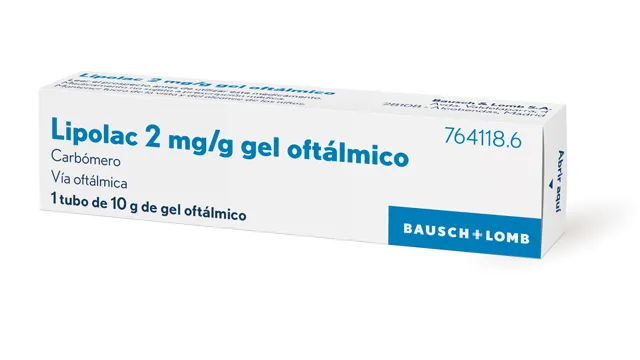
Table of Contents
Patient Information Leaflet
Introduction
Package leaflet: Information for the user
Lipolasic 2 mg/g ophthalmic gel
Carbomer
Read the entire leaflet carefully before you start using this medicine, because it contains important information for you.
Follow exactly the instructions for use provided in this leaflet or those given by your doctor or pharmacist.
- Keep this leaflet, as you may need to read it again.
- If you need advice or further information, consult your pharmacist.
- If you experience any adverse effects, consult your doctor or pharmacist, even if such effects are not listed in this leaflet. See section 4.
- You must consult a doctor if your condition worsens or does not improve.
Contents of the leaflet
- What Lipolasic is and what it is used for
- What you need to know before using Lipolasic
- How to use Lipolasic
- Possible side effects
- How to store Lipolasic
- Contents of the pack and other information
1. What Lipolasic is and what it is used for
Lipolasic is a highly viscous, whitish gel containing a lubricant used as a substitute for natural tears. Your eyes normally produce enough natural tears to move easily and comfortably. If your eyes do not produce enough tears, they may become dry, red, and painful. Lipolasic will help keep your eyes comfortable.
Lipolasic is a highly viscous gel that forms a protective layer over the eye and maintains its surface moist.
It is easy and comfortable to use, and is especially suitable for the symptomatic treatment of severe dry eye.
You should consult a doctor if your condition worsens or does not improve.
2. What you need to know before using Lipolasic
Do not use Lipolasic
- if you are allergic to carbomer or any of the other ingredients of this medicine (listed in section 6).
Warnings and precautions
Talk to your doctor or pharmacist before starting to use Lipolasic.
Children and adolescents up to 18 years
In clinical practice, the safety and efficacy of Lipolasic in children and adolescents at the recommended adult dose has been established, but there are no clinical trial data available.
Use of other medicines
Tell your doctor or pharmacist if you are taking, have recently taken, or might need to take any other medicines.
When Lipolasic is used at the same time as other eye drops or ocular creams, an interval of approximately 15 minutes should be left between the application of these other medicines and Lipolasic, which should always be the last medication applied.
Pregnancy and breastfeeding
If you are pregnant or breastfeeding, think you may be pregnant or are planning to become pregnant, consult your doctor or pharmacist before using this medicine.
You may be advised to use this medicine, but it is also possible that an alternative may be suitable for you.
Driving and using machines
As with all eye preparations, you may experience blurred vision for a short period of time after applying the gel. Wait until your vision is clear before driving or operating machinery.
Contact lenses
To avoid streaks or gel clumps on contact lenses, you must remove them before applying Lipolasic. You may reinsert them after 30 minutes.
3. How to use Lipolasic
Follow exactly the instructions for administration of this medicine as given by your doctor or pharmacist. If in doubt, consult your doctor or pharmacist again.
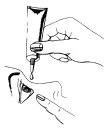
The recommended dose is one drop placed in the angle of the eye closest to the nose, 3–5 times a day, and approximately 30 minutes before going to bed.
Follow these instructions carefully:
- Wash your hands thoroughly.
- Unscrew the cap.
- Look upwards and gently pull down the lower eyelid.
- Hold the Lipolasic tube just above your eye and gently squeeze until gel drops into the space between the eyeball and the lower eyelid.
- Release the lower eyelid, and move your eye while keeping it open to ensure the gel covers the entire eye surface.
- Repeat the process in the other eye, if necessary.
Children and adolescents up to 18 years of age
In clinical practice, the safety and efficacy of Lipolasic in children and adolescents at the recommended adult dose have been established; however, clinical trial data are not available.
If you use more Lipolasic than you should
If you have applied too much Lipolasic, rinse the gel out of your eyes.
If you forget to use Lipolasic
Do not apply a double dose to make up for missed doses.
If you stop using Lipolasic
Dry eye disorder may worsen if not treated properly or adequately. If you have any further questions about the use of this medicine, ask your doctor or pharmacist.
4. Possible adverse effects
Like all medicines, this medicine may cause adverse effects, although not everyone experiences them. Your eyes may feel slightly painful when you apply the gel, and your vision may become blurred. These effects will disappear within a few minutes.
There have been some reports of allergic reactions (hypersensitivity) after administration of Lipolasic, due to one of the excipients in the formulation (this may affect up to 1 in 10,000 people).
Other adverse effects that have rarely been reported (may affect up to 1 in 10,000 people) include sticky eyelids, conjunctivitis (red eyes), speckling (or spots) on the cornea (the surface of the eye), swollen eyes, burning, itching, and eye irritation.
If any of the adverse effects you experience are severe, or if you notice any adverse effects not listed in this leaflet, inform your doctor or pharmacist.
Reporting of adverse effects
If you experience any type of adverse effect, consult your doctor or pharmacist, even if it is a possible adverse effect not mentioned in this leaflet. You may also report them directly through the Spanish Pharmacovigilance System for Human Medicinal Products: https://www.notificaram.es.
By reporting adverse effects, you can help provide more information on the safety of this medicine.
5. Storage of Lipolasic
Keep this medicine out of the sight and reach of children.
Do not use this medicine after the expiry date stated on the packaging after EXP. The expiry date refers to the last day of the month indicated.
Do not store above 25ºC (room temperature).
Lipolasic is sterile until the tube is opened for the first time. It is important to keep the tube as clean as possible during use.
The tube has a flat cap, allowing it to remain in an upright position.
Discard any remaining contents 28 days after opening the tube. It may be helpful to write the date of first opening on the tube.
Remember that this medicine is intended for you. Do not give it to other people.
Medicines must not be disposed of via wastewater or household waste. Dispose of empty containers and unused medicines at a pharmacy’s SIGRE collection point. If you have any doubts, ask your pharmacist how to properly dispose of unused medicines and packaging. This way, you will help protect the environment.
6. Additional Information
Composition of Lipolasic
The active substance is carbomer. Each tube contains 2.0 mg of carbomer per g of gel.
The other components are cetrimide, sorbitol, medium-chain triglycerides, sodium hydroxide (for pH adjustment), and water for injections.
Lipolasic ophthalmic gel contains the preservative cetrimide.
Appearance of the product and contents of the pack
Lipolasic ophthalmic gel is a white, highly viscous gel.
Pack sizes:
Tubes of 5 g of gel. Cartons containing 1 or 3 tubes of 5 g of ophthalmic gel.
Tubes of 10 g of gel. Cartons containing 1 or 3 tubes of 10 g of ophthalmic gel.
Only certain pack sizes may be commercially available.
Marketing Authorization Holder and Manufacturer
Marketing Authorization Holder
Bausch & Lomb S.A.
Avda. Valdelaparra, 4
28108 – Alcobendas, Madrid
Spain
Manufacturer
Dr. Gerhard Mann
Chem.-pharm. Fabrik GmbH
Brunsbuetteler Damm 165-173
13581 Berlin (Germany)
Laboratoire Chauvin
Zone Industrielle de Ripotier
50 Avenue Jean Monnet
07200 Aubenas (France)
This medicinal product is authorized in the Member States of the European Economic Area under the following names:
United Kingdom: Liposic
Belgium: Liposic
Greece: Liposic
Spain: Lipolasic
France: Liposic
Ireland: Liposic
Italy: Lipovisc
Portugal: Liposic
Date of the most recent review of this leaflet: June 2018
Detailed and up-to-date information on this medicinal product is available on the website of the Spanish Agency of Medicines and Health Products (AEMPS) http://www.aemps.gob.es/
Other Information
Lipolasic is used for the symptomatic treatment of "dry eye", which is dehydration of the eye surface due to disturbances in tear secretion or tear quality. Dry eye disease may also occur when the eyelids cannot close partially or completely.
This condition is so common that one in five patients visiting an ophthalmologist suffers from it. There are many factors that can cause it, such as decreased tear production with aging, air conditioning, computer work, hormonal changes during menopause, etc. Environmental and climatic factors may also play a role in the development of dry eye.
What do we mean by "dry eye"?
During the day, we blink an average of 14,000 times. With each blink, a very thin tear film spreads over the surface of the eyeball, keeping it soft, clean, and moist, and protecting the eye from contaminants. When the volume or composition of the tear film is altered, drying (desiccation) of the cornea and conjunctiva occurs, and patients experience symptoms such as burning, dry eye sensation, foreign body sensation or pressure, and light sensitivity.
Lipolasic is a soothing gel that moisturizes the eyes and provides lubrication to the eyes and eyelids similar to natural tears. The carbomer in Lipolasic gel increases the gel's viscosity, allowing it to remain in contact with the eye for a longer period of time.
Your ophthalmologist has prescribed you an artificial tear substitute to relieve your eye discomfort. In addition to using it consistently, you should follow these recommendations:
- Ventilate your apartment or house several times a day.
- Make sure you drink enough fluids.
- Go outdoors frequently.
- Avoid directing air vents toward your eyes.
- Take breaks when working in front of a computer screen.
However, it is also important that you consult your ophthalmologist regularly for follow-up, as dry eye may lead to a serious condition if inadequately or improperly treated.