Lidocaine/epinephrine Dermogen 20 mg/ml + 0.0125 mg/ml solution for injection EFG
Spain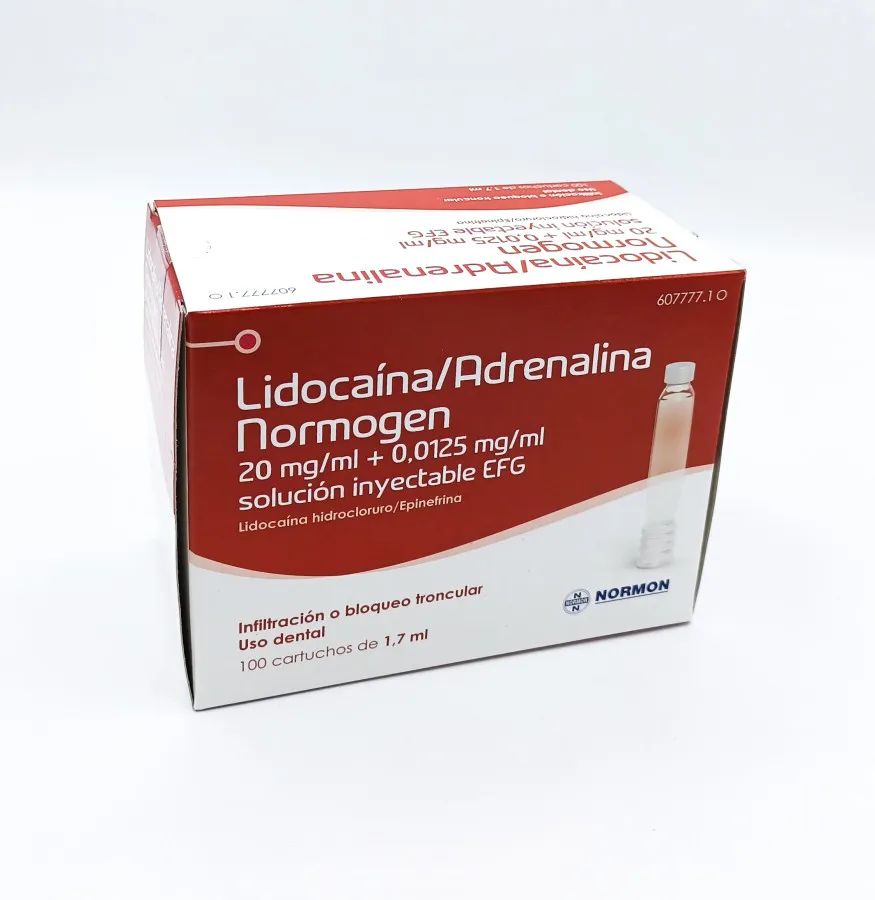
Table of Contents
- Patient Information Leaflet
- Introduction
- 1. What Lidocaína/Epinefrina Dermogen 20 mg/ml + 0.0125 mg/ml solution for injection EFG is and what it is used for
- 2. What you need to know before using Lidocaine/Epinephrine Dermogen 20 mg/ml + 0.0125 mg/ml solution for injection EFG
- 3. How to use Lidocaine/Epinephrine Dermogen 20 mg/ml + 0.0125 mg/ml solution for injection EFG
- 4. Possible adverse effects
- 5. Storage of Lidocaine/Epinephrine Dermogen 20 mg/ml + 0.0125 mg/ml solution for injection EFG
- 6. Contents of the pack and other information
Patient Information Leaflet
Introduction
Patient Information Leaflet
Lidocaíne / Epinephrine Dermogen 20 mg/ml + 0.0125 mg/ml injectable solution EFG
Lidocaine, Epinephrine
Read all of this leaflet carefully before you start using this medicine, as it contains important information for you.
Follow exactly the instructions for administration provided in this leaflet or as directed by your doctor or pharmacist.
- Keep this leaflet, as you may need to refer to it again.
- If you need advice or further information, consult your pharmacist.
- If you experience any adverse effects, consult your doctor or pharmacist, even if they are effects not listed in this leaflet. See section 4.
Leaflet Contents
- What Lidocaíne / Epinephrine Dermogen 20 mg/ml + 0.0125 mg/ml injectable solution EFG is and what it is used for
- What you need to know before using Lidocaíne / Epinephrine Dermogen 20 mg/ml + 0.0125 mg/ml injectable solution EFG
- How to use Lidocaíne / Epinephrine Dermogen 20 mg/ml + 0.0125 mg/ml injectable solution EFG
- Possible side effects
- How to store Lidocaíne / Epinephrine Dermogen 20 mg/ml + 0.0125 mg/ml injectable solution EFG
- Contents of the pack and other information
1. What Lidocaína/Epinefrina Dermogen 20 mg/ml + 0.0125 mg/ml solution for injection EFG is and what it is used for
Lidocaína / Epinefrina Dermogen is an injectable solution. It is supplied in cartridges, in single-unit packs, packs of 50 cartridges, and packs of 100 cartridges.
Lidocaína / Epinefrina Dermogen 20 mg/ml + 0.0125 mg/ml solution for injection EFG is indicated for local dental anesthesia by infiltration or nerve block.
2. What you need to know before using Lidocaine/Epinephrine Dermogen 20 mg/ml + 0.0125 mg/ml solution for injection EFG
Do not use Lidocaine / Epinephrine Dermogen 20 mg/ml + 0.0125 mg/ml solution for injection EFG:
- If you are allergic to the active substances, amide-type local anesthetics, or to any of the other ingredients of this medicine listed in section 6.
- If you have closed-angle glaucoma (increased intraocular pressure), paroxysmal tachycardia (rapid pulse), or absolute arrhythmia with high frequency (abnormal heart rhythm).
- Do not administer intravenously.
Warnings and precautions
Please consider the following before starting administration of Lidocaine / Epinephrine Dermogen 20 mg/ml + 0.0125 mg/ml solution for injection EFG:
-
If you have any liver disorder. Special caution is required if the disorder is severe, as toxic levels of lidocaine may be reached.
-
If you have kidney disease, as the anesthetic or its metabolites may accumulate.
-
If you are being treated with monoamine oxidase inhibitors, tricyclic antidepressants, or phenothiazines, or if you are taking non-cardioselective beta-blockers.
-
If you have cardiovascular dysfunction, as cardiac depressant effects may be enhanced.
-
If you have drug sensitivities, especially to anesthetics or other chemically related compounds.
-
May contribute to the development of malignant hyperthermia if supplemental anesthesia is required.
-
Oxygen, resuscitation equipment, and resuscitation drugs must be immediately available.
-
Avoid injection into inflamed or infected areas.
Please consult whether any of the above conditions have ever occurred in the patient.
Other medicines and Lidocaine / Epinephrine Dermogen 20 mg/ml + 0.0125 mg/ml solution for injection EFG:
Inform your doctor or pharmacist if you are taking, have recently taken, or might need to take any other medicines, including those obtained without a prescription. Some medicines may affect the action of others.
Administration with the following medicines is not recommended:
-
Tricyclic antidepressants or MAO inhibitors (monoamine oxidase inhibitors): may enhance the pressor effect of epinephrine.
-
Phenothiazines and butyrophenones: may reduce or reverse the pressor effect of epinephrine.
-
Non-cardioselective beta-blocking agents (e.g., propranolol).
-
Central nervous system depressants: may lead to additive depressant effects.
-
Disinfectant solutions containing heavy metal ions: lidocaine may release ions from these solutions, causing significant local irritation and swelling.
-
Beta-adrenergic blockers: may slow the metabolism of lidocaine due to reduced hepatic blood flow, increasing the risk of lidocaine toxicity.
-
Cimetidine: may inhibit hepatic metabolism of lidocaine, leading to an increased risk of lidocaine toxicity.
-
Neuromuscular blocking agents: the anesthetic may prolong or potentiate the action of these drugs.
Intramuscular injection of lidocaine may increase levels of phosphokinase.
Use of Lidocaine / Epinephrine Dermogen 20 mg/ml + 0.0125 mg/ml solution for injection EFG with food:
After administration of Lidocaine / Epinephrine Dermogen 20 mg/ml + 0.0125 mg/ml solution for injection EFG, food should not be ingested until sensation has returned.
Pregnancy and breastfeeding
If you are pregnant or breastfeeding, think you may be pregnant, or plan to become pregnant, consult your doctor or pharmacist before using this medicine.
Pregnancy: Consult your doctor or pharmacist before using any medicine. Caution should be exercised when prescribing to pregnant women.
There are no clinical data on lidocaine in pregnant women. Animal studies do not indicate direct or indirect harmful effects with respect to pregnancy, embryonic/fetal development, labor, or postnatal development.
Breastfeeding: Consult your doctor or pharmacist before using any medicine. Lidocaine is excreted in small amounts in breast milk. Although the possible consequences for the infant are unknown, the potential for adverse effects appears to be low.
Driving and use of machines
Although effects on the ability to drive vehicles are not expected, the dentist will decide when you are fit to drive or operate machinery.
Lidocaine / Epinephrine Dermogen 20 mg/ml + 0.0125 mg/ml solution for injection EFG contains sodium metabisulfite (E-223)
This medicine contains sodium metabisulfite (E-223) as an excipient. It may rarely cause severe allergic reactions and bronchospasm (sudden sensation of suffocation).
Athletes should be aware that lidocaine may result in a positive doping test.
3. How to use Lidocaine/Epinephrine Dermogen 20 mg/ml + 0.0125 mg/ml solution for injection EFG
Your dentist will determine the dose and method of administration of Lidocaine/Epinephrine Dermogen.
The recommended dose is:
- For infiltration or terminal anaesthesia, administration of 1 ml of Lidocaine/Epinephrine Dermogen 20 mg/ml + 0.0125 mg/ml solution for injection EFG is generally sufficient.
- For nerve block anaesthesia, the dose will be 1.5 to 2 ml.
- The maximum dose within 24 hours is 500 mg of lidocaine, and must in no case exceed 7 mg/kg of body weight in adults.
Do not eat food until sensation has returned.
If you use more Lidocaine/Epinephrine Dermogen 20 mg/ml + 0.0125 mg/ml solution for injection EFG than you should
Respiratory, circulatory complications, and seizures may occur. If this happens, administration will be stopped immediately and appropriate treatment initiated.
In case of overdose or accidental ingestion, contact the Toxicology Information Service (Tel. 91 562 04 20), indicating the product and the amount received.
4. Possible adverse effects
Like all medicines, this medicine may produce adverse effects, although not everyone will experience them.
Common (>1/100, <1/10): excitation, agitation, dizziness, tinnitus (ringing in the ears), blurred vision, nausea, vomiting, tremors, and convulsions. Numbness of the tongue and perioral area. Following excitation, depression may occur with somnolence, respiratory disturbances that may progress to respiratory arrest and coma, even with cardiac disturbances (myocardial depression), low blood pressure (hypotension), decreased heart rate (bradycardia), arrhythmia, and cardiac arrest.
Very rare (<1/10,000): Allergic reactions (urticaria, anaphylactoid reaction), blood disorders (methemoglobinemia).
Other adverse reactions: Epinephrine may cause rapid heart rate (tachycardia), disturbances in heart rhythm, and increased blood pressure, although these are extremely rare.
If you observe any of these reactions or any other reaction not described in this leaflet, consult your doctor or pharmacist.
Reporting of adverse effects
If you experience any type of adverse effect, consult your doctor or pharmacist, even if it is a possible adverse effect not listed in this leaflet. You may also report them directly via the Spanish Pharmacovigilance System for Human Medicinal Products: www.notificaRAM.es. By reporting adverse effects, you can help provide more information on the safety of this medicine.
5. Storage of Lidocaine/Epinephrine Dermogen 20 mg/ml + 0.0125 mg/ml solution for injection EFG
Keep Lidocaine / Epinephrine Dermogen 20 mg/ml + 0.0125 mg/ml solution for injection EFG out of the reach and sight of children.
Do not store above 30°C. Keep the blister in the outer packaging to protect from light. Do not freeze.
Do not use this medicinal product after the expiry date stated on the packaging after Exp. The expiry date refers to the last day of the month indicated.
Medicines should not be disposed of via wastewater or household waste. Dispose of containers and unused medicines at the SIGRE collection point at the pharmacy. Ask your pharmacist how to dispose of containers and medicines you no longer need. This way, you will help protect the environment.
6. Contents of the pack and other information
Composition of Lidocaine / Epinephrine Dermogen 20 mg/ml + 0.0125 mg/ml solution for injection EFG
- The active substances are lidocaine and epinephrine.
- Other excipients are: Sodium metabisulfite (E-223), sodium chloride, water for injection.
Appearance of the medicinal product and contents of the pack
Lidocaine / Epinephrine Dermogen 20 mg/ml + 0.0125 mg/ml solution for injection EFG is presented as an injectable solution in glass cartridges. Unit pack containing one cartridge and a package leaflet. Pack containing 50 cartridges of 1.8 ml and one leaflet. Clinical pack containing 100 cartridges in blister holder and one leaflet.
Marketing Authorization Holder and Manufacturer
Marketing Authorization Holder
FARMALIDER, S.A.
C/La Granja, 1
28108-Alcobendas, Madrid
Spain
Manufacturer
PIERREL, S.P.A.
Via Nazzionale Appia (Capua, Caserta) I-81043
Italy
Date of the most recent revision of this leaflet: 04/2017.
Other sources of information
Detailed information on this medicinal product is available on the website of the Spanish Agency of Medicines and Health Products.
……………………………………………………………………………………………………
This information is intended exclusively for healthcare professionals
Method of administration
By injection into the oral mucosa.
FOR DENTAL ANESTHESIA USE ONLY.
To avoid intravascular injection, aspiration must always be performed in at least two planes (rotating the needle 180º); however, a negative aspiration result does not rule out inadvertent intravascular injection.
The injection rate must not exceed 0.5 ml in 15 seconds, i.e., 1 cartridge per minute.
Major systemic reactions resulting from accidental intravascular injection can usually be avoided by proper injection technique (after aspiration, slow injection of 0.1–0.2 ml, followed by slow administration of the remainder), waiting at least 20–30 seconds before continuing.
Cartridges that have been opened must not be used for other patients. Any residues must be discarded.
Precautions for use
Each time a local anesthetic is used, the following drugs/therapies must be available:
- -Anticonvulsant drugs (benzodiazepines or barbiturates), muscle relaxants, atropine, and vasopressors or epinephrine for severe allergic or anaphylactic reactions.
- -Resuscitation equipment (particularly an oxygen source) capable of providing artificial ventilation if necessary.
- -Careful and continuous monitoring of cardiovascular and respiratory vital signs (adequate ventilation) and the patient's level of consciousness must be maintained after each local anesthetic injection. Restlessness, anxiety, tinnitus, dizziness, blurred vision, tremors, depression, or drowsiness may be early warning signs of central nervous system toxicity.
Treatment in cases of overdose
General basic measures:
Hypertension: Elevate upper body; if necessary, administer sublingual nifedipine.
Seizures: Protect patient from injury; if necessary, administer benzodiazepines (e.g., diazepam i.v.).
Hypotension: Place patient in supine position; if necessary, intravenous infusion of a complete electrolyte solution, vasopressor (e.g., ethylephrine i.v.).
Bradycardia: Atropine i.v.
Anaphylactic shock: Contact emergency physician immediately; meanwhile, place patient in shock position, administer generous infusion of a complete electrolyte solution; if necessary, i.v. adrenaline, i.v. cortisone.
Cardiac arrest: Immediate cardiopulmonary resuscitation; contact emergency physician.