Lercanidipine Viatris 20 mg film-coated tablets EFG
Spain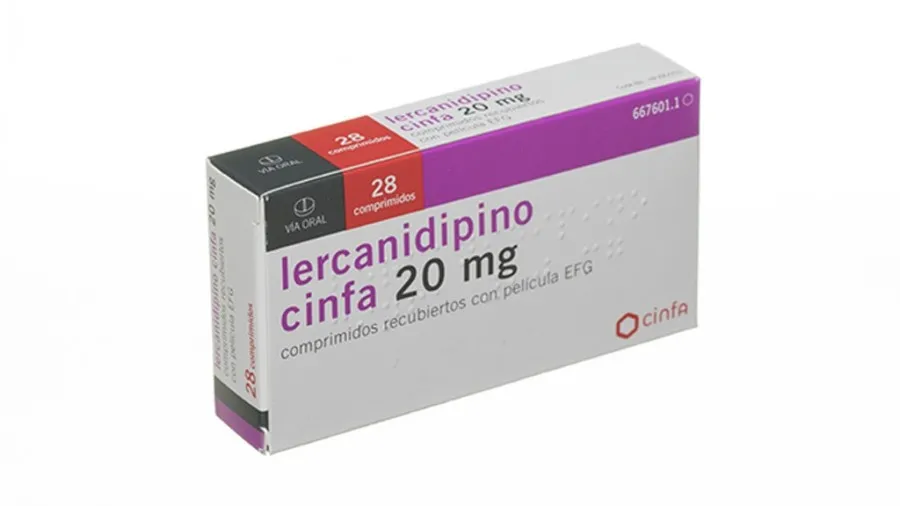
Table of Contents
- Patient Information Leaflet
- Introduction
- 1. What Lercanidipine Viatris is and what it is used for
- 2. What you need to know before taking Lercanidipine Viatris
- 3. How to take Lercanidipine Viatris
- 4. Possible side effects
- 5. Storage of Lercanidipine Viatris
- 6. Contents of the pack and other information
Patient Information Leaflet
Introduction
Patient Information Leaflet
Lercanidipino Viatris 20 mg Film-coated Tablets EFG
lercanidipine hydrochloride
Read the entire leaflet carefully before you start taking this medicine, because it contains important information for you.
-
Keep this leaflet, as you may need to read it again.
- If you have any questions, ask your doctor or pharmacist.
-
This medicine has been prescribed for you only and must not be given to other people, even if they have the same symptoms as you, because it may harm them.
- If you experience any adverse effects, consult your doctor or pharmacist, even if they are adverse effects not listed in this leaflet. See section 4.
Leaflet Contents
- What Lercanidipino Viatris is and what it is used for
- What you need to know before taking Lercanidipino Viatris
- How to take Lercanidipino Viatris
- Possible side effects
- How to store Lercanidipino Viatris
- Contents of the pack and other information
1. What Lercanidipine Viatris is and what it is used for
Lercanidipine Viatris belongs to a group of medicines called calcium channel blockers, which block the entry of calcium into the muscle cells of the heart and blood vessels that carry blood away from the heart (arteries). The entry of calcium into these cells causes the heart to contract and the arteries to narrow. By blocking calcium entry, calcium channel blockers reduce the contraction of the heart and dilate (widen) the arteries, thereby lowering blood pressure. It is not recommended for children under 18 years of age.
Lercanidipine Viatris has been prescribed to treat your high blood pressure, also known as hypertension.
2. What you need to know before taking Lercanidipine Viatris
Do not take Lercanidipine Viatris
-
If you are allergic to lercanidipine or to any of the other ingredients of this medicine (listed in section 6).
-
If you have heart conditions such as:
- Untreated heart failure.
- Obstruction of the heart's outflow tract.
- Unstable angina (angina at rest or progressively worsening).
- During the first month after having suffered a heart attack.
-
If you have severe liver problems.
-
If you have severe kidney problems or are undergoing dialysis.
-
If you are taking medicines that are inhibitors of hepatic metabolism, such as:
- Antifungal medicines (such as ketoconazole or itraconazole).
- Macrolide antibiotics (such as erythromycin, troleandomycin, or clarithromycin).
- Antiviral medicines (such as ritonavir).
- Medicines containing cyclosporine (used after organ transplant to prevent organ rejection).
- Grapefruit or grapefruit juice.
Warnings and precautions
Talk to your doctor or pharmacist before taking Lercanidipine Viatris:
- If you have a heart condition.
- If you have liver or kidney problems.
You must inform your doctor if you think you are pregnant (could become pregnant) or are breastfeeding (see section on pregnancy, breastfeeding, and fertility).
Children and adolescents
The safety and efficacy of lercanidipine have not been established in children under 18 years of age.
Other medicines and Lercanidipine Viatris
Tell your doctor or pharmacist if you are taking, have recently taken, or might need to take any other medicines.
Taking lercanidipine with certain medicines may alter the effect of these medicines or of lercanidipine.
It is especially important that your doctor knows if you are being treated with any of the following medicines:
- Phenytoin, phenobarbital, or carbamazepine (medicines used to treat epilepsy).
- Rifampicin (a medicine used to treat tuberculosis).
- Midazolam (a medicine to help you sleep).
- Cimetidine, more than 800 mg (a medicine for ulcers, indigestion, or heartburn).
- Digoxin (a medicine used to treat certain heart problems).
- Terfenadine or astemizole (medicines for allergies).
- Amiodarone, quinidine, or sotalol (medicines used to treat heart rhythm disorders).
- Medicines known as beta-blockers, for example, metoprolol (a medicine used to treat high blood pressure).
- Simvastatin (a medicine used to lower blood cholesterol levels).
- Other medicines used to treat high blood pressure.
Taking Lercanidipine Viatris with food, drinks, and alcohol
- High-fat meals considerably increase the concentration of the medicine in the blood (see section 3).
- Do not consume alcohol during treatment with lercanidipine, as it may enhance the effect of lercanidipine.
- Do not take grapefruit or grapefruit juice, as it may increase the effect of lercanidipine.
Pregnancy and breastfeeding
Lercanidipine is not recommended during pregnancy and must not be taken while breastfeeding. There are no data on the use of lercanidipine in pregnant or breastfeeding women. If you are pregnant or breastfeeding, if you are not using an effective method of contraception, think you may be pregnant, or plan to become pregnant, consult your doctor or pharmacist before taking this medicine.
Driving and using machines
Lercanidipine has negligible influence on the ability to drive or use machines. However, adverse effects such as dizziness, weakness, fatigue, and rarely, drowsiness, may occur. Exercise caution until you know how you tolerate lercanidipine.
Lercanidipine Viatris contains lactose and sodium
This medicine contains lactose. If your doctor has informed you that you have an intolerance to certain sugars, consult with him before taking this medicine.
This medicine contains less than 23 mg of sodium (1 mmol) per tablet; this is essentially “sodium-free”.
3. How to take Lercanidipine Viatris
Follow exactly the instructions for use of this medicine provided by your doctor or pharmacist. If in doubt, consult your doctor or pharmacist again.
Adults
The recommended dose is one 10 mg tablet daily, taken at the same time each day, preferably in the morning, at least 15 minutes before breakfast, as a high-fat meal significantly increases the levels of the medicine in the blood. Your doctor may decide to increase the dose to one 20 mg tablet daily, if necessary.
The tablets should preferably be swallowed whole with half a glass of water. The score line is intended solely for breaking the tablet if you have difficulty swallowing it whole, but not for dividing it into equal doses.
Elderly patients
No adjustment of the daily dose is required. However, special caution is needed when starting treatment.
Patients with liver or kidney problems
Special caution is needed when starting treatment. Your doctor may decide to adjust your dose.
Use in children and adolescents
Lercanidipine is not recommended for use in children and adolescents under 18 years of age.
If you take more Lercanidipine Viatris than you should
In case of overdose or accidental ingestion, contact your doctor or pharmacist immediately, go to the nearest emergency department, or call the Toxicology Information Service at: 91 562 04 20, indicating the medicine and the amount ingested.
Exceeding the appropriate dosage may cause an excessive drop in your blood pressure and may make your heart rate irregular or faster. Loss of consciousness may also occur.
If you forget to take Lercanidipine Viatris
If you forget to take your tablet, take it as soon as you remember, unless it is almost time for your next dose. Then continue as before. Do not take a double dose to make up for forgotten doses.
If you stop taking Lercanidipine Viatris
If you stop taking lercanidipine, your blood pressure may rise again. Consult your doctor before stopping treatment.
If you have any further questions about the use of this medicine, ask your doctor or pharmacist.
4. Possible side effects
Like all medicines, this medicine can cause side effects, although not everyone will experience them.
Some side effects can be serious. If you experience any of the following, contact your doctor immediately or go to the nearest hospital emergency department:
Rare (may affect up to 1 in 1,000 people)
- Allergic reactions (with symptoms such as itching, rash, and hives)
- Chest pain, often spreading to the arms or neck, and sometimes to the shoulders and back, due to insufficient blood supply to the heart (angina pectoris)
- Fainting
If you have angina pectoris, lercanidipine may very rarely cause an increased frequency of attacks, which may last longer and be more severe. Isolated cases of heart attacks have been observed.
Other side effects:
Common (may affect up to 1 in 10 people)
- Headache
- Rapid heartbeat
- Awareness of heartbeats (palpitations)
- Flushing (temporary redness of the face, neck, or upper chest)
- Swelling of the ankles
Uncommon (may affect up to 1 in 100 people)
- Dizziness
- Feeling weak or tired
- Low blood pressure
- Heartburn
- Stomach pain
- Malaise
- Skin rash
- Itching
- Muscle pain
- Increased amount of urine
Rare (may affect up to 1 in 1,000 people)
- Drowsiness
- Vomiting
- Diarrhea
- Hives
- Increased frequency of urination
- Chest pain
Frequency not known (cannot be estimated from available data)
- Increased liver enzyme values in blood tests
- Inflammation of the gums
- Cloudy fluid (when performing dialysis through a tube inserted into the abdomen)
- Swelling of the face, lips, tongue, or throat, which may cause difficulty breathing or swallowing
Reporting of side effects
If you experience any side effect, talk to your doctor or pharmacist, even if it is a possible side effect not listed in this leaflet. You can also report them directly via the Spanish Pharmacovigilance System for Human Medicines: https://www.notificaram.es. By reporting side effects, you can help provide more information on the safety of this medicine.
5. Storage of Lercanidipine Viatris
Keep this medicine out of the sight and reach of children.
Do not use Lercanidipine Viatris after the expiry date which is stated on the label, carton or bottle after EXP or CAD. The expiry date refers to the last day of the month indicated.
Blister packs: Do not store above 25°C. Keep in the original packaging to protect from moisture.
Bottles: Keep the bottle tightly closed to protect from moisture.
Medicines must not be disposed of via wastewater or household waste. Dispose of unused medicines and their containers at the SIGRE collection point at your pharmacy. If you have any doubts, ask your pharmacist how to dispose of medicines and containers you no longer need. This will help protect the environment.
6. Contents of the pack and other information
Composition of Lercanidipine Viatris
The active substance is lercanidipine hydrochloride.
Each film-coated tablet contains 20 mg of lercanidipine hydrochloride, equivalent to 18.8 mg of lercanidipine.
The other components are: magnesium stearate, povidone, sodium starch glycolate (potato starch type A), lactose monohydrate, microcrystalline cellulose.
Coating: macrogol, polyvinyl alcohol (partially hydrolysed), talc, titanium dioxide (E-171), yellow iron oxide (E-172), red iron oxide (E-172).
Appearance of the product and contents of the pack
Lercanidipine Viatris are pink, round, biconvex, film-coated tablets 8.5 mm in diameter, scored on one side and marked with an 'L' on the other side.
The score line is intended only to facilitate breaking the tablet for ease of swallowing and does not guarantee equal dosing.
It is available in blister packs containing 28, 30, 50, 56, 98, 100 tablets.
It is also available in bottles containing 28, 30, 50, 90, 98, 100, 105 tablets.
Only certain pack sizes may be commercially available.
Marketing Authorisation Holder and Manufacturer
Marketing Authorisation Holder
Viatris Limited
Damastown Industrial Park
Mulhuddart, Dublin 15
Dublin
Ireland
Manufacturer
Actavis Ltd.
BLB015-016 Bulebel Industrial Estate, Zejtun ZTN3000
Malta
Or
Coripharma ehf.
Reykjavikurvegur 76-78, IS-220 Hafnarfjörður
Iceland
Or
Balkanpharma – Dupnitsa AD
3 Samokovsko Str.
Dupnitsa 2600
Bulgaria
For further information about this medicinal product, please contact the local representative of the Marketing Authorisation Holder:
Viatris Pharmaceuticals, S.L.U.
C/ General Aranaz, 86
28027 - Madrid
Spain
This medicinal product is authorised in the European Economic Area (EEA) member states under the following names:
Spain: Lercanidipino Viatris 20 mg film-coated tablets EFG
Italy: Lercanidipina Mylan Italia
Netherlands: Lercanidipine HCl Viatris 20 mg, filmomhulde tabletten
Portugal: Lercanidipina Mylan 20 mg comprimido revestido por pelicula
United Kingdom: Lercanidipine 20 mg Film-Coated Tablets
Date of the most recent review of this leaflet: November 2021
Detailed information on this medicinal product is available on the website of the Spanish Agency of Medicines and Health Products (AEMPS): https://www.aemps.gob.es/