Largactil 25 mg film-coated tablets
Spain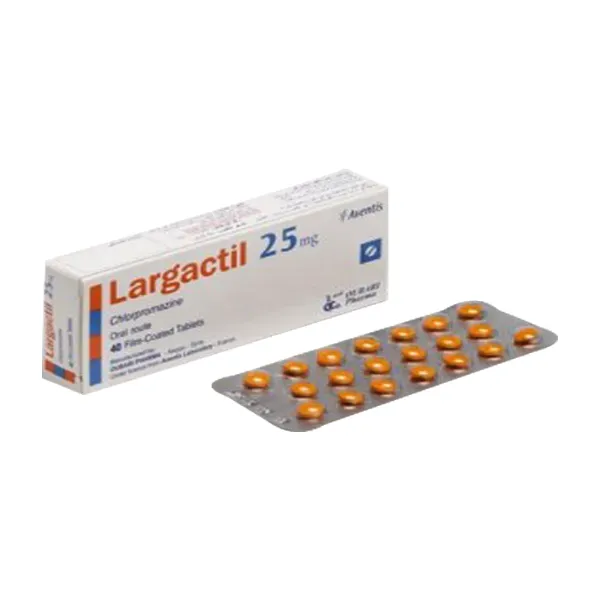
Table of Contents
Package leaflet: Information for the user
Introduction
Package leaflet: information for the user
Largactil 25 mg film-coated tablets
chlorpromazine
Read the entire leaflet carefully before you start taking this medicine because it contains important information for you.
- Keep this leaflet. You may need to read it again.
- If you have any questions, ask your doctor or pharmacist.
- This medicine has been prescribed for you only, and you should not give it to others, even if they have the same symptoms as you, because it could harm them.
- If you experience any adverse reactions, consult your doctor or pharmacist, even if they are adverse reactions not listed in this leaflet. See section 4.
Leaflet contents:
- What Largactil is and what it is used for
- What you need to know before taking Largactil
- How to take Largactil
- Possible side effects
- How to store Largactil
- Contents of the pack and other information
1. What Largactil is and what it is used for
It is an antipsychotic and neuroleptic drug belonging to the group of medicines known as phenothiazines. Its neuroleptic activity is manifested by its sedative effect, which is useful in states of agitation, aggressiveness, and anxiety in psychiatric patients. Chlorpromazine also has a marked antiemetic activity (stops or prevents vomiting) and reduces anxiety.
Always under a doctor's prescription, this medicine is indicated for the treatment of:
- Psychomotor agitation states: acute psychoses, manic crises, delirious episodes, confusional syndromes, psychogeriatric conditions, etc.
- Psychotic disorders: schizophrenia, chronic delusional syndromes.
- Sleep cures.
2. What you need to know before taking Largactil
Do not take Largactil
- if you are allergic (hypersensitive) to chlorpromazine, other phenothiazines, or any of the other components of this medicine (listed in section 6).
- if you are at risk of increased intraocular pressure (glaucoma).
- if you are at risk of urinary retention due to urethral or prostate problems.
- in case of coma caused by alcohol or barbiturate intoxication.
- if you have previously suffered from a disease characterized by a decrease in the number of granulocytes in the blood (agranulocytosis).
- if you are allergic or intolerant to gluten.
- if you are breastfeeding.
- if you are a child under one year of age.
- if you are being treated with citalopram or escitalopram (see section “Taking Largactil with other medicines”).
- if you are being treated with dopaminergic medicines (see section “Taking Largactil with other medicines”).
Warnings and precautions
Consult your doctor or pharmacist before starting to take Largactil:
-
If your body temperature rises inexplicably, consult your doctor immediately due to the risk of developing a condition called neuroleptic malignant syndrome, which has been reported during treatment with this type of medicine. Symptoms include muscle rigidity, increased body temperature, and disturbances of the nervous system.
-
If you have risk factors for stroke.
-
If you have Parkinson’s disease.
-
If you have epilepsy. Treatment should be discontinued if seizures occur.
-
If you have serious heart or circulatory problems.
-
If you have liver or kidney disorders.
-
If you have a history of liver disease.
-
If you have intestinal obstruction (paralytic ileus).
-
Ensure the absence of factors that may favor the occurrence of cardiac rhythm disturbances (ventricular arrhythmia): heart rate < 55 beats per minute, low blood potassium levels, congenital prolonged QT interval, or concomitant use of medicines that may cause the conditions described above.
-
If your treatment is prolonged, your doctor may recommend an eye examination and blood tests.
-
In case of fever, sore throat, infection, or mouth ulcers, your doctor will perform a blood test to rule out a possible decrease in a type of white blood cells (granulocytes) or an increase in leukocyte count.
-
If you suffer from epileptic seizures. The risk of seizures may increase, so your doctor may monitor you closely and perform an electroencephalogram.
-
This type of medicine may increase the risk of cardiac rhythm disturbances (prolonged QT interval), which can be severe (torsades de pointes) and potentially fatal. Your doctor will perform necessary checks to exclude possible risk factors before starting treatment and, if needed, during treatment.
-
Elderly patients are more likely to experience sedation and low blood pressure (orthostatic hypotension). Elderly patients with increased susceptibility to low blood pressure, sedation, extrapyramidal effects, chronic constipation, or prostate hypertrophy should be closely monitored.
-
In elderly patients with dementia-related psychosis treated with antipsychotics (possible increased risk of death).
-
If you have risk factors for thromboembolism (blood clot formation) (see section “4. Possible side effects”).
-
If you or your caregiver:
-
notice yellowing of the skin or eyes (jaundice) and darkening of the urine. These could be signs of liver damage.
-
suspect any allergic reaction while taking chlorpromazine.
You must immediately inform a doctor if you experience symptoms such as fatigue (asthenia), loss of appetite, nausea, vomiting, abdominal pain, due to the potential severe liver toxicity of this medicine, which may occasionally be fatal. Your doctor should immediately initiate investigations, including clinical examination and biological assessment of liver function (see section “4. Possible side effects”).
-
If you have diabetes mellitus or risk factors for it, as you should monitor your blood glucose levels carefully while taking Largactil.
-
If you are taking lithium, other medicines that may prolong the QT interval, or dopaminergic anti-Parkinson medicines (see section “Taking Largactil with other medicines”).
-
Alcohol consumption or medicines containing alcohol should be avoided (see sections “Taking Largactil with food, drinks, and alcohol” and “Taking Largactil with other medicines”).
-
Use in children (see section “3. How to take Largactil”).
-
Serious skin reactions, including drug reaction with eosinophilia and systemic symptoms (DRESS), have been reported with the use of Largactil.
-
DRESS initially presents with flu-like symptoms and a facial rash, followed by a more widespread rash, fever, elevated liver enzymes in blood tests, increased white blood cells (eosinophilia), and enlarged lymph nodes.
If you develop a severe rash or any of these skin symptoms, stop taking chlorpromazine and contact your doctor or seek immediate medical attention.
Taking Largactil with other medicines
Inform your doctor or pharmacist if you are currently taking, have recently taken, or might need to take any other medicines.
Contraindicated combinations
- Quinagolide, cabergoline (medicines used to treat elevated prolactin hormone levels).
- Citalopram and escitalopram (medicines used to treat depression).
Not recommended combinations
-
Medicines used to treat Parkinson’s disease such as amantadine, bromocriptine, cabergoline, levodopa, lisuride, pergolide, piribedil, ropinirole.
-
Levodopa (medicine for Parkinson’s disease): if movement disorders occur, your doctor may not prescribe or may replace levodopa with another medicine.
-
Medicines that may prolong the QT interval (heart disorder): the risk of arrhythmias increases when chlorpromazine is used simultaneously with medicines that prolong the QT interval (including some antiarrhythmics and other antipsychotics such as sultopride) and medicines that may cause electrolyte imbalances.
-
Alcohol: alcohol intake enhances the sedative effect of Largactil.
-
Guanethidine (medicine for treating hypertension): concomitant administration with guanethidine reduces its antihypertensive effect.
-
Sultopride (medicine for treating psychosis): administering Largactil together with sultopride may cause cardiac rhythm disturbances that can be severe (torsades de pointes).
-
Lithium (medicine for treating bipolar disorder): concomitant administration of lithium and chlorpromazine may cause confusion, increased muscle tone, and increased reflexes.
Combinations requiring caution
-
Medicines for diabetes treatment: administration of high doses of chlorpromazine (100 mg/day) together with antidiabetic medicines may increase blood glucose levels. A dose adjustment of the antidiabetic medicine may be necessary.
-
Concomitant administration with antacids (salts, oxides, and hydroxides of aluminum, magnesium, and calcium) reduces the absorption of Largactil. It is recommended to take them at least two hours apart.
-
Concomitant administration of Largactil with CYP1A2 inhibitors increases chlorpromazine concentrations.
-
A possible interaction exists between CYP2D6 inhibitors, such as phenothiazines (including chlorpromazine), and CYP2D6 substrates. Concomitant administration of Largactil with amitriptyline / amitriptyline N-oxide may increase plasma levels of amitriptyline / amitriptyline N-oxide. Possible adverse reactions associated with amitriptyline / amitriptyline N-oxide treatment should be monitored.
Combinations to be aware of
-
Concomitant administration of Largactil with antihypertensive medicines (used to lower blood pressure) increases their effect and the risk of low blood pressure upon standing, possibly causing dizziness.
-
Medicines acting on the brain, such as: tranquilizers, morphine derivatives, barbiturates, antiallergic medicines, sleep inducers, medicines for anxiety, benzodiazepines, non-benzodiazepine anxiolytics, sedative antidepressants, centrally-acting antihypertensives, clonidine and related substances, and methadone, enhance the effect of Largactil. These may cause changes in alertness, making driving or operating machinery dangerous.
-
Medicines for depression (e.g., imipramine), antiallergic medicines acting on the brain, tranquilizers, medicines for Parkinson’s disease, medicines for spasms, and disopyramide, when taken with Largactil, increase the risk of adverse reactions such as urinary retention, constipation, and dry mouth.
Taking Largactil with food, drinks, and alcohol
During treatment, avoid alcoholic drinks. Alcohol enhances sedation.
Pregnancy, breastfeeding, and fertility
Consult your doctor or pharmacist before using any medicine.
Pregnancy:
Largactil is not recommended during pregnancy.
Consult your doctor before using this medicine:
- if you are a woman of childbearing potential and not using effective contraceptive methods, or
- if you are pregnant, think you may be pregnant, or plan to become pregnant.
If your doctor considers treatment with Largactil necessary to maintain the mother’s mental balance, treatment should be initiated and maintained at the effective dose throughout pregnancy.
The following symptoms have been reported in newborns whose mothers were treated with Largactil during the third trimester of pregnancy (last three months): tremors, muscle stiffness and/or muscle weakness, drowsiness, agitation, breathing difficulties, feeding problems, slow or rapid heartbeat, abdominal distension, meconium ileus (an obstruction of the small intestine by meconium), and delayed meconium excretion. If your baby develops any of these symptoms, contact your doctor.
Breastfeeding:
You should not take Largactil while breastfeeding, as chlorpromazine passes into breast milk.
Your doctor should consider replacing breastfeeding with artificial feeding or discontinuing treatment with Largactil.
Fertility:
Largactil may increase the secretion of prolactin hormone (hyperprolactinemia), which may be associated with fertility problems in women.
Driving and using machines
Largactil may cause symptoms such as drowsiness, dizziness, or visual disturbances, and may reduce reaction ability. These effects, as well as the underlying illness itself, may impair your ability to drive vehicles or operate machinery. Therefore, do not drive or operate machinery, or engage in other activities requiring special attention, until your doctor evaluates your response to this medicine.
Important information about some of the ingredients of Largactil
Largactil contains gluten.
This medicine contains very low levels of gluten (from wheat starch), and it is highly unlikely to cause problems if you have coeliac disease.
One tablet contains no more than 2.51 micrograms of gluten.
If you are allergic to wheat (other than coeliac disease), you should not take this medicine.
This medicine contains lactose and sucrose. If your doctor has informed you that you have an intolerance to certain sugars, consult with him before taking this medicine.
This medicine may cause allergic reactions as it contains the colouring agent Orange Yellow S (E-110). It may cause asthma, especially in patients allergic to acetylsalicylic acid.
3. How to take Largactil
Follow exactly the instructions for administration of this medicine as given by your doctor.
If you are unsure, consult your doctor again if you are uncertain about the dose you should take.
Remember to take your medicine.
The usual dose is:
- In adults, generally 75 to 150 mg of chlorpromazine divided into 3 doses every 24 hours, starting with low daily doses (25–50 mg) and gradually increasing until the effective dose is reached. The daily dose should not exceed 300 mg of chlorpromazine, except in special cases and always at your doctor’s discretion.
Elderly patients ≥ 65 years of age
If you experience any adverse effects, consult your doctor, as your doctor will periodically review your dose.
Use in children
-
Chlorpromazine must not be administered to children under 1 year of age.
-
Chlorpromazine tablets must not be administered to children under 6 years of age.
-
The use of chlorpromazine oral solution in children under 6 years of age is reserved for exceptional circumstances in a specialized unit.
-
In children aged 1 to 5 years, the recommended dose is 1 mg of chlorpromazine per kg of body weight per day.
-
From this age onwards, the recommended dose is 1/3 or 1/2 of the adult dose, depending on body weight.
Never change the dose prescribed by your doctor. If you feel that the effect of Largactil is too strong or too weak, inform your doctor or pharmacist.
Your doctor will indicate how long your treatment with Largactil should last. Do not stop your treatment prematurely.
If you take more Largactil than you should
Contact your doctor immediately or go to the nearest hospital. Symptoms of Largactil poisoning may include: seizures, severe parkinsonism, and even coma.
Although there is no specific antidote, in case of accidental poisoning, specialized treatment will be administered in a hospital setting (gastric lavage and administration of antiparkinsonian drugs and cardiac stimulants intravenously), and respiratory and cardiac monitoring will be performed.
In case of overdose or accidental ingestion, contact the Toxicology Information Service at telephone number 91 562 04 20, indicating the medicine and the amount ingested.
If you forget to take Largactil
Do not take a double dose to make up for forgotten doses.
4. Possible adverse effects
Like all medicines, Largactil may cause adverse effects, although not everyone experiences them.
The classification of possible adverse effects is based on the following frequency data:
Very common: may affect more than 1 in 10 people
Common: may affect up to 1 in 10 people
Uncommon: may affect up to 1 in 100 people
Rare: may affect up to 1 in 1,000 people
Very rare: may affect up to 1 in 10,000 people
Frequency not known: cannot be estimated from available data
These may include:
- Blood and lymphatic system disorders
Frequency not known: decrease in the overall number of white blood cells (leucopenia), decrease in a type of white blood cells called granulocytes (agranulocytosis), eosinophilia, which is an increase in the number of eosinophils (a type of white blood cell) found in a blood test, thrombocytopenia, which is a decrease in the number of platelets (blood cells involved in clotting) found in a blood test, which may lead to bleeding and bruising (thrombocytopenic purpura).
- Immune system disorders
Frequency not known: chronic, systemic autoimmune disease that can affect almost any part of the human body (systemic lupus erythematosus), positive antinuclear antibodies (which may be observed without evidence of clinical disease).
- Endocrine disorders
Common: increased levels of the hormone prolactin in the blood, absence of menstrual periods (amenorrhea).
Frequency not known: abnormal milk secretion (galactorrhea), excessive breast enlargement in men (gynaecomastia), impotence, sexual arousal disorders in women.
- Metabolism and nutrition disorders
Very common: weight gain.
Common: glucose intolerance.
Frequency not known: high blood glucose levels (hyperglycaemia), high triglyceride levels (hypertriglyceridaemia), low sodium concentration in the blood (hyponatraemia), inappropriate secretion of antidiuretic hormone.
- Psychiatric disorders
Common: anxiety.
Frequency not known: drowsy state (lethargy), mood changes.
- Nervous system disorders
Very common: sedation and drowsiness (particularly at the start of treatment), disturbances in voluntary movements (dyskinesia, tardive dyskinesia), movement disorder characterised by inability to stay still (akathisia), extrapyramidal syndrome.
Common: increased muscle tone (hypertonia), seizure.
Frequency not known: movement disturbances such as acute dyskinesias (lack of coordination or difficulty in movement, characterised by contraction of neck, eye, or mouth muscles), reduction or absence of voluntary movement (akinesia), syndrome characterised by hyperactivity and lack of attention (hyperkinesia), neuroleptic malignant syndrome characterised by muscle rigidity, elevated body temperature, and nervous system disturbances.
- Eye disorders
Frequency not known: eye accommodation disorder, pigment deposits in the anterior segment of the eye.
- Cardiac disorders
Common: prolonged QT interval on electrocardiogram, which may trigger disturbances in heart rhythm (ventricular arrhythmia).
Frequency not known: disturbances in heart rhythm such as ventricular arrhythmias, ventricular fibrillation, ventricular tachycardia, torsade de pointes (a type of arrhythmia), cardiac arrest. Cases of sudden death associated with cardiac abnormalities or without apparent explanation have been reported in patients receiving this type of medication.
- Vascular disorders
Very common: drop in blood pressure upon standing (orthostatic hypotension).
Frequency not known: blood clot formation (venous thromboembolism) which may affect the lungs (pulmonary embolism), sometimes fatal, and deep vein thrombosis.
- Gastrointestinal disorders
Very common: dry mouth, constipation.
Frequency not known: intestinal obstruction and other gastrointestinal disorders such as paralytic ileus, ischaemic colitis, gastrointestinal necrosis (sometimes fatal), necrotising colitis (sometimes fatal), intestinal perforation (sometimes fatal).
- Hepatobiliary disorders
Frequency not known: liver damage and cholestatic jaundice. Yellowing of the skin or eyes (jaundice) and darkening of the urine. These could be signs of liver damage.
Cases of hepatocellular, cholestatic, and mixed-type liver injury have been reported, which in some cases may result in death.
- Skin and subcutaneous tissue disorders
Frequency not known: allergic dermatitis, increased sensitivity of the skin to sunlight (erythema, pigmentation), swelling (angioedema), skin rash (urticaria).
- Renal and urinary disorders
Frequency not known: urinary retention.
- Pregnancy, puerperium and perinatal conditions
Frequency not known: withdrawal syndrome in newborns.
- Reproductive system and breast disorders
Frequency not known: erection in the absence of sexual desire (priapism).
- General disorders and administration site conditions
Frequency not known: disturbance in temperature regulation.
Reporting of adverse effects
If you experience any type of adverse effect, consult your doctor or pharmacist, even if it is a possible adverse effect not listed in this leaflet. You may also report them directly via the Spanish Pharmacovigilance System for Human Medicines: https://www.notificaram.es. By reporting adverse effects, you can help provide more information on the safety of this medicine.
5. Storage of Largactil
Keep out of the sight and reach of children.
Do not store above 25°C.
Keep in the original packaging to protect from light.
Do not use this medicine after the expiry date stated on the container after EXP. The expiry date refers to the last day of the month indicated.
Medicines must not be disposed of via wastewater or household waste. Dispose of unused medicines and their containers at the SIGRE Point at your pharmacy. If in doubt, ask your pharmacist how to dispose of medicines and containers you no longer need. This will help protect the environment.
6. Contents of the pack and other information
Composition of Largactil 25 mg film-coated tablets
- The active substance is chlorpromazine. Each tablet contains 25 mg of chlorpromazine (as hydrochloride).
- The other components are: monohydrate lactose, wheat starch, sucrose, colloidal hydrated silica, magnesium stearate.
Coating: acetyl butyl ricinoleate, acetic anhydride, orange-yellow S dye (E-110), zein varnish, 96% ethyl alcohol (ethanol), purified water.
Appearance of the product and contents of the pack
The film-coated tablets are round, orange-colored, scored on one side.
Each pack contains 50 film-coated tablets.
Other pack sizes:
Largactil 100 mg film-coated tablets: pack containing 30 tablets
Largactil 40 mg/ml oral drops solution: 30 ml bottle
Largactil 5 mg/ml injectable solution: pack with 5 vials of 5 ml
Marketing Authorization Holder and Manufacturer
Holder:
Neuraxpharm Spain, S.L.U.
Avda. Barcelona, 69
08970 Sant Joan Despí
Barcelona - Spain
Manufacturer:
Famar Health Care Services Madrid, S.A.U.
Avda. de Leganés, 62
28923 Alcorcón (Madrid)
Spain
Date of the most recent revision of this leaflet: May 2023
Detailed information on this medicinal product is available on the website of the Spanish Agency of Medicines and Health Products (AEMPS) http://www.aemps.gob.es/