Lamictal 50 mg chewable/dispersible tablets
Spain
Table of Contents
Package leaflet: Information for the user
Introduction
Package leaflet: information for the user
Lamictal 50 mg chewable/dispersible tablets
lamotrigine
Read the entire leaflet carefully before you start taking this medicine, because it contains important information for you.
- Keep this leaflet as you may need to read it again.
- If you have any questions, ask your doctor or pharmacist.
- This medicine has been prescribed for you only, and you should not give it to other people, even if they have the same symptoms as you, because it could harm them.
- If you experience any adverse effects, consult your doctor or pharmacist, even if they are adverse effects not listed in this leaflet. See section 4.
Contents of the leaflet
- What Lamictal is and what it is used for
- What you need to know before taking Lamictal
- How to take Lamictal
- Possible adverse effects
- How to store Lamictal
- Contents of the pack and other information
1. What Lamictal is and what it is used for
Lamictal belongs to a group of medicines called antiepileptic drugs. It can be used to treat two conditions: epilepsy and bipolar disorder.
Lamictal is used to treat epilepsy because it blocks signals in the brain that trigger epileptic seizures (attacks).
- In adults and children aged 13 years and older, Lamictal may be used alone or in combination with other antiepileptic medicines. Lamictal may also be used together with other medicines to treat seizures associated with a condition called Lennox-Gastaut syndrome.
- In children between 2 and 12 years of age, Lamictal may be used in combination with other medicines to treat the same conditions. It may also be used without combination with other medicines to treat a type of epilepsy called typical absence seizures.
Lamictal is also used to treat bipolar disorder.
People with bipolar disorder (previously known as manic-depressive disorder) experience extreme mood swings, with episodes of mania (excitement or euphoria) alternating with episodes of depression (deep sadness or despair). In adults aged 18 years and older, Lamictal may be used to prevent depressive episodes associated with bipolar disorder, either alone or in combination with other medicines. It is not known how Lamictal works in the brain to produce this effect.
2. What you need to know before taking Lamictal
Do not take Lamictal:
- if you are allergic (hypersensitive) to lamotrigine or to any of the other components of this medicine (listed in section 6).
If this applies to you:
? Tell your doctor and do not take Lamictal.
Warnings and precautions
Take special care with Lamictal
Talk to your doctor or pharmacist before starting to take Lamictal:
- if you have any kidney problems
- if you have ever developed a skin rash after taking lamotrigine or other medicines for bipolar disorder or epilepsy
- if you develop skin rashes or sunburn after taking lamotrigine and being exposed to sunlight or artificial light (e.g., in a tanning bed). Your doctor will review your treatment and may advise you to avoid sunlight or protect yourself from the sun (e.g., by using sunscreen and/or protective clothing)
- if you have ever had meningitis after taking lamotrigine (read the description of these symptoms in section 4 of this leaflet: Rare adverse effects)
- if you are already taking medicines containing lamotrigine
- if you have a condition called Brugada Syndrome or other heart problems. Brugada Syndrome is a genetic condition causing abnormal electrical activity in the heart. Lamotrigine may lead to abnormalities in the electrocardiogram (ECG) that could cause arrhythmias (abnormal heart rhythm).
If this applies to you:
? Tell your doctor, who will decide whether to reduce your dose or determine that Lamictal is not suitable for you.
Important information about potentially life-threatening reactions
A small number of people taking Lamictal may experience allergic reactions or skin reactions that could potentially be life-threatening, which may lead to more serious problems if not treated. These reactions may include Stevens-Johnson syndrome (SJS), toxic epidermal necrolysis (TEN), and drug reaction with eosinophilia and systemic symptoms (DRESS). It is important that you recognize the symptoms of these reactions and remain vigilant for them while taking Lamictal. This risk may be associated with a genetic variant in people of Asian origin (particularly Han Chinese and Thai). If you are of this origin and have been found to carry this genetic variant (HLA-B*1502), speak with your doctor before taking Lamictal.
? Read the description of these symptoms in section 4 of this leaflet: "Reactions that may potentially be life-threatening: consult your doctor immediately".
Haemophagocytic lymphohistiocytosis (HLH)
Cases of a rare but very serious immune system reaction have been reported in patients taking lamotrigine.
- Contact your doctor or pharmacist immediately if you experience any of the following symptoms while taking lamotrigine: fever, rash, neurological symptoms (e.g., seizures or tremors, confusion, changes in brain function).
Thoughts of self-harm or suicide
Antiepileptic medicines are used to treat various conditions, including epilepsy and bipolar disorder. People with bipolar disorder may sometimes have thoughts of self-harm or suicide. If you have bipolar disorder, you may be more likely to have such thoughts in the following situations:
- when starting treatment
- if you have previously had thoughts of self-harm or suicide
- if you are under 25 years of age.
If you have troubling thoughts or experiences, or if you notice that you feel worse or develop new symptoms while being treated with Lamictal:
? Contact your doctor as soon as possible or go to the nearest hospital.
It may be helpful for you to explain to a family member, caregiver, or close friend that you may become depressed or experience significant mood changes, and ask them to read this leaflet. You may ask them to inform you if they are concerned about your depression or other changes in your behavior.
A small number of people treated with antiepileptic medicines such as Lamictal have also had thoughts of self-harm or suicide. If at any time you have such thoughts, contact your doctor immediately.
If you are taking Lamictal for epilepsy
Seizures in some types of epilepsy may occasionally worsen or occur more frequently while taking Lamictal. Some patients may experience severe seizures, which could lead to serious health problems. If seizures occur more frequently or if you experience severe seizures while taking Lamictal:
? Contact a doctor immediately.
Lamictal should not be given to children under 18 years of age for the treatment of bipolar disorder. Medicines indicated for the treatment of depression and other mental health conditions increase the risk of suicidal thoughts and behaviors in children and adolescents under 18 years of age.
Other medicines and Lamictal
Tell your doctor or pharmacist if you are taking, have recently taken, or might need to take any other medicines, including herbal remedies or other medicines obtained without a prescription.
Your doctor needs to know if you are taking other medicines for epilepsy or mental health conditions. This is to ensure you receive the correct dose of Lamictal. These medicines include:
- oxcarbazepine, felbamate, gabapentin, levetiracetam, pregabalin, topiramate, or zonisamide, used to treat epilepsy
- lithium, olanzapine, or aripiprazole, used to treat mental health conditions
- bupropion, used to treat mental health conditions or to quit smoking
- paracetamol, used to treat pain and fever.
?Tell your doctor if you are taking any of these medicines.
Some medicines interact with Lamictal or make it more likely for people to experience adverse effects. These include:
- valproate, used to treat epilepsy and mental health conditions
- carbamazepine, used to treat epilepsy and mental health conditions
- phenytoin, primidone, or phenobarbital, used to treat epilepsy
- risperidone, used to treat mental health conditions
- rifampicin, which is an antibiotic
- medicines used to treat Human Immunodeficiency Virus (HIV) infection (a combination of lopinavir and ritonavir or atazanavir and ritonavir)
- products containing estrogens, including hormonal contraceptives, such as the contraceptive pill (see below) and hormone replacement therapy (HRT).
?Tell your doctor if you are taking any of these medicines, or if you start or stop taking any of them.
Hormonal contraceptives (such as the contraceptive pill) may affect how Lamictal works
Your doctor may recommend that you use a specific hormonal contraceptive or use another method of contraception, such as condoms, diaphragm, or intrauterine device (IUD). If you are taking a hormonal contraceptive, such as the contraceptive pill, your doctor may perform a blood test to check your Lamictal levels. If you are using or plan to start using a hormonal contraceptive:
? Talk to your doctor, who will advise you on the most appropriate contraceptive methods for you.
Lamictal may also affect how hormonal contraceptives work, although it is unlikely to reduce their effectiveness. If you are using a hormonal contraceptive and notice changes in your menstrual cycle, such as breakthrough bleeding or spotting between periods:
?Tell your doctor. These may be signs that Lamictal is affecting how your contraceptive works.
HRT may affect how Lamictal works
If you are using estrogen-containing hormone replacement therapy (HRT), your doctor may request blood tests to monitor your Lamictal levels.
Pregnancy and breastfeeding
? If you are pregnant, think you may be pregnant, or plan to become pregnant, consult your doctor or pharmacist before using this medicine.
- Do not stop your treatment without consulting your doctor. This is especially important if you have epilepsy.
- Pregnancy may alter the effectiveness of Lamictal treatment, so you may need blood tests and dose adjustments.
- If Lamictal is taken during the first three months of pregnancy, there may be a small increased risk of birth defects, including cleft lip and/or cleft palate.
- Your doctor may advise you to take folic acid supplements if you are planning to become pregnant and during pregnancy.
? If you are breastfeeding or planning to breastfeed, consult your doctor or pharmacist before using this medicine. The active ingredient in Lamictal passes into breast milk and may affect your baby. Your doctor will discuss the risks and benefits of breastfeeding while taking Lamictal and will arrange periodic check-ups for your baby if you decide to breastfeed, as your baby may experience drowsiness, rash, or poor weight gain. Inform your doctor if you notice any of these symptoms in your baby.
Driving and using machines
Lamictal may cause dizziness and double vision.
? Do not drive or operate machinery unless you are certain you are not affected by these symptoms.
If you have epilepsy, consult your doctor about the possibility of driving or operating machinery.
Important information about some of the ingredients of Lamictal
This medicine contains less than 1 mmol of sodium (23 mg) per tablet; hence, it is essentially "sodium-free".
3. How to take Lamictal
Follow exactly the instructions for using this medicine as given by your doctor or pharmacist. If in doubt, consult your doctor or pharmacist again.
What dose of Lamictal to take
It may take some time for your doctor to find the most appropriate dose of Lamictal for you. The dose you should take depends on:
- your age
- whether you are taking Lamictal together with other medicines
- whether you have any liver or kidney problems.
Your doctor will initially prescribe a low dose and gradually increase it over several weeks until reaching the most appropriate dose for you (called the effective dose). Never take more Lamictal than your doctor has prescribed.
Typically, the effective dose of Lamictal for adults and children aged 13 years and older ranges between 100 mg and 400 mg per day.
For children between 2 and 12 years of age, the effective dose depends on body weight, usually between 1 mg and 15 mg per kilogram of body weight, up to a maximum maintenance dose of 200 mg per day.
The use of Lamictal is not recommended in children under 2 years of age.
How to take your dose of Lamictal
Take your dose of Lamictal once or twice daily, as advised by your doctor. It may be taken with or without food.
- Always take the full dose prescribed by your doctor. Never take only part of a tablet.
Your doctor may advise you to start or stop taking other medicines, depending on the condition being treated and your response to therapy.
Lamictal dispersible/masticable tablets may be swallowed whole with a little water, chewed, or dissolved in water. Never take only part of the liquid.
Removing a tablet:
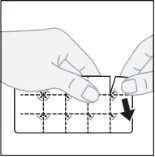
These tablets come in a special packaging designed to prevent children from removing them.
Each blister unit has a number. Take each tablet in order, starting with tablet number 1.
- Separate a tablet: Tear along the perforation line to separate one unit from the blister.
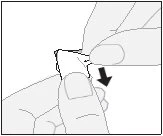
- Peel off the outer layer: Starting at one corner, lift and remove the foil covering the unit.
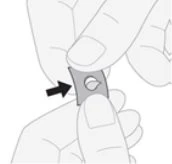
- Remove the tablet: Gently press on one side of the tablet through the foil to push it out.
Chewing the tablet:
When chewing the tablet, you may need to drink a small amount of water to help the tablet dissolve in your mouth. After swallowing, drink a little more water to ensure you have taken all of the medicine.
To dissolve the medicine:
- place the tablet in a glass containing enough water to cover the entire tablet
- shake to dissolve or wait until the tablet is completely dissolved
- drink all the liquid
- add a little more water to the glass and drink it to ensure no medicine remains in the glass.
If you take more Lamictal than you should
? In case of overdose or accidental ingestion, contact your doctor, pharmacist, or call the Toxicology Information Service at: 91 562 04 20, indicating the medicine and the amount ingested.
If you take more Lamictal than prescribed, you may be more likely to experience serious adverse effects, which may be fatal.
Someone who has taken too much Lamictal may experience one or more of the following symptoms:
- rapid, uncontrolled eye movements (nystagmus)
- clumsiness and loss of coordination, affecting balance (ataxia)
- changes in heart rhythm (usually detected by ECG)
- loss of consciousness, seizures, or coma.
If you forget to take a dose of Lamictal
?Do not take a double dose to make up for forgotten doses. Take the next dose at your usual time.
If you miss multiple doses of Lamictal
?Ask your doctor for advice on how to restart treatment. It is important that you do this.
Do not stop taking Lamictal without consulting your doctor
You should take Lamictal for as long as your doctor recommends. Do not stop taking it unless your doctor advises you to do so.
If you are taking Lamictal for epilepsy treatment
To stop taking Lamictal, it is important that the dose is gradually reduced over approximately 2 weeks. If you stop taking Lamictal suddenly, your epilepsy symptoms may return or your condition may worsen.
If you are taking Lamictal for bipolar disorder
Lamictal may take some time to work, so you are unlikely to feel better immediately. When stopping Lamictal, you do not necessarily need to gradually reduce the dose. However, you should still consult your doctor before discontinuing treatment with Lamictal.
4. Possible adverse effects
Like all medicines, this medicine can cause adverse effects, although not everyone experiences them.
Reactions that may potentially be life-threatening: consult your doctor immediately.
A small number of people taking Lamictal have allergic reactions or skin reactions that may potentially be life-threatening, which could lead to more serious problems if not treated.
These symptoms are more likely to occur during the first few months of treatment with Lamictal, especially if the initial dose is too high, if the dose is increased too quickly, or if you are taking Lamictal together with another medicine called valproate. Some of these symptoms are more common in children, so parents should pay special attention.
Symptoms of these reactions include:
- skin rash or redness, which may lead to skin reactions that can be serious or, in some cases, potentially fatal, including rash with target-like lesions (erythema multiforme), widespread rash with blistering and peeling of the skin, particularly around the mouth, nose, eyes, and genitals (Stevens-Johnson syndrome), extensive peeling of the skin (more than 30% of body surface – toxic epidermal necrolysis), or widespread rash associated with liver, blood, and other organ involvement (drug reaction with eosinophilia and systemic symptoms, also known as hypersensitivity syndrome (DRESS))
- mouth, throat, nose, or genital ulcers
- mouth pain or red, swollen eyes (conjunctivitis)
- high temperature (fever), flu-like symptoms, or drowsiness (stupor)
- swelling around the face, or swollen lymph nodes in the neck, armpits, or groin
- unexplained bleeding or bruising, or fingers turning blue
- sore throat or experiencing more infections than usual (such as colds)
- increased liver enzyme levels in blood tests
- increase in a type of white blood cell (eosinophils)
- enlarged lymph nodes
- involvement of body organs including the liver and kidneys.
In many cases, these symptoms may be signs of less serious adverse effects. However, you should be aware that they may potentially be life-threatening and could lead to more serious problems, such as organ failure, if not treated. If you notice any of these symptoms:
?Contact a doctor immediately. Your doctor will decide whether you need tests to assess liver, kidney, or blood function and may advise you to stop treatment with Lamictal. If you have developed Stevens-Johnson syndrome or toxic epidermal necrolysis, your doctor will instruct you never to take lamotrigine again.
Haemophagocytic lymphohistiocytosis (HLH) (see section 2. What you need to know before taking Lamictal).
Very common adverse effects
These affect more than 1 in 10 people:
- headache
- skin rash.
Common adverse effects
These affect up to 1 in 10 people:
- aggression or irritability
- drowsiness or feeling sleepy
- dizziness
- spasms or tremors
- difficulty sleeping (insomnia)
- feeling restless
- diarrhoea
- dry mouth
- nausea or vomiting
- feeling tired
- back, joint, or other pain.
Uncommon adverse effects
These may affect up to 1 in 100 people:
- clumsiness and loss of coordination (ataxia)
- double vision or blurred vision
- decreased hair mass or unusual hair loss (alopecia)
- skin rash or sunburn after exposure to sunlight or artificial light (photosensitivity).
Rare adverse effects
These affect up to 1 in 1,000 people:
- skin reaction characterized by concentric red spots on the skin, which may look like a "target"; that is, a dark red center surrounded by paler red rings (erythema multiforme)
- skin reaction that may be life-threatening (Stevens-Johnson syndrome) (see also information at the beginning of section 4)
- a group of symptoms including: fever, nausea, vomiting, headache, neck stiffness, and extreme sensitivity to bright light.
This may be caused by inflammation of the membranes covering the brain and spinal cord (meningitis). These symptoms usually resolve when treatment is stopped. However, if symptoms persist or worsen, contact your doctor.
- rapid, uncontrolled eye movements (nystagmus)
- itchy eyes with discharge and crusty eyelids (conjunctivitis).
Very rare adverse effects
These affect up to 1 in 10,000 people:
- a skin reaction that may be life-threatening (toxic epidermal necrolysis) (see also information at the beginning of section 4)
- drug reaction with eosinophilia and systemic symptoms (DRESS) (see also information at the beginning of section 4)
- high temperature (fever) (see also information at the beginning of section 4)
- swelling around the face (edema) or inflammation of glands in the neck, groin, or armpits (lymphadenopathy) (see also information at the beginning of section 4)
- changes in liver function, which may be seen in blood tests, or liver failure (see also information at the beginning of section 4)
- serious blood clotting disorder, which may cause bleeding or unexpected bruising (disseminated intravascular coagulation) (see also information at the beginning of section 4)
- haemophagocytic lymphohistiocytosis (HLH) (see section 2. What you need to know before taking Lamictal)
- changes that may be observed in blood tests including reduced number of red blood cells (anaemia), reduced number of white blood cells (leucopenia, neutropenia, agranulocytosis), reduced number of platelets (thrombocytopenia), reduced number of all types of blood cells (pancytopenia), and a bone marrow disorder called aplastic anaemia
- hallucinations (hearing or seeing things that are not really there)
- confusion
- feeling unsteady or unstable when moving
- repetitive body movements and/or uncontrollable sounds or words (tics), uncontrollable muscle spasms affecting the eyes, head, and torso (choreoathetosis), or other unusual movements such as jerking, spasms, or stiffness
- in people with epilepsy, more frequent seizures
- in people with Parkinson's disease, worsening of symptoms
- lupus-like reaction (symptoms may include back or joint pain, sometimes accompanied by fever and/or general illness).
Other adverse effects
Other adverse effects have occurred in a small number of people, but their exact frequency is unknown:
- bone disorders have been reported, including osteopenia and osteoporosis (reduced bone density) and fractures. Consult your doctor or pharmacist if you have taken antiepileptic medicines for a long time, if you have a history of osteoporosis, or if you are taking steroids
- kidney inflammation (tubulointerstitial nephritis) or kidney and eye inflammation (acute tubulointerstitial nephritis and uveitis syndrome)
- nightmares
- reduced immunity due to decreased levels of antibodies called immunoglobulins in the blood, which help protect against infection
- red nodules or spots on the skin (pseudolymphoma).
Reporting of adverse effects
If you experience any adverse effect, talk to your doctor or pharmacist, even if it is a possible adverse effect not listed in this leaflet. You can also report them directly via the Spanish Pharmacovigilance System for Human Medicines: www.notificaRAM.es. By reporting adverse effects, you can help provide more information on the safety of this medicine.
5. Storage of Lamictal
Keep this medicine out of the sight and reach of children.
Do not use this medicine after the expiry date stated on the blister, carton, or bottle. The expiry date refers to the last day of the month indicated.
Lamictal does not require any special storage conditions.
Medicines must not be disposed of via wastewater or household waste. Dispose of unused medicines and their containers at a SIGRE collection point at your pharmacy. If you are unsure how to dispose of unused medicines and their packaging, consult your pharmacist. This will help protect the environment.
6. Contents of the pack and other information
Composition of Lamictal 50 mg chewable/dispersible tablets
The active substance is lamotrigine. Each chewable/dispersible tablet contains 50 mg of lamotrigine.
The other components are: calcium carbonate, low-substituted hydroxypropylcellulose, magnesium aluminium silicate, sodium carboxymethyl starch (Type A) from potato, povidone K30, sodium saccharin, magnesium stearate, blackcurrant flavouring.
Appearance of the product and contents of the container of Lamictal chewable/dispersible tablets
Lamictal chewable/dispersible tablets are white to off-white in colour and may be slightly mottled. The tablets have a blackcurrant odour.
Lamictal 50 mg chewable/dispersible tablets are square with rounded corners. The tablets are marked with “GSCX7” on one side and “50” on the other. Each pack contains 10, 14, 28, 30, 42, 50, 56, 60, 90, 98, 100, 196 or 200 tablets in blisters.
Only some pack sizes may be marketed.
Marketing Authorisation Holder and Manufacturer
Marketing Authorisation Holder:
GlaxoSmithKline, S.A.
P.T.M. C/ Severo Ochoa, 2
28760 Tres Cantos (Madrid)
Tel: +34 900 202 700
Manufacturer:
Delpharm Poznan Spólka Akcyjna
ul. Grunwaldzka 189
60-322 Poznan
Poland
This medicinal product is authorised in the Member States of the European Economic Area under the following names:
Austria Lamictal | Belgium Lamictal | Bulgaria Lamictal |
Croatia Lamictal | Cyprus Lamictal | Czech Republic Lamictal |
Denmark Lamictal | Estonia Lamictal | Finland Lamictal |
France Lamictal | Germany Lamictal | Greece Lamictal |
Hungary Lamictal | Iceland Lamictal | Ireland Lamictal |
Italy Lamictal | Latvia Lamictal | Lithuania Lamictal |
Luxembourg Lamictal | Malta Lamictal | Netherlands Lamictal |
Norway Lamictal | Poland Lamitrin Lamitrin S | Portugal Lamictal |
Romania Lamictal | Slovakia Lamictal | Slovenia Lamictal |
Spain Lamictal | Sweden Lamictal |
Date of the last revision of this leaflet: June 2025.
Detailed and up-to-date information on this medicinal product is available on the website of the Spanish Agency of Medicines and Medical Devices (AEMPS) http://www.aemps.gob.es/