Lacryvisc 3 mg/g ophthalmic gel
Spain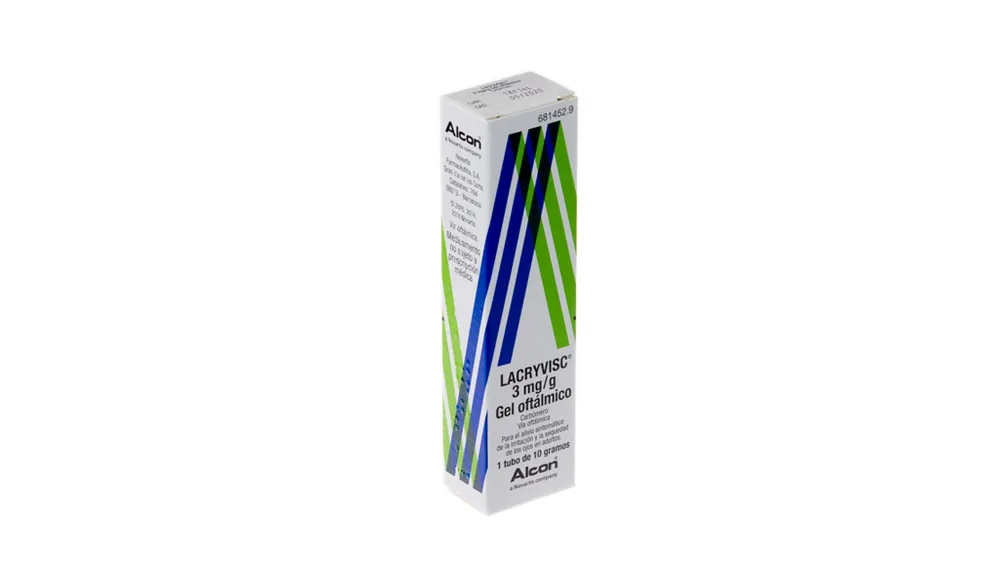
Table of Contents
Package leaflet: Information for the user
Introduction
Package leaflet: information for the user
LACRYVISC 3mg/g Ophthalmic Gel
Carbomer
Read this entire leaflet carefully before you start using this medicine, because it contains important information for you.
Follow exactly the instructions for use provided in this leaflet or those given by your doctor or pharmacist.
- Keep this leaflet, as you may need to read it again.
- If you need advice or further information, consult your pharmacist.
- If you experience any side effects, consult your doctor or pharmacist, even if they are side effects not listed in this leaflet. See section 4.
- You should consult a doctor if your condition worsens or if you do not improve after 3 days.
Contents of the leaflet
- What Lacryvisc is and what it is used for
- What you need to know before using Lacryvisc
- How to use Lacryvisc
- Possible side effects
- How to store Lacryvisc
- Contents of the pack and other information
1. What Lacryvisc is and what it is used for
Lacryvisc is a liquid ophthalmic gel containing the active substance carbomer, which is a highly viscous ocular lubricant capable of forming drops. After local application to the eye, it forms a protective lubricating film with high adherence and long duration.
It is used for the symptomatic relief of eye irritation and dryness in adults.
You should consult a doctor if symptoms worsen or do not improve after 3 days.
2. What you need to know before using Lacryvisc
Do not use Lacryvisc
If you are allergic to carbomer or any of the other ingredients of this medicine (listed in section 6).
Warnings and precautions
Talk to your doctor or pharmacist before using Lacryvisc.
Use this gel only in your eye(s).
The tip of the container must not come into contact with any surface, including the eye, as this may cause eye injury and the gel may become contaminated.
Wearing contact lenses is not recommended during treatment with this medicine. See section "Lacryvisc contains benzalkonium chloride".
In case of inflammation of the iris or corneal diseases, consult your doctor, who will determine whether or not Lacryvisc can be used as treatment.
If eye pain, changes in vision, eye irritation, persistent redness, or worsening or prolonged symptoms (beyond 3 days) occur, stop treatment and consult your doctor.
Children and adolescents up to 18 years of age
In clinical practice, the safety and efficacy of Lacryvisc in children and adolescents at the recommended adult dose has been established; however, clinical trial data are not available.
Using Lacryvisc with other medicines
Inform your doctor or pharmacist if you are taking, have recently taken, or might need to take any other medicines.
Pregnancy, breastfeeding, and fertility
If you are pregnant or breastfeeding, think you may be pregnant, or are planning to become pregnant, consult your doctor or pharmacist before using this medicine.
This medicine may be used during pregnancy and breastfeeding.
Driving and using machines
You may notice blurred vision for a short time after applying the medicine. If this occurs, wait until the symptom resolves and your vision is clear again before driving or operating machinery.
Lacryvisc contains benzalkonium chloride
This medicine contains 0.001 mg of benzalkonium chloride per dose, equivalent to 0.05 mg/g.
Benzalkonium chloride may be absorbed by soft contact lenses, altering their color. Remove contact lenses before using this medicine and wait 15 minutes before reinserting them.
Benzalkonium chloride may cause ocular irritation, particularly if you have dry eye or other corneal diseases (conditions affecting the transparent layer at the front of the eye). Consult your doctor if you experience a foreign body sensation, stinging, or eye pain after using this medicine.
3. How to use Lacryvisc
Follow exactly the instructions for administering the medicine as given by your doctor or pharmacist. If in doubt, consult your doctor or pharmacist again.
The recommended dose is one drop into the eye(s) 2 to 4 times daily, or each time you experience ocular discomfort associated with dry eye.
In certain cases and according to your doctor's instructions, Lacryvisc may be applied more frequently.
Children and adolescents up to 18 years of age
In clinical practice, the safety and efficacy of Lacryvisc in children and adolescents has been established at the recommended adult dose, but clinical trial data are not available.
Elderly patients
Lacryvisc can be used in elderly patients (over 65 years of age), and no dose adjustment is necessary.
Instructions for use
To correctly administer Lacryvisc, follow the steps described below:
|
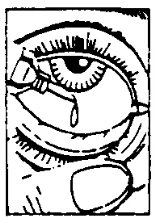
Since this is a sterile medication, the following instructions should be observed:
- Each patient should use their own container.
- The gel should be applied with maximum care, avoiding contact of the tube tip with any surface (including eyelid, fingers, etc.) as much as possible.
- After each application, close the container tightly.
- Lacryvisc must not be used more than 4 weeks after the first opening of the tube and should be discarded even if not completely used.
If you need to apply any other medication to your eyes in addition to Lacryvisc, wait at least 5 minutes between the applications of each medication. Lacryvisc should be administered last.
If you use more Lacryvisc than you should
Due to its exclusive ophthalmic administration, overdose is not expected.
In case of overdose or accidental ingestion, consult your doctor immediately or call the Toxicology Information Service at telephone number 91 562 04 20, indicating the medication and the amount ingested.
If you forget to use Lacryvisc
Do not use a double dose to make up for missed doses.
If you have any further questions about the use of this medication, ask your doctor or pharmacist.
4. Possible adverse effects
Like all medicines, this medicine may cause adverse effects, although not everyone experiences them.
The following reactions may occur in your eyes:
Very common (may affect more than 1 in 10 people): blurred vision.
Common (may affect up to 1 in 10 people): eye discomfort, crusting of the eyelid, eye irritation.
Uncommon (may affect up to 1 in 100 people): eye swelling, eye pain, eye itching, eye redness, increased tear production.
Or, reactions in other parts of your body:
Uncommon (may affect up to 1 in 100 people): skin inflammation.
Additional adverse effects have been observed during post-marketing experience with frequency not known (cannot be estimated from available data): allergy (hypersensitivity).
Reporting of adverse effects
If you experience any type of adverse effect, consult your doctor or pharmacist, even if it is a possible adverse effect not listed in this leaflet. You may also report them directly via the Spanish Pharmacovigilance System for Human Medicinal Products: https://www.notificaRAM.es. By reporting adverse effects, you can help provide more information on the safety of this medicine.
5. Storage of Lacryvisc
Keep this medicine out of the sight and reach of children.
Do not store above 30°C.
Keep the container tightly closed. The contents of the tube are sterile until first opening.
Do not use this medicine after the expiry date stated on the tube and the carton after EXP. The expiry date refers to the last day of the month indicated.
To prevent infection, discard the tube 4 weeks after first opening.
Record the date of first opening in the space provided for this purpose on the carton.
Medicines must not be disposed of via wastewater or household waste. Dispose of containers and unused medicines at the SIGRE collection point at your pharmacy. If you are in doubt, ask your pharmacist how to dispose of unused containers and medicines. This will help protect the environment.
6. Contents of the pack and other information
Composition of Lacryvisc
- The active substance is carbomer. Each gram of gel contains 3 mg of carbomer.
- The other components are benzalkonium chloride, sorbitol (E-420), sodium hydroxide and purified water.
Appearance of the product and contents of the pack
Lacryvisc is a slightly opaque, slightly yellowish liquid ophthalmic gel.
The gel is supplied in a box containing a 10 g tube with a plastic dispensing tip and a plastic cap.
Marketing Authorization Holder
Alcon Healthcare S.A.
World Trade Center Almeda Park
Plaça de la Pau s/n, Edificio 6, planta 3
08940 - Cornellà de Llobregat (Barcelona)
Spain
Manufacturer
S.A. Alcon-Couvreur N.V.
Rijksweg 14, B-2870 Puurs,
Belgium
or
Alcon Laboratories Belgium
Lichterveld 3
2870 Puurs-Sint-Amands
Belgium
Date of the most recent revision of this leaflet: February 2018
Detailed and up-to-date information on this medicine is available on the website of the Spanish Agency for Medicines and Health Products (AEMPS) http://www.aemps.gob.es/