Ivabradine Tarbis 7.5 mg film-coated tablets EFG
Spain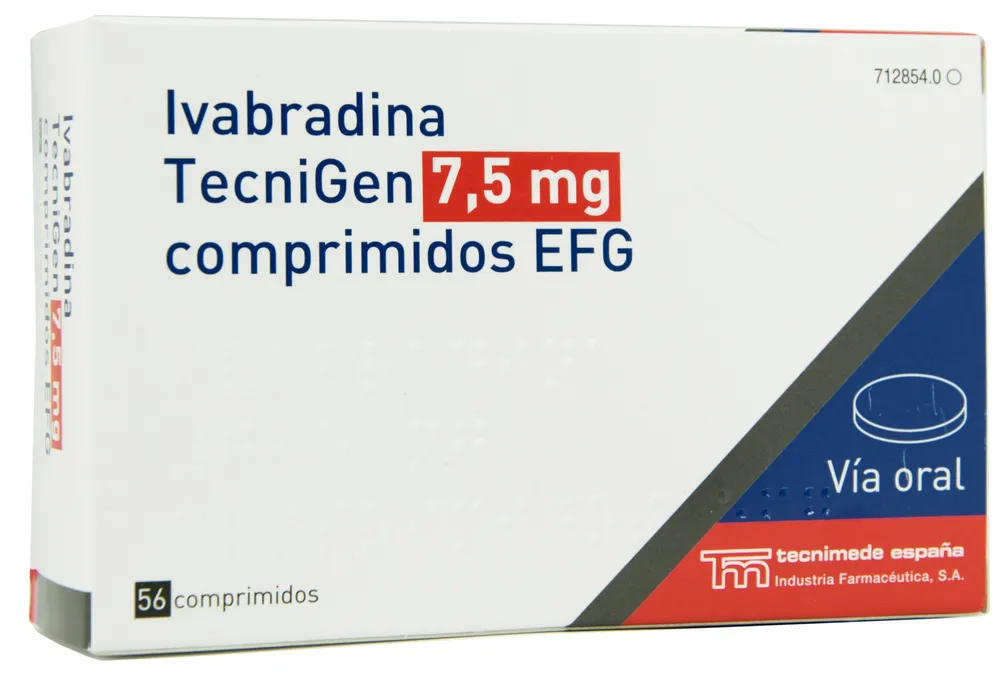
Table of Contents
- Package leaflet: Information for the user
- Introduction
- 1. What Ivabradina Tarbis is and what it is used for
- **How does Ivabradine work?**
- 2. What you need to know before taking Ivabradina Tarbis
- 3. How to take Ivabradine Tarbis
- 4. Possible adverse effects
- 5. Storage of Ivabradine Tarbis
- 6. Contents of the pack and other information
Package leaflet: Information for the user
Introduction
Package leaflet: information for the patient
Ivabradina Tarbis 7.5 mg film-coated tablets EFG
Read the entire leaflet carefully before starting to take this medicine because it contains important information for you.
- Keep this leaflet as you may need to read it again.
- If you have any questions, ask your doctor or pharmacist.
- This medicine has been prescribed for you only, and you should not give it to other people even if they have the same symptoms as you, because it may harm them.
- If you experience any adverse reactions, consult your doctor or pharmacist, even if they are adverse reactions not listed in this leaflet. See section 4.
Leaflet contents:
- What Ivabradina Tarbis is and what it is used for
- What you need to know before taking Ivabradina Tarbis
- How to take Ivabradina Tarbis
- Possible adverse effects
- How to store Ivabradina Tarbis
- Contents of the pack and other information
1. What Ivabradina Tarbis is and what it is used for
Ivabradine is a heart medication used to treat:
- Stable symptomatic angina (causing chest pain) in adult patients whose heart rate is greater than or equal to 70 beats per minute. It is used in adult patients who cannot tolerate or cannot take heart medications known as beta-blockers. It is also used in combination with beta-blockers in adult patients whose condition is not fully controlled with a beta-blocker alone.
- Chronic heart failure in adult patients whose heart rate is greater than or equal to 75 beats per minute. It is used in combination with standard therapy, including treatment with beta-blockers, or when beta-blockers are contraindicated or not tolerated.
About stable angina (commonly known as "angina"):
Stable angina is a heart condition that occurs when the heart does not receive enough oxygen. It usually appears between the ages of 40 and 50. The most common symptom of angina is pain or discomfort in the chest. Angina is more likely to occur when the heart beats faster, such as during exercise, emotional stress, exposure to cold, or after eating. This increase in heart rate can trigger chest pain in people with angina.
About chronic heart failure:
Chronic heart failure is a heart condition that occurs when your heart cannot pump enough blood to the rest of the body. The most common symptoms of heart failure are shortness of breath, fatigue, tiredness, and swelling of the ankles.
How does Ivabradine work?
Ivabradine works primarily by reducing the heart rate by a few beats per minute. This decreases the heart's oxygen demand, especially in situations where an angina attack is more likely to occur. Thus, Ivabradine tablets help control and reduce the number of angina attacks.
Additionally, since elevated heart rate negatively affects heart function and vital prognosis in patients with chronic heart failure, Ivabradine's specific action in lowering heart rate helps improve heart function and vital prognosis in these patients.
2. What you need to know before taking Ivabradina Tarbis
Do not take Ivabradine tablets
- if you are allergic to ivabradine or to any of the other ingredients of this medicine (listed in section 6);
- if your resting heart rate before treatment is too slow (below 70 beats per minute);
- if you are suffering from cardiogenic shock (a heart problem treated in hospital);
- if you have a heart rhythm disorder;
- if you are having a heart attack;
- if you have very low blood pressure;
- if you have unstable angina (a severe type of angina in which chest pain occurs frequently, with or without exercise);
- if you have heart failure that has recently worsened;
- if your heart rate is solely determined by your pacemaker;
- if you have severe liver problems;
- if you are taking medicines for fungal infections (such as ketoconazole, itraconazole), macrolide antibiotics (such as josamycin, clarithromycin, telithromycin or oral erythromycin), medicines for treating HIV infections (such as nelfinavir, ritonavir) or nefazodone (a medicine for treating depression), or diltiazem, verapamil (used for treating high blood pressure or angina);
- if you are a woman of childbearing age and you are not using reliable contraceptive methods;
- if you are pregnant or trying to become pregnant;
- if you are breastfeeding.
Warnings and precautions
Talk to your doctor or pharmacist before taking Ivabradine tablets:
- if you have heart rhythm disorders (such as irregular heartbeat, palpitations, increased chest pain) or sustained atrial fibrillation (a type of irregular heartbeat), or an abnormality in the electrocardiogram (ECG) called "Long QT syndrome",
- if you experience symptoms such as fatigue, dizziness or difficulty breathing (this may mean your heart is beating too slowly),
- if you develop symptoms of atrial fibrillation (unusually high resting pulse (over 110 beats per minute) or irregular pulse, without apparent reason, making it difficult to measure),
- if you have recently had a stroke (cerebral attack),
- if you have mild to moderate low blood pressure,
- if you have uncontrolled blood pressure, especially after a change in your antihypertensive treatment,
- if you have severe heart failure or heart failure with an ECG abnormality called "bundle branch block",
- if you have chronic retinal eye disease,
- if you have moderate liver problems,
- if you have severe kidney problems.
If you have any of these conditions, consult your doctor immediately before or during treatment with Ivabradine tablets.
Children
Ivabradine tablets are not intended for use in children and adolescents under 18 years of age.
Taking Ivabradine tablets with other medicines
Tell your doctor or pharmacist if you are taking, have recently taken or might need to take any other medicines.
Make sure to inform your doctor if you are taking any of the following medicines, as dose adjustment of Ivabradine tablets or monitoring may be necessary:
- fluconazole (an antifungal medicine)
- rifampicin (an antibiotic)
- barbiturates (for sleep problems or epilepsy)
- phenytoin (for epilepsy)
- Hypericum perforatum or St. John's Wort (a herbal remedy for treating depression)
- Medicines that prolong the QT interval used to treat heart rhythm disorders or other conditions:
- quinidine, disopyramide, ibutilide, sotalol, amiodarone (for treating heart rhythm disorders)
- bepridil (for treating angina)
- certain types of medicines for treating anxiety, schizophrenia or other psychoses (such as pimozide, ziprasidone, sertindole)
- antimalarial medicines (such as mefloquine or halofantrine)
- intravenous erythromycin (an antibiotic)
- pentamidine (an antiparasitic medicine)
- cisapride (for gastroesophageal reflux).
- Certain types of diuretics that may cause a reduction in blood potassium levels, such as furosemide, hydrochlorothiazide, indapamide (used to treat edema, high blood pressure).
Taking Ivabradine tablets with food and drinks
Avoid grapefruit juice during treatment with Ivabradine tablets.
Pregnancy and breastfeeding
Do not take Ivabradine tablets if you are pregnant or intend to become pregnant (see "Do not take Ivabradine tablets").
If you are pregnant and have taken Ivabradine tablets, consult your doctor.
Do not take Ivabradine tablets if you are of childbearing age unless you are using reliable contraceptive methods (see "Do not take Ivabradine tablets").
Do not take Ivabradine tablets if you are breastfeeding (see "Do not take Ivabradine tablets"). Talk to your doctor if you are breastfeeding or intend to start breastfeeding, as breastfeeding must be discontinued if you are taking Ivabradine tablets.
If you are pregnant or breastfeeding, think you might be pregnant, or plan to become pregnant, consult your doctor or pharmacist before using this medicine.
Driving and using machines
Ivabradine tablets may cause transient luminous phenomena (a brief sensation of brightness in the visual field, see "Possible side effects"). If this occurs, take care when driving or using machinery in situations where sudden changes in light intensity may occur, especially when driving at night.
Ivabradina Tarbis contains lactose
If your doctor has informed you that you have an intolerance to certain sugars, consult with him before taking this medicine.
3. How to take Ivabradine Tarbis
Follow exactly the instructions given by your doctor or pharmacist for taking this medicine. If in doubt, consult your doctor or pharmacist again.
Ivabradine tablets should be taken with breakfast and dinner.
If you are being treated for stable angina
The starting dose should not exceed one 5 mg Ivabradine tablet twice daily. If you still have angina symptoms and have tolerated the 5 mg twice daily dose well, the dose may be increased. The maintenance dose should not exceed 7.5 mg twice daily. Your doctor will prescribe the correct dose for you. The usual dose is one tablet in the morning and one tablet in the evening. In some cases (e.g. if you are elderly), your doctor may prescribe half the dose, i.e. half a 5 mg Ivabradine tablet (corresponding to 2.5 mg of Ivabradine) in the morning and half a 5 mg tablet in the evening.
If you are being treated for chronic heart failure
The recommended initial dose is one 5 mg Ivabradine tablet twice daily, which may be increased if necessary to one 7.5 mg Ivabradine tablet twice daily. Your doctor will decide the appropriate dose for you. The normal dose is one tablet in the morning and one tablet in the evening. In some cases (e.g. if you are elderly), your doctor may prescribe half the dose, i.e. half a 5 mg Ivabradine tablet (corresponding to 2.5 mg of Ivabradine) in the morning and half a 5 mg tablet in the evening.
If you take more Ivabradine tablets than you should
An overdose of Ivabradine tablets may make you feel tired or short of breath due to your heart beating too slowly. If this happens, contact your doctor immediately.
In case of overdose or accidental ingestion, contact your doctor or pharmacist immediately or call the Toxicology Information Service at 91 562 04 20, indicating the medicine and the amount ingested.
If you forget to take Ivabradine tablets
If you forget to take a dose of Ivabradine tablets, take the next dose at the scheduled time. Do not take a double dose to make up for missed doses.
If you stop taking Ivabradine tablets
Treatment for stable angina or chronic heart failure is generally lifelong, so you must consult your doctor before stopping this medicine.
If you think that the effect of Ivabradine tablets is too strong or too weak, tell your doctor or pharmacist.
If you have any further questions about the use of this medicine, ask your doctor or pharmacist.
4. Possible adverse effects
Like all medicines, this medicine can cause adverse effects, although not everyone experiences them.
The frequency of the possible adverse effects listed below is defined using the following classification system:
Very common: may affect more than 1 in 10 people.
Common: may affect up to 1 in 10 people.
Uncommon: may affect up to 1 in 100 people.
Rare: may affect up to 1 in 1,000 people.
Very rare: may affect up to 1 in 10,000 people.
Frequency not known: frequency cannot be estimated from the available data.
The most common adverse reactions with this medicine are dose-dependent and related to its mechanism of action:
Very common:
Luminous visual phenomena (brief episodes of increased brightness, usually caused by sudden changes in light intensity). These may also be described as halos, flashes of color, image fragmentation, or multiple images. These typically occur during the first two months of treatment and may then recur repeatedly, resolving during or after treatment.
Common:
Changes in heart function (symptoms include slowed heart rate). This occurs especially during the first 2 to 3 months after starting treatment.
Other adverse effects reported include:
Common:
Rapid, irregular heartbeat, sensation of abnormal heartbeat, uncontrolled blood pressure, headache, dizziness, and blurred vision (cloudy vision).
Uncommon:
Palpitations and extra heartbeats, sensation of dizziness (nausea), constipation, diarrhea, abdominal pain, sensation of spinning (vertigo), difficulty breathing (dyspnea), muscle cramps, changes in laboratory tests: elevated blood uric acid levels, eosinophilia (excess of eosinophils, a type of white blood cell), and elevated blood creatinine levels (a muscle breakdown product), skin rash, angioedema (such as swelling of the face, tongue, or throat, difficulty breathing or swallowing), low blood pressure, fainting, feeling of fatigue, feeling of weakness, abnormal electrocardiogram, double vision, visual disturbance.
Rare:
Urticaria, itching, skin redness, malaise.
Very rare:
Irregular heartbeats.
Reporting of adverse effects
If you experience any type of adverse effect, consult your doctor or pharmacist, even if it is a possible adverse effect not listed in this leaflet. You may also report them directly via the Spanish Pharmacovigilance System for Human Medicines: https://www.notificaram.es. By reporting adverse effects, you can help provide more information on the safety of this medicine.
5. Storage of Ivabradine Tarbis
Keep this medicine out of the sight and reach of children.
Do not use this medicine after the expiry date stated on the packaging, after EXP. The expiry date refers to the last day of the month indicated.
This medicine does not require any special storage conditions.
Medicines must not be disposed of via wastewater or household waste. Dispose of unused medicines and their containers at the SIGRE Point located at your pharmacy. If you are unsure, ask your pharmacist how to properly dispose of unused medicines and their packaging. This will help protect the environment.
6. Contents of the pack and other information
Composition of Ivabradina Tarbis
- The active substance is ivabradine (as hydrochloride).
Ivabradine 7.5 mg: one film-coated tablet contains 7.5 mg of ivabradine (equivalent to 8.085 mg of ivabradine hydrochloride).
- The other components in the tablet core are: monohydrate lactose, magnesium stearate, corn starch, maltodextrin, anhydrous colloidal silica; and in the tablet coating: monohydrate lactose, hypromellose, titanium dioxide, macrogol 4000, yellow iron oxide (E 172), red iron oxide (E 172).
Appearance of the product and contents of the pack:
Ivabradina Tarbis 7.5 mg tablets are presented as light salmon-coloured, round, biconvex, film-coated tablets.
The tablets are supplied in blisters containing 56 film-coated tablets.
Marketing Authorization Holder
Tarbis Farma, S.L.
Gran Vía Carlos III, 94
08028 Barcelona (Spain)
Manufacturer
Noucor Health, S.A.
Av. Camí Reial, 51-57
08184 Palau-solità i Plegamans (Spain)
Date of the most recent review of this leaflet:
Detailed and up-to-date information on this medicinal product is available on the website of the Spanish Agency of Medicines and Medical Devices (AEMPS) http://www.aemps.gob.es