Grippostad with paracetamol/caffeine hard capsules
Spain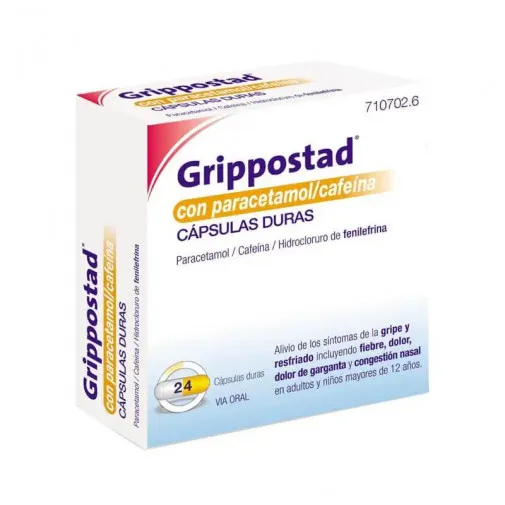
Table of Contents
- Package leaflet: Information for the user
- Introduction
- 1. What Grippostad with paracetamol/caffeine is and what it is used for
- 2. What you need to know before taking Grippostad with paracetamol/caffeine
- 3. How to take Grippostad with paracetamol/caffeine
- 4. Possible adverse effects
- 5. Storage of Grippostad with paracetamol/caffeine
- 6. Contents of the pack and other information
Package leaflet: Information for the user
Introduction
Package leaflet: information for the user
Grippostad with paracetamol/caffeine hard capsules
Paracetamol/caffeine/phenylephrine hydrochloride
Read the entire leaflet carefully before you start taking this medicine, because it contains important information for you.
Follow exactly the instructions for use provided in this leaflet or those given by your doctor or pharmacist.
- Keep this leaflet, as you may need to read it again.
- If you need advice or more information, consult your pharmacist.
- If you experience any adverse effects, consult your doctor, pharmacist, or nurse, even if they are adverse effects not listed in this leaflet. See section 4.
- You should consult a doctor if you worsen or do not improve after 3 days of treatment.
Leaflet contents
- What Grippostad with paracetamol/caffeine is and what it is used for
- What you need to know before taking Grippostad with paracetamol/caffeine
- How to take Grippostad with paracetamol/caffeine
- Possible adverse effects
- How to store Grippostad with paracetamol/caffeine
- Contents of the pack and other information
1. What Grippostad with paracetamol/caffeine is and what it is used for
Grippostad with paracetamol/caffeine contains three active substances that help treat symptoms:
- Paracetamol, which is an analgesic (relieves pain) and antipyretic (reduces fever).
- Phenylephrine, which is a substance belonging to the sympathomimetic group. It acts as a decongestant by unblocking nasal passages, helping you breathe more easily.
- Caffeine, which enhances the effectiveness of paracetamol.
Grippostad with paracetamol/caffeine is indicated for the symptomatic relief of colds and flu accompanied by fever, mild to moderate pain, sore throat, and nasal congestion.
This medicine is indicated for treatment in adults and children aged 12 years and older.
2. What you need to know before taking Grippostad with paracetamol/caffeine
Do not take Grippostad with paracetamol/caffeine
- If you are allergic to paracetamol, caffeine, phenylephrine hydrochloride, or any of the other ingredients of this medicine (listed in section 6),
- If you have a rare inherited condition known as glucose-6-phosphate dehydrogenase deficiency (G6PD). G6PD deficiency is an enzyme deficiency that may lead to anemia (lack of red blood cells),
- If you have a tumor of the adrenal glands called a pheochromocytoma. The adrenal glands are triangular-shaped and located on top of the kidneys,
- If you have severe kidney problems,
- If you have high blood pressure,
- If you have an overactive thyroid gland,
- If you have diabetes,
- If you have heart disease,
- If you have increased eye pressure (glaucoma),
- If you are taking any medicines from the group of beta-blockers,
- If you are taking any medicines for depression from the group of tricyclic antidepressants,
- If you are taking or have taken within the last two weeks any medicine for depression from the group of monoamine oxidase inhibitors (MAOIs).
Warnings and precautions
Talk to your doctor or pharmacist before taking Grippostad with paracetamol/caffeine:
- If you have prostatic hypertrophy. Symptoms of prostatic hypertrophy include difficulty urinating, pain when urinating, or urinating more frequently.
- If you have Raynaud's phenomenon (discoloration of fingers caused by poor circulation).
- If you have heart or circulation problems.
- If you have liver or kidney problems, including alcoholic liver disease.
- If you are underweight (less than 50 kg) or malnourished.
- If you regularly consume large amounts of alcohol (alcoholism).
- If you suffer from severe dehydration.
- If you are taking medicines that affect your liver.
- If you are an elderly patient.
- If you have glutathione deficiency (a metabolic disorder that may impair paracetamol breakdown).
- If you have an enzyme deficiency called glucose-6-phosphate dehydrogenase deficiency.
- If you have hemolytic anemia (abnormal breakdown of red blood cells).
If any of the above apply to you, you may need to reduce the dose of Grippostad with paracetamol/caffeine or avoid taking this medicine altogether.
You should not take Grippostad with paracetamol/caffeine if you are taking other sympathomimetic medicines (stimulants or appetite suppressants, and medicines used to treat congestion and asthma).
You should not consume large amounts of caffeine (e.g., coffee, tea, and certain canned drinks) while taking Grippostad with paracetamol/caffeine.
You should not take other medicines containing paracetamol. Taking too much paracetamol can lead to serious liver problems, which may even be fatal. You should be especially careful if you have any liver or kidney disease. The risk of overdose increases in people with alcoholism.
You should see your doctor if:
- A very high fever develops.
- Signs of another infection appear, such as feeling unwell, night sweats, fatigue, pain, or swelling.
- Symptoms have not improved after three days.
During treatment with Grippostad with paracetamol/caffeine, inform your doctor immediately if:
You suffer from serious conditions, including severe renal failure or sepsis (when bacteria and their toxins circulate in the blood causing organ damage), or if you suffer from malnutrition, chronic alcoholism, or are also taking flucloxacillin (an antibiotic). A serious condition called metabolic acidosis (an abnormality in blood and fluids) has been reported in patients in these situations when paracetamol is used at regular doses over a prolonged period or when paracetamol is taken together with flucloxacillin. Symptoms of metabolic acidosis may include: severe breathing difficulties with rapid and deep breathing, drowsiness, feeling unwell (nausea), and discomfort (vomiting).
Taking Grippostad with paracetamol/caffeine with other medicines
Tell your doctor or pharmacist if you are taking, have recently taken, or might take any other medicines.
The following medicines may interact with or be affected by Grippostad with paracetamol/caffeine.
You should not take Grippostad with paracetamol/caffeine with any of the following medicines without first talking to your doctor:
- Monoamine oxidase inhibitors (MAOIs), including moclobemide
- Sympathomimetic medicines (stimulants or appetite suppressants, and medicines used to treat nasal congestion and asthma)
- Beta-blockers and other antihypertensive medicines (used to treat high blood pressure), including debrisoquine, guanethidine, reserpine, and methyldopa
- Tricyclic antidepressants, for example amitriptyline
- Cardiac glycosides (used to control heart rhythm or contractions), for example digoxin
- Ergot alkaloids (medicines used to treat migraine), for example ergotamine and methysergide
- Anticoagulants (medicines used to thin the blood, such as warfarin)
- Propantheline (used to treat gastrointestinal disorders, enuresis, and excessive sweating (hyperhidrosis))
- Pethidine and pentazocine (analgesics)
- Metoclopramide or domperidone (used to treat nausea and vomiting)
- Cholestyramine (used to lower blood cholesterol levels)
- Carbamazepine, phenobarbital, phenytoin, and primidone (used in the treatment of epilepsy)
- Rifampicin (antibiotic)
- St. John’s wort (used for the treatment of depression)
- Flucloxacillin (antibiotic), due to a serious risk of blood and fluid imbalance (called metabolic acidosis) that requires urgent treatment (see section 2).
Do not take Grippostad with paracetamol/caffeine with other medicines containing paracetamol.
Grippostad with paracetamol/caffeine and alcoholic drinks
Do not drink alcoholic beverages (wine, beer, alcoholic soft drinks...) while taking this medicine.
Pregnancy and breast-feeding
If you are pregnant or breast-feeding, think you may be pregnant, or are planning to become pregnant, consult your doctor or pharmacist before using this medicine.
This medicine is not recommended during pregnancy or breast-feeding.
Driving and using machines
Be cautious when driving. Grippostad with paracetamol/caffeine may affect your ability to react, especially:
- At the start of treatment
- After increasing the dose
- When switching medications
- If you consume alcohol
Do not operate tools or machinery, or drive if your reactions are affected.
Important information about some of the ingredients of Grippostad with paracetamol/caffeine
- Warning:
Grippostad with paracetamol/caffeine contains paracetamol and an active ingredient to relieve nasal congestion (a decongestant). Do not take with other medicines for relief of flu, colds, or nasal congestion, or with other products containing paracetamol.
Grippostad with paracetamol/caffeine contains sodium
This medicine contains less than 1 mmol of sodium (23 mg) per capsule, i.e., essentially sodium-free.
3. How to take Grippostad with paracetamol/caffeine
Follow exactly the instructions for use provided in this leaflet or as directed by your doctor or pharmacist. If in doubt, consult your doctor or pharmacist.
Always take the lowest effective dose for the shortest time necessary to relieve your symptoms.
Recommended dose:
Adults (including elderly patients):
Take 2 capsules up to 4 times a day if needed. Do not take more than 8 capsules in 24 hours. Leave at least 4 hours between doses.
Children between 12 and 18 years of age:
Take 2 capsules up to 3 times a day if needed. Do not take more than 6 capsules in 24 hours. Leave at least 4 hours between doses.
Children under 12 years of age:
This medicine is contraindicated in children under 12 years of age.
Special populations
Adults and elderly patients with special conditions:
Do not take more than 6 capsules per day in the following situations, unless otherwise directed by your doctor:
- Body weight below 50 kg
- Regular consumption of large amounts of alcohol (alcoholism)
- Dehydration
- Malnutrition
Use in renal or hepatic impairment
If you have been diagnosed with kidney or liver problems, consult your doctor or pharmacist. You may need to take a lower dose or increase the interval between doses.
Do not take a higher dose than recommended without first speaking to your doctor.
Grippostad with paracetamol/caffeine is recommended for daytime use, as it contains caffeine, which may cause insomnia.
How to take Grippostad with paracetamol/caffeine
This medicine is taken orally.
The capsules should be swallowed whole with water. Do not chew.
How long should you take Grippostad with paracetamol/caffeine
If symptoms do not improve after three days, consult your doctor. Prolonged use, except under medical supervision, may be harmful.
If you take more Grippostad with paracetamol/caffeine hard capsules than you should Contact your doctor immediately or go to a medical centre if:
Consult your doctor if you take more Grippostad with paracetamol/caffeine hard capsules than you should, even if you feel well. This is because an excessive amount of paracetamol may cause severe, irreversible liver damage that appears later. Take the medicine and the package leaflet with you so that the medical staff know what you have taken. In case of overdose or accidental ingestion, contact your doctor or pharmacist immediately or call the Toxicology Information Service at telephone number 915620420. |
You are at higher risk of overdose if:
- You have been taking any of the following medicines for a prolonged period:
- Carbamazepine, phenobarbital, phenytoin, and primidone (used to treat epilepsy)
- Rifampicin (antibiotic)
- St. John’s wort (used in the treatment of depression)
- You regularly consume high amounts of alcohol
- You have a deficiency of a protein called glutathione. This may be due to:
- An eating disorder such as lack or loss of appetite
- Starvation, or if you lose weight despite eating normally (loss of body mass known as cachexia)
- Cystic fibrosis (a hereditary disorder causing breathing difficulties)
- HIV infection (AIDS)
Symptoms of overdose within the first 24 hours are:
- Pallor
- Nausea
- Vomiting
- Loss of appetite (anorexia)
- Stomach ache (abdominal pain)
Other symptoms include:
- Problems with glucose metabolism
- High level of acid in the body (metabolic acidosis)
Severe overdose can be fatal and may lead to:
- Liver failure
- Brain damage (encephalopathy)
- Bleeding (haemorrhage)
- Low blood sugar levels (hypoglycaemia)
- Brain swelling (cerebral oedema)
- Kidney failure with lower back pain (acute tubular necrosis)
- Blood in the urine (haematuria)
- Protein in the urine (proteinuria)
- Irregular heartbeat (cardiac arrhythmia)
- Inflamed pancreas (pancreatitis)
- Pain in the upper abdomen (epigastric pain)
- Vomiting
- Increased urine production (diuresis)
- Rapid heartbeat (tachycardia)
- Stimulation of the nervous system, including:
- Difficulty sleeping (insomnia)
- Restlessness
- Excitement
- Anxiety (agitation)
- Nervousness and irritability
- Uncontrollable tremors
- Seizures
- Other similar effects described in section 4 “Possible side effects” of this leaflet
- High blood pressure (hypertension)
- Slow heart rate (reflex bradycardia)
- Confusion
- Seeing or feeling things that are not there (hallucinations)
If you forget to take Grippostad with paracetamol/caffeine
Do not take a double dose to make up for forgotten capsules.
Ensure that you take the next dose at least four hours after the previous dose.
If you have any questions about the use of this medicine, consult your doctor or pharmacist.
4. Possible adverse effects
Like all medicines, this medicine can cause adverse effects, although not everyone will experience them.
If you experience any of the following adverse effects, stop taking the medicine and seek immediate help
- Allergic reactions:
- Skin swelling, of the face and lips, tongue or throat (angioedema)
- Difficulty breathing (dyspnea)
- Sweating
- Nausea
- Decreased blood pressure (hypotension) leading to "shock"
- Severe allergic reactions (anaphylaxis)
If you experience any of the following adverse effects, stop taking the medicine and speak with your doctor
- Skin allergic reactions (cutaneous hypersensitivity reactions) including:
- Skin rashes
- Stevens-Johnson syndrome (a serious skin illness with blistering of the skin, mouth, eyes and genitals)
- Toxic epidermal necrolysis (severe blistering and peeling of the skin)
- Allergic reactions, for example: rash, hives, skin inflammation (allergic dermatitis)
- Allergic reactions (hypersensitivity). If you have previously had an allergic reaction to another sympathomimetic medicine (such as pseudoephedrine), you are more likely to have an allergic reaction (cross-sensitivity)
Very rare (may affect up to 1 in 10,000 patients):
- Very rare cases of severe skin reactions
- Liver problems (hepatic dysfunction)
Not known (frequency cannot be estimated from available data):
- Decrease in the number of blood cells called platelets or thrombocytes (thrombocytopenia)
- Decrease in the number of white blood cells called leukocytes (leukopenia)
- Severe deficiency of white blood cells (agranulocytosis)
- Decrease in the number of both red and white blood cells (pancytopenia)
- Tiredness
- Headache
- Dizziness
- Difficulty sleeping (insomnia)
- Anxiety
- Nervousness
- Irritability
- Restlessness
- Excitability
- Worsening of elevated intraocular pressure (pre-existing narrow-angle glaucoma) (see section 2, “Do not take Grippostad with paracetamol/caffeine”)
- Dilated pupils (mydriasis)
- Sudden increase in intraocular pressure (acute angle-closure glaucoma)
- High blood pressure (hypertension)
- Palpitations
- Tachycardia
- Bronchospasm
- Dry mouth
- Nausea
- Vomiting
- Diarrhea
- Loss of appetite (anorexia)
- Kidney problems (renal dysfunction)
- Difficulty urinating (dysuria) or inability to urinate (urinary retention). This is more likely to occur if your bladder is obstructed, for example if you have prostate enlargement. See also section 2 “Warnings and precautions”
- A serious condition that may cause the blood to become more acidic (called metabolic acidosis), in patients with severe illnesses who use paracetamol (see section 2).
Reporting of adverse effects
If you experience any type of adverse effect, consult your doctor or pharmacist, even if it is a possible adverse effect not listed in this leaflet. You may also report them directly via the Spanish Pharmacovigilance System for Human Medicines: http://www.notificaram.es. By reporting adverse effects, you can help provide more information on the safety of this medicine.
5. Storage of Grippostad with paracetamol/caffeine
Keep this medicine out of the sight and reach of children.
Do not use this medicine after the expiry date stated on the packaging after the letters «EXP». The expiry date refers to the last day of the month indicated.
Do not store above 25 °C.
Medicines must not be disposed of via wastewater drains or household waste. Dispose of unused medicines and their containers at the SIGRE collection point at your pharmacy. If you are unsure, please ask your pharmacist how to dispose of medicines and containers you no longer need. This will help protect the environment.
6. Contents of the pack and other information
Composition of Grippostad with paracetamol/caffeine
The active substances are:
- Paracetamol
- Caffeine
- Phenylephrine hydrochloride
Each capsule contains:
- 300 mg of paracetamol
- 25 mg of caffeine
- 5 mg of phenylephrine hydrochloride
The other components are:
- Sodium lauryl sulfate
- Anhydrous colloidal silica
- Magnesium stearate
Other ingredients in the capsule coating:
- Gelatin
- Titanium dioxide (E 171)
- Yellow iron oxide (E 172)
Appearance of the product and contents of the pack
Grippostad with paracetamol/caffeine are hard capsules size number 1 with a white body and yellow cap, filled with powder ranging from white to yellow.
Grippostad with paracetamol/caffeine is available in:
- OPA/Alu/PVC–glassine paper/Alu/PVC/PVAC blister, or
- PVC-PVDC / Aluminum blister
Blister packs are contained in cardboard boxes.
Pack sizes of 10, 12, 20 and 24 capsules.
Not all pack sizes may be marketed.
Marketing Authorization Holder and Manufacturer
Marketing Authorization Holder
Laboratorio STADA, S.L.
Frederic Mompou 5
08960 Sant Just Desvern
Spain
Manufacturer
STADA Arzneimittel AG
Stadastrasse 2-18
67778 Bad Vilbel
Germany
Or
Clonmel Healthcare Ltd.
Waterford Road
Clonmel, Co. Tipperary
Ireland
This medicinal product is authorized in the European Economic Area Member States under the following names:
Spain: Grippostad with paracetamol/caffeine hard capsules
Ireland: Paralief Cold & Flu hard capsules, Paracetamol 300 mg Caffeine 25 mg Phenylephrine hydrochloride 5 mg
Romania: Grippostad Zi capsules
Date of the most recent review of this leaflet: December 2024
Detailed information on this medicine is available on the website of the Spanish Agency of Medicines and Health Products (AEMPS): http://www.aemps.gob.es