Glucosamine CINFA 1500 mg powder for oral solution EFG
Spain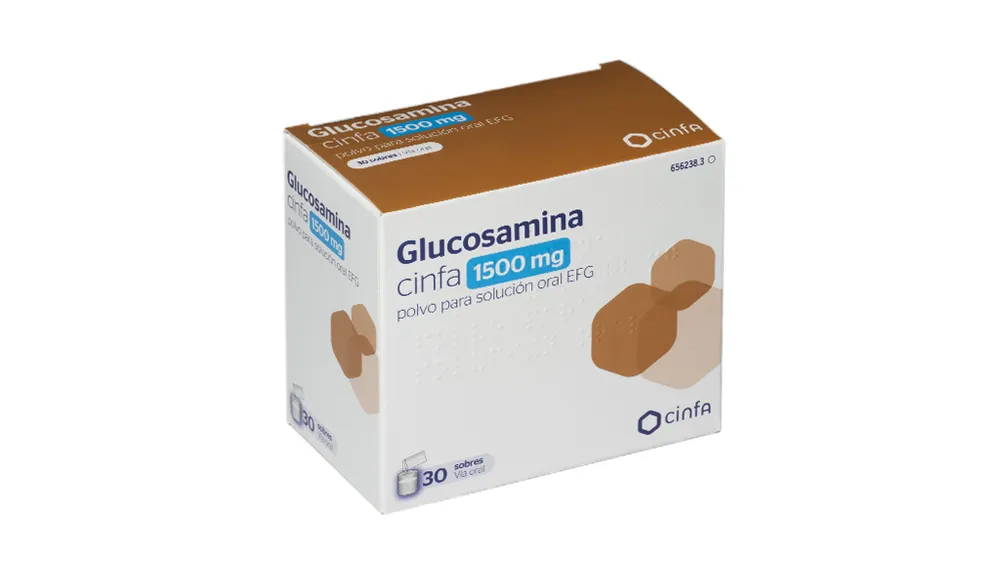
Table of Contents
- Package leaflet: Information for the user
- Introduction
- 1. What is glucosamine cinfa and what is it used for
- 2. What you need to know before taking glucosamine cinfa
- 3. How to take glucosamine cinfa
- 4. Possible adverse effects
- 5. Storage of glucosamine cinfa
- 6. Contents of the pack and other information
Package leaflet: Information for the user
Introduction
Package leaflet: information for the user
glucosamine cinfa 1500 mg powder for oral solution EFG
Glucosamine sulphate
Read the entire leaflet carefully before you start taking this medicine, because it contains important information for you.
- Keep this leaflet, as you may need to read it again.
If you have any questions, ask your doctor or pharmacist.
- This medicine has been prescribed for you only, and you should not give it to other people, even if they have the same symptoms as you, because it may harm them.
- If you experience any adverse effects, consult your doctor or pharmacist, even if they are adverse effects not listed in this leaflet. See section 4.
Leaflet contents
- What glucosamine cinfa is and what it is used for
- What you need to know before taking glucosamine cinfa
- How to take glucosamine cinfa
- Possible side effects
- How to store glucosamine cinfa
- Contents of the pack and other information
1. What is glucosamine cinfa and what is it used for
glucosamine cinfa belongs to the group of medicines known as other anti-inflammatory and non-steroidal antirheumatic agents.
glucosamine cinfa is indicated for relieving symptoms caused by mild to moderate knee osteoarthritis.
2. What you need to know before taking glucosamine cinfa
Do not take glucosamine cinfa
- If you are allergic to glucosamine or to any of the other ingredients of this medicine (listed in section 6).
- If you are allergic to shellfish, because glucosamine is derived from shellfish.
Warnings and precautions
Talk to your doctor or pharmacist before starting to take glucosamine cinfa.
Take special care:
- If you have impaired glucose tolerance. More frequent monitoring of blood sugar levels may be necessary when starting treatment with glucosamine.
- If you have any risk factors for heart or arterial disease, as increases in cholesterol levels have been observed in some patients treated with glucosamine.
- If you have asthma. When starting treatment with glucosamine, you should be aware that symptoms may worsen.
- If you have any kidney or liver impairment, as studies have not been conducted under these conditions and therefore no dosage recommendations can be given. Administration in these patients should always be under medical supervision.
You should consult your doctor to rule out the presence of other joint diseases for which alternative treatments may be required.
Children and adolescents
Do not take glucosamine if you are under 18 years of age.
Other medicines and glucosamine cinfa
Tell your doctor or pharmacist if you are taking, have recently taken, or might need to take any other medicines.
Caution is recommended when administering glucosamine together with other medicines, particularly:
- Certain types of anticoagulant medicines (e.g., warfarin, dicoumarol, phenprocoumon, acenocoumarol, and fluindione). The effect of these medicines may be enhanced when used in combination with glucosamine. Therefore, patients receiving these combinations should be monitored more closely when starting or stopping glucosamine treatment.
- With other medicines such as tetracycline.
Please consult your doctor for appropriate advice.
Taking glucosamine cinfa with food and drink
Dissolve the contents of the sachet in a glass of water and take once daily, preferably with food.
Pregnancy and breastfeeding
If you are pregnant or breastfeeding, think you may be pregnant, or are planning to become pregnant, consult your doctor or pharmacist before using this medicine.
Glucosamine should not be used during pregnancy.
The use of glucosamine is not recommended during breastfeeding.
Driving and use of machines
No studies have been conducted on the effects of glucosamine on the ability to drive and operate machinery. However, if you experience headache, fatigue, dizziness, somnolence, or visual disturbances while taking glucosamine, you should not drive or operate machinery (see section 4 “Possible side effects”).
glucosamine cinfa contains aspartame (E-951)
This medicine contains 2.5 mg of aspartame per sachet.
Aspartame is a source of phenylalanine, which may be harmful if you have phenylketonuria (PKU), a rare genetic disorder in which phenylalanine accumulates because the body cannot eliminate it properly.
glucosamine cinfa contains sodium
This medicine contains 151 mg of sodium (main component of table/cooking salt) per sachet. This corresponds to 7.5% of the maximum daily recommended sodium intake for an adult.
3. How to take glucosamine cinfa
Follow exactly the instructions for use of this medicine as given by your doctor or pharmacist. If in doubt, consult your doctor or pharmacist again.
Your doctor will adjust the dose according to your condition.
The recommended starting dose is one sachet (dissolved in a glass of water) once daily, preferably with meals.
For oral use.
Duration of treatment
Glucosamine is not indicated for the treatment of acute painful symptoms. Relief of symptoms (especially pain relief) may not occur until after several weeks of treatment and, in some cases, even longer. If you do not experience symptom relief within 2–3 months, consult your doctor to reconsider continuing treatment with glucosamine.
If you take more glucosamine cinfa than you should
If you take more glucosamine than you should, or if someone else or a child takes this medicine, inform your doctor or pharmacist.
Signs and symptoms of overdose with glucosamine include headache, dizziness, confusion, joint pain, nausea, vomiting, diarrhea, or constipation. Do not continue taking glucosamine at the first sign of any of the symptoms listed above.
In case of overdose or accidental ingestion, contact your doctor or pharmacist immediately or call the Toxicology Information Service at 91 562 04 20, indicating the medicine and the amount ingested. It is recommended to bring the container and the package leaflet to the healthcare professional.
If you forget to take glucosamine cinfa
Do not take a double dose to make up for missed doses.
If you have any further questions about the use of this medicine, ask your doctor or pharmacist.
4. Possible adverse effects
Like all medicines, this medicine may cause adverse effects, although not everyone experiences them.
You should stop taking glucosamine and contact your doctor immediately if you experience symptoms of angioedema, such as:
- Swelling of the face, tongue or throat
- Difficulty swallowing
- Hives and difficulty breathing
The most commonly observed adverse effects are:
Frequent (may affect up to 1 in 10 people)
- Headache
- Drowsiness
- Fatigue
- Diarrhea
- Constipation
- Nausea
- Flatulence
- Abdominal pain
- Indigestion
Uncommon (may affect up to 1 in 100 people)
- Hot flushes
- Rash
- Itching
- Redness
Frequency not known (cannot be estimated from available data)
- Insomnia
- Dizziness
- Cardiac arrhythmia of the tachycardia type
- Vomiting
- Asthma and worsening of asthma symptoms
- Yellowing of the skin
- Swelling in ankles, legs and feet
- Hives
- Increased levels of liver enzymes and worsening of blood glucose levels in patients with diabetes mellitus
- Allergic reactions
- Visual disturbances
- Increase in blood pressure
One case of elevated cholesterol has been reported, but a causal relationship with the medicine has not been established.
Reporting of adverse effects
If you experience any type of adverse effect, consult your doctor or pharmacist, even if it is a possible adverse effect not listed in this leaflet. You may also report them directly through the Spanish Pharmacovigilance System for Human Medicines: https://www.notificaram.es. By reporting adverse effects, you can help provide more information on the safety of this medicine.
5. Storage of glucosamine cinfa
Keep this medicine out of sight and reach of children.
Do not use this medicine after the expiry date stated on the packaging after EXP. The expiry date is the last day of the month indicated.
This medicine does not require any special storage conditions.
Medicines must not be disposed of via wastewater or household waste. Dispose of containers and unused medicines at the SIGRE Point at your pharmacy. If in doubt, ask your pharmacist how to dispose of containers and medicines you no longer need. This way, you will help protect the environment.
6. Contents of the pack and other information
Composition of glucosamine cinfa
- The active substance is glucosamine. Each sachet contains 1,500 mg of glucosamine sulfate as glucosamine sulfate sodium chloride complex, equivalent to 1,178 mg of glucosamine.
- The other components are: mannitol (E-421), aspartame (E-951), and citric acid monohydrate.
Appearance of the product and contents of the pack
Fine white or slightly yellowish powder, possibly with brownish granules, for oral solution.
Presented in single-dose sachets made of a metallic laminate (Alu/PE/Coated paper).
Each pack contains 20, 30, or 500 (hospital pack) single-dose sachets.
Only certain pack sizes may be commercially available.
Marketing Authorization Holder and Manufacturer
Laboratorios Cinfa, S.A.
Carretera Olaz-Chipi, 10. Polígono Industrial Areta
31620 Huarte (Navarra) - Spain
Date of the most recent review of this leaflet: October 2021
Detailed and up-to-date information on this medicinal product is available on the website of the Spanish Agency of Medicines and Health Products (AEMPS) http://www.aemps.gob.es/
You can access detailed and updated information about this medicine by scanning with your mobile phone (smartphone) the QR code included in the package leaflet and outer packaging. You can also access this information at the following internet address: https://cima.aemps.es/cima/dochtml/p/68105/P_68105.html
QR code to: https://cima.aemps.es/cima/dochtml/p/68105/P_68105.html