Gemcitabine Aurovitas Spain 2000 mg concentrate for solution for infusion
Spain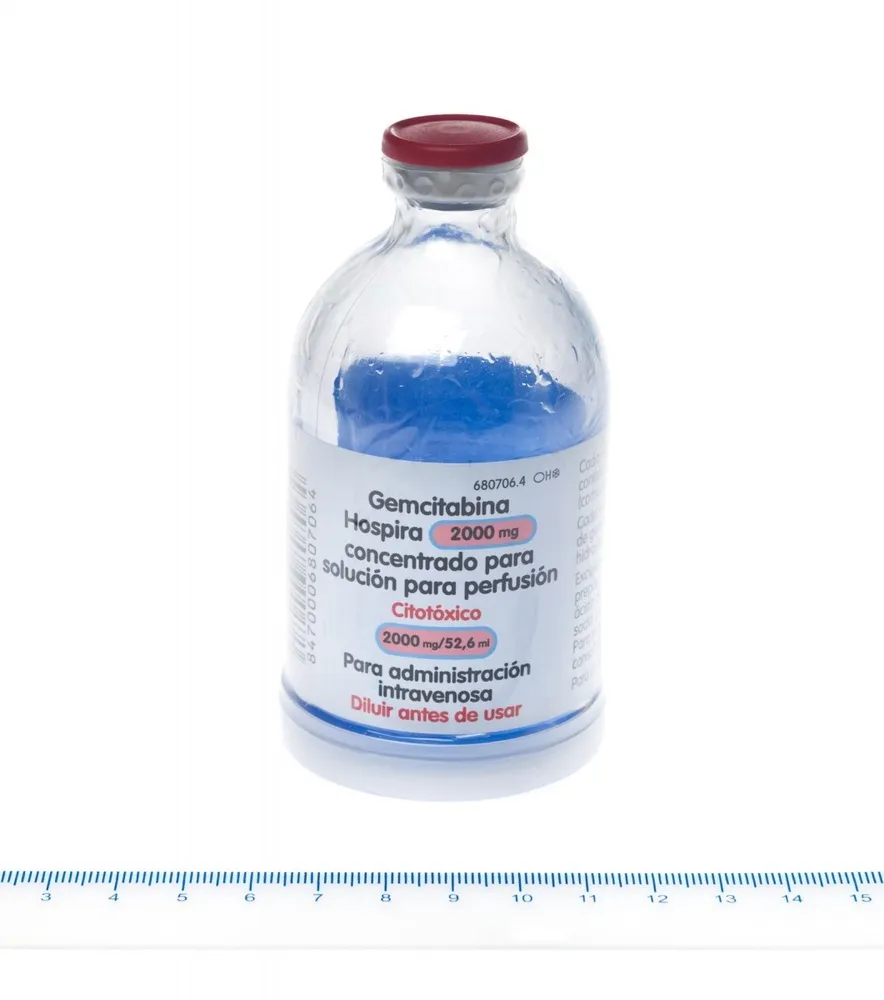
Table of Contents
- Package leaflet: Information for the user
- Introduction
- 1. What Gemcitabina Aurovitas Spain is and what it is used for
- 2. What you need to know before using Gemcitabine Aurovitas Spain
- 3. How to use Gemcitabina Aurovitas Spain
- 4. Possible adverse effects
- 5. Storage of Gemcitabine Aurovitas Spain
- 6. Contents of the container and other information
Package leaflet: Information for the user
Introduction
Package leaflet: information for the user
Gemcitabina Aurovitas Spain 2,000 mg concentrate for solution for infusion
Read all of this leaflet carefully before you start using this medicine, because it contains important information for you.
- Keep this leaflet. You may need to read it again.
- If you have any questions, ask your doctor, pharmacist or nurse.
- If you get any side effects, talk to your doctor, pharmacist or nurse. This includes any side effects not listed in this leaflet. See section 4.
Leaflet contents
- What Gemcitabina Aurovitas Spain is and what it is used for
- What you need to know before using Gemcitabina Aurovitas Spain
- How to use Gemcitabina Aurovitas Spain
- Possible side effects
- How to store Gemcitabina Aurovitas Spain
- Contents of the pack and other information
1. What Gemcitabina Aurovitas Spain is and what it is used for
Gemcitabina Aurovitas Spain belongs to a group of medicines known as "cytotoxic agents". These medicines destroy dividing cells, including cancer cells.
Gemcitabine may be administered alone or in combination with other anticancer medicines, depending on the type of cancer.
Gemcitabine is used in the treatment of the following types of cancer:
- Non-small cell lung cancer (NSCLC), either alone or in combination with cisplatin.
- Pancreatic cancer.
- Breast cancer, in combination with paclitaxel.
- Ovarian cancer, in combination with carboplatin.
- Bladder cancer, in combination with cisplatin.
2. What you need to know before using Gemcitabine Aurovitas Spain
Do not use Gemcitabine Aurovitas Spain
- if you are allergic to gemcitabine or to any of the other ingredients of this medicine (listed in section 6).
- if you are breastfeeding.
Warnings and precautions
Before the first infusion, blood samples will be taken to check whether your liver and kidneys are functioning well enough for you to receive this medicine. Likewise, before each infusion, blood samples will be taken to check whether you have enough red blood cells to receive gemcitabine. Your doctor may decide to adjust the dose or delay treatment depending on your general condition and whether your blood cell counts are too low. Periodically, blood samples will be taken to monitor how well your kidneys and liver are functioning.
Consult your doctor, nurse, or hospital pharmacist before starting to use this medicine.
If you have ever developed a severe skin rash, skin peeling, blisters, and/or mouth sores after using gemcitabine.
If you have or have previously had liver, heart, or blood vessel disease, or kidney problems, consult your doctor or hospital pharmacist, as you may not be able to receive gemcitabine.
Inform your doctor if you have recently received, or are scheduled to receive, radiotherapy, as gemcitabine may cause an early or delayed radiation reaction.
Inform your doctor if you have recently been vaccinated, as this may cause adverse effects with gemcitabine.
If during treatment with this medicine you experience symptoms such as headache with confusion, seizures, or changes in vision, consult your doctor immediately. This could be a very rare nervous system adverse effect known as reversible posterior encephalopathy syndrome.
Inform your doctor if you experience difficulty breathing or feel very weak and look very pale, as this may be a sign of kidney failure or lung problems.
Inform your doctor if you experience generalized swelling, shortness of breath, or weight gain, as these may be signs of fluid leakage from your smallest blood vessels into your tissues.
Severe skin reactions, including Stevens-Johnson syndrome, toxic epidermal necrolysis, and acute generalized exanthematous pustulosis (AGEP), have been reported in association with gemcitabine treatment. Seek immediate medical attention if you notice any symptoms related to these severe skin reactions described in section 4.
Children and adolescents
The use of this medicine is not recommended in children under 18 years of age due to lack of efficacy and safety data.
Other medicines and Gemcitabine Aurovitas Spain
Inform your doctor or hospital pharmacist if you are taking, have recently taken, or might need to take any other medicines, including vaccines and over-the-counter medicines, or if you have received or are scheduled to receive radiotherapy.
Pregnancy, breastfeeding, and fertility
Pregnancy
If you are pregnant or breastfeeding, think you might be pregnant, or plan to become pregnant, consult your doctor or pharmacist before using this medicine. Gemcitabine use during pregnancy should be avoided. Your doctor will discuss with you the potential risks of using gemcitabine during pregnancy. Women of childbearing potential must use an effective method of contraception during treatment with gemcitabine and for 6 months after the last dose.
Breastfeeding
Inform your doctor if you are breastfeeding.
You must interrupt breastfeeding during treatment with gemcitabine.
Fertility
Men are advised not to father a child during treatment with gemcitabine and for 3 months after treatment ends. If you wish to father a child during treatment or within 3 months after treatment, seek advice from your doctor or pharmacist. You may request information about sperm preservation before starting treatment.
Driving and use of machines
Gemcitabine may cause drowsiness.
Do not drive or operate machinery until you are certain that treatment with gemcitabine does not cause drowsiness.
3. How to use Gemcitabina Aurovitas Spain
The recommended dose of gemcitabine is 1,000–1,250 mg per square meter of your body surface area. Your height and weight will be measured to calculate your body surface area. Your doctor will use this body surface area to determine the correct dose for you. This dose may be adjusted, or treatment may be delayed, depending on your overall health and blood cell counts.
The frequency with which you receive your gemcitabine infusion depends on the type of cancer being treated.
A hospital pharmacist or physician will have diluted the Gemcitabina Aurovitas Spain concentrate before administration.
You will always receive this medicine by intravenous infusion into one of your veins. The infusion will last approximately 30 minutes.
Use of this medicine is not recommended in children under 18 years of age.
If you have any further questions about the use of this medicine, ask your doctor or pharmacist.
4. Possible adverse effects
Like all medicines, this medicine can cause adverse effects, although not everyone will experience them.
You must contact your doctor immediately if you notice any of the following effects:
- Bleeding from the gums, nose or mouth, or any bleeding that does not stop; reddish or pink urine; unexpected bruising (as you may have lower than normal platelet counts, which is very common).
- Tiredness, feeling faint, becoming easily short of breath, or if you are pale (as you may have lower than normal hemoglobin levels, which is very common).
- Allergic reactions: mild or moderate skin rash (very common), itching (common), or fever (very common).
- Temperature of 38°C or higher, sweating, or other signs of infection (as you may have lower than normal white blood cell counts accompanied by fever, also known as febrile neutropenia) (common).
- Pain, redness, swelling, or sores in the mouth (stomatitis) (common).
- Irregular heartbeat (arrhythmia) (uncommon).
- Severe weakness and fatigue, purpura or small bleeding areas in the skin (bruising), acute kidney failure (low urine output or no urine production), and signs of infection (hemolytic uremic syndrome). This can be fatal (uncommon).
- Difficulty breathing (it is common to experience mild breathing difficulty shortly after gemcitabine infusion, which quickly resolves; however, more serious lung problems may occur uncommonly or rarely).
- Severe chest pain (myocardial infarction) (rare).
- Severe allergic/hypersensitivity reaction, with severe skin rash, including redness and itching of the skin, swelling of hands, feet, ankles, face, lips, mouth, or throat (which may cause difficulty swallowing or breathing), wheezing, rapid heartbeat (tachycardia), and feeling faint (anaphylactic reaction) (very rare).
- Generalized swelling, shortness of breath, or weight gain, as you may be experiencing leakage of fluid from your smallest blood vessels into your tissues (capillary leak syndrome) (very rare).
- Headache with changes in vision, confusion, seizures or epileptic fits (reversible posterior encephalopathy syndrome) (very rare).
- Severe rash with itching, blistering or peeling of the skin, often accompanied by flu-like symptoms (Stevens-Johnson syndrome, toxic epidermal necrolysis) (very rare).
- Extreme tiredness and weakness, purpura or small bleeding areas in the skin (bruising), acute kidney injury (low urine output or no urine production), and signs of infection. These may be signs of thrombotic microangiopathy (clots forming in small blood vessels) and hemolytic uremic syndrome, which can be fatal.
- Widespread red, scaly rash with inflamed skin bumps (including skin folds, trunk, and upper limbs) and blisters accompanied by fever (Acute Generalized Exanthematous Pustulosis [AGEP]) (frequency not known).
Other adverse effects with gemcitabine may include:
Very common adverse effects (may affect more than 1 in 10 people)
Low white blood cell count
Shortness of breath
Vomiting
Nausea
Hair loss
Liver problems: identified through abnormal blood test results
Blood in the urine
Abnormal urine tests: protein in the urine
Pseudoflu-like syndrome including fever
Swelling of ankles, fingers, feet, face (edema)
Low hemoglobin levels (anemia)
Common adverse effects (may affect up to 1 in 10 people)
Loss of appetite (anorexia)
Headache
Insomnia
Drowsiness
Cough
Stuffy nose
Constipation
Diarrhea
Itching
Sweating
Muscle pain
Back pain
Fever
Weakness
Chills
Infections
Uncommon adverse effects (may affect up to 1 in 100 people)
Hardening of the walls of the lung alveoli (interstitial pneumonitis)
Wheezing (spasm of the airways)
Hardening of the walls of the lungs (abnormal chest X-ray/scan)
Heart failure
Kidney failure
Severe liver damage, including liver failure, which could be potentially fatal
Stroke (cerebral infarction)
Rare adverse effects (may affect up to 1 in 1,000 people)
Low blood pressure
Skin peeling, ulceration, or blistering
Severe peeling and blistering of the skin
Reactions at the injection site
Severe lung inflammation causing respiratory failure (adult respiratory distress syndrome)
Sunburn-like skin rash, which may occur in skin previously exposed to radiotherapy (delayed skin toxicity)
Fluid in the lungs
Hardening of the walls of the lung alveoli associated with radiotherapy (radiotherapy-associated toxicity)
Gangrene of the fingers or toes
Inflammation of blood vessels (peripheral vasculitis)
Very rare adverse effects (may affect up to 1 in 10,000 people)
Increased platelet count
Inflammation of the lining of the large intestine due to reduced blood supply (ischemic colitis)
Blood tests may reveal low hemoglobin levels (anemia), low white blood cell count, and low platelet count.
Thrombotic microangiopathy: clots forming in small blood vessels.
Frequency not known (cannot be estimated from available data)
Sepsis: when bacteria and their toxins circulate in your blood and begin to damage organs.
Pseudocellulitis: Redness of the skin with swelling.
You may experience any of these symptoms and/or conditions. You should inform your doctor as soon as possible if you begin to experience any of these adverse effects.
Reporting of adverse effects
If you experience any adverse effect, talk to your doctor or pharmacist, even if it is a possible adverse effect not listed in this leaflet. You can also report them directly via the Spanish Pharmacovigilance System for Human Medicines: www.notificaram.es. By reporting adverse effects, you can help provide more information on the safety of this medicine.
5. Storage of Gemcitabine Aurovitas Spain
Keep this medicine out of the sight and reach of children.
Unopened container
Store in a refrigerator (between 2°C and 8°C).
After first opening:
Physical and chemical stability in use has been demonstrated for 28 days at 25°C.
From a microbiological point of view, unless the opening method prevents the risk of microbiological contamination, the product should be used immediately. If not used immediately, the storage times and conditions during use are the responsibility of the user.
Infusion solution:
Chemical and physical stability in use has been demonstrated for 28 days at 2°C–8°C and at approximately 25°C after dilution in 0.9% sodium chloride solution to a final concentration within the range of 2 to 25 mg/ml (2.0 mg/ml, 12 mg/ml and 25 mg/ml). Diluted solutions are stable when stored in PVC or PE infusion bags.
From a microbiological standpoint, the infusion solution should be used immediately. If not used immediately, the storage times and conditions prior to use are the responsibility of the user and should normally not exceed 24 hours at 2°C–8°C, unless dilution has taken place under controlled and validated aseptic conditions.
Do not use this medicine after the expiry date stated on the vial and the outer carton after EXP. The expiry date refers to the last day of the month indicated.
Do not use this medicine if particles are observed.
6. Contents of the container and other information
Composition of Gemcitabina Aurovitas Spain
- The active substance is gemcitabine (as gemcitabine hydrochloride). Each ml of concentrate for solution for infusion contains 40 mg of gemcitabine (as gemcitabine hydrochloride).
Each 50 ml vial contains 2,000 mg of gemcitabine (as gemcitabine hydrochloride).
- The other components are hydrochloric acid (E-507) for pH adjustment and water for injections.
Appearance of the product and contents of the container
Gemcitabina Aurovitas Spain concentrate for solution for infusion is a clear, colourless or pale yellow solution.
Gemcitabina Aurovitas Spain is supplied in a colourless type I glass vial with a rubber stopper and sealed with an aluminium cap and a polypropylene disc. The vial may be packaged with or without a protective plastic overwrap.
Pack size
1 vial of 50 ml
Only certain pack sizes may be marketed.
Marketing Authorization Holder
Eugia Pharma (Malta) Limited
Vault 14, Level 2, Valletta Waterfront
Floriana, FRN 1914
Malta
Manufacturer
APL Swift Services (Malta) Limited
HF26, Hal Far Industrial Estate, Hal Far
Birzebbugia, BBG 3000
Malta
Or
Generis Farmacêutica, S.A.
Rua João de Deus, nº 19, Venda Nova
2700-487 Amadora
Portugal
For further information about this medicinal product, please contact the local representative of the Marketing Authorization Holder:
Aurovitas Spain, S.A.U.
Avda. de Burgos, 16-D
28036 Madrid
Spain
Date of the most recent revision of this leaflet: December 2023
Other sources of information
Detailed information on this medicinal product is available on the website of the Spanish Agency of Medicines and Health Products (AEMPS) (http://www.aemps.gob.es/).
This information is intended exclusively for healthcare professionals:
Instructions for use
Gemcitabina Aurovitas Spain 2,000 mg concentrate for solution for infusion
Cytotoxic
Handling
Standard safety precautions for cytostatic agents must be observed when preparing or disposing of the infusion solution. Pregnant female personnel must not handle the product. The solution must be handled in a safety cabinet and protective gowns and gloves must be worn. If a safety cabinet is not available, the protective equipment must also include a mask and protective goggles.
If the product comes into contact with the eyes, severe irritation may occur. The eyes must be rinsed immediately with copious amounts of water. Consult a physician if irritation persists. If the solution contacts the skin, wash the affected area thoroughly with plenty of water.
Dilution instructions
The only solvent approved for dilution of Gemcitabina Aurovitas Spain concentrate for solution for infusion is 9 mg/ml (0.9%) sodium chloride for injection (without preservatives).
-
Use aseptic techniques during dilution of gemcitabine for intravenous infusion administration.
-
The diluted solution is a clear, colourless or pale yellow solution.
-
Parenteral medicinal products should be inspected visually prior to administration to check for particles or discoloration. If particles are observed, the solution must not be administered.
-
Disposal of unused medicinal product and all materials that have been in contact with it must be carried out in accordance with local regulations.
Storage conditions
After first opening:
Chemical and physical in-use stability has been demonstrated for 28 days at 25°C.
From a microbiological standpoint, unless the opening method prevents the risk of microbiological contamination, the product should be used immediately. If not used immediately, the storage times and conditions prior to use are the responsibility of the user.
Infusion solution:
Chemical and physical in-use stability has been demonstrated for 28 days at 2°C–8°C and at approximately 25°C after dilution in 0.9% sodium chloride solution to a final concentration within the range of 2 to 25 mg/ml (2.0 mg/ml, 12 mg/ml and 25 mg/ml). The pH of the diluted solution is in the range of 2–3 and osmolarity is approximately 285 mOsm/kg. Diluted solutions are stable when stored in PVC or PE infusion bags.
From a microbiological standpoint, the infusion solution should be used immediately. If not used immediately, the storage times and conditions prior to use are the responsibility of the user and normally should not exceed 24 hours at 2°C–8°C, unless dilution has taken place under controlled and validated aseptic conditions.