Gelocatil 650 mg tablets
Spain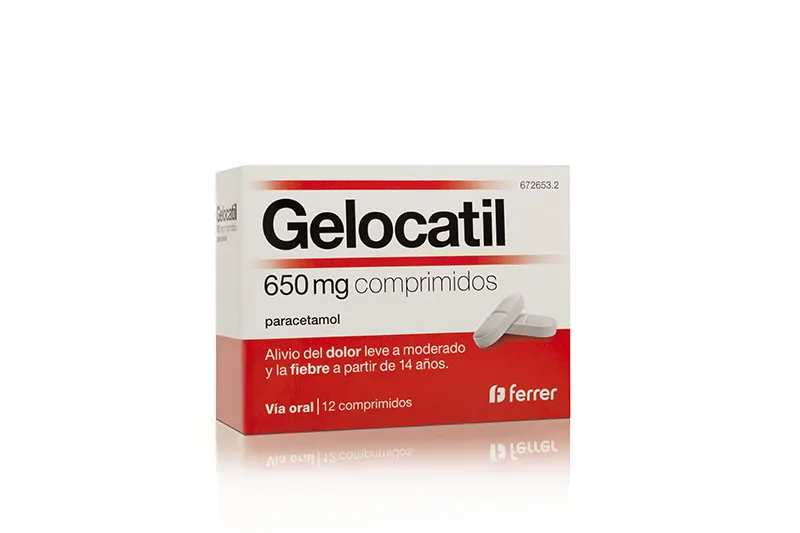
Table of Contents
Package leaflet: Information for the user
Introduction
GELOCATIL 650 mg Tablets
Paracetamol
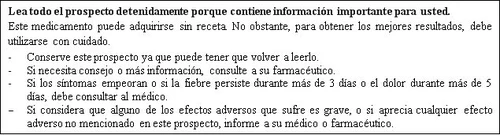
Contents of the leaflet:
- What Gelocatil 650 mg Tablets are and what they are used for.
- Before you take Gelocatil 650 mg Tablets.
- How to take Gelocatil 650 mg Tablets.
- Possible side effects.
- How to store Gelocatil 650 mg Tablets.
- Further information.
1. What Gelocatil 650 mg Tablets are and what they are used for
Paracetamol is effective in reducing pain and fever.
It is indicated for the symptomatic relief of mild to moderate occasional pain, such as headache, dental pain, muscle pain (muscle strains), or back pain (lumbago), as well as in febrile conditions.
Gelocatil is indicated for adults and adolescents over 14 years of age.
2. Before taking Gelocatil
Do not take Gelocatil if:
- you are allergic (hypersensitive) to paracetamol or to any of the other ingredients of Gelocatil.
Take special care with Gelocatil:
- Do not take more than the recommended dose stated in section 3, "How to take Gelocatil".
- Avoid using this medicine together with other medicines containing paracetamol, such as cold and flu remedies, because high doses may cause liver damage. Do not use more than one medicine containing paracetamol without consulting your doctor.
- Chronic alcoholics should take care not to exceed 2 grams of paracetamol in 24 hours.
- Patients with kidney, liver, heart, or lung disease, or those with anemia, should consult their doctor before taking this medicine.
- If you are being treated with medication for epilepsy, consult your doctor before taking this medicine, as concomitant use may reduce effectiveness and increase the hepatotoxicity of paracetamol, especially with high-dose paracetamol regimens.
- Asthmatic patients who are sensitive to acetylsalicylic acid should consult their doctor before taking this medicine.
- During treatment with Gelocatil, inform your doctor immediately if:
You have serious conditions such as severe renal failure or sepsis (when bacteria and their toxins circulate in the blood, causing organ damage), or if you suffer from malnutrition, chronic alcoholism, or are also taking flucloxacillin (an antibiotic). A serious condition called metabolic acidosis (an abnormality in the blood and body fluids) has been reported in patients in these situations when paracetamol is used at regular doses over a prolonged period or when paracetamol is taken together with flucloxacillin. Symptoms of metabolic acidosis may include: severe difficulty breathing with deep and rapid breathing, drowsiness, feeling unwell (nausea), and vomiting.
Use of other medicines:
Tell your doctor or pharmacist if you are using or have recently used any other medicines, including those obtained without a prescription.
In particular, if you are taking any of the following medicines, dosage adjustments or discontinuation of treatment may be necessary:
- Medicines to prevent blood clots: Oral anticoagulants (acenocoumarol, warfarin)
- Medicines to treat epilepsy: Antiepileptics (lamotrigine, phenytoin or other hydantoins, phenobarbital, methylphenobarbital, primidone, carbamazepine)
- Medicines to treat tuberculosis: (isoniazid, rifampicin)
- Medicines to treat depression and seizures: Barbiturates (used as hypnotics, sedatives, and anticonvulsants)
- Medicines to lower blood cholesterol levels: (cholestyramine)
- Medicines used to increase urine elimination (loop diuretics such as furosemide)
- Medicines used in the treatment of gout: (probenecid and sulfinpyrazone)
- Medicines used to prevent nausea and vomiting: Metoclopramide and domperidone
- Medicines used to treat high blood pressure (hypertension) and heart rhythm disorders (cardiac arrhythmias): Propranolol
- Flucloxacillin (antibiotic), due to a serious risk of blood and fluid abnormalities (called metabolic acidosis) requiring urgent treatment (see section 2).
Interference with diagnostic tests :
If you are scheduled for any laboratory tests (including blood and urine tests, etc.), inform your doctor that you are taking/using this medicine, as it may affect test results.
Taking Gelocatil with food and drinks:
The use of paracetamol in patients who habitually consume alcohol (3 or more alcoholic drinks: beer, wine, liquor, ... per day) may cause liver damage. |
Taking this medicine with food does not affect its effectiveness.
Use in children:
- Do not use in adolescents under 14 years of age.
Pregnancy:
Consult your doctor or pharmacist before using any medicine.
IMPORTANT FOR WOMEN If you are pregnant or think you might be pregnant, consult your doctor before taking this medication. Taking medications during pregnancy can be harmful to the embryo or fetus, and must be monitored by your doctor. |
If necessary, Gelocatil 650 mg Tablets may be used during pregnancy. You should use the lowest dose that relieves your pain or fever, and use it for the shortest possible time. Contact your doctor if your pain or fever does not improve, or if you need to take the medicine more often.
Breast-feeding:
Consult your doctor or pharmacist before taking any medicine.
Paracetamol passes into breast milk, therefore women who are breast-feeding should consult their doctor or pharmacist before taking this medicine.
Driving and using machines:
Paracetamol has no or negligible influence on the ability to drive and use machines.
Gelocatil contains sodium
This medicine contains less than 23 mg of sodium (1 mmol) per tablet; this is essentially "sodium-free".
3. How to take Gelocatil
Follow these instructions unless your doctor has given you different advice. Consult your doctor or pharmacist if you have any doubts.
The usual dose is:
Adults and adolescents over 14 years of age (weight 64-65 kg): Take 1 tablet every 4 - 6 hours as needed. Do not take more than 3 grams (4 tablets) in 24 hours.
Patients with liver disease: must consult their doctor before taking this medicine.
They should take the amount prescribed by their doctor, with a minimum interval of 8 hours between doses.
They must not take more than 3 tablets in 24 hours, divided into 3 doses.
Patients with kidney disease: must consult their doctor before taking this medicine.
Take a maximum of 500 milligrams per dose.
Due to the dose of 650 milligrams of paracetamol, this medicine is not indicated for this patient group.
This medicine is taken orally.
The tablets should be swallowed whole or split in half, with a glass of liquid, preferably water.
The tablets are scored, which allows them to be split in half. The score line is only intended to facilitate splitting if you have difficulty swallowing the tablet whole.
Always use the lowest effective dose.
The prolonged use of high daily doses of paracetamol should be avoided, as this increases the risk of adverse effects such as liver damage.
Administration of this medicine should be based on the presence of pain or fever. As these symptoms subside, treatment should be discontinued.
If pain persists for more than 5 days, fever for more than 3 days, or if pain or fever worsen or new symptoms appear, you must stop treatment and consult your doctor.
If you take more Gelocatil than you should:
You should contact your doctor or pharmacist immediately.
Symptoms of overdose may include: dizziness, vomiting, loss of appetite, yellowing of the skin and eyes (jaundice), abdominal pain, and inflammation of the pancreas (pancreatitis).
If you have taken an overdose, you must go immediately to a medical center even if you do not have symptoms, as symptoms often do not appear until 3 days after the overdose has been ingested, even in cases of severe poisoning.
Treatment of overdose is most effective if started within 4 hours of taking the medicine.
Patients undergoing treatment with barbiturates or chronic alcoholics may be more susceptible to the toxicity of a paracetamol overdose.
In case of overdose or accidental ingestion, go immediately to a medical center or call the Toxicology Information Service (telephone 91 562 04 20), indicating the medicine and the amount ingested.
4. Possible adverse effects
Like all medicines, Gelocatil may have adverse effects, although not everyone experiences them.
-
Rare adverse effects (occurring in between 1 and 10 out of every 10,000 people) include: malaise, low blood pressure (hypotension), and increased blood transaminase levels. Very rare adverse effects (occurring in fewer than 1 out of every 10,000 people) include: kidney disorders, cloudy urine, allergic dermatitis (skin rash), jaundice (yellowing of the skin), blood disorders (agranulocytosis, leucopenia, neutropenia, haemolytic anaemia), and hypoglycaemia (low blood sugar). Very rare cases of severe skin reactions have been reported.
-
Paracetamol may cause liver damage when taken at high doses or during prolonged treatment.
-
Adverse effects of unknown frequency (cannot be estimated from available data): A serious condition that may cause the blood to become more acidic (called metabolic acidosis) in critically ill patients using paracetamol (see section 2).
Reporting of adverse effects
If you experience any type of adverse effect, consult your doctor or pharmacist, even if it is a possible adverse effect not listed in this leaflet. You can also report them directly via the Spanish Pharmacovigilance System for Human Medicines: https://www.notificaram.es. By reporting adverse effects, you can help provide more information on the safety of this medicine.
5. Storage of Gelocatil 650 mg Tablets
Keep out of the reach and sight of children.
This medicine does not require special storage conditions.
Do not use this medicine after the expiry date stated on the packaging after EXP. The expiry date is the last day of the month indicated.
Medicines should not be disposed of via wastewater or household waste. Dispose of unused containers and medicines at the SIGRE Point at your pharmacy. If in doubt, ask your pharmacist how to properly dispose of unused containers and medicines. This will help protect the environment.
6. Contents of the pack and other information
Composition of Gelocatil:
Each tablet contains 650 milligrams of paracetamol as the active substance.
The other components (excipients) are magnesium stearate, povidone, colloidal anhydrous silica, potato starch, and pregelatinized corn starch.
Appearance of the product and contents of the pack:
Gelocatil is presented as tablets for oral administration.
The tablets are oblong, bevelled on one side, and white in colour.
Packs contain 4, 12 or 20 tablets.
Marketing Authorisation Holder:
Ferrer Internacional, S.A.
Gran Vía Carlos III, 94
08028 – Barcelona (Spain)
Manufacturer:
Ferrer Internacional, S.A.
Joan XXIII, 10
08950 – Esplugues de Llobregat (Barcelona)
or
Ferrer Internacional, S.A.
Joan Buscallá, 1-9
08173 - Sant Cugat del Vallès (Barcelona)
Local Representative:
Vemedia Pharma Hispania, S.A.
C/ Aragón, 182, 5th floor
08011 - Barcelona (Spain)
Date of the most recent revision of this leaflet: February 2025
Detailed and up-to-date information on this medicinal product is available on the website of the Spanish Agency for Medicines and Health Products (AEMPS) http://www.aemps.gob.es/