Frenadol Descongestivo hard capsules
Spain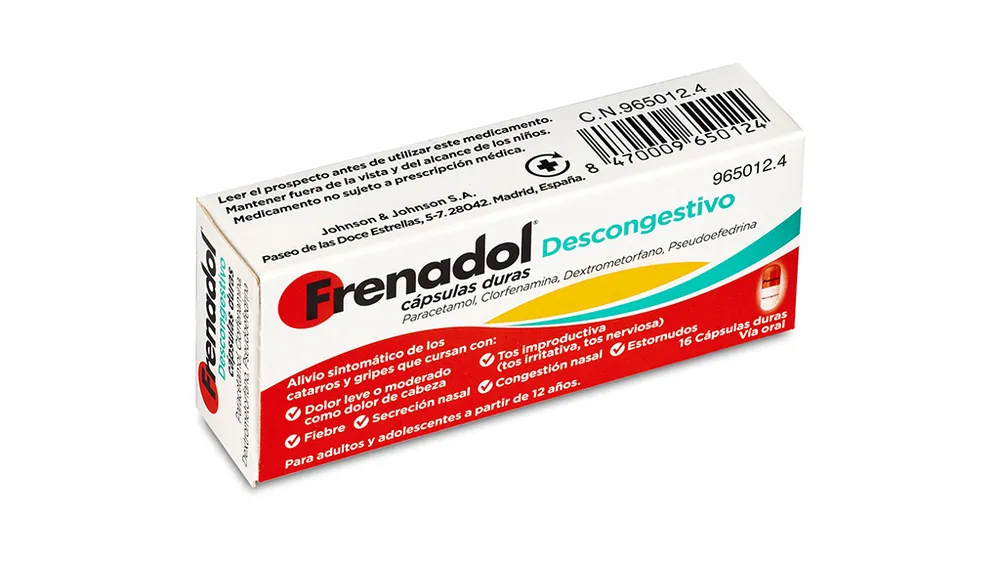
Table of Contents
- Package leaflet: Information for the user
- Introduction
- 1. What FRENADOL® (Decongestant) is and what it is used for
- 2. What you need to know before taking FRENADOL® Decongestant
- **Taking FRENADOL?Decongestant with food, drinks, and alcohol**
- 3. How to take FRENADOL (Decongestant)
- 4. Possible adverse effects
- 5. Storage of FRENADOL (Decongestant)
- 6. Contents of the pack and other information
Package leaflet: Information for the user
Introduction
Package leaflet: information for the user
FRENADOL? Decongestant hard capsules
Read the entire leaflet carefully before you start taking this medicine, because it contains important information for you.
Follow exactly the administration instructions contained in this leaflet or those indicated by your doctor or pharmacist.
- Keep this leaflet, as you may need to read it again.
- If you need advice or more information, consult your pharmacist.
- If you experience any adverse effects, consult your doctor or pharmacist, even if they are adverse effects not listed in this leaflet. See section 4.
- You should consult your doctor if you worsen or do not improve after 5 days of treatment (3 days for fever and for adolescents).
Contents of the leaflet
- What FRENADOL? Decongestant is and what it is used for
- What you need to know before taking FRENADOL? Decongestant
- How to take FRENADOL? Decongestant
- Possible adverse effects
- How to store FRENADOL? Decongestant
- Contents of the pack and other information
1. What FRENADOL® (Decongestant) is and what it is used for
FRENADOL® Decongestant is a combination medicine containing paracetamol, which reduces fever and relieves pain; dextromethorphan, a cough suppressant; chlorpheniramine, which helps reduce nasal discharge and sneezing; and pseudoephedrine, which relieves nasal congestion.
This medicine is indicated for the symptomatic relief of colds and flu associated with mild to moderate pain such as headache, fever, dry cough (irritative or nervous cough), nasal discharge and congestion, and sneezing, in adults and adolescents aged 12 years and older.
You should consult your doctor if your symptoms worsen or do not improve after 5 days of treatment in adults or 3 days in adolescents, if fever persists for more than 3 days, or if cough is accompanied by rash or persistent headache.
2. What you need to know before taking FRENADOL® Decongestant
Do not take FRENADOL® Decongestant
- if you are allergic to the active ingredients, sympathomimetics, antihistamine medicines, or to any of the other components of this medicine listed in section 6.
- if you have severe hypertension (high blood pressure) or severe coronary artery disease.
- if you have very high blood pressure (severe hypertension) or uncontrolled hypertension despite medication.
- if you have severe acute (sudden) or chronic (long-term) kidney disease, or kidney failure.
- if you are in the first trimester of pregnancy.
- if you suffer from severe liver disease.
- if you have severe renal failure or are undergoing hemodialysis.
- if you have respiratory insufficiency, asthmatic cough, or cough accompanied by expectoration.
- if you are being treated with a class of medicines called "monoamine oxidase inhibitors" (MAOIs), or within two weeks after stopping treatment with such medicines. Concomitant use increases the risk of serotonin syndrome and may cause increased blood pressure and/or hypertensive crisis.
- if you are currently or have recently been treated with other medicines, such as antidepressants or Parkinson’s disease medications, linezolid (an antibiotic), or procarbazine (a cancer medication) (see section “Taking FRENADOL® Decongestant with other medicines”).
- Children under 7 years of age must not take this medicine due to the dosage of its active ingredients.
Warnings and precautions
- Do not exceed the recommended dose stated in section 3, “How to take FRENADOL® Decongestant.” Taking more than the recommended dose (overdose) may result in liver damage. In case of overdose, seek immediate medical help. Prompt medical attention is critical for both adults and children, even if no signs or symptoms are apparent.
- Chronic alcohol users should consult their doctor before taking paracetamol, other analgesics, or antipyretic medicines. They should also take care not to exceed 4 capsules per day (2 g of paracetamol) and should consult their doctor about taking paracetamol or other antipyretics (products for adults).
- Patients who regularly consume alcohol (3 or more alcoholic drinks—beer, wine, spirits, etc.—per day) may experience liver damage when taking this medicine.
- While taking this medicine, do not take other medicines containing paracetamol, as this could lead to paracetamol overdose and potential liver damage. Do not use more than one paracetamol-containing medicine without consulting your doctor.
- You must not take other medicines containing nasal decongestants. In case of overdose, contact your doctor immediately. Rapid medical attention is critical for both adults and children, even if no signs or symptoms are observed.
- If small pustules develop, mainly non-follicular, which may or may not be accompanied by fever and disseminated edematous erythema, primarily located in skin folds, trunk, and upper limbs, especially within the first 2 days of treatment, you may be experiencing acute generalized exanthematous pustulosis (AGEP), which requires medical monitoring.
- If sudden abdominal pain, rectal bleeding, or other symptoms of ischemic colitis appear, discontinue treatment and consult a doctor immediately. Serious skin reactions such as Acute Generalized Exanthematous Pustulosis (AGEP), Stevens-Johnson Syndrome (SJS), Toxic Epidermal Necrolysis (TEN), and Drug Reaction with Eosinophilia and Systemic Symptoms (DRESS) have been reported very rarely in patients receiving paracetamol. Patients should be informed about signs of serious skin reactions, and use of the medicine must be discontinued at the first appearance of skin rash or any other sign of hypersensitivity.
- Cases of reversible posterior encephalopathy syndrome (RPES) and reversible cerebral vasoconstriction syndrome (RCVS) have been reported after using medicines containing pseudoephedrine. RPES and RCVS are rare conditions that may involve reduced blood flow to the brain. Stop using FRENADOL® Decongestant immediately and seek urgent medical attention if you experience symptoms that could indicate RPES or RCVS (see section 4, “Possible side effects” for symptoms).
You should consult your doctor or pharmacist before starting FRENADOL® Decongestant if you:
- have kidney disease, pre-existing heart conditions (such as arrhythmias or coronary artery disease), lung disease, or anemia.
- have liver disease (with or without hepatic insufficiency) or viral hepatitis, as this increases the risk of hepatotoxicity.
- are asthmatic and sensitive to acetylsalicylic acid.
- are sensitive (allergic) to an antihistamine, as you may also be sensitive to others (such as chlorpheniramine).
- have hypertension (high blood pressure), glaucoma (elevated intraocular pressure), hyperthyroidism, bladder neck obstruction, symptomatic prostate hypertrophy, difficulty urinating, or urinary obstruction or retention.
- have atopic dermatitis.
- have diabetes mellitus.
- have thyroid disease.
- have a chronic respiratory condition such as emphysema, chronic bronchitis, bronchial asthma, or cough with excessive secretions.
- have difficulty urinating and/or benign prostatic hyperplasia.
- are a poor metabolizer of CYP2D6 or are using CYP2D6 inhibitors.
Patients with chronic respiratory conditions such as emphysema, chronic bronchitis, bronchial asthma, or cough with excessive secretions, as well as those with glaucoma, prostate enlargement with residual urine formation, are advised to consult a doctor before using this product.
During treatment with FRENADOL® Decongestant, inform your doctor immediately if:
You have serious conditions such as severe renal failure or sepsis (when bacteria and their toxins circulate in the blood, causing organ damage), or if you suffer from malnutrition, chronic alcoholism, or are also taking flucloxacillin (an antibiotic). A serious condition called metabolic acidosis (an abnormality in blood and body fluids) has been reported in patients under these conditions when paracetamol is used regularly over a prolonged period or when paracetamol is taken concomitantly with flucloxacillin. Symptoms of metabolic acidosis may include: severe breathing difficulty with deep and rapid breathing, drowsiness, malaise (nausea), and vomiting.
With FRENADOL® Decongestant, blood flow to the optic nerve may be reduced. If you experience sudden vision loss, stop taking FRENADOL® Decongestant and contact your doctor or seek immediate medical attention. See section 4.
This medicine may cause dependence. Therefore, treatment should be short-term. Special caution is recommended in adolescents and young adults, as well as in patients with a history of drug abuse or psychoactive substance use.
This medicine may cause drowsiness. Avoid consuming alcoholic beverages and certain medicines while taking this medicine, as they may enhance this effect. See sections “Taking FRENADOL® Decongestant with other medicines” and “Taking FRENADOL® Decongestant with food, drinks, and alcohol.”
Patients over 60 years of age may be particularly sensitive to the adverse effects of this medicine due to its content of pseudoephedrine, a sympathomimetic amine. Overdose of sympathomimetic amines in patients over 60 may lead to hallucinations, central nervous system depression, seizures, and death.
Sedated, weakened, or bedridden patients must not take this medicine.
Serious skin reactions such as redness, blisters, or rashes may rarely occur. If you notice any of these symptoms, stop treatment and consult your doctor.
It is recommended not to take other cough or nasal decongestant medicines simultaneously. See “Taking FRENADOL® Decongestant with other medicines.”
If you are scheduled for surgery, discontinue treatment with this medicine at least 24 hours beforehand.
Children
Children under 12 years of age must not take this medicine due to the dosage of its active ingredients.
Taking FRENADOL® Decongestant with other medicines
Inform your doctor or pharmacist if you are taking, have recently taken, or might need to take any other medicines.
In particular, if you are using any of the following medicines, dosage adjustments or discontinuation of treatment may be necessary:
- Medicines for epilepsy (lamotrigine, phenytoin or other hydantoins, phenobarbital, methylphenobarbital, primidone).
- Medicines for tuberculosis (isoniazid, rifampicin).
- Medicines to prevent blood clots (oral anticoagulants) such as acenocoumarol, warfarin.
- Medicines used to increase urine elimination (loop diuretics such as furosemide, or other diuretics), and other potassium-wasting diuretics (such as diuretics used for hypertension or other conditions).
- Medicines used to prevent nausea and vomiting (metoclopramide and domperidone).
- Medicines used in the treatment of gout (probenecid).
- Medicines used for high blood pressure (hypertension) or to promote urine elimination (such as beta-blockers like propranolol, ACE inhibitors, rauwolfia alkaloids such as reserpine, methyldopa, guanethidine), and for cardiac arrhythmias, such as amiodarone or quinidine.
- Medicines to lower blood cholesterol levels (cholestyramine).
- Monoamine oxidase inhibitors (MAOIs) used to treat depression (moclobemide, tranylcypromine, fluoxetine, paroxetine, bupropion), Parkinson’s disease (selegiline), or other conditions such as cancer (procarbazine), infections (linezolid, furazolidone). If you are taking any of these, administration of FRENADOL® Decongestant must be separated by at least 15 days, both before and after. Otherwise, due to its pseudoephedrine content, severe increases in blood pressure, very high fever, and headache may occur.
- Other antidepressants, known as tricyclic and tetracyclic antidepressants (such as maprotiline).
- Medicines for schizophrenia (such as haloperidol).
- Medicines that cause central nervous system depression (such as those used for insomnia or anxiety, Parkinson’s disease, or allergies).
- Ototoxic medicines (those that have ear damage as an adverse effect).
- Photosensitizing medicines (those that cause light allergy as an adverse effect).
- Medicines used for pain and inflammation relief (celecoxib, parecoxib, valdecoxib).
- Medicines used to increase mucus secretion.
- Urine-alkalinizing medicines (sodium bicarbonate, citrates).
- Inhalational anesthetics.
- Central nervous system stimulants (amphetamines, xanthines).
- Medicines for heart conditions (digitalis glycosides).
- Medicines for thyroid disorders (thyroid hormones).
- Medicine used for Parkinson’s disease (levodopa).
- Medicines used for angina pectoris (nitrates).
- Cocaine, which, in addition to stimulating the nervous system, may increase cardiac effects when used with pseudoephedrine.
- Other medicines belonging to the pseudoephedrine group (sympathomimetic medicines), as they may enhance adverse effects.
- Selective serotonin reuptake inhibitors (SSRIs), as they may cause Serotonin Syndrome.
- Metoprolol, used for cardiovascular conditions (hypertension, acute myocardial infarction).
- Isavuconazole, used for the treatment of invasive aspergillosis and invasive mucormycosis.
- The antibiotic flucloxacillin, due to a serious risk of blood and fluid abnormality (called metabolic acidosis) requiring urgent treatment (see section 2).
Interference with diagnostic tests:
If you are scheduled to undergo any diagnostic tests (including blood or urine tests, skin tests using allergens, etc.), inform your doctor that you are taking this medicine, as it may alter test results.
Taking FRENADOL?Decongestant with food, drinks, and alcohol
While taking this medicine, you must not consume alcoholic beverages, as they may increase the likelihood of adverse effects from this medicine.
In addition, the use of medicines containing paracetamol by patients who regularly consume alcohol (3 or more alcoholic drinks—beer, wine, liquor, etc.—per day) may cause liver damage.
This medicine must not be taken with grapefruit juice or bitter orange juice, as they may enhance the adverse effects of some of its components, dextromethorphan and pseudoephedrine.
Pregnancy and breastfeeding
If you are pregnant or breastfeeding, think you might be pregnant, or are planning to become pregnant, consult your doctor or pharmacist before using this medicine. Taking medicines during pregnancy may be harmful to the embryo or fetus and should be supervised by your doctor.
This medicine is contraindicated during the first trimester of pregnancy and should not be taken during the remainder of pregnancy unless your doctor considers it strictly necessary.
The four active ingredients in this medicine are excreted in breast milk; therefore, women who are breastfeeding should not take FRENADOL® Decongestant unless the benefits of treatment for the mother outweigh the potential risks to the nursing infant.
Driving and operating machinery
FRENADOL® Decongestant may cause drowsiness. If you experience these effects, avoid driving or operating machinery.
3. How to take FRENADOL (Decongestant)
Follow exactly the instructions for use provided in this leaflet or those given by your doctor or pharmacist. If in doubt, ask your doctor or pharmacist.
The recommended dose is:
Adults: 1 capsule every 6 or 8 hours (3 or 4 times daily), as needed. Preferably take 1 capsule before going to bed. Do not take more than 4 capsules (equivalent to 2 g of paracetamol) per day. See section “Warnings and precautions”.
Adolescents aged 12 to 18 years: 1 capsule every 6 or 8 hours (3 or 4 times daily), as needed. Preferably take one dose before going to bed. Do not exceed 4 doses (equivalent to 2 g of paracetamol) per day.
Patients with hepatic impairment: Should consult their doctor. The recommended dose is 1 capsule every 8 hours. Do not take more than 4 capsules (equivalent to 2 g of paracetamol) per day.
Patients with renal impairment: Consult your doctor. The recommended dose is 1 capsule every 6 or 8 hours, depending on the degree of renal impairment.
Use in children
- Children under 12 years of age must not take this medicine due to the dosage of its active ingredients.
Use in elderly patients over 60 years
Patients over 60 years of age are often more sensitive to the stimulant effects of one of the components of this medicine (pseudoephedrine), and therefore the dose may sometimes need to be reduced. Consult your doctor.
How to take
Take orally.
Swallow the capsule with a glass of water.
Always use the lowest effective dose.
Treatment should be discontinued as symptoms resolve.
Consult your doctor if symptoms worsen or persist beyond 5 days in adults or 3 days in adolescents, if fever lasts more than 3 days, or if cough is accompanied by rash or persistent headache.
If you take more FRENADOL Decongestant than you should
Go immediately to a medical center even if you have no symptoms, as symptoms often do not appear until 3 days after overdose ingestion, even in cases of severe poisoning.
The most serious effect of overdose is liver damage caused by paracetamol. You may experience dizziness, confusion, excitability, restlessness, nervousness, irritability, insomnia, pupil dilation, anxiety, agitation, hallucinations, tremor, seizures, difficulty urinating, gastrointestinal discomfort, abdominal pain, general malaise, nausea and vomiting, loss of appetite, rapid breathing and difficulty breathing, increased blood pressure, palpitations, changes in heart rhythm (arrhythmias), tachycardia and reflex bradycardia, visual disturbances, yellowing of the skin and eyes (jaundice). In children, drowsiness or disturbances in gait may occur. In more severe cases, the following may occur: decreased potassium in blood (hypokalemia), mental disorder with altered perception of reality (psychosis), seizures, coma, hypertensive crisis, arrhythmias, cerebral hemorrhage, myocardial infarction, rhabdomyolysis, and ischemic intestinal infarction.
Other symptoms in cases of massive overdose may include: coma, severe respiratory problems, and seizures.
Contact your doctor or hospital immediately if you experience any of the symptoms listed above.
Cases of abuse of medicines containing dextromethorphan have been reported, with the possibility of serious adverse effects such as agitation, confusion, conversion disorder, mixed hallucinations, ataxia (uncoordinated movements), clumsiness, coma, decreased level of consciousness, dysarthria (difficulty articulating words), dystonia, lethargy, nystagmus (involuntary and uncontrollable eye movements), seizures, serotonin syndrome (neuromuscular disorders), tremor, miosis, mydriasis (pupil dilation), respiratory depression, urinary retention, tachycardia, hypertension, and ischemic colitis.
Overdose of pseudoephedrine may cause nausea, vomiting, sympathomimetic symptoms, including central nervous system stimulation, insomnia, tremor, mydriasis, anxiety, agitation, hallucinations, seizures, palpitations, tachycardia, hypertension, and reflex bradycardia (slowing of heart rate). Other effects may include arrhythmias, hypertensive crisis, intracerebral hemorrhage, myocardial infarction, psychosis, rhabdomyolysis (muscle tissue breakdown), hypokalemia, and ischemic intestinal infarction. Drowsiness has been reported in cases of overdose in children.
Treatment of overdose is most effective if started within 4 hours of ingestion. Patients receiving barbiturates or chronic alcoholics may be more susceptible to the toxicity of a paracetamol overdose.
In case of overdose or accidental ingestion, go immediately to a medical center or, if not possible, contact the Toxicology Information Service (telephone: 91 5620420), stating the name of the medicine and the amount ingested.
4. Possible adverse effects
Like all medicines, FRENADOL® Decongestant may cause adverse effects, although not everyone experiences them.
Frequency not known: cannot be estimated from the available data
- Serious conditions affecting the blood vessels in the brain known as reversible posterior encephalopathy syndrome (RPES) and reversible cerebral vasoconstriction syndrome (RCVS).
- A serious condition that may cause the blood to become more acidic (called metabolic acidosis) in patients with severe illness who use paracetamol (see section 2).
Stop using FRENADOL® Decongestant immediately and seek urgent medical attention if you experience symptoms that could be signs of reversible posterior encephalopathy syndrome (RPES) or reversible cerebral vasoconstriction syndrome (RCVS). These include:
- Sudden, severe headache
- Malaise
- Vomiting
- Confusion
- Seizures
- Changes in vision
The most frequent adverse effects are sedation and somnolence. The following adverse effects were reported in at least 1 in 100 subjects during clinical trials with chlorpheniramine, chlorpheniramine/paracetamol/pseudoephedrine, pseudoephedrine alone, and paracetamol/pseudoephedrine: asthenia, dizziness, dry mouth, dyspepsia, restlessness, insomnia, nausea, nervousness, pharyngitis, and somnolence.
During the period of use of the combination of paracetamol, chlorpheniramine, dextromethorphan, and pseudoephedrine, the following additional adverse effects have been reported, for which the frequency could not be accurately determined:
Severe allergic reactions, such as anaphylactic reaction, hypersensitivity, anxiety, euphoric mood, hallucinations, visual hallucinations, restlessness, stroke, headache, tingling and numbness in the limbs, nervousness and nervousness (psychomotor hyperactivity), tremor, arrhythmia, myocardial infarction, palpitations, tachycardia, abdominal pain, ischemic colitis, diarrhea, vomiting, severe skin reaction (acute generalized exanthematous pustulosis), angioedema (swelling of certain areas of the skin), pruritus, urticaria, rash, pruritic rash, skin lesions after taking the medicine (fixed drug eruption), acute generalized exanthematous pustulosis, dysuria (difficulty urinating), and urinary retention. With the same frequency, general disorders such as irritability, increased blood pressure, elevated transaminases, and decreased blood flow to the optic nerve (ischemic optic neuropathy).
Concomitant consumption of alcohol during treatment may increase the occurrence of adverse effects. Do not consume alcoholic beverages during treatment.
Reporting of adverse effects
If you experience any type of adverse effect, consult your doctor, pharmacist, or nurse, even if it is a possible adverse effect not listed in this leaflet. You may also report them directly via the Spanish Pharmacovigilance System for Human Medicinal Products. Website: www.notificaram.es
5. Storage of FRENADOL (Decongestant)
Keep this medicine out of the sight and reach of children.
Do not store above 30°C.
Do not use this medicine after the expiry date stated on the packaging after EXP. The expiry date refers to the last day of the month indicated.
Medicines must not be disposed of via wastewater or household waste. Dispose of unused medicines and their containers at the SIGRE Point located at your pharmacy. If you are unsure, ask your pharmacist how to properly dispose of unused medicines and their packaging. This will help protect the environment.
6. Contents of the pack and other information
The active substances are: paracetamol 500 mg, chlorphenamine 2 mg (as maleate), dextromethorphan 15 mg (as hydrobromide) and pseudoephedrine 30 mg (as hydrochloride).
The other components (excipients) are: pregelatinized corn starch, colloidal silicon dioxide, magnesium stearate, gelatin, erythrosine (E-127), quinoline yellow (E-104), titanium dioxide (E-171), black iron oxide (E-172).
Nature of the product and pack contents
Red and white opaque hard gelatin capsules, printed with the name "Frenadol descongestivo".
Each pack contains 16 capsules.
Marketing Authorization Holder | Manufacturer |
JNTL Consumer Health (Spain), S.L. Pº de las Doce Estrellas, 5-7 28042 Madrid Spain | LUSOMEDICAMENTA SOCIEDADE TECNICA FARMACEUTICA, S.A. Estrada Consiglieri Pedroso, nº69 B – Queluz de Baixo 2730-055 Bacarena-Portugal |
Date of last review of this leaflet: February 2025
Detailed and up-to-date information on this medicinal product is available on the website of the Spanish Agency of Medicines and Medical Devices (AEMPS) http://www.aemps.gob.es/