Fosfomycin CINFA 3 g granules for oral solution in sachets EFG
Spain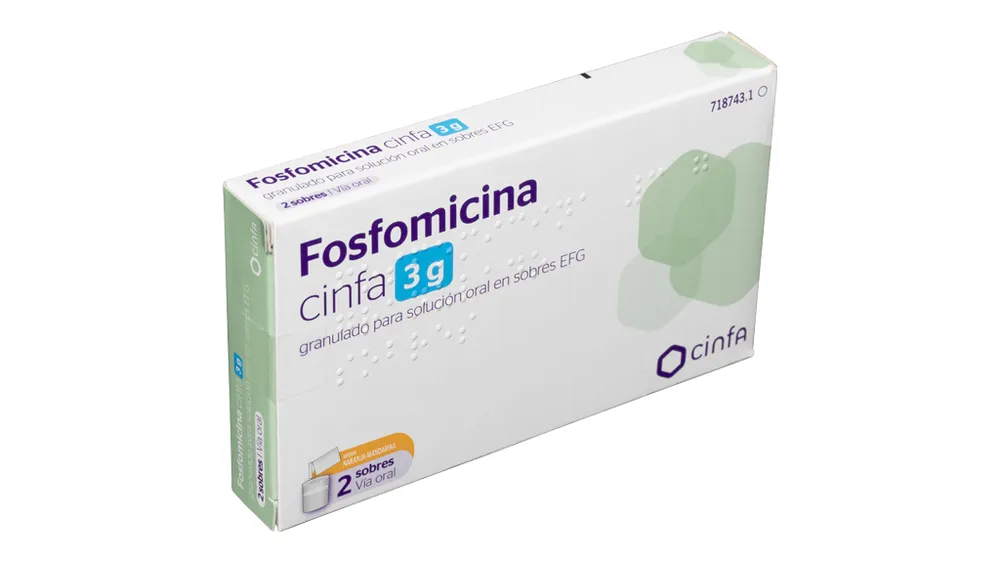
Table of Contents
- Package leaflet: Information for the user
- Introduction
- 1. What Fosfomicina cinfa is and what it is used for
- 2. What you need to know before starting to take Fosfomicina cinfa.
- 3. How to take Fosfomicina cinfa
- 4. Possible adverse effects
- 5. Storage of Fosfomicina cinfa
- 6. Contents of the pack and other information
Package leaflet: Information for the user
Introduction
Package leaflet: information for the patient
Fosfomicina cinfa 3 g granules for oral solution in sachets EFG
Fosfomycin (trometamol)
Read the entire leaflet carefully before you start taking this medicine, because it contains important information for you.
- Keep this leaflet, as you may need to read it again.
- If you have any questions, consult your doctor, pharmacist, or nurse.
- This medicine has been prescribed for you only, and you should not give it to other people, even if they have the same symptoms as you, because it could harm them.
- If you experience any adverse reactions, consult your doctor, pharmacist, or nurse, even if they are adverse reactions not listed in this leaflet. See section 4.
Leaflet contents:
- What Fosfomicina cinfa is and what it is used for.
- What you need to know before taking Fosfomicina cinfa.
- How to take Fosfomicina cinfa.
- Possible side effects.
- How to store Fosfomicina cinfa.
- Contents of the pack and other information.
1. What Fosfomicina cinfa is and what it is used for
Fosfomicina cinfa contains the active substance fosfomicin (as fosfomycin trometamol). It is an antibiotic that works by eliminating bacteria that can cause infections.
Fosfomicina cinfa is used to treat uncomplicated urinary bladder infections in adult and adolescent women.
Fosfomicina cinfa is used as antibiotic prophylaxis for transrectal prostate biopsies in adult men.
2. What you need to know before starting to take Fosfomicina cinfa.
Do not take Fosfomicina cinfa
- if you are allergic to fosfomicin or to any of the other ingredients of this medicine (listed in section 6).
Warnings and precautions
Talk to your doctor, pharmacist, or nurse before starting to use Fosfomicina cinfa if you are in any of the following situations:
- you suffer from persistent bladder infections,
- you have ever had diarrhoea after taking any other antibiotic.
Symptoms to watch for
Fosfomicina cinfa may cause serious adverse effects. For example, allergic reactions and inflammation of the large intestine. You should pay attention to certain symptoms while taking this medicine in order to reduce the risk of complications. See “serious adverse effects” in section 4.
Children and adolescents
This medicine must not be given to children under 12 years of age, as safety and efficacy have not been established in this age group.
Other medicines and Fosfomicina cinfa
Tell your doctor or pharmacist if you are taking, have recently taken, or might need to take any other medicines, even if they are medicines obtained without a prescription.
This is especially important if you are taking:
- metoclopramide or other medicines that increase the movement of food through the stomach and intestines, as they may reduce the absorption of fosfomicin in your body,
- anticoagulants, since fosfomicin and other antibiotics could alter your ability to prevent blood clotting.
Taking Fosfomicina cinfa with food
Food may delay the absorption of fosfomicin. Therefore, this medicine should be taken on an empty stomach (2–3 hours before or 2–3 hours after a meal).
Pregnancy, breastfeeding, and fertility
If you are pregnant or breastfeeding, think you may be pregnant, or are planning to become pregnant, consult your doctor or pharmacist before using this medicine.
If you are pregnant, your doctor will prescribe this medicine only when strictly necessary.
Breastfeeding mothers may take a single oral dose of this medicine.
Driving and using machines
You may experience adverse effects such as dizziness, which could affect your ability to drive or operate machinery.
Fosfomicina cinfa contains saccharose and sodium
This medicine contains saccharose. If your doctor has advised you that you have an intolerance to certain sugars, consult him before taking this medicine.
This medicine contains less than 1 mmol of sodium (23 mg) per sachet; essentially “sodium-free”.
3. How to take Fosfomicina cinfa
Follow exactly the instructions for use of this medicine as given by your doctor or pharmacist. If in doubt, consult your doctor or pharmacist again.
For the treatment of uncomplicated bladder infection in women and adolescent females, the recommended dose is 1 sachet of fosfomycin (3 g of fosfomycin).
When used as antibiotic prophylaxis for transrectal prostate biopsy, the recommended dose is 1 sachet of Fosfomicina cinfa (3 g of fosfomycin) 3 hours before the procedure and 1 sachet of Fosfomicina cinfa (3 g of fosfomycin) 24 hours after the procedure.
Use in patients with renal impairment
This medicine must not be used in patients with severe renal impairment (creatinine clearance <10 ml/min).
Use in children and adolescents
This medicine must not be used in children under 12 years of age.
Method of administration
For oral use.
This medicine should be taken orally on an empty stomach (approximately 2–3 hours before or 2–3 hours after a meal), preferably before going to bed and after having urinated.
The contents of one sachet should be dissolved in a glass of water and taken immediately.
If you take more Fosfomicina cinfa than you should
If you accidentally take more than the prescribed dose, contact your doctor or pharmacist.
In case of overdose or accidental ingestion, go to a medical center or call the Toxicology Information Service at telephone number 91 562 04 20, indicating the medicine and the amount ingested.
If you have any further questions about the use of this medicine, ask your doctor or pharmacist.
4. Possible adverse effects
Like all medicines, this medicine may cause adverse effects, although not everyone will experience them.
Serious adverse effects
If you experience any of the following symptoms while taking Fosfomicina cinfa, you must stop taking the medicine and contact your doctor immediately:
- anaphylactic shock, a type of potentially life-threatening allergic reaction (frequency not known). Symptoms include sudden onset of rash, itching, or hives, and/or shortness of breath, wheezing (whistling sounds when breathing), or difficulty breathing,
- swelling of the face, lips, tongue, or throat with difficulty breathing (angioedema) (frequency not known),
- moderate to severe diarrhea, abdominal cramps, bloody stools and/or fever, which may indicate an infection of the large intestine (antibiotic-associated colitis) (frequency not known). Do not take anti-diarrheal medicines that inhibit intestinal motility (antiperistaltics).
Other adverse effects
Common (may affect up to 1 in 10 people):
- headache
- dizziness
- diarrhea
- nausea
- indigestion
- abdominal pain
- genital infection in women with symptoms such as inflammation, irritation, or itching (vulvovaginitis).
Uncommon (may affect up to 1 in 100 people):
- vomiting
- rash
- urticaria
- itching
Frequency not known (cannot be estimated from available data):
- allergic reactions.
Reporting of adverse effects
If you experience any type of adverse effect, consult your doctor or pharmacist, even if it is a possible adverse effect not listed in this leaflet. You may also report them directly via the Spanish Pharmacovigilance System for Human Medicines: www.notificaram.es. By reporting adverse effects, you can help provide more information on the safety of this medicine.
5. Storage of Fosfomicina cinfa
Keep this medicine out of the sight and reach of children.
No special storage conditions are required.
Before reconstitution: Do not use this medicine after the expiry date stated on the container after "EXP.:". The expiry date refers to the last day of the month indicated.
After reconstitution: Use immediately.
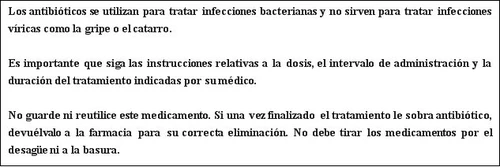
Medicines must not be disposed of via wastewater or household waste. Dispose of unused medicines and their containers at the SIGRE collection point at your usual pharmacy. Ask your pharmacist how to properly dispose of medicines and containers you no longer need. This will help protect the environment.
6. Contents of the pack and other information
Contents of the pack and other information
Composition of Fosfomicina cinfa
-The active substance is fosfomycin (as fosfomycin trometamol). Each sachet contains 3 grams of fosfomycin (as fosfomycin trometamol).
-The other components (excipients) are: sucrose, sodium saccharin, mandarin flavour, and orange flavour. See section 2. Fosfomicina cinfa contains sucrose and sodium.
Appearance of the product and contents of the pack
White or almost white granules.
Single-dose sachets made of surlyn/aluminum/low-density polyethylene/paper, packed in cardboard boxes containing 1 or 2 sachets.
Marketing Authorisation Holder
Laboratorios Cinfa, S.A.
Carretera Olaz-Chipi, 10. Polígono Industrial Areta
31620 Huarte (Navarra) – Spain.
Manufacturer
Labiana Pharmaceuticals, S.L.U.
C/ Casanova 27-31
08757 Corbera de Llobregat
(Barcelona)
Or
Laboratorios Cinfa, S.A.
Carretera Olaz-Chipi, 10. Polígono Industrial Areta
31620 Huarte (Navarra) – Spain
Date of the most recent revision of this leaflet: June 2022
Detailed and up-to-date information on this medicine is available on the website of the Spanish Agency of Medicines and Medical Devices (AEMPS) www.aemps.gob.es/
You can access detailed and up-to-date information about this medicine by scanning with your mobile phone (smartphone) the QR code included in the leaflet and packaging. You can also access this information at the following internet address: https://cima.aemps.es/cima/dochtml/p/82353/P_82353.html
QR code to: https://cima.aemps.es/cima/dochtml/p/82353/P_82353.html