Fluvoxamine Sandoz 50 mg film-coated tablets EFG
Spain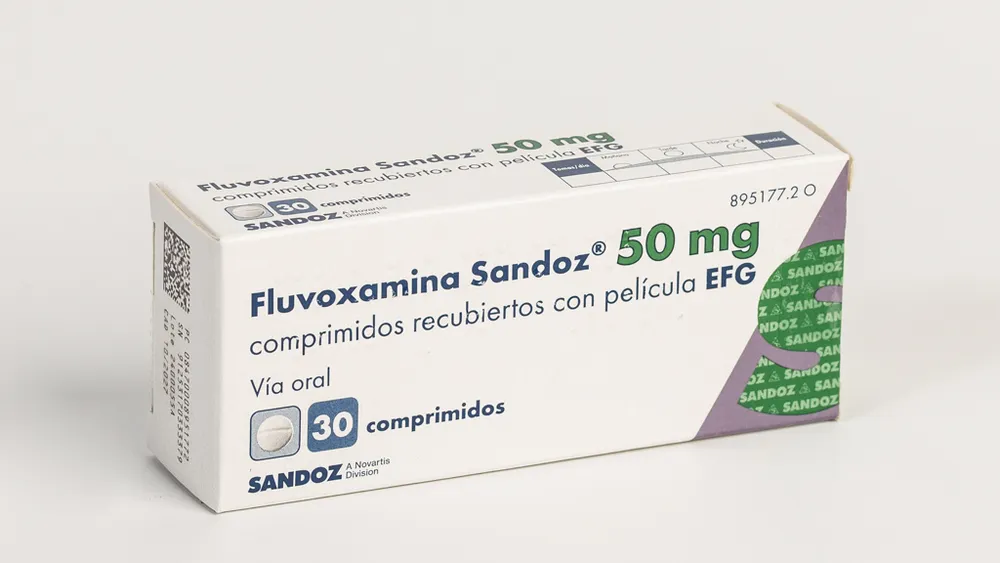
Table of Contents
- Package leaflet: Information for the user
- Introduction
- 1. What Fluvoxamina Sandoz is and what it is used for
- 2. What you need to know before taking Fluvoxamine Sandoz
- 3. How to take Fluvoxamine Sandoz
- 4. Possible adverse effects
- 5. Storage of Fluvoxamine Sandoz
- 6. Contents of the pack and other information
Package leaflet: Information for the user
Introduction
Package leaflet: information for the user
Fluvoxamine Sandoz 50 mg film-coated tablets EFG
Fluvoxamine Sandoz 100 mg film-coated tablets EFG
Fluvoxamine maleate
Read the entire leaflet carefully before you start taking this medicine, because it contains important information for you.
- Keep this leaflet, as you may need to read it again.
- If you have any questions, ask your doctor or pharmacist.
- This medicine has been prescribed for you only, and you should not give it to other people, even if they have the same symptoms as you, because it may harm them.
- If you experience any adverse effects, consult your doctor or pharmacist, even if they are adverse effects not listed in this leaflet. See section 4.
Leaflet contents
- What Fluvoxamine Sandoz is and what it is used for
- What you need to know before taking Fluvoxamine Sandoz
- How to take Fluvoxamine Sandoz
- Possible side effects
- How to store Fluvoxamine Sandoz
- Contents of the pack and other information
1. What Fluvoxamina Sandoz is and what it is used for
Fluvoxamina Sandoz belongs to a group of medicines known as selective serotonin reuptake inhibitors (SSRIs). Fluvoxamina Sandoz contains a substance called fluvoxamine, which is an antidepressant.
It is used for the treatment of depression (major depressive disorder).
Fluvoxamina Sandoz can also be used to treat people suffering from obsessive-compulsive disorder (OCD).
2. What you need to know before taking Fluvoxamine Sandoz
Do not take Fluvoxamine Sandoz if:
- you are allergic to fluvoxamine or any of the other ingredients of this medicine (listed in section 6),
- you are taking medicines called monoamine oxidase inhibitors (MAOIs), sometimes prescribed to treat depression or anxiety, including linezolid (an antibiotic which is also an MAOI). Treatment with fluvoxamine should be started at least 2 weeks after stopping an irreversible MAOI. However, treatment with fluvoxamine may be started the next day after discontinuing certain reversible MAOIs. In exceptional cases, linezolid (an MAOI antibiotic) may be used with fluvoxamine if your doctor closely monitors you. Your doctor will advise you on how to start taking fluvoxamine after stopping the MAOI,
- you are taking tizanidine, a medicine frequently used as a muscle relaxant,
- you are taking pimozide, a neuroleptic medicine used in the treatment of schizophrenia and other psychiatric disorders,
- you are breastfeeding.
If any of the above apply to you, do not take fluvoxamine and consult your doctor.
Warnings and precautions
Talk to your doctor or pharmacist before starting Fluvoxamine Sandoz if:
- you have recently had a heart attack,
- you are pregnant or think you may be pregnant,
- you have epilepsy,
- you have a history of bleeding problems or if you regularly take medicines that increase the risk of bleeding, such as painkillers, or if you are pregnant (see “Pregnancy, breastfeeding and fertility”),
- you have diabetes,
- you are receiving combined electroconvulsive therapy (ECT),
- you have a history of mania (feelings of euphoria or overexcitement),
- you have liver or kidney impairment,
- you have high eye pressure (glaucoma),
- you are under 18 years of age (see also section 3),
- you are taking medicines containing buprenorphine or buprenorphine/naloxone, as these products taken in combination with fluvoxamine may cause serotonin syndrome, a potentially life-threatening condition (for symptoms, see section 4, "Possible side effects") and also "Other medicines and Fluvoxamine Sandoz".
If any of the above apply to you, your doctor will advise whether it is safe for you to start fluvoxamine.
Medicines like Fluvoxamine Sandoz (so-called SSRIs) may cause symptoms of sexual dysfunction (see section 4). In some cases, these symptoms have continued after stopping treatment.
Occasionally, feelings of restlessness or inability to sit or stand still (akathisia) may occur or worsen during the first weeks of treatment with fluvoxamine, before the antidepressant effect begins.
Inform your doctor immediately if you experience these symptoms. Dose adjustment may be helpful.
Serious skin reactions have been reported with the use of fluvoxamine. Stop taking fluvoxamine and contact a doctor immediately if you develop a rash or mucosal ulcers. Severe rashes may include skin rashes starting on the hands, feet, arms or legs, usually on both sides of the body and progressing in concentric rings resembling erythema (erythema multiforme), widespread blistering rashes and skin peeling, occurring mainly around the mouth, nose, eyes and genitals (Stevens-Johnson syndrome), or extensive skin peeling (more than 30% of body surface area – toxic epidermal necrolysis).
Suicidal thoughts and worsening of your anxiety or depression disorder:
If you are depressed and/or have anxiety disorders, you may experience thoughts of self-harm or suicide. This risk may increase when starting antidepressant treatment for the first time, as these medicines take time to work, usually about two weeks, but sometimes longer.
You may be more likely to have such thoughts:
- if you have previously had suicidal or self-harming thoughts,
- if you are a young adult. Clinical trial data have shown an increased risk of suicidal behaviour in psychiatric patients under 25 years of age treated with an antidepressant.
If you have thoughts of self-harm or suicide, contact your doctor immediately or go directly to a hospital.
It may be very helpful to tell a family member or friend that you are depressed or have an anxiety disorder, and ask them to read this leaflet.
You may ask them for their opinion on whether your depression or anxiety is worsening, or if they are concerned about changes in your behaviour.
Contact your doctor immediately if you have thoughts or experiences that cause you distress.
Children and adolescents under 18 years of age
Children and adolescents under 18 years of age should not take this medicine, unless they are being treated for obsessive-compulsive disorder (OCD). This is because fluvoxamine is not used to treat depression in people under 18 years of age.
When taking this type of medicine, patients under 18 years of age have a higher risk of adverse effects such as suicide attempts, suicidal thoughts and hostility, including aggression, confrontational behaviour and irritability.
If your doctor has prescribed fluvoxamine for a patient under 18 years of age and you wish to discuss this decision, speak to your doctor again. If a patient under 18 years of age is taking fluvoxamine, you should inform your doctor if any of the symptoms described above worsen or if complications arise.
There is no long-term safety data on the use of fluvoxamine in patients under 18 years of age regarding growth, maturation, and intellectual and behavioural development.
Other medicines and Fluvoxamine Sandoz
Tell your doctor or pharmacist if you are taking, have recently taken or might need to take any other medicines.
- Do not start taking the herbal remedy “St. John’s wort” if you have been prescribed fluvoxamine, as it may increase adverse effects. If you are already taking a St. John’s wort preparation when starting fluvoxamine treatment, stop taking St. John’s wort and consult your doctor at your next visit.
- If you have been taking a medicine to treat depression or anxiety within the last two weeks or if you have schizophrenia, consult your doctor or pharmacist.
Your doctor or pharmacist should know if you are taking other medicines to treat depression or related conditions containing:
- benzodiazepines,
- tricyclic antidepressants,
- neuroleptics or antipsychotics,
- lithium,
- tryptophan,
- monoamine oxidase inhibitors (MAOIs) such as moclobemide,
- pimozide,
- selective serotonin reuptake inhibitors (SSRIs) such as citalopram.
Your doctor will advise whether it is safe for you to start treatment with fluvoxamine.
Tell your doctor or pharmacist if you are taking any of the following medicines:
- aspirin (acetylsalicylic acid) or aspirin-like medicines used to treat pain and inflammation (arthritis),
- cyclosporine, used to reduce immune system activity,
- methadone, used to treat pain and withdrawal syndrome,
- mexiletine, used to treat heart rhythm disorders,
- phenytoin or carbamazepine, used to treat epilepsy,
- propranolol, used to treat high blood pressure and heart conditions,
- ropinirole, for Parkinson’s disease,
- a “triptan”, used to treat migraines, such as sumatriptan,
- terfenadine, used to treat allergies. Fluvoxamine must not be used together with terfenadine,
- sildenafil, used to treat erectile dysfunction,
- theophylline, used to treat asthma and bronchitis,
- tramadol, used to treat pain,
- buprenorphine or buprenorphine/naloxone,
- clopidogrel, warfarin, acenocoumarol or any anticoagulant medicine.
If you are taking or have recently taken any of the medicines listed above and have not informed your doctor, please see your doctor again and ask what you should do. Your dose may need to be changed or you may need to be given a different medicine.
Taking Fluvoxamine Sandoz with food, drinks and alcohol
- do not drink alcohol while taking this medicine. Alcohol may interact with fluvoxamine and may cause drowsiness and unsteadiness.
- if you usually drink large amounts of tea, coffee or caffeinated soft drinks, you may experience symptoms such as shaky hands, discomfort, rapid heartbeat (palpitations), restlessness and difficulty sleeping (insomnia). If you reduce your caffeine intake, these symptoms may disappear.
Pregnancy, breastfeeding and fertility
If you are pregnant or breastfeeding, think you may be pregnant or plan to become pregnant, consult your doctor or pharmacist before using this medicine.
Pregnancy
There is only limited experience with the use of fluvoxamine during pregnancy. Do not take fluvoxamine if you are pregnant unless your doctor considers it absolutely necessary. If you are currently taking fluvoxamine and planning to become pregnant, please consult your doctor to determine whether it is necessary or appropriate to change your medication.
Ensure that your midwife and/or doctor know that you are taking fluvoxamine. Medicines like fluvoxamine, if taken during pregnancy, particularly during the last 3 months, may increase the risk of a serious condition in newborns called persistent pulmonary hypertension of the newborn (PPHN), which causes the baby to breathe faster and appear bluish. These symptoms usually begin within the first 24 hours after birth. If this occurs in your baby, inform your midwife and/or doctor immediately.
Do not stop fluvoxamine treatment abruptly. If you have taken fluvoxamine during the last 3 months of pregnancy, your baby may have additional symptoms at birth, besides breathing difficulties or bluish skin, such as inability to sleep or feed properly, being too hot or cold, feeling unwell, excessive crying, stiff or floppy muscles, lethargy, drowsiness, tremors, nervousness or seizures.
If your baby shows any of these symptoms at birth, contact your doctor immediately.
If you take Fluvoxamine Sandoz in late pregnancy, there may be an increased risk of heavy vaginal bleeding shortly after delivery, especially if you have a history of bleeding disorders. Your doctor or midwife should be aware that you are taking Fluvoxamine Sandoz so they can advise you appropriately.
Breastfeeding
Fluvoxamine passes into breast milk. There is a risk that it may affect the newborn. Therefore, you should discuss with your doctor whether you should stop breastfeeding or discontinue treatment with fluvoxamine.
Driving and using machines
You may drive and use machines while taking this medicine, provided that this medicine does not make you drowsy.
Fluvoxamine Sandoz contains sodium
This medicine contains less than 1 mmol of sodium (23 mg) per tablet; this is essentially “sodium-free”.
3. How to take Fluvoxamine Sandoz
Follow exactly the instructions given by your doctor or pharmacist for taking this medicine. If in doubt, consult your doctor or pharmacist again.
Usual starting dose for adults (18 years and older)
Treatment of depression
- Start with 50 or 100 mg daily, taken at night.
Treatment of obsessive-compulsive disorder
- Start with 50 mg daily, preferably taken at night.
If you do not start to feel better after a couple of weeks, consult your doctor, who will advise you and decide whether your dose should be gradually increased.
The maximum recommended daily dose is 300 mg.
If your doctor tells you to take more than 150 mg per day, do not take it all at once; consult your doctor about when to take it.
Usual dose in children and adolescents with obsessive-compulsive disorder (8 years and older):
- Start with 25 mg (half a tablet) per day. Your doctor may increase the dose by 25 mg every 4–7 days, as tolerated, until an effective dose is achieved.
- The maximum daily dose is 200 mg.
If your doctor instructs you to take more than 50 mg per day, do not take it all at once; consult your doctor about when to take it. If the dose is not divided into equal parts, the larger dose should be taken at night.
Children and adolescents under 18 years of age must not take this medicine for the treatment of depression. This medicine should only be prescribed for children and adolescents with obsessive-compulsive disorder (OCD).
How to take Fluvoxamine Sandoz
Swallow the tablets with water. Do not chew the tablets.
You may split the tablets in half if your doctor has instructed you to do so.
When it takes effect
Fluvoxamine takes some time to work. Some patients do not feel better during the first 2 or 3 weeks of treatment.
Continue taking the tablets until your doctor tells you to stop. Even if you feel better, your doctor may advise you to continue taking the tablets for some time longer—typically at least six months—to ensure the treatment has been fully effective.
Do not stop treatment with fluvoxamine abruptly. You may experience withdrawal symptoms such as:
- agitation and anxiety,
- confusion,
- diarrhea,
- difficulty sleeping/intense dreams,
- dizziness,
- emotional instability,
- headache,
- irritability,
- nausea and/or vomiting,
- palpitations (rapid heartbeat),
- sensory disturbances (such as electric shock sensations or visual disturbances),
- sweating,
- tremors.
When stopping treatment with fluvoxamine, your doctor will help you gradually reduce your dose over weeks or months, which will help reduce the likelihood of experiencing withdrawal symptoms. Most patients find that these fluvoxamine withdrawal symptoms are mild and resolve on their own within two weeks; however, for some patients, these symptoms may be more severe or last longer.
If you experience withdrawal symptoms when stopping the tablets, your doctor will decide whether you should taper off more slowly. If you experience severe withdrawal symptoms when stopping fluvoxamine, please inform your doctor, who will advise whether you should resume treatment and discontinue it gradually (see section 4 “Possible side effects”).
If you experience any symptoms when stopping treatment, contact your doctor.
If you take more Fluvoxamine Sandoz than you should
If you have taken more fluvoxamine than you should, contact your doctor, pharmacist, or call the Toxicology Information Service immediately at telephone: 91 562 04 20, stating the medicine and amount taken. Bring the medicine packaging with you.
Symptoms of overdose include, but are not limited to, nausea, vomiting, diarrhea, and drowsiness or dizziness. Cardiac symptoms (slow or rapid heart rate, low blood pressure), liver complications, seizures (fits), and coma have been reported.
If you forget to take Fluvoxamine Sandoz
If you forget to take a tablet, wait until your next scheduled dose. Do not take a double dose to make up for the missed dose.
If you have any further questions about using this medicine, ask your doctor or pharmacist.
4. Possible adverse effects
Like all medicines, this medicine can cause adverse effects, although not everyone experiences them.
Adverse effects related to this type of medication
Occasionally, suicidal thoughts or self-harm may occur or worsen during the first weeks of treatment with fluvoxamine, until the antidepressant effect takes place.
Contact your doctor immediately if you experience distressing thoughts or events.
If you have several symptoms at the same time, you may have one of the rare conditions described below:
- Serotonin syndrome: if you experience sweating, muscle rigidity or spasms, unsteadiness, confusion, irritability, or extreme agitation.
- Neuroleptic malignant syndrome: if you have muscle rigidity, fever, confusion, and other related symptoms.
- SIADH: if you feel tired, weak, or confused and have painful, numb, or uncontrolled muscles.
- Serious skin reactions, such as severe rashes or redness, including widespread rash starting in the hands, feet, arms, or legs on both sides of the body, progressing to concentric rings resembling erythema (erythema multiforme), widespread skin rash with blisters and peeling of the skin, particularly around the mouth, nose, eyes, and genitals (Stevens-Johnson syndrome), extensive skin peeling (more than 30% of body surface area – toxic epidermal necrolysis). The frequency of these side effects is unknown (cannot be estimated from available data).
Stop taking fluvoxamine and consult your doctor immediately.
If unusual bruising or purple spots appear on your skin, or if you vomit blood or have blood in your stools, contact your doctor.
Stopping fluvoxamine (especially abruptly) often leads to withdrawal symptoms (see section 3, withdrawal symptoms).
Sometimes patients experience nausea when starting treatment with fluvoxamine and the medicine begins to take effect. Although nausea is unpleasant, it should pass after a short time if you continue taking the tablets as prescribed. This may occur within a few weeks.
Adverse effects caused by fluvoxamine
Common adverse effects (may affect up to 1 in 10 patients):
- restlessness,
- anxiety,
- constipation,
- diarrhoea,
- difficulty falling asleep,
- dizziness,
- dry mouth,
- increased heart rate,
- drowsiness (lethargy),
- malaise,
- headache,
- indigestion,
- loss of appetite,
- nervousness,
- stomach pain,
- sweating,
- tremors,
- muscle weakness (asthenia),
- vomiting.
Uncommon adverse effects (may affect up to 1 in 100 patients):
- allergic reactions (including swelling of the face, lips, or tongue, rash, itching),
- confusion,
- aggression,
- delayed ejaculation,
- dizziness upon standing up quickly,
- hallucinations,
- lack of coordination,
- muscle or joint pain.
Rare adverse effects (may affect up to 1 in 1,000 patients):
- seizures,
- liver disorders,
- mania (feelings of euphoria or overexcitement),
- photosensitivity (sensitivity to sunlight),
- unexpected milk secretion from the breasts.
Frequency not known (cannot be estimated from available data):
Heavy vaginal bleeding shortly after childbirth (postpartum haemorrhage); see "Pregnancy, breastfeeding, and fertility" in section 2 for more information.
Other reported adverse reactions:
- akathisia (restlessness),
- abnormal taste,
- anorgasmia (inability to achieve orgasm),
- in female patients: menstrual disorders,
- urinary disorders (such as frequent need to urinate during the day and/or night, sudden loss of bladder control during the day and/or night, or inability to urinate),
- paraesthesia (tingling or numbness),
- glaucoma (increased pressure in the eye),
- dilated pupils,
- increased prolactin hormone levels (a hormone supporting milk production in breastfeeding women),
- weight changes.
An increased risk of bone fractures has been observed in patients taking this type of medication.
Adverse reactions related to treatment for obsessive-compulsive disorder (OCD) in children and adolescents, frequency not established:
- hypomania (feelings of euphoria and overexcitement),
- agitation,
- seizures,
- difficulty falling asleep (insomnia),
- lack of energy (asthenia),
- hyperactivity (hyperkinesia),
- drowsiness (somnolence),
- indigestion.
Reporting of adverse effects
If you experience any adverse effects, consult your doctor or pharmacist, even if they are possible side effects not listed in this leaflet. You may also report them directly via the Spanish Pharmacovigilance System for Human Medicines: https://www.notificaram.es. By reporting adverse effects, you can help provide more information on the safety of this medicine.
5. Storage of Fluvoxamine Sandoz
Keep this medicine out of the sight and reach of children.
Do not use this medicine after the expiry date stated on the packaging after EXP. The expiry date refers to the last day of the month indicated.
Do not store above 25°C. Store in the original container.
Medicines must not be disposed of via wastewater or household waste. Dispose of empty containers and unused medicines at a SIGRE collection point at your pharmacy. If you are unsure, please ask your pharmacist how to dispose of containers and medicines you no longer need. This will help protect the environment.
6. Contents of the pack and other information
Composition of Fluvoxamine Sandoz 50 mg
- The active substance is fluvoxamine (as maleate). Each film-coated tablet contains 50 mg of fluvoxamine (as maleate).
Composition of Fluvoxamine Sandoz 100 mg
- The active substance is fluvoxamine (as maleate). Each film-coated tablet contains 100 mg of fluvoxamine (as maleate).
The other components are:
- Tablet core: maize starch, mannitol (E 421), pregelatinized maize starch, colloidal anhydrous silica, sodium stearyl fumarate.
- Tablet coating: macrogol 6000, talc (E 553b), titanium dioxide (E 171), hypromellose (E 464).
Nature of the product and contents of the container
Fluvoxamine Sandoz 50 mg:
White to off-white, round, biconvex, scored tablets marked “FLM 50” on one side.
Fluvoxamine Sandoz 100 mg:
White to off-white, round, biconvex, scored tablets marked “FLM 100” on one side.
This medicinal product is presented in ALU/PVC/PVDC blisters contained in cardboard packaging.
Pack sizes:
10, 20, 30, 50, 60, 90, 100 film-coated tablets.
Only certain pack sizes may be marketed.
Marketing Authorization Holder and Manufacturer
Marketing Authorization Holder
Sandoz Farmacéutica, S.A.
Parque Norte Business Centre
Roble Building
C/ Serrano Galvache, 56
28033 Madrid
Spain
Manufacturer
Sandoz B.V.
Veluwezoom 22
1327 AH Almere
The Netherlands
or
Synthon Hispania, S.L.
Castello, 1
Poligono Las Salinas
08830 Sant Boi de Llobregat
Spain
This medicinal product is authorized in the Member States of the European Economic Area under the following names:
The Netherlands: Fluvoxaminemaleaat Sandoz 50
Fluvoxaminemaleaat Sandoz 100
Date of the most recent review of this leaflet: January 2024
Detailed information on this medicinal product is available on the website of the Spanish Agency of Medicines and Medical Devices (AEMPS) http://www.aemps.gob.es/