Famotidine Mabo 20 mg tablets EFG
Spain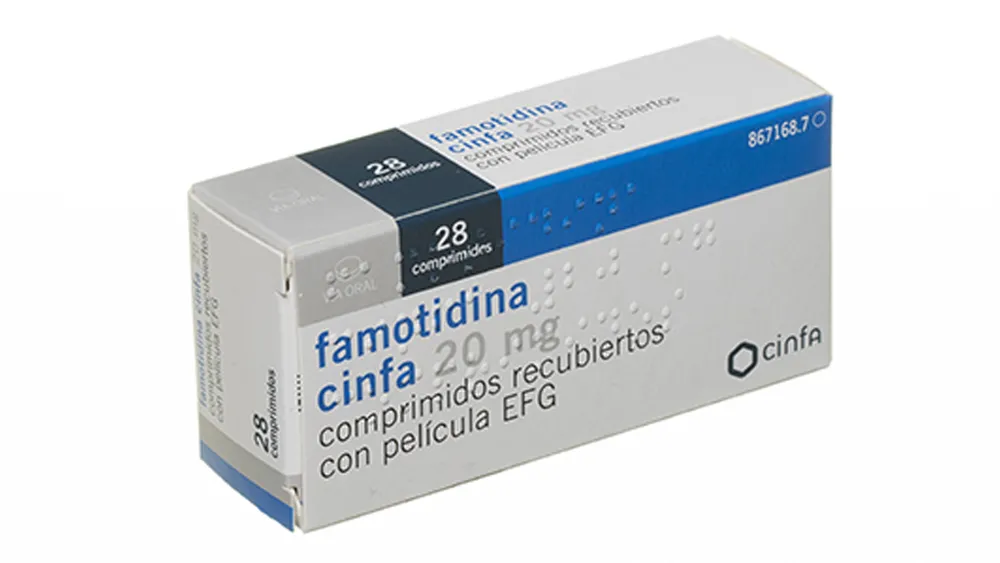
Table of Contents
- Package leaflet: Information for the user
- Introduction
- 1. What FAMOTIDINE MABO 20 mg Tablets are and what they are used for
- 2. BEFORE TAKING FAMOTIDINE MABO 20 mg Tablets
- 3. How to TAKE FAMOTIDINE MABO 20 mg Tablets
- 4. Possible adverse effects
- 5. Storage of FAMOTIDINE MABO 20 mg Tablets
- 6. ADDITIONAL INFORMATION
Package leaflet: Information for the user
Introduction
PACKAGE LEAFLET: INFORMATION FOR THE USER
Famotidine Mabo 20 mg tablets EFG
Read the entire leaflet carefully before starting to take the medicine.
|
Package leaflet contents:
-
What FAMOTIDINA MABO 20 mg Tablets are and what they are used for
-
Before taking FAMOTIDINA MABO 20 mg Tablets
-
How to take FAMOTIDINA MABO 20 mg Tablets
-
Possible side effects
-
How to store FAMOTIDINA MABO 20 mg Tablets
-
Further information
1. What FAMOTIDINE MABO 20 mg Tablets are and what they are used for
Famotidine belongs to a group of medicines called histamine H2-receptor antagonists. Famotidine reduces the amount of acid produced in the stomach.
Famotidine is indicated for:
- Treatment and prevention of duodenal and gastric ulcers
- Treatment of inflammation of the esophagus (reflux esophagitis)
- Prevention of reflux esophagitis
- Treatment of heartburn and acid regurgitation
- Treatment of Zollinger-Ellison syndrome
2. BEFORE TAKING FAMOTIDINE MABO 20 mg Tablets
Do not take FAMOTIDINE MABO 20 mg Tablets if:
- You are allergic (hypersensitive) to famotidine, to other H2-receptor antagonists, or to any of the other ingredients of Famotidine Mabo 20 mg.
Take special care with FAMOTIDINE MABO 20 mg Tablets:
- If your doctor has not ruled out the presence of gastric neoplasm before starting treatment with Famotidine. Symptomatic relief of gastric ulcer during treatment does not exclude the possibility of malignant gastric ulcer.
- Should be used with caution in patients with moderate or severe hepatic or renal dysfunction. Adverse reactions affecting the central nervous system (CNS) have been reported in patients with moderate and severe renal impairment, and it may be necessary to extend the dosing interval or reduce the dose.
- If you have been taking Famotidine Mabo for a long time, your doctor will likely perform regular check-ups. During visits to your doctor, you should report any new or unusual symptoms or circumstances.
Use in children
The safety and efficacy of this medicinal product in children have not been established.
Use in elderly patients (aged 65 years and over)
Patients aged 65 years and over only require dose adjustment if they have moderate or severe renal impairment.
Use of other medicines
Inform your doctor or pharmacist if you are taking, have recently taken, or might take any other medicines, including those obtained without a prescription.
- Calcium carbonate, when used to treat elevated blood phosphate levels (hyperphosphatemia) in patients undergoing dialysis.
- Famotidine may reduce the effect of oral posaconazole suspension (a medicine taken to prevent and treat certain fungal infections).
- Famotidine may reduce the effect of dasatinib, erlotinib, gefitinib, or pazopanib (medicines used to treat cancer).
Taking FAMOTIDINE MABO with food and drink:
Take the tablets with a little water. It does not matter whether you take FAMOTIDINE MABO 20 mg with food or not.
Discontinuation of treatment should always be done gradually and under medical supervision to avoid relapse.
Pregnancy and breastfeeding
Consult your doctor or pharmacist before taking any medicine.
Pregnancy:
Treatment with Famotidine is not recommended during pregnancy. You must inform your doctor if you are pregnant, think you may be pregnant, or plan to become pregnant.
Breastfeeding:
Famotidine passes into breast milk. Breastfeeding women should either discontinue treatment with Famotidine or stop breastfeeding.
Driving and using machines:
It is unlikely that famotidine will affect your ability to drive or operate machinery. Nevertheless, caution is advised during the first months of treatment.
Interference with diagnostic tests:
If you are due to undergo any diagnostic tests, inform your doctor that you are taking this medicine, as it may alter test results.
Important information about certain ingredients of FAMOTIDINE MABO 20 mg:
This medicine contains lactose. If your doctor has informed you that you have an intolerance to certain sugars, consult him before taking this medicine.
3. How to TAKE FAMOTIDINE MABO 20 mg Tablets
Follow exactly the administration instructions for FAMOTIDINE MABO 20 mg provided by your doctor.
Your doctor will tell you how many tablets to take each day and for how long.
If you feel that the effect of this medicine is too strong or too weak, inform your doctor or pharmacist.
Famotidine Mabo 20 mg tablets are administered orally. Take each tablet with a sufficient amount of liquid.
Remember to take your medicine.
Treatment of duodenal ulcer: The usual dose is 2 tablets (40 mg of Famotidine) at bedtime. Alternatively, one tablet (20 mg of Famotidine) every 12 hours may be administered. Treatment should be continued for 4 to 8 weeks.
Treatment of benign gastric ulcer: The usual dose is 2 tablets (40 mg of Famotidine) at bedtime. Treatment should be continued for 4 to 8 weeks.
Maintenance treatment of gastric or duodenal ulcer: 1 tablet (20 mg of Famotidine) at bedtime is recommended. Your doctor will advise you on how long you should continue treatment.
Treatment of gastroesophageal reflux disease (GERD): The recommended dose is 1 tablet (20 mg of Famotidine) twice daily. If there is no improvement after 4-8 weeks, consult your doctor.
Healing of ulcers associated with gastroesophageal reflux: The recommended dose is 2 tablets (40 mg of Famotidine) twice daily. If there is no improvement after 4-8 weeks, consult your doctor.
Zollinger-Ellison syndrome: Treatment usually starts with a dose of 1 tablet (20 mg of Famotidine) every 6 hours. The doctor will subsequently adjust the dose according to each patient's individual needs.
Dosage adjustment in patients with moderate or severe renal impairment: In adult patients with moderate or severe renal impairment, the dose of Famotidine may be reduced by half or the dosing interval may be extended to 36–48 hours, depending on the patient's response.
If you take more FAMOTIDINE MABO 20 mg Tablets than you should:
Adverse reactions in cases of overdose are similar to those observed in normal clinical experience.
If you have taken more FAMOTIDINE MABO 20 mg than you should, contact your doctor or pharmacist immediately or call the Toxicology Information Service at telephone number 91 562 04 20. If possible, bring this leaflet or the package with you and show it to the healthcare professional.
If you forget to take FAMOTIDINE MABO 20 mg Tablets:
If you forget to take a dose, take it as soon as possible unless it is nearly time for your next dose. In this case, skip the missed dose and take the next tablets at the usual time. Do not take a double dose to make up for a forgotten dose.
If you stop taking FAMOTIDINE MABO 20 mg:
Do not stop treatment prematurely, even if symptoms have improved. Your condition may not be fully healed and could return if you do not complete the full course of treatment.
4. Possible adverse effects
Like all medicines, FAMOTIDINE MABO 20 mg Tablets can have adverse effects, although not everybody gets them.
Diarrhea, headache, dizziness, and constipation have rarely been reported.
Other, even less common, side effects include: fatigue, dry mouth, nausea and vomiting, abdominal discomfort or distension, excessive intestinal gas, loss of appetite, skin rash, pruritus, urticaria, hepatic enzyme abnormalities, cholestatic jaundice, anaphylaxis, angioedema, and arthralgia. Very rarely, hair loss and toxic epidermal necrolysis have been reported with H2-receptor antagonists.
Nevertheless, at present the possibility cannot be ruled out of other adverse effects of the type observed with other H2 antagonists.
Reporting of adverse effects
If you experience any type of adverse effect, consult your doctor or pharmacist, even if it is a possible adverse effect not listed in this leaflet. You can also report them directly through the Spanish Pharmacovigilance System for Human Medicines: https://www.notificaram.es. By reporting adverse effects, you can help provide more information on the safety of this medicine.
5. Storage of FAMOTIDINE MABO 20 mg Tablets
Keep out of the reach and sight of children.
No special storage conditions required. Store in the original packaging.
Expiry date
Do not use FAMOTIDINE MABO 20 mg after the expiry date stated on the packaging after EXP. The expiry date refers to the last day of the month indicated.
Medicines must not be disposed of via wastewater or household waste. Dispose of unused containers and medicines at the SIGRE collection point in your pharmacy. IF IN DOUBT, ask your pharmacist how to dispose of unused containers and medicines. This will help protect the environment.
6. ADDITIONAL INFORMATION
Composition of FAMOTIDINE MABO 20 mg tablets
- The active substance is famotidine. Each tablet contains 20 mg of famotidine.
- The other components (excipients) are: lactose, microcrystalline cellulose, corn starch, polyvinylpyrrolidone, sodium croscarmellose, and magnesium stearate.
Appearance of the finished product and contents of the container
FAMOTIDINE MABO 20 mg tablets are presented as tablets. Each package contains 28 tablets.
Marketing Authorization Holder
MABO-FARMA S.A.
Calle Rejas 2, planta 1
28821 Coslada, Madrid
Spain
Manufacturer
INDUSTRIA QUÍMICA Y FARMACÉUTICA VIR, S.A.
C/Laguna 66-70. Polígono Industrial Urtinsa II
28923 Alcorcón, Madrid
Spain
OR
TEDEC-MEIJI FARMA, S.A.
Ctra. M-300, Km. 30,500
28802 Alcalá de Henares, Madrid
Spain
This patient information leaflet was approved in August 2023
Detailed and up-to-date information on this medicine is available on the website of the Spanish Agency of Medicines and Health Products (AEMPS) http://www.aemps.gob.es/