Estradot 50 micrograms/24 hours, transdermal patch
Spain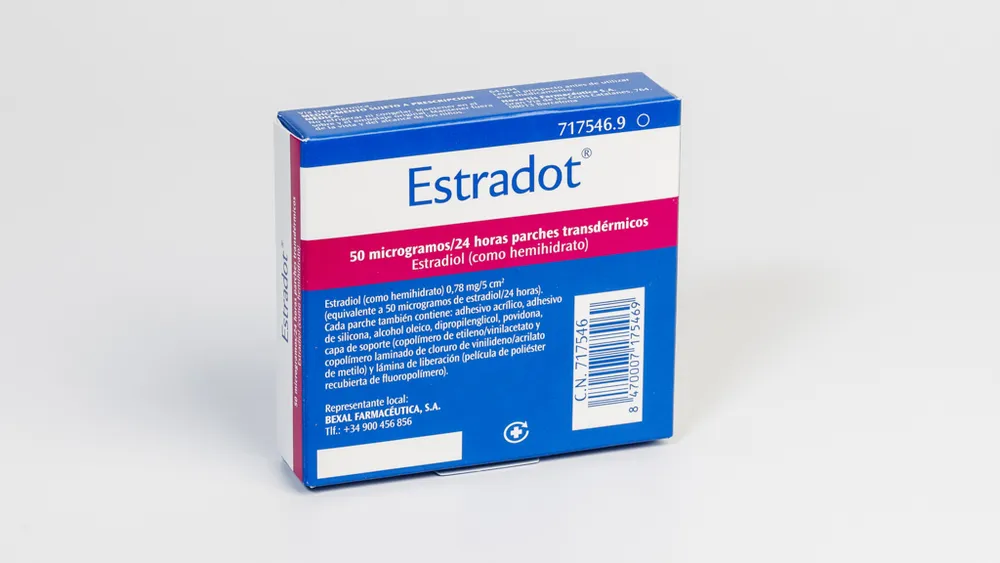
Instructions for Use
Package leaflet: Information for the user
Introduction
Package leaflet: information for the user
Estradot 50 micrograms/24 hours transdermal patch
Estradiol (as hemihydrate)
Read the entire leaflet carefully before you start using this medicine, as it contains important information for you.
-
Keep this leaflet as you may need to read it again.
-
If you have any questions, ask your doctor or pharmacist.
-
This medicine has been prescribed for you only and must not be given to other people, even if they have the same symptoms as you, because it may harm them.
-
If you experience any adverse reactions, consult your doctor or pharmacist, even if they are adverse reactions not listed in this leaflet. See section 4.
Contents of the leaflet:
- What Estradot is and what it is used for
- What you need to know before using Estradot
- How to use Estradot
- Possible side effects
- How to store Estradot
- Contents of the pack and other information
1. What Estradot is and what it is used for
Estradot is a Hormone Replacement Therapy (HRT) containing the female sex hormone oestrogen.
Estradot is used in postmenopausal women when at least 12 months have passed since their last natural menstrual period.
Estradot is available as a skin patch.
Estradot is used for:
Relief of menopausal symptoms
During menopause, the amount of oestrogen produced by a woman's body decreases. This can cause symptoms such as sudden waves of heat in the face, neck and chest (hot flushes). Estradot relieves these symptoms after menopause. Estradot will only be prescribed to you if your symptoms seriously affect your daily life.
Prevention of osteoporosis
After menopause, some women may develop brittle bones (osteoporosis). Discuss with your doctor all available treatment options. If you have a high risk of fractures due to osteoporosis and other medicines are not suitable for you, you may use Estradot to prevent osteoporosis after menopause.
2. What you need to know before using Estradot
Medical history and regular check-ups
The use of HRT carries risks that must be considered when deciding whether to start or continue treatment.
Experience in treating women with premature menopause (due to ovarian failure or surgery) is limited. If you have premature menopause, the risks of using HRT may differ. Please consult your doctor.
Before starting (or restarting) HRT, your doctor will ask about your personal and family medical history. Your doctor may decide to perform a physical examination. This may include a breast examination and/or an internal examination, if necessary.
Once you have started treatment with Estradot, you should visit your doctor for regular check-ups (at least once a year). During these visits, discuss with your doctor the benefits and risks of continuing Estradot.
Have regular breast examinations as recommended by your doctor.
Do not use Estradot
if any of the following apply to you. If you are unsure about any of the points listed here, consult your doctor before using Estradot.
Do not use Estradot:
- if you have or have had breast cancer, or if there is suspicion that you may have it;
- if you have an estrogen-dependent cancer, such as cancer of the inner lining of the womb (endometrium), or if there is suspicion that you may have it;
- if you have abnormal vaginal bleeding;
- if you have excessive thickening of the inner lining of the womb (endometrial hyperplasia) for which you are not receiving treatment;
- if you have or have had a blood clot in a vein (venous thrombosis), such as in the legs (deep vein thrombosis) or in the lungs (pulmonary embolism);
- if you have a blood clotting disorder (such as protein C deficiency, protein S deficiency, or antithrombin deficiency);
- if you have or have recently had a disease caused by blood clots in the arteries, such as a heart attack, stroke, or angina pectoris;
- if you have or have had a liver disease and your liver function tests have not returned to normal;
- if you have a rare inherited blood disorder called porphyria that is passed from parents to children (hereditary);
- if you are allergic (hypersensitive) to estradiol or to any of the other ingredients of this medicine (listed in section 6, Contents of the pack and other information).
If you experience any of the above conditions for the first time while using Estradot, stop treatment immediately and consult your doctor without delay.
Warnings and precautions
Inform your doctor if you suffer from or have suffered from any of the following conditions before starting treatment, as they may reappear or worsen during treatment with Estradot. In such cases, you should visit your doctor more frequently for periodic check-ups:
- fibroids in the uterus;
- growth of the inner lining of the uterus outside the uterus (endometriosis) or history of excessive growth of the inner lining of the uterus (endometrial hyperplasia);
- increased risk of developing blood clots (see “Blood clots in a vein (thrombosis)”);
- increased risk of developing an estrogen-dependent cancer (for example, if your mother, sister, or grandmother had breast cancer);
- increased blood pressure;
- liver disorder, such as a benign liver tumor;
- diabetes;
- gallstones (gallbladder stones);
- severe migraine or headaches;
- an autoimmune disease affecting multiple organs (systemic lupus erythematosus, SLE);
- epilepsy;
- asthma;
- a disease affecting the eardrum and ear (otosclerosis);
- very high levels of fat in the blood (triglycerides);
- fluid retention due to heart or kidney problems;
- hereditary and acquired angioedema.
Stop using Estradot and contact a doctor immediately.
If you experience any of the following while using HRT:
- any of the conditions listed in the section ‘Do not use Estradot’;
- yellowing of the skin or whites of the eyes (jaundice). This may be a sign of liver disease;
- swelling of the face, tongue, or throat, difficulty swallowing, or hives accompanied by breathing difficulties, suggesting angioedema;
- a significant increase in blood pressure (symptoms may include headache, fatigue, dizziness);
- new-onset migraine-type headaches;
- if you become pregnant;
- if you notice signs of a blood clot, such as:
- painful swelling and redness in the legs;
- sudden chest pain;
- difficulty breathing.
For more information, see ‘Blood clots in a vein (thrombosis)’.
Note: Estradot is not a contraceptive. If less than 12 months have passed since your last menstrual period or if you are under 50 years old, you may still need additional contraceptive measures to prevent pregnancy. Speak with your doctor for advice.
HRT and cancer
Thickening of the inner lining of the womb (endometrial hyperplasia) and cancer of the inner lining of the womb (endometrial cancer)
Taking HRT with estrogen-only products increases the risk of thickening of the inner lining of the womb (endometrial hyperplasia) and cancer of the inner lining of the womb (endometrial cancer).
Adding a progestogen to estrogen therapy for at least 12 days of each 28-day cycle protects against this additional risk. Therefore, your doctor will prescribe a progestogen separately if you still have your uterus. If your womb has been removed (hysterectomy), ask your doctor whether you can safely use this medicine without a progestogen.
In women aged 50 to 65 years who have a uterus and are not receiving HRT, an average of 5 out of 1000 will be diagnosed with cancer of the inner lining of the womb.
In women aged 50 to 65 years who have a uterus and are receiving estrogen-only HRT, between 10 and 60 out of 1000 will be diagnosed with endometrial cancer (i.e., between 5 and 55 additional cases), depending on the dose and duration of therapy.
Unexpected bleeding
You will experience monthly bleeding (called withdrawal bleeding) while using Estradot in combination with a progestogen. However, if you experience unexpected bleeding or spotting of blood outside your monthly bleed that:
- continues beyond the first 6 months;
- starts after you have been using Estradot for more than 6 months;
- continues after you have stopped using Estradot;
contact your doctor as soon as possible.
Breast cancer
Evidence shows that the use of hormone replacement therapy (HRT), either combined estrogen-progestogen or estrogen-only, increases the risk of breast cancer. The additional risk depends on how long HRT is used. The additional risk becomes apparent after 3 years of use. After stopping HRT, the additional risk decreases over time, but the risk may persist for 10 years or more if HRT has been used for more than 5 years.
Comparison
In women aged 50 to 54 years not using HRT, an average of 13 to 17 out of 1000 will be diagnosed with breast cancer over a 5-year period.
In women aged 50 who start estrogen-only HRT for 5 years, there will be between 16 and 17 cases per 1000 women (i.e., between 0 and 3 additional cases).
In women aged 50 who start combined estrogen-progestogen HRT for 5 years, there will be 21 cases per 1000 women (i.e., 4 to 8 additional cases).
In women aged 50 to 59 years not taking HRT, an average of 27 cases of breast cancer will be diagnosed per 1000 women over a 10-year period.
In women aged 50 who start estrogen-only HRT for 10 years, there will be 34 cases per 1000 women (i.e., 7 additional cases).
In women aged 50 who start combined estrogen-progestogen HRT for 10 years, there will be 48 cases per 1000 women (i.e., 21 additional cases).
- Examine your breasts regularly. Contact your doctor if you notice any changes, such as:
- dimples or indentations in the skin;
- changes in the nipples;
- any lump you can see or feel.
In addition, you are advised to participate in mammography screening programs. When undergoing screening mammograms, it is important to inform the nurse or healthcare professional performing the X-ray that you are using HRT, as this medication may increase breast density, which can affect the mammogram result. When breast density increases, a mammogram may not detect all lumps.
Ovarian cancer
Ovarian cancer occurs less frequently than breast cancer. The use of HRT with estrogen-only or combined estrogen-progestogen has been associated with a slightly increased risk of ovarian cancer.
The risk of ovarian cancer varies with age. For example, in women aged 50 to 54 years not using HRT, about 2 cases of ovarian cancer are observed per 2000 women over a 5-year period. In women receiving HRT for 5 years, about 3 cases per 2000 patients are observed (i.e., about 1 additional case).
Effect of HRT on the heart and circulation
Blood clots in a vein (thrombosis)
The risk of blood clots in veins is approximately 1.3 to 3 times higher in HRT users than in non-users, especially during the first year of treatment.
Blood clots can be serious, and if one travels to the lungs, it can cause chest pain, difficulty breathing, fainting, or even death.
You are more likely to develop a blood clot in your veins as you age and if you experience any of the following. Inform your doctor if any of the following apply to you:
- inability to walk for a prolonged period due to major surgery, injury, or illness (see also section 3, If you need surgery);
- significant overweight (BMI >30 kg/m²);
- a blood clotting disorder requiring long-term treatment with a medication used to prevent blood clots;
- if any of your close relatives have ever had a blood clot in a leg, lung, or other organ;
- if you have systemic lupus erythematosus (SLE);
- if you have cancer.
For signs of a blood clot, see “Stop using Estradot and contact a doctor immediately.”
Comparison
In women in their fifties not taking HRT, an average of 4 to 7 out of 1000 are expected to have a blood clot in a vein over a 5-year period.
In women in their fifties taking combined estrogen-progestogen HRT for 5 years, there will be 9 to 12 cases per 1000 users (i.e., 5 additional cases).
In women in their fifties who have had their womb removed and have been treated with estrogen-only HRT for 5 years, there will be 5 to 8 cases per 1000 users (i.e., 1 additional case).
Heart disease (heart attack)
There is no evidence that HRT prevents heart attacks.
Women over 60 years of age using combined estrogen-progestogen HRT have a slightly higher probability of developing heart disease than non-users of HRT.
In women who have had their womb removed and are being treated with estrogen-only HRT, there is no increased risk of developing heart disease.
Stroke
The risk of stroke is about 1.5 times higher in women treated with HRT than in those not treated. The number of additional stroke cases due to HRT use increases with age.
Comparison
In women in their fifties not taking HRT, an average of 8 out of 1000 will likely suffer a stroke over a 5-year period. In women in their fifties receiving HRT, 11 out of 1000 will likely suffer a stroke over a 5-year period (i.e., 3 additional cases).
Other conditions
- HRT does not prevent memory loss. There is some evidence of an increased risk of memory loss in women who start HRT after age 65. Speak with your doctor for advice.
Other medicines and Estradot
Some medicines may interfere with the effect of Estradot. This may cause irregular bleeding. This occurs with the following medicines:
- Medicines for epilepsy (such as phenobarbital, phenytoin, and carbamazepine);
- Medicines for tuberculosis (such as rifampicin, rifabutin);
- Medicines for HIV infection (such as nevirapine, efavirenz, ritonavir, nelfinavir);
- Herbal preparations containing St. John’s wort (Hypericum perforatum);
HRT may affect the function of other medicines:
- An epilepsy medicine (lamotrigine), as it may increase the frequency of seizures.
- Other anti-infective medicines (such as ketoconazole, erythromycin).
- Combination regimens for hepatitis C virus (HCV), such as ombitasvir/paritaprevir/ritonavir and dasabuvir with or without ribavirin; glecaprevir/pibrentasvir or sofosbuvir/velpatasvir/voxilaprevir (see section 4.4), may cause elevations in liver function blood tests (increase in liver enzyme ALT) in women using HRT containing ethinylestradiol. Estradot contains estradiol instead of ethinylestradiol. It is unknown whether an increase in liver enzyme ALT can occur when using Estradot with these HCV combination regimens. Your doctor will inform you about this.
Please inform your doctor or pharmacist if you are taking or have recently taken any other medicines, including those obtained without a prescription, herbal remedies, or other natural products. Your doctor will advise you accordingly.
Laboratory tests
If you need a blood test, inform your doctor or laboratory staff that you are using Estradot, as this medicine may affect the results of certain tests.
Pregnancy and breastfeeding
Estradot is a medicine intended only for postmenopausal women. If you become pregnant, stop treatment with Estradot and contact your doctor.
Do not use Estradot if you are pregnant or breastfeeding.
Driving and using machines
Estradot has no known effects on the ability to drive or operate machinery.
3. How to use Estradot
Follow exactly the instructions for using this medicine as given by your doctor. Consult your doctor or pharmacist if you have any doubts.
Your doctor will try to prescribe you the lowest dose needed to treat your symptoms for the shortest possible duration. Speak with your doctor if you feel this dose is too strong or not strong enough.
How long you should use Estradot
It is important to use the lowest effective dose for only as long as necessary.
You should periodically discuss with your doctor the potential risks and benefits associated with using Estradot and whether you still need this treatment.
When to start treatment
- If you are currently not using any hormone replacement therapy (patches or tablets), or if you have been using a continuous combined hormone replacement product (in which oestrogen and progestogen are taken every day without interruption), you may start using Estradot on any day.
- If you are switching from a cyclical or sequential hormone replacement therapy (in which progestogen is added for 12–14 days of the cycle), you should start using Estradot the day after completing your previous regimen.
When to apply Estradot
- Each Estradot patch should be changed twice a week (every 3 to 4 days). It is best to change it on the same two days each week (for example, Monday and Thursday). The Estradot package contains a calendar reminder on the back to help you remember your schedule. Mark the two days per week you intend to follow. Always change the patch on the two days you have marked.
- You should wear the Estradot patch continuously until it is time to replace it with a new one.
Any adhesive residue remaining on the skin can be easily removed by rubbing. If this occurs, apply a new Estradot patch to a different area of skin.
Women who have had their uterus removed
The Estradot patch should be used continuously without interruption. There is no need to add another type of hormone called a progestogen, unless there is growth of endometrial tissue outside the uterus (endometriosis). See the risks to consider with hormone replacement therapy in section 2, Warnings and precautions.
Women who still have their uterus
Your doctor will prescribe another hormone to take with Estradot, called progesterone, to reduce the risk of cancer of the uterus. If Estradot is used continuously without interruption, the progesterone tablet should be taken for at least 12–14 days each month/cycle of 28 days. See the risks to consider with hormone replacement therapy in section 2, Warnings and precautions.
You may experience irregular bleeding or spotting during the first few months of treatment. If you have heavy bleeding or if bleeding or spotting continues after several months of treatment, speak with your doctor so your treatment can be re-evaluated if necessary (see section 2, Unexpected bleeding).
Where to apply Estradot
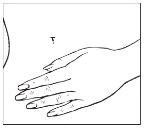
Apply the patch to the lower abdomen, below the waist. Avoid the waistline, as clothing may cause the patch to come loose. Do not apply the patch on or near the breasts.
When changing the patch, according to your schedule of twice a week, apply the new patch to a different skin area. Do not apply a new patch to the same area for at least one week.
Before applying Estradot, make sure your skin is:
- clean, dry, and cool,
- free of powder, oil, cream, or lotion,
- free of cuts and/or irritation.
How to apply Estradot
Each patch is individually sealed in a protective pouch. Open the pouch along the slit and remove the patch (do not use scissors to open the pouch as they may damage the patch).
| |
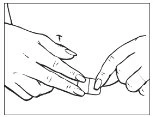
A protective liner covers the adhesive side of the patch. This liner must be removed before applying the patch to the skin. Apply the patch immediately after opening the pouch and removing the protective liner. Hold the patch with the protective liner facing toward you. Peel off half of the protective liner and discard it. Try to avoid touching the adhesive side of the patch with your fingers.
| |
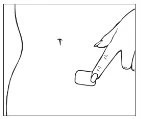
Holding the other half of the protective liner, apply the adhesive side of the patch to a dry area of the lower abdomen. Press the adhesive side firmly onto the skin to ensure proper adhesion, especially around the edges. Remove the remaining part of the protective liner.
| |
Hold the straight edge of the protective liner and peel it off the patch.
| |
Press the adhesive side firmly onto the skin to ensure proper adhesion. Press the patch firmly onto the skin with the palm of your hand for at least 10 seconds.
| |
Make sure the patch has been properly applied to the skin and run your fingers along the edges to check for good contact between the patch and the skin.
| |
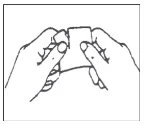
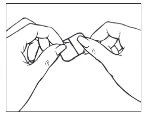
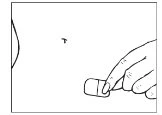
When changing the patch, peel it off and fold it in half with the sticky side inward. See section 5, "Storage of Estradot," for instructions on how to safely dispose of the used patch. Do not flush used patches down the toilet.
Additional practical information
If the patch has been correctly applied, bathing, swimming, showering, or exercising should not affect it. If a patch becomes partially detached, for example during bathing or showering, reposition it to remove water. After drying and allowing the skin to cool, you may reapply the same patch to a different area of skin on the lower abdomen (see "Where to apply Estradot").
If the patch does not adhere properly to the skin, use a new patch. Regardless of the day this occurs, resume changing the patch on the same days as per the initial schedule.
When sunbathing or using a sunbed, you must cover the patch. When swimming, you may wear the patch underneath your swimsuit.
If you need surgery
If you are scheduled for surgery, inform your surgeon that you are using Estradot. You may need to stop using Estradot 4 to 6 weeks before the operation to reduce the risk of blood clot formation (see section 2, Blood clots in a vein). Ask your doctor when you can restart treatment with Estradot.
If you use more Estradot than you should
If you have used too much Estradot, remove the patch immediately. Symptoms of overdose are usually breast tenderness and/or vaginal bleeding. Acute overdose is unlikely due to the route of administration of Estradot (the patch releases the drug gradually). If symptoms persist, contact your doctor.
If you forget to use Estradot
If you forget to change the patch, apply a new one as soon as you remember. Regardless of the day this occurs, resume changing the patch on the same days as per the initial schedule.
Do not apply a double dose to make up for a missed application.
If you stop using Estradot
Stopping treatment with Estradot may increase the risk of irregular bleeding or spotting. Inform your doctor if this occurs. After a prolonged break from treatment, consult your doctor before restarting use of the patch.
If you have any further questions about the use of this medicine, ask your doctor or pharmacist.
4. Possible adverse effects
Like all medicines, Estradot may cause adverse effects, although not everyone experiences them.
The following diseases are observed more frequently in women treated with HRT compared to women not treated with HRT:
- breast cancer;
- abnormal growth of the inner lining of the uterus (endometrial hyperplasia) or cancer of the inner lining of the uterus (endometrial cancer);
- ovarian cancer;
- blood clots in the veins of the legs or lungs (venous thromboembolism);
- heart disease;
- stroke;
- probable memory loss if HRT is started at age 65 or older.
For more information about these adverse effects, see section 2.
Some adverse effects may be serious
The following symptoms require immediate medical attention:
- sudden chest pain;
- chest pain spreading to the arm or neck;
- difficulty breathing;
- painful swelling and redness in the legs;
- yellowing of the eyes and skin, darkening of the urine, itching of the skin (jaundice);
- unexpected bleeding or spotting after using Estradot for some time, or if this continues after stopping treatment;
- changes in the breasts, such as changes in the skin of the breast, changes in the nipples, lumps that you can see or feel (breast cancer);
- heavy menstrual periods;
- unexplained migraine-type headaches.
Stop treatment with Estradot and contact your doctor immediately if you experience any of the adverse effects listed above.
Check the risks associated with hormone replacement therapy in section 2, Warnings and precautions.
Other adverse effects
Estradot may also cause the following adverse effects. If you consider any of the adverse effects you experience to be severe, inform your doctor or pharmacist.
Very common adverse effects, may affect more than 1 in 10 people:
Headache, skin reactions at the patch application site (including irritation, burning, rash, dryness, bleeding, bruising, inflammation, swelling, skin pigmentation, hives, and blisters), breast tenderness and pain, menstrual pain, menstrual disturbances.
Common, may affect up to 1 in 10 people:
Depression, nervousness, mood changes, insomnia, nausea, indigestion, diarrhoea, abdominal pain, bloating sensation, acne, rash, dry skin, itching, breast enlargement, heavy menstrual periods, discharge of a white or yellowish sticky fluid from the vagina, irregular bleeding, severe uterine contractions, vaginal inflammation, abnormal growth of the uterus (endometrial hyperplasia), pain (e.g. back, arms, legs, wrists, ankles), weakness, fluid retention (oedema) in the limbs (arms and legs), weight changes.
Uncommon, may affect up to 1 in 100 people:
Migraine, dizziness, increased blood pressure, vomiting, skin discoloration, altered liver function.
Rare, may affect up to 1 in 1,000 people:
Tingling or numbness in hands and feet, blood clots, gallstones, hair loss, muscle weakness, benign growth of the uterus, cysts near the uterine tubes, polyps (small growths) in the cervix (neck of the uterus), changes in sexual desire, allergic reactions such as rashes.
Very rare, may affect up to 1 in 10,000 people:
Hives, signs of severe allergic reaction (including difficulty breathing; swelling of the face, tongue, throat or skin; dizziness and hives), decreased tolerance to carbohydrates, involuntary movements that may affect the eyes, head and neck, discomfort with contact lens use, severe skin reactions, excessive hair growth.
Adverse effects of unknown frequency (cannot be estimated from the available data):
Breast cancer, abnormal liver function test, allergic inflammation of the skin, breast lumps (non-cancerous).
The following adverse effects have been reported with other hormone replacement therapies:
-
gallbladder disease
-
various skin disorders:
-
skin discoloration, especially on the face or neck, known as "pregnancy mask" (chloasma);
-
painful red nodules on the skin (erythema nodosum);
-
skin rash with red, target-like lesions or sores (erythema multiforme);
-
memory loss or reduced mental capacity (possible dementia)
Reporting of adverse effects
If you experience any adverse effect, talk to your doctor or pharmacist, even if it is a possible adverse effect not listed in this leaflet. You can also report them directly via the Spanish Pharmacovigilance System for Human Medicines (http://www.notificaram.es). By reporting adverse effects, you can help provide more information on the safety of this medicine.
5. Storage of Estradot
- Keep this medicine out of the sight and reach of children.
- Store Estradot in its original sachet, in a cool and dry place. Once opened or after the protective layer has been removed, apply the patch to the skin immediately.
- Do not refrigerate or freeze Estradot.
- Do not use this medicine after the expiry date stated on the sachet after CAD/EXP. The expiry date refers to the last day of the month indicated.
- Do not use this medicine if you notice that the packaging is damaged or shows signs of tampering.
- After removing the patch, fold it in half with the adhesive side inwards and keep it in a safe place out of the reach of children. Used or unused transdermal patches must be disposed of according to local regulations or returned to the pharmacy, preferably in their original packaging.
- Medicines must not be disposed of via wastewater or household waste. Unused medicines and their containers should be taken to the SIGRE Point at your pharmacy. If you are unsure, ask your pharmacist how to properly dispose of medicines and packaging you no longer need. This will help protect the environment.
6. Contents of the pack and other information
Composition of Estradot
Each 50 microgram/24 hour transdermal patch contains 0.78 mg of estradiol (as hemihydrate) and releases approximately 50 micrograms of estradiol every 24 hours.
- The active substance is estradiol (as hemihydrate).
- The other components of the patch's adhesive layer are: acrylic adhesive, silicone adhesive, oleic alcohol, dipropylene glycol, povidone (E1201).
- The support layer is an ethylene/vinyl acetate copolymer and a laminated vinylidene chloride/methyl acrylate copolymer.
- The protective liner (which is removed before applying the patch) is a fluoropolymer-coated polyester film.
Appearance of the product and contents of the pack
Estradot 50 is a rectangular patch of 5 cm² with rounded edges, composed of a pressure-sensitive adhesive layer containing estradiol, a translucent support layer on one side and a protective liner on the other.
Estradot is available in four different strengths: 25, 37.5, 50 and 75 micrograms/24 hours. Not all strengths may be available.
Estradot is available in packs containing 2, 8, 24 and 26 patches. Not all pack sizes may be available.
Marketing Authorization Holder
BEXAL FARMACÉUTICA, S.A.
Centro Empresarial Parque Norte
Edificio Roble
C/ Serrano Galvache, 56
28033 Madrid
Spain
Manufacturer
Novartis Farmacéutica, S.A.
Gran Vía de les Corts Catalanes, 764
08013 Barcelona
Spain
Novartis Pharma GmbH
Roonstrasse 25
D-90429 Nürnberg
Germany
This medicinal product is authorized in the Member States of the European Economic Area and in the United Kingdom (Northern Ireland) under the following names:
Austria: Estradot
Denmark: Vivelle dot
Finland: Estradot
France: Vivelledot
Croatia: Estradot
Iceland: Vivelle dot
Ireland: Estradot
Norway: Estradot
Portugal: Estradot
Spain: Estradot
Sweden: Estradot
United Kingdom (Northern Ireland): Estradot
Date of the most recent review of this leaflet: May 2025
Other sources of information
Detailed information about this medicinal product is available on the website of the Spanish Agency of Medicines and Health Products (AEMPS) http://www.aemps.gob.es/
Similar Medications
-
Estraderm Matrix 100 micrograms/24 hours transdermal patches
Form: patches, transdermal
Active substance Dosage ESTRADIOL 3 mg Manufacturer: Merus Labs Luxco Ii S.A.R.L.
-
Estraderm Matrix 25 micrograms/24 hours transdermal patches
Form: patches, transdermal
Active substance Dosage ESTRADIOL 0,75 mg Manufacturer: Merus Labs Luxco Ii S.A.R.L.
-
Estraderm Matrix 50 micrograms/24 hours transdermal patches
Form: patches, transdermal
Active substance Dosage ESTRADIOL 1,5 mg Manufacturer: Merus Labs Luxco Ii S.A.R.L.
-
Estradot 25 micrograms/24 hours, transdermal patch
Form: patches, transdermal
Active substance Dosage ESTRADIOL HEMIHYDRATE 0,39 mg Manufacturer: Bexal Farmaceutica S.A.
-
Estradot 37.5 micrograms/24 hours transdermal patch
Form: patches, transdermal
Active substance Dosage ESTRADIOL HEMIHYDRATE 585 µg Manufacturer: Bexal Farmaceutica S.A.
-
Estradot 75 micrograms/24 hours, transdermal patch
Form: patches, transdermal
Active substance Dosage ESTRADIOL HEMIHYDRATE 1,17 mg Manufacturer: Bexal Farmaceutica S.A.
-
Evopad 100 micrograms/24 h transdermal patches
Form: patches, transdermal
Active substance Dosage ESTRADIOL 6,4 mg Manufacturer: Theramex Ireland Limited
-
Evopad 25 micrograms/24 H transdermal patches
Form: patches, transdermal
Active substance Dosage ESTRADIOL HEMIHYDRATE 1,6 mg Manufacturer: Theramex Ireland Limited
-
Evopad 50 micrograms/24 H transdermal patches
Form: patches, transdermal
Active substance Dosage ESTRADIOL HEMIHYDRATE 3,2 mg Manufacturer: Theramex Ireland Limited
-
Evopad 75 micrograms/24 H transdermal patches
Form: patches, transdermal
Active substance Dosage ESTRADIOL 4,8 mg Manufacturer: Theramex Ireland Limited
This page has been machine-translated and may contain inaccuracies. The original data is available in the manufacturing country's language.
Last data check: May 18, 2026 · Data source: CIMA — AEMPS