Esbrinet 801 mg film-coated tablets
Spain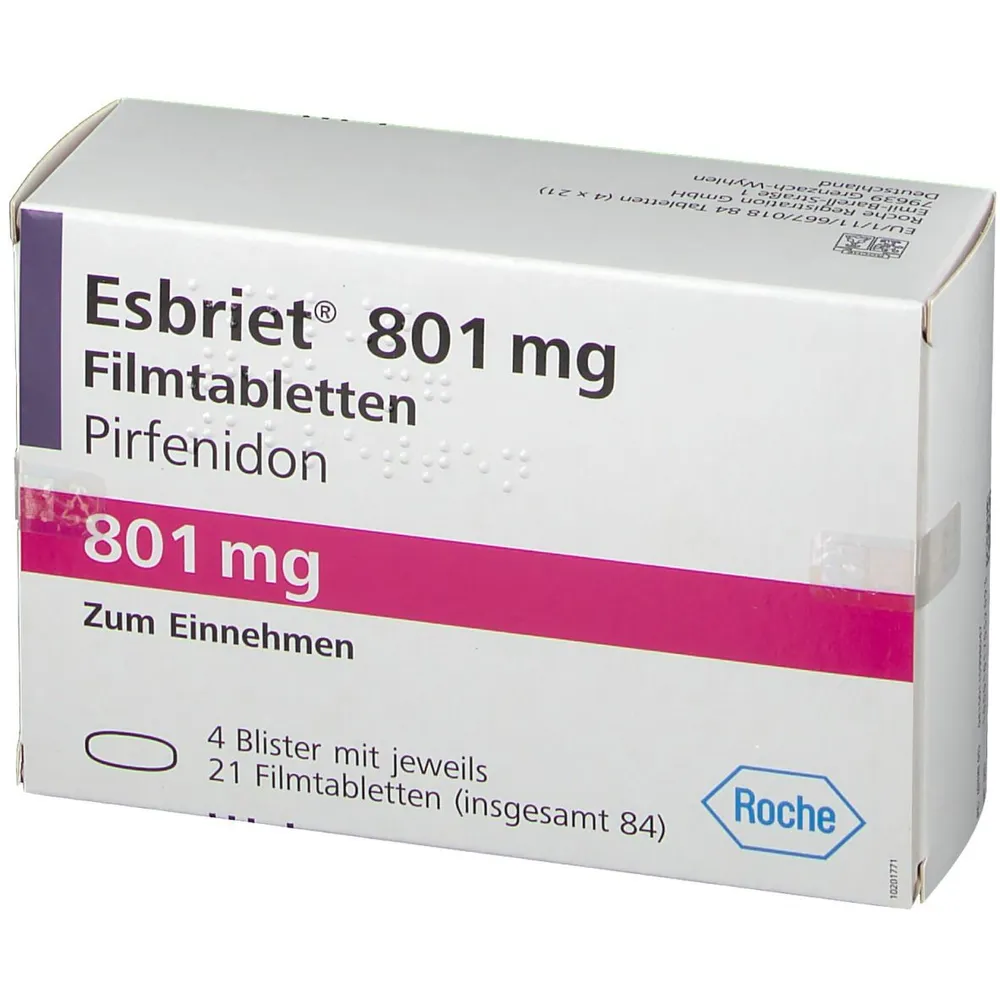
Table of Contents
Package leaflet: Information for the user
Introduction
Package leaflet: Information for the user
Esbriet 267 mg film-coated tablets
Esbriet 534 mg film-coated tablets
Esbriet 801 mg film-coated tablets
pirfenidone
Read this entire leaflet carefully before you start taking this medicine, as it contains important information for you.
- Keep this leaflet, as you may need to read it again.
- If you have any questions, ask your doctor or pharmacist.
- This medicine has been prescribed for you only and must not be given to other people, even if they have the same symptoms as you, because it may harm them.
- If you experience any side effects, talk to your doctor or pharmacist, even if they are side effects not listed in this leaflet. See section 4.
Leaflet contents:
- What Esbriet is and what it is used for
- What you need to know before taking Esbriet
- How to take Esbriet
- Possible side effects
- How to store Esbriet
- Contents of the pack and other information
1. What Esbriet is and what it is used for
Esbriet contains the active substance pirfenidone and is used for the treatment of Idiopathic Pulmonary Fibrosis (IPF) in adults.
IPF is a disease in which lung tissues become inflamed and progressively scarred over time, making it difficult to take deep breaths. Under these conditions, the lungs have difficulty functioning properly. Esbriet helps reduce lung scarring and inflammation, thereby helping you breathe better.
2. What you need to know before taking Esbriet
Do not take Esbriet
- if you are allergic to pirfenidone or to any of the other ingredients of this medicine (listed in section 6)
- if you have previously had angioedema with pirfenidone, including symptoms such as swelling of the face, lips and/or tongue, which may be associated with difficulty breathing or wheezing
- if you are taking a medicine called fluvoxamine (used to treat depression and obsessive-compulsive disorder [OCD])
- if you have severe or end-stage liver disease
- if you have severe or end-stage kidney disease requiring dialysis.
If any of the above apply to you, do not take Esbriet. If you have any doubts, consult your doctor or pharmacist.
Warnings and precautions
Talk to your doctor or pharmacist before starting to take Esbriet
- You may experience increased sensitivity to sunlight (photosensitivity reaction) while taking Esbriet. Avoid sunlight (including UV lamps) while taking Esbriet. Use sunscreen daily and cover your arms, legs, and head to reduce exposure to sunlight (see section 4: Possible side effects).
- You should not take other medicines such as tetracycline antibiotics (e.g. doxycycline) that may increase your sensitivity to sunlight.
- You must inform your doctor if you have kidney problems.
- You must inform your doctor if you have mild to moderate liver problems.
- You must refrain from smoking before and during treatment with Esbriet. Tobacco may reduce the effect of Esbriet.
- Esbriet may cause dizziness and fatigue. Be cautious if you need to perform activities requiring attention and coordination.
- Esbriet may cause weight loss. Your doctor will monitor your weight while you are taking this medicine.
- Stevens-Johnson syndrome, toxic epidermal necrolysis, and drug reaction with eosinophilia and systemic symptoms (DRESS) have been reported in association with Esbriet treatment. Stop taking Esbriet and seek immediate medical attention if you notice any symptoms related to these serious skin reactions described in section 4.
Esbriet may cause serious liver problems. Some cases have been fatal. You will need to have a blood test before starting Esbriet, once a month for the first 6 months, and then every 3 months thereafter while taking this medicine, to check that your liver is working properly. It is important that you have these blood tests performed regularly throughout the time you are taking Esbriet.
Children and adolescents
Do not give Esbriet to children and adolescents under 18 years of age.
Other medicines and Esbriet
Inform your doctor or pharmacist if you are taking, have recently taken, or might need to take any other medicines.
This is especially important if you are taking the following medicines, as they may alter the effect of Esbriet.
The following medicines may increase the side effects of Esbriet:
- enoxacin (a type of antibiotic)
- ciprofloxacin (a type of antibiotic)
- amiodarone (used to treat certain types of heart disease)
- propafenone (used to treat certain types of heart disease)
- fluvoxamine (used to treat depression and obsessive-compulsive disorder [OCD]).
The following medicines may reduce the effectiveness of Esbriet:
- omeprazole (used to treat conditions such as indigestion and gastroesophageal reflux disease)
- rifampicin (a type of antibiotic).
Taking Esbriet with food and drinks
Do not drink grapefruit juice while taking this medicine. Grapefruit juice may cause Esbriet to not work properly.
Pregnancy and breastfeeding
As a precautionary measure, it is preferable to avoid using Esbriet if you are pregnant, planning to become pregnant, or think you may be pregnant, as the potential risks to the fetus are unknown.
If you are breastfeeding or plan to breastfeed, talk to your doctor or pharmacist before taking Esbriet. Since it is not known whether Esbriet is excreted in breast milk, your doctor will explain the risks and benefits of taking this medicine during breastfeeding if you decide to do so.
Driving and use of machines
Do not drive or operate machinery if you feel dizzy or tired after taking Esbriet.
Esbriet contains sodium
Esbriet contains less than 1 mmol of sodium (23 mg) per tablet, i.e., essentially "sodium-free".
3. How to take Esbriet
Treatment with Esbriet should be initiated and supervised by specialist physicians experienced in the diagnosis and treatment of IPF.
Always follow exactly the instructions for administration of this medicine as given by your doctor or pharmacist. If in doubt, consult your doctor or pharmacist again.
You will normally be given this medicine with a gradually increasing dose as follows:
- for the first 7 days, take a dose of 267 mg (1 yellow tablet), 3 times a day with food (a total of 801 mg/day)
- from days 8 to 14, take a dose of 534 mg (2 yellow tablets or 1 orange tablet), 3 times a day with food (a total of 1,602 mg/day)
- from day 15 onwards (maintenance), take a dose of 801 mg (3 yellow tablets or 1 brown tablet), 3 times a day with food (a total of 2,403 mg/day).
The recommended maintenance daily dose of Esbriet is 801 mg (3 yellow tablets or 1 brown tablet) three times a day with meals, for a total of 2,403 mg/day.
Swallow the tablets whole with water, during or after a meal to reduce the risk of side effects such as nausea (feeling unwell) and dizziness. If symptoms persist, contact your doctor.
Dose reduction due to side effects
Your doctor may decide to reduce your dose if you experience side effects such as stomach problems, skin reactions to sunlight or UVA lamps, or significant changes in liver enzymes.
If you take more Esbriet than you should
Go immediately to your doctor, pharmacist, or the nearest hospital emergency department if you take more tablets than you should, and take your medication with you.
If you forget to take Esbriet
If you forget to take a dose, take it as soon as you remember. Do not take a double dose to make up for forgotten doses. Each dose should be separated by at least 3 hours. Do not take more tablets per day than your prescribed daily dose.
If you stop taking Esbriet
In certain situations, your doctor may advise you to stop taking Esbriet. If you stop taking Esbriet for any reason for more than 14 consecutive days, your doctor will restart your treatment with a dose of 267 mg 3 times a day and gradually increase it to 801 mg 3 times a day.
If you have any further questions about the use of this medicine, ask your doctor or pharmacist.
4. Possible side effects
Like all medicines, this medicine can cause side effects, although not everyone experiences them.
Stop taking Esbriet and seek immediate medical attention if you notice any of the following symptoms or signs:
- Swelling of the face, lips, or tongue, itching, hives, difficulty breathing or wheezing, or feeling faint, which are signs of angioedema, a serious allergic reaction or anaphylaxis.
- Yellowing of the eyes or skin, dark urine, and possibly accompanied by itching of the skin, pain in the upper right part of the stomach (abdomen), loss of appetite, bleeding or bruising more easily than normal, or feeling tired. These could be signs of abnormal liver function and may indicate liver damage, which is an uncommon adverse effect of Esbriet.
- Red, non-elevated patches or circular spots on the trunk, often with central blisters, skin peeling, or ulcers in the mouth, throat, nose, genitals, and eyes. These severe skin rashes may be preceded by fever and flu-like symptoms (Stevens-Johnson syndrome or toxic epidermal necrolysis).
- Widespread rash, elevated body temperature, and swollen lymph nodes (DRESS syndrome or drug-induced hypersensitivity syndrome).
Other possible side effects
If you experience any type of side effect, consult your doctor.
Very common side effects (may affect more than 1 in 10 people):
- Throat or respiratory tract infections reaching the lungs and/or sinusitis
- Feeling unwell (nausea)
- Stomach problems, such as acid reflux, vomiting, and constipation
- Diarrhea
- Indigestion or stomach heaviness
- Weight loss
- Decreased appetite
- Difficulty sleeping
- Fatigue
- Dizziness
- Headache
- Difficulty breathing
- Cough
- Joint pain
Common side effects (may affect up to 1 in 10 people):
- Bladder infections
- Drowsiness
- Taste disturbance
- Hot flushes
- Stomach problems, such as feeling of fullness, abdominal pain and discomfort, heartburn, and flatulence
- Blood tests may show increased liver enzymes
- Skin reactions after exposure to sunlight or use of UVA lamps
- Skin problems such as itching, irritation, or redness, dryness, rash
- Muscle pain
- Weakness or lack of energy
- Chest pain
- Sunburn
Uncommon side effects (may affect up to 1 in 100 people):
- Low levels of sodium in the blood. This may cause headache, dizziness, confusion, weakness, muscle cramps, or nausea and vomiting.
- Blood test results may show decreased white blood cells.
Reporting of side effects
If you experience any type of side effect, consult your doctor or pharmacist, even if it is a possible side effect not listed in this leaflet. You can also report them directly through the national reporting system included in Appendix V. By reporting side effects, you can help provide more information on the safety of this medicine.
5. Storage of Esbriet
Keep this medicine out of the sight and reach of children.
Do not use this medicine after the expiry date which is stated on the label of the bottle, on the blister pack, and on the outer carton after EXP. The expiry date refers to the last day of the month indicated.
This medicine does not require any special storage conditions.
Medicines should not be disposed of via wastewater or household waste. Ask your pharmacist how to dispose of medicines and packaging you no longer need. This will help protect the environment.
6. Contents of the pack and other information
Composition of Esbriet
267 mg tablets
The active substance is pirfenidone. Each film-coated tablet contains 267 mg of pirfenidone.
The other components are: microcrystalline cellulose, sodium croscarmellose (see section 2 “Esbriet contains sodium”), povidone K30, anhydrous colloidal silica, magnesium stearate.
The film coating consists of: polyvinyl alcohol, titanium dioxide (E171), macrogol 3350, talc, yellow iron oxide (E172).
534 mg tablets
The active substance is pirfenidone. Each film-coated tablet contains 534 mg of pirfenidone.
The other components are: microcrystalline cellulose, sodium croscarmellose (see section 2 “Esbriet contains sodium”), povidone K30, anhydrous colloidal silica, magnesium stearate.
The film coating consists of: polyvinyl alcohol, titanium dioxide (E171), macrogol 3350, talc, yellow iron oxide (E172), and red iron oxide (E172).
801 mg tablets
The active substance is pirfenidone. Each film-coated tablet contains 801 mg of pirfenidone.
The other components are: microcrystalline cellulose, sodium croscarmellose (see section 2 “Esbriet contains sodium”), povidone K30, anhydrous colloidal silica, magnesium stearate.
The film coating consists of: polyvinyl alcohol, titanium dioxide (E171), macrogol 3350, talc, red iron oxide (E172), and black iron oxide (E172).
Nature of the product and contents of the pack
267 mg tablets
Esbriet 267 mg film-coated tablets are yellow, oval, biconvex, film-coated tablets with the imprint “PFD”.
Bottle presentations contain one bottle with 90 tablets, or two bottles with 90 tablets each (180 tablets in total).
Blister packs contain 21, 42, 84 or 168 film-coated tablets, and multiple packs contain 63 film-coated tablets (2-week starter pack: 21 + 42) or 252 film-coated tablets (maintenance pack: 3x84).
534 mg tablets
Esbriet 534 mg film-coated tablets are orange, oval, biconvex, film-coated tablets with the imprint “PFD”.
Bottle presentations contain one bottle with 21 tablets or one bottle with 90 tablets.
801 mg tablets
Esbriet 801 mg film-coated tablets are brown, oval, biconvex, film-coated tablets with the imprint “PFD”.
The bottle presentation contains one bottle with 90 tablets.
Blister packs contain 84 film-coated tablets, and the multiple pack contains 252 film-coated tablets (maintenance pack: 3x84).
Each of the blister strips for the 801 mg tablets is marked with the following symbols and abbreviations as a reminder to take a dose three times daily:

LU, MA, MI, JU, VI, SA, DO
It is possible that only certain pack sizes are marketed.
Marketing Authorization Holder
Roche Registration GmbH
Emil-Barell-Strasse 1
79639 Grenzach-Wyhlen
Germany
Manufacturer
Roche Pharma AG
Emil-Barell-Str. 1
D-79639 Grenzach-Wyhlen
Germany
For more information about this medicinal product, please contact the local representative of the Marketing Authorization Holder:
Belgium/Belgium/Belgium, Luxembourg/Luxembourg N.V. Roche S.A. Belgium/Belgium/Belgium Tel/Tel: +32 (0) 2 525 82 11 | Latvia Roche Latvija SIA Tel: +371 - 6 7039831 |
| Lithuania UAB “Roche Lietuva” Tel: +370 5 2546799 |
Czech Republic Roche s. r. o. Tel: +420 - 2 20382111 | Hungary Roche (Hungary) Kft. Tel: +36 1 279 4500 |
Denmark Roche Pharmaceutical A/S Tlf: +45 - 36 39 99 99 | Netherlands Roche Nederland B.V. Tel: +31 (0) 348 438000 |
Germany Roche Pharma AG Tel: +49 (0) 7624 140 | Norway Roche Norge AS Tlf: +47 - 22 78 90 00 |
Estonia Roche Eesti OÜ Tel: + 372 - 6 177 380 | Austria Roche Austria GmbH Tel: +43 (0) 1 27739 |
Greece, Cyprus Roche (Hellas) A.E. Greece Tel: +30 210 61 66 100 | Poland Roche Polska Sp. z o.o. Tel: +48 - 22 345 18 88 |
Spain Roche Farma S.A. Tel: +34 - 91 324 81 00 | Portugal Roche Farmacêutica Química, Lda Tel: +351 - 21 425 70 00 |
France Roche Tél: +33 (0) 1 47 61 40 00 | Romania Roche România S.R.L. Tel: +40 21 206 47 01 |
Croatia Roche d.o.o. Tel: +385 1 4722 333 | Slovenia Roche farmacevtska družba d.o.o. Tel: +386 - 1 360 26 00 |
Ireland, Malta Roche Products (Ireland) Ltd. Ireland/Ireland Tel: +353 (0) 1 469 0700 | Slovakia Roche Slovensko, s.r.o. Tel: +421 - 2 52638201 |
Iceland Roche Pharmaceutical A/S c/o Icepharma hf Tel: +354 540 8000 | Finland/Finland Roche Oy Puh/Tel: +358 (0) 10 554 500 |
Italy Roche S.p.A. Tel: +39 - 039 2471 | Sweden Roche AB Tel: +46 (0) 8 726 1200 |
Date of the most recent review of this leaflet:
Detailed information on this medicine is available on the website of the European Medicines Agency: http://www.ema.europa.eu.
There are also links to other websites on rare diseases and orphan medicinal products.