Dynexan 20 mg/g oral gel
Spain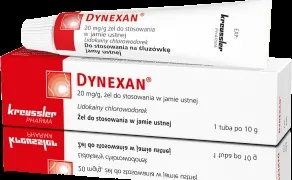
Table of Contents
Package Leaflet: Information for the User
Introduction
Package Leaflet: Information for the Patient
Dynexan 20 mg/g oral gel
Hydrochloride lidocaine
Read the entire leaflet carefully before starting to use this medicine, as it contains important information for you.
- Follow exactly the instructions for administration of the medicine contained in this leaflet or those indicated by your doctor, dentist, or pharmacist.
- Keep this leaflet, as you may need to read it again.
- If you need advice or more information, consult your pharmacist.
- If you experience any adverse effects, consult your doctor, dentist, or pharmacist, even if they are effects not listed in this leaflet. See section 4.
- You should consult a doctor or dentist if your condition worsens or does not improve after 2 days and the underlying cause is unknown.
Leaflet Contents:
- What Dynexan is and what it is used for
- What you need to know before using Dynexan
- How to use Dynexan
- Possible adverse effects
- How to store Dynexan
- Contents of the pack and other information
1. What Dynexan is and what it is used for
Dynexan contains the active substance lidocaine hydrochloride, a substance for local numbing (local anaesthesia) of the skin and mucous membranes.
Dynexan is used for the short-term symptomatic treatment of pain in the oral mucosa, gums, and lips in adults, adolescents, and children from 6 years of age.
You should consult a doctor or dentist if your condition worsens or does not improve after 2 days and the underlying cause is unknown.
2. What you need to know before using Dynexan
Do not use Dynexan:
- if you are allergic to lidocaine hydrochloride or to any of the other ingredients of this medicine (listed in section 6).
- if you are allergic to amide-type local anesthetics (e.g., prilocaine, mepivacaine).
Warnings and precautions
Consult your doctor, dentist, or pharmacist before using Dynexan if you have serious underlying medical conditions, e.g., heart disease or severe liver or kidney disease.
For up to 45 minutes after application, caution should be taken when consuming hot drinks or food, to avoid choking, biting, or burning the tongue.
Children
Do not administer this medicine to children under 6 years of age.
Other medicines and Dynexan
Tell your doctor, dentist, or pharmacist if you are taking, have recently taken, or might need to take any other medicines.
Pregnancy and breastfeeding
If you are pregnant or breastfeeding, think you may be pregnant, or plan to become pregnant, consult your doctor, dentist, or pharmacist before using this medicine. Dynexan should not be used during pregnancy unless strictly necessary.
Lidocaine is excreted in breast milk in small amounts.
At therapeutic doses of Dynexan, effects on breastfed infants are not expected.
Driving and using machines
Dynexan has no known effect on the ability to drive or operate machinery.
Dynexan contains benzalkonium chloride
This medicine contains 1 mg of benzalkonium chloride per gram of gel. Benzalkonium chloride may cause local irritation.
3. How to use Dynexan
Follow exactly the administration instructions provided in this leaflet or those given by your doctor, dentist, or pharmacist. If in doubt, consult your doctor, dentist, or pharmacist.
Adults and adolescents
The recommended dose for adults and adolescents is 4–8 applications per day of a pea-sized amount of gel (approx. 0.2 g of gel (4 mg of lidocaine hydrochloride)).
Use in children
For children aged 6 years and older, the dosage should be up to 4 times daily a pea-sized amount of gel (approx. 0.2 g of gel (4 mg of lidocaine hydrochloride)).
How to administer
Oral route.
Apply Dynexan to the painful areas and massage gently.
If you wear dentures or dental appliances, apply a thin layer of Dynexan to the affected areas.
If symptoms persist for more than 2 days and the underlying cause is unknown, you should consult a doctor or dentist.
If you use more Dynexan than you should
There have been no reported cases of poisoning due to overdose, accidental ingestion, or errors with Dynexan. If you think you have used more Dynexan than you should, speak to your doctor or dentist immediately.
In case of overdose or accidental ingestion, consult your doctor or pharmacist immediately or call the Toxicology Information Service at telephone number 91 562 04 20, indicating the medication and the amount ingested.
If you have any further questions about the use of this medicine, ask your doctor, dentist, or pharmacist.
4. Possible adverse effects
Like all medicines, this medicine may cause adverse effects, although not everyone will experience them.
Very rarely, Dynexan may cause allergic reactions, in the most severe cases an acute hypersensitivity reaction which may lead to shock (anaphylactic shock). If you develop an allergic reaction, stop using Dynexan and seek immediate medical attention.
Other possible adverse effects
Very rare: may affect up to 1 in 10,000 people
- Local skin reactions, e.g. burning sensation, swelling, redness, itching, urticaria, contact dermatitis, rash, pain
- Taste disturbances
- Numbness
Reporting of adverse effects
If you experience any type of adverse effect, consult your doctor, dentist or pharmacist, even if it is a possible adverse effect not listed in this leaflet. You can also report them directly through the Spanish System of Pharmacovigilance for Human Medicinal Products: https://www.notificaram.es. By reporting adverse effects, you can help provide more information on the safety of this medicine.
5. Storage of Dynexan
Keep this medicine out of the sight and reach of children.
Do not use this medicine after the expiry date stated on the tube and the carton after EXP. The expiry date refers to the last day of the month indicated.
No special storage conditions are required.
After opening the tube, the product remains valid for 3 months.
Medicines must not be disposed of via wastewater or household waste. Dispose of unused medicines and their containers at the SIGRE collection point at your pharmacy. If you are in doubt, ask your pharmacist how to properly dispose of unused medicines and their packaging. This will help protect the environment.
6. Contents of the pack and other information
Composition of Dynexan
- The active substance is lidocaine hydrochloride.
- 1 g of gel contains 20 mg lidocaine hydrochloride (as lidocaine hydrochloride 1 H2O).
- The other components (excipients) are benzalkonium chloride, glycerol, guar gum, partially deminthalized peppermint oil, liquid paraffin, peppermint oil, sodium saccharin, colloidal anhydrous silica, thymol, white soft paraffin, purified water.
Nature of the product and pack size
Dynexan is a white, ointment-like gel for oral use.
Tubes containing 10 g of oral gel.
Only certain pack sizes may be marketed.
Marketing Authorization Holder and Manufacturer
Chemische Fabrik Kreussler & Co. GmbH
Rheingaustr. 87-93
65203 Wiesbaden
Germany
This medicinal product is authorized in the European Economic Area member states under the following names:
Germany: LidocainKreussler 20 mg/g Gel zur Anwendung am Zahnfleisch/in der Mundhöhle
Spain: Dynexan 20 mg/g gel bucal
Italy, Poland: Dynexan
Luxembourg: Dynexan Gel
Netherlands: Dynexan Gel 20 mg/g, gel voor oromucosaal gebruik
Date of the most recent review of this leaflet:
March 2025
Detailed and up-to-date information on this medicinal product is available on the website of the Spanish Agency of Medicines and Medical Devices (AEMPS): http://www.aemps.gob.es/