Duloxetine Kern Pharma 30 mg gastro-resistant hard capsules EFG
Spain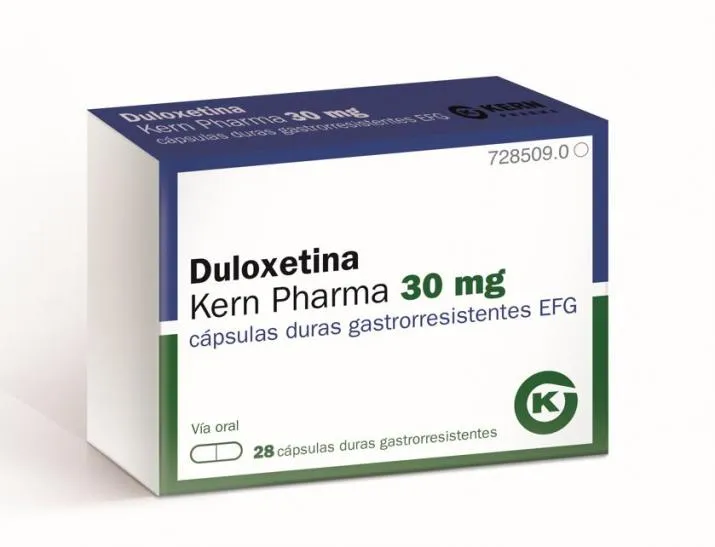
Table of Contents
- Package leaflet: Information for the user
- Introduction
- 1. What Duloxetina Kern Pharma is and what it is used for
- 2. What you need to know before taking Duloxetina Kern Pharma
- 3. How to take Duloxetina Kern Pharma
- 4. Possible adverse effects
- 5. Storage of Duloxetine Kern Pharma
- 6. Contents of the pack and other information
Package leaflet: Information for the user
Introduction
Package leaflet: information for the user
Duloxetine Kern Pharma 30 mg gastro-resistant hard capsules EFG
Duloxetine (as hydrochloride)
Read the entire leaflet carefully before you start taking this medicine because it contains important information for you.
- Keep this leaflet, as you may need to read it again.
- If you have any questions, ask your doctor or pharmacist.
- This medicine has been prescribed for you only and must not be given to other people, even if they have the same symptoms as you, because it may harm them.
- If you experience any adverse reactions, consult your doctor or pharmacist, even if they are adverse reactions not listed in this leaflet. See section 4.
Contents of the leaflet:
-
What Duloxetine Kern Pharma is and what it is used for
-
What you need to know before taking Duloxetine Kern Pharma
-
How to take Duloxetine Kern Pharma
-
Possible side effects
-
How to store Duloxetine Kern Pharma
-
Contents of the pack and other information
1. What Duloxetina Kern Pharma is and what it is used for
This medicine contains the active substance duloxetine. Duloxetine increases the levels of serotonin and noradrenaline in the nervous system.
Duloxetine is used in adults to treat:
- depression
- generalized anxiety disorder (chronic feeling of anxiety or nervousness)
- diabetic neuropathic pain (often described as burning, stabbing, shooting, tingling, or like an electric shock. There may be loss of sensation in the affected area, or pain may occur when the area is touched or exposed to heat, cold, or pressure).
Duloxetine begins to work in most people with depression or anxiety within two weeks of starting treatment, but it may take between 2 and 4 weeks before you start to feel better. Inform your doctor if you do not notice improvement within this time. Your doctor may continue prescribing duloxetine once you feel better in order to prevent your depression or anxiety from returning.
In people with diabetic neuropathic pain, it may take several weeks before you start to feel better. Consult your doctor if you do not feel better after 2 months.
2. What you need to know before taking Duloxetina Kern Pharma
Do not take Duloxetina Kern Pharma:
- if you are allergic to duloxetine or any of the other ingredients of this medicine (listed in section 6)
- if you have hepatic impairment
- if you have severe renal impairment
- if you are taking or have taken within the last 14 days another medicine known as a monoamine oxidase inhibitor (MAOI) (see “Use of Duloxetina Kern Pharma with other medicines”)
- if you are taking fluvoxamine, which is usually used to treat depression, or ciprofloxacin or enoxacin, which are used to treat certain infections
- if you are taking other medicines containing duloxetine (see “Use of Duloxetina Kern Pharma with other medicines”)
Consult your doctor if you have high blood pressure or heart disease. Your doctor will determine whether you should take duloxetine.
Warnings and precautions
Duloxetine may not be suitable for you for the following reasons.
Consult your doctor before starting to take this medicine:
- you are using other medicines to treat depression or buprenorphine. Using these medicines together with Duloxetina Kern Pharma may cause serotonin syndrome, a potentially life-threatening condition. (see “Use of Duloxetina Kern Pharma with other medicines”)
- you are taking St. John’s Wort, a herbal remedy (Hypericum perforatum)
- you have any kidney disease
- you have had seizures (epileptic fits)
- you have experienced mania
- you suffer from bipolar disorder
- you have eye problems, such as certain types of glaucoma (increased intraocular pressure)
- you have had bleeding problems (tendency to bruise easily), especially if you are pregnant (see “Pregnancy and breastfeeding”)
- you are at risk of low sodium levels (for example, if you are taking diuretics, particularly if you are elderly)
- you are receiving treatment with other medicines that may cause liver damage
- you are taking other medicines containing duloxetine (see “Use of Duloxetina Kern Pharma with other medicines”)
Duloxetine may cause a feeling of restlessness or inability to sit still or remain motionless. If this occurs, inform your doctor.
Some medicines in the same class as duloxetine (known as SNRIs) may cause symptoms of sexual dysfunction (see section 4). In some cases, these symptoms persist after discontinuation of treatment.
Suicidal thoughts and worsening of depression or anxiety disorder
If you are depressed and/or suffer from anxiety disorders, you may occasionally have thoughts of self-harm or suicide. These thoughts may increase at the beginning of treatment with antidepressants, as all these medicines take time to take effect, usually about two weeks but sometimes longer.
You are more likely to have such thoughts if:
- you have previously had thoughts of self-harm or suicide
- you are a young adult. Clinical trial data have shown an increased risk of suicidal behaviour in psychiatric patients under 25 years of age being treated with antidepressants.
Contact your doctor or go immediately to hospital if you have any thoughts of self-harm or suicide.
It may be helpful to inform a close family member or friend that you are depressed or have an anxiety disorder, and ask them to read this leaflet. You may wish to ask them to inform you if they notice your depression or anxiety worsening, or if they are concerned about changes in your behaviour.
You should also contact your doctor:
If you experience signs and symptoms such as restlessness, hallucinations, loss of coordination, rapid heartbeat, increased body temperature, rapid changes in blood pressure, hyperactive reflexes, diarrhea, coma, nausea, or vomiting, as you may be experiencing serotonin syndrome.
In its most severe form, serotonin syndrome may resemble Neuroleptic Malignant Syndrome (NMS). Signs and symptoms of NMS may include a combination of fever, rapid heartbeat, sweating, severe muscle rigidity, confusion, and increased muscle enzymes (detected by blood test).
Children and adolescents under 18 years of age
Duloxetina is generally not recommended for use in children and adolescents under 18 years of age. In addition, you should be aware that patients under 18 years of age taking this type of medicine have an increased risk of side effects such as suicide attempts, suicidal thoughts, and hostility (mainly aggression, oppositional behaviour, and anger). Nevertheless, your doctor may prescribe duloxetine to patients under 18 years of age if they decide it may be beneficial for the patient. If your doctor has prescribed duloxetine to a patient under 18 years of age and you wish to discuss this, please contact your doctor. You must inform your doctor if any of the symptoms listed above appear or worsen in patients under 18 years of age taking duloxetine. Furthermore, in this age group, the long-term effects of duloxetine on growth, maturation, and cognitive and behavioural development have not yet been established.
Use of Duloxetina Kern Pharma with other medicines
Inform your doctor or pharmacist if you are using, have recently used, or might need to take any other medicines, including those obtained without a prescription.
The main active ingredient of this medicine, duloxetine, is used in other medicines for other conditions:
- diabetic neuropathic pain, depression, anxiety, and urinary incontinence
You should avoid using more than one of these medicines at the same time. Check with your doctor if you are already using other medicines containing duloxetine.
Your doctor will decide whether you can take duloxetine with other medicines. Do not start or stop taking any medicine, including those obtained without a prescription and herbal remedies, without first consulting your doctor.
You should also inform your doctor if you are taking any of the following medicines:
Monoamine oxidase inhibitors (MAOIs): You must not take duloxetine if you are taking, or have recently taken (within the last 14 days), another antidepressant medicine known as a monoamine oxidase inhibitor (MAOI). Examples of MAOIs include moclobemide (an antidepressant) and linezolid (an antibiotic). Taking an MAOI together with many prescription medicines, including duloxetine, can cause serious adverse effects, even life-threatening ones. You must wait at least 14 days after stopping treatment with an MAOI before starting duloxetine. Likewise, you must wait at least 5 days after stopping treatment with duloxetine before starting treatment with an MAOI.
Medicines that cause drowsiness: This includes medicines prescribed by your doctor such as benzodiazepines, strong painkillers, antipsychotics, phenobarbital, and antihistamines.
Medicines that increase serotonin levels: Triptans, tryptophan, selective serotonin reuptake inhibitors (SSRIs, such as paroxetine and fluoxetine), SNRIs (such as venlafaxine), tricyclic antidepressants (such as clomipramine, amitriptyline), St. John’s Wort, MAOIs (such as moclobemide and linezolid), buprenorphine, tramadol, and meperidine. These medicines may interact with Duloxetina Kern Pharma, and you may experience symptoms such as involuntary and rhythmic muscle contractions, including muscles controlling eye movement, agitation, hallucinations, coma, excessive sweating, tremors, exaggerated reflexes, increased muscle tone, and body temperature above 38°C. Contact your doctor if you experience these symptoms, as they may indicate a potentially life-threatening condition such as serotonin syndrome.
Oral anticoagulants or antiplatelet agents: Medicines that thin the blood or prevent blood clots. These medicines may increase the risk of bleeding.
Taking Duloxetina Kern Pharma with food, drinks, and alcohol
Duloxetine may be taken with or without food. You should exercise caution if you consume alcohol while being treated with duloxetine.
Pregnancy and breastfeeding
If you are pregnant or breastfeeding, think you may be pregnant, or plan to become pregnant, consult your doctor or pharmacist before using this medicine.
-
Inform your doctor if you become pregnant or are trying to become pregnant while taking duloxetine. Duloxetine should only be used after your doctor has evaluated the potential benefits and any potential risks to the fetus.
-
Ensure that your midwife and/or doctor know that you are taking duloxetine. Other similar medicines (SSRIs), when taken during pregnancy, may increase the risk of a serious condition in newborns called persistent pulmonary hypertension of the newborn (PPHN), which causes the baby to breathe faster and turn blue. These symptoms usually begin within the first 24 hours after birth. If this happens to your baby, contact your midwife and/or doctor immediately.
-
If you take duloxetine near the end of your pregnancy, your baby may experience some symptoms at birth. These usually begin at birth or during the first few days after birth. Symptoms may include weak muscles, tremors, irritability, poor feeding, breathing difficulties, and seizures. If your baby has any of these symptoms after birth or if you are concerned about your baby’s health, contact your doctor or midwife, who can advise you.
-
If you take duloxetine near the end of your pregnancy, there is an increased risk of excessive vaginal bleeding shortly after delivery, especially if you have had bleeding problems. Your doctor or midwife should be aware that you are taking duloxetine so they can advise you appropriately.
-
Available data on the use of duloxetine during the first three months of pregnancy do not show a general increase in the risk of birth defects. If you take duloxetine during the second half of pregnancy, there may be an increased risk of premature birth (6 additional preterm births per 100 women taking duloxetine in the second half of pregnancy), particularly between weeks 35 and 36 of pregnancy.
-
Inform your doctor if you are breastfeeding. The use of duloxetine during breastfeeding is not recommended. Seek advice from your doctor or pharmacist.
Driving and using machines
During treatment with duloxetine, you may feel drowsy or dizzy. Do not drive or operate tools or machinery until you know how this medicine affects you.
Duloxetina Kern Pharma contains sucrose
Duloxetina contains sucrose. If your doctor has informed you of an intolerance to certain sugars, consult him before taking this medicine.
Duloxetina Kern Pharma contains sodium
This medicine contains less than 23 mg of sodium (1 mmol) per dose unit; hence, it is essentially “sodium-free”.
3. How to take Duloxetina Kern Pharma
Follow exactly the instructions given by your doctor or pharmacist for taking this medicine. If in doubt, consult your doctor or pharmacist again.
Duloxetina should be taken orally. Swallow the capsule whole with water.
For depression and diabetic neuropathic pain:
The recommended dose of duloxetine is 60 mg once daily, but your doctor will prescribe the dose that is best for you.
For generalized anxiety disorder:
The usual starting dose of duloxetine is 30 mg once daily, after which most patients will receive 60 mg once daily, but your doctor will prescribe the dose that is best for you. The dose may be adjusted up to 120 mg per day depending on your response to duloxetine.
To help you remember to take duloxetina, it may be helpful to take it at the same time every day.
Discuss with your doctor how long you should continue taking duloxetina. Do not stop taking duloxetina or change your dose without consulting your doctor. It is important to treat your condition properly to help you improve. If left untreated, your condition may not resolve and could become worse and more difficult to treat.
If you take more Duloxetina Kern Pharma than you should
In case of overdose or accidental ingestion, contact your doctor or pharmacist immediately or call the Toxicology Information Service at: 91.562.04.20, indicating the medication and the amount ingested.
Symptoms of overdose may include drowsiness, coma, serotonin syndrome (a rare reaction that may cause intense feelings of well-being, drowsiness, clumsiness, restlessness, sensation of being drunk, fever, sweating, or muscle rigidity), seizures, vomiting, and rapid heart rate.
If you forget to take Duloxetina Kern Pharma
If you forget to take a dose, take it as soon as you remember. However, if it is nearly time for your next dose, skip the missed dose and take your next dose at the usual time. Do not take a double dose to make up for a missed dose. Do not take more duloxetine than prescribed for you in one day.
If you stop taking Duloxetina Kern Pharma
Do not stop taking your capsules without consulting your doctor, even if you feel better. If your doctor decides that you no longer need to continue taking duloxetina, they will instruct you to gradually reduce your dose over at least 2 weeks before stopping treatment.
Some patients who stop duloxetine treatment suddenly have experienced symptoms such as:
- dizziness, tingling or prickling sensations, or electric shock-like sensations (especially in the head), sleep disturbances (vivid dreams, nightmares, inability to sleep), fatigue, drowsiness, restlessness or agitation, feelings of anxiety, nausea or vomiting, tremor, headache, muscle pain, irritability, diarrhea, and excessive sweating or vertigo.
These symptoms are usually not serious and disappear within a few days, but if you experience bothersome symptoms, seek advice from your doctor.
If you have any further questions about the use of this medicine, ask your doctor or pharmacist.
4. Possible adverse effects
Like all medicines, this medicine can cause adverse effects, although not everyone will experience them.
These effects are usually mild to moderate and often disappear within a few weeks.
Very common adverse effects (may affect more than 1 in 10 people)
- headache, drowsiness
- discomfort (nausea), dry mouth
Common adverse effects (may affect up to 1 in 10 people)
- loss of appetite
- difficulty sleeping, feeling restless, decreased sex drive, anxiety, difficulty or inability to achieve orgasm, unusual dreams
- dizziness, feeling slowed down, tremor, numbness, itching or tingling of the skin
- blurred vision
- tinnitus (perception of sounds in the ear when there is no external sound)
- feeling palpitations in the chest
- increased blood pressure, flushing
- increased yawning
- constipation, diarrhoea, stomach ache, vomiting, heartburn or indigestion, gas
- increased sweating, rash (itching)
- muscle pain, muscle spasms
- pain when urinating, frequent urination
- difficulty achieving an erection, changes in ejaculation
- falls (mainly in elderly people), fatigue
- weight loss
Children and adolescents under 18 years of age with depression treated with this medicine experienced a decrease in weight when they started taking it. After 6 months of treatment, their weight increased to levels similar to those of other children and adolescents of the same age and sex.
Uncommon adverse effects (may affect up to 1 in 100 people)
- throat swelling causing hoarseness
- suicidal thoughts, difficulty sleeping, teeth grinding, feeling disoriented, lack of motivation
- muscle spasms and involuntary muscle movements, feeling restless or unable to sit still or remain motionless, nervousness, difficulty concentrating, changes in taste sensation, difficulty controlling movements e.g.: lack of coordination or involuntary muscle movements, restless legs syndrome, poor quality of sleep
- pupil dilation (the black center of the eye), vision problems
- feeling dizzy or vertigo, ear pain
- rapid and/or irregular heartbeat
- fainting, dizziness, feeling lightheaded or faint upon standing, coldness in fingers and/or toes
- throat spasms, nosebleeds
- vomiting blood, or black stools, gastroenteritis, burping, difficulty swallowing
- liver inflammation which may cause abdominal pain and yellowing of the skin or whites of the eyes
- night sweats, hives, cold sweats, sensitivity to sunlight, increased tendency to bruise
- muscle stiffness, muscle spasms
- difficulty or inability to urinate, difficulty starting urination, need to urinate at night, need to urinate more than normal, decreased urine flow
- abnormal vaginal bleeding, abnormal menstrual periods, including heavy, painful, irregular or prolonged periods; rarely light or missed periods; pain in the testicles or scrotum
- chest pain, feeling cold, thirst, chills, feeling hot, change in walking pattern
- weight gain
- Duloxetine may cause effects you may not notice, such as increased liver enzymes or blood potassium levels, creatine phosphokinase, blood sugar or cholesterol.
Rare adverse effects (may affect up to 1 in 1,000 people)
- severe allergic reactions causing difficulty breathing or dizziness with swelling of the tongue or lips, allergic reactions
- decreased activity of the thyroid gland, which may cause tiredness or weight gain
- dehydration, low sodium levels in the blood (mainly in elderly people; symptoms may include dizziness, weakness, confusion, drowsiness or extreme tiredness, nausea or vomiting; more serious symptoms include fainting, seizures or falls), syndrome of inappropriate antidiuretic hormone secretion (SIADH)
- suicidal behaviour, mania (hyperactivity, racing thoughts and reduced need for sleep), hallucinations, aggression and anger
- "Serotonin syndrome" (a rare reaction that may cause intense feelings of happiness, drowsiness, clumsiness, restlessness, feeling drunk, fever, sweating or muscle stiffness), seizures
- increased pressure in the eye (glaucoma)
- cough, wheezing and shortness of breath, which may be accompanied by high fever
- mouth inflammation, bright red blood in stools, bad breath, inflammation of the large intestine (leading to diarrhoea)
- liver failure, yellowing of the skin or whites of the eyes (jaundice)
- Stevens-Johnson syndrome (a serious illness causing blisters on the skin, mouth, eyes and genitals), severe allergic reactions causing swelling of the face or throat (angioedema)
- jaw muscle contractions
- unusual odour of urine
- menopausal symptoms, abnormal production of breast milk in men or women
- excessive vaginal bleeding shortly after childbirth (postpartum haemorrhage)
Very rare adverse effects (may affect up to 1 in 10,000 people)
- inflammation of blood vessels in the skin (cutaneous vasculitis)
Frequency not known (cannot be estimated from available data)
- Signs and symptoms of a condition called "stress cardiomyopathy", which may include chest pain, difficulty breathing, dizziness, fainting and irregular heartbeat
Reporting of adverse effects
If you experience any adverse effect, talk to your doctor or pharmacist, even if it is a possible adverse effect not listed in this leaflet. You can also report them directly via the Spanish Pharmacovigilance System for Human Medicines: https://www.notificaram.es. By reporting adverse effects, you can help provide more information on the safety of this medicine.
5. Storage of Duloxetine Kern Pharma
Keep this medicine out of the sight and reach of children.
Do not use this medicine after the expiry date stated on the packaging after EXP. The expiry date is the last day of the month indicated.
Alu/Alu blister: This medicine does not require any special storage temperature. Store in the original packaging to protect it from light.
PVC-PVDC/Alu blister: Store below 30°C. Keep in the original packaging to protect it from light.
Bottle: This medicine does not require any special storage temperature. Keep the container tightly closed to protect it from light.
Medicines must not be disposed of via wastewater or household waste. Dispose of unused medicines and their containers at the SIGRE collection point at your pharmacy. If you are unsure, ask your pharmacist how to dispose of medicines and containers you no longer need. This will help protect the environment.
6. Contents of the pack and other information
Composition of Duloxetina Kern Pharma
-
The active substance is duloxetine.
-
Each capsule contains 30 mg of duloxetine (as hydrochloride).
-
The other components are:
-
Capsule contents: hypromellose, talc, titanium dioxide, methacrylic acid-ethyl acrylate copolymer, sodium lauryl sulfate, polysorbate 80, triethyl citrate, sugar spheres (corn starch and sucrose), and sucrose.
-
Capsule coating: gelatin, titanium dioxide (E-171), indigo carmine (E-132), printing ink (shellac, black iron oxide (E-172), and potassium hydroxide).
Appearance of the product and contents of the pack of Duloxetina Kern Pharma
Duloxetina Kern Pharma is a gastro-resistant hard capsule. Each duloxetine capsule contains duloxetine hydrochloride pellets coated to protect them from stomach acid.
Duloxetina Kern Pharma 30 mg are printed capsules (cap E/body 127), with an opaque blue cap and an opaque white body, approximately 15 mm in length.
Duloxetina Kern Pharma 30 mg is available in blisters containing 7, 10, 14, 20, 28, 30, 50, 56, 60, 84, 98 and 504 capsules; and bottles containing 28 and 500 capsules.
Only some pack sizes may be marketed.
Marketing Authorization Holder and Manufacturer
Marketing Authorization Holder:
Kern Pharma, S.L.
Venus, 72 – Pol. Ind. Colón II
08228 Terrassa - Barcelona
Spain
Spain
Manufacturer:
TOWA PHARMACEUTICAL EUROPE S.L.
C/ de Sant Martí 75-97
08107 Martorelles (Barcelona)
Spain
This medicinal product is authorized in the Member States of the European Economic Area under the following names:
France: | Duloxetine Mylan Pharma 30 mg gastro-resistant capsule |
Sweden: | Dulmis 30 mg gastro-resistant hard capsules |
Iceland: | Duloxetin W&H 30 mg hard acid-resistant capsules |
Spain: | Duloxetine Kern Pharma 30 mg gastro-resistant hard capsules EFG |
Date of the most recent review of this leaflet: July 2024
Detailed information on this medicinal product is available on the website of the Spanish Agency of Medicines and Health Products (AEMPS) http://www.aemps.gob.es/