Diurex 20 mg tablets
Spain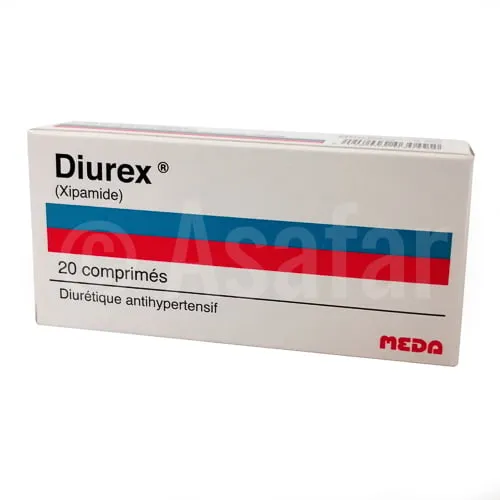
Table of Contents
- Patient Information Leaflet
- Introduction
- **Diurex 20 mg tablets**
- xipamide
- **Read the entire leaflet carefully before starting to take the medicine, as it contains important information for you.**
- 1. What Diurex is and what it is used for
- 2. What you need to know before starting to take Diurex
- **Do not take Diurex**
- **Warnings and precautions**
- **Children and adolescents**
- **Use of Diurex with other medicines**
- **Taking Diurex with food, drinks, and alcohol**
- **Use in athletes**
- **Pregnancy and lactation**
- **Driving and operating machinery**
- **Important information about some of Diurex's components**
- 3. How to take Diurex
- **Instructions for the correct administration of the preparation**
- **If you take more Diurex than you should**
- **If you forget to take Diurex**
- 4. Possible adverse effects
- 5. Storage of Diurex
- 6. Contents of the pack and other information
- **Composition of Diurex**
- **Appearance of the product and contents of the container**
- **Marketing Authorization Holder and Manufacturing Responsible Party**
Patient Information Leaflet
Introduction
Patient Information Leaflet
Diurex 20 mg tablets
xipamide
Read the entire leaflet carefully before starting to take the medicine, as it contains important information for you.
? Keep this leaflet, as you may need to read it again.
? If you have any questions, consult your doctor or pharmacist.
? This medicine has been prescribed for you only, and you should not give it to others, even if they have the same symptoms as you, since it could harm them.
? If you experience adverse effects, consult your doctor or pharmacist, even if they are adverse effects not listed in this leaflet. See section 4.
Leaflet contents
1.- What Diurex is and what it is used for
2.- What you need to know before taking Diurex
3.- How to take Diurex
4.- Possible side effects
5.- Storage of Diurex
6.- Contents of the pack and additional information
1. What Diurex is and what it is used for
Diurex belongs to a group of medicines called diuretics. Diuretics increase your need to urinate while simultaneously reducing the amount of water and salt in the body. Their use helps to lower and control blood pressure.
Diurex is used to treat high blood pressure (hypertension) and to remove excess fluid accumulated in the body due to various causes (edema).
2. What you need to know before starting to take Diurex
Do not take Diurex
? If you are allergic to xipamide, to other sulfonamide or thiazide derivatives, or to any of the other ingredients of this medicine (listed in section 6).
? If you have a severe liver disease.
? If you have severe renal insufficiency.
? If you have any of the following blood disorders: decreased potassium or sodium levels, or increased calcium levels, even while undergoing treatment.
? If you have gout, a condition characterized by excess uric acid in the blood.
? If you are pregnant or breastfeeding (see "Pregnancy and breastfeeding").
Warnings and precautions
? If you have any liver or kidney disease, inform your doctor before taking this medicine.
? If you experience any of the following conditions, stop taking the medicine and contact your doctor:
- Changes in blood pressure upon standing.
- Allergic reactions.
- Recurrent stomach discomfort.
- Acute inflammation of the pancreas (pancreatitis) or of the gallbladder (cholecystitis).
- Worsening of pre-existing muscle disorders.
- Inflammation of blood vessels (vasculitis).
- Diseases of the nervous system.
- Blood disorders (anemia, leucopenia, thrombocytopenia).
- Addison's disease.
? If you are diabetic or have high levels of uric acid in the blood, increased monitoring by your doctor may be necessary, and you may need to undergo periodic check-ups.
? Your doctor may request monitoring of sodium and potassium levels before and during treatment with this medicine, especially if you are over 65 years of age, have heart or liver disease, or are taking other medications.
? Inform your doctor beforehand if you have a parathyroid function disorder, such as hyperparathyroidism.
? If you experience a decrease in vision or eye pain, these could be symptoms of fluid accumulation in the vascular layer of the eye (choroidal effusion) or increased eye pressure, which may occur within a few hours to one week after taking Diurex.
Children and adolescents
The efficacy and safety of use in children have not been established. Therefore, the use of Diurex is not recommended in children and adolescents (under 18 years of age).
Use of Diurex with other medicines
Inform your doctor or pharmacist if you are taking, have recently taken, or might need to take any other medicines, including those obtained without a prescription, homeopathic medicines, herbal remedies, and other health-related products, as it may be necessary to discontinue treatment or adjust the dose of one of them.
It is especially important that you inform your doctor if you are taking any of the following medicines:
? Beta-blockers, ACE inhibitors, and other diuretics (used to treat high blood pressure).
? Lithium, for the treatment of manic-depressive disorder.
? Amiodarone, quinidine, and other drugs used to treat arrhythmias.
? Cardiac glycosides, organic nitrates, and vasodilators (used in heart diseases).
? Salicylates and non-steroidal anti-inflammatory drugs, for relief of pain and inflammation.
? Phenothiazines and tricyclic antidepressants, for the treatment of personality disorders and depression.
? Cyclosporine, tacrolimus (used in organ transplants).
? Cholestyramine and colestipol (used to reduce the amount of cholesterol and other fatty substances in the blood).
? Cytostatic agents (medicines for the treatment of neoplasms).
? Muscle relaxants.
? Corticosteroids.
? Metformin and other oral antidiabetic medicines.
? Iodinated contrast media.
? Calcium and its salts.
? Amphotericin (an antibiotic used to treat fungal infections).
? Laxatives.
Taking Diurex with food, drinks, and alcohol
Diurex tablets are taken orally, swallowed whole without chewing, with a glass of water, and may be taken either on an empty stomach or with food (see also "Instructions for the correct administration of the preparation").
During treatment with this medicine, you must not consume alcohol, as it may cause a drop in blood pressure leading to dizziness and/or fainting.
Use in athletes
Athletes are advised that this medicine contains a component that may produce a positive result in doping control tests.
Pregnancy and lactation
Consult your doctor or pharmacist before taking any medication.
Diurex should not be taken during pregnancy and breastfeeding. Therefore, if you are pregnant or breastfeeding, think you may be pregnant, or plan to become pregnant, stop taking this medicine and inform your doctor as soon as possible.
Driving and operating machinery
At the beginning of treatment with this medicine, your ability to drive vehicles and operate machinery may be reduced due to impaired reflexes, which could be intensified if you consume alcohol at the same time. Therefore, do not drive or operate potentially dangerous machinery until you have determined how you tolerate the medication.
Important information about some of Diurex's components
Diurex contains lactose. If your doctor has informed you of an intolerance to certain sugars, consult with him before taking this medicine.
This medicine contains less than 23 mg of sodium (1 mmol) per tablet; hence, it is essentially "sodium-free".
3. How to take Diurex
Follow exactly the instructions for use of this medicine given by your doctor or pharmacist. If in doubt, consult your doctor or pharmacist again. The recommended dose is:
? High blood pressure (hypertension): 1 tablet daily.
? Excessive fluid accumulation (edema): 2 tablets daily.
It is recommended to take the medicine in the morning, during or after breakfast.
In special situations (renal and/or hepatic impairment, congestive heart failure), dose adjustment may be required. Consult your doctor for advice on how to proceed in these cases.
Instructions for the correct administration of the preparation
Swallow the tablets whole, without chewing, with the help of a sufficient amount of liquid (for example, a glass of water). Remember to take your medication.
Your doctor will indicate the duration of your treatment with Diurex and may also adjust the dose if necessary. Do not change the dose prescribed by your doctor, do not stop the treatment without consulting your doctor first, and never stop abruptly, as this could be harmful to your health.
If you feel that the effect of Diurex is too strong or too weak, inform your doctor or pharmacist.
If you take more Diurex than you should
If for any reason you have taken more Diurex tablets than you should, you may experience signs and symptoms such as: nausea, vomiting, decreased blood pressure, cramps, dizziness, drowsiness, and urinary disorders (increased, decreased, or suppressed urine output).
In case of overdose or accidental ingestion, immediately consult your doctor or pharmacist, or call the Toxicology Information Service at telephone number 91 562 04 20, indicating the medication and the amount ingested.
If you forget to take Diurex
If you forget to take a dose, do not worry; wait until your next scheduled dose to take your next tablet, and then continue with your usual dosing regimen. Do not take a double dose to make up for forgotten doses.
If you have any other questions about the use of this medicine, ask your doctor or pharmacist.
4. Possible adverse effects
Like all medicines, this medicine can cause adverse effects, although not everyone experiences them.
The following adverse effects have been reported for Diurex. In such cases, you should inform your doctor as soon as possible:
Very common adverse effects (may affect more than 1 in 10 people):
- decrease in blood potassium levels, which may manifest as nausea, vomiting, reduced muscle strength, disturbances in heart rhythm, and changes in the electrocardiogram
- reduced urinary excretion of magnesium.
Common adverse effects (may affect up to 1 in 10 people):
- headache
- dizziness
- affective indifference (apathy)
- anxiety
- agitation
- palpitations
- decrease in blood pressure upon standing
- muscle cramps
- abdominal discomfort or pain
- diarrhea
- constipation
- dry mouth
- sweating
- fatigue
- increased uric acid with episodes of gout
- decreased levels of sodium and magnesium in blood
- dehydration.
Rare adverse effects (may affect up to 1 in 1,000 people):
- skin redness
- itching and/or urticaria
- abnormal increase in sensitivity to sunlight
- visual disturbances and worsening of existing myopia
- severe allergic reactions
- haemorrhagic inflammation of the pancreas
- increase in blood fats
- inflammation of the gallbladder.
Very rare adverse effects (may affect up to 1 in 10,000 people):
- yellowing of the skin and mucous membranes (jaundice)
- acute interstitial nephritis (inflammation of the renal tubules)
- blood test abnormalities, such as reductions in red blood cells and/or white blood cells and platelets (thrombocytopenia, leucopenia, agranulocytosis, aplastic anaemia).
Adverse effects of unknown frequency (cannot be estimated from available data):
- decreased vision or eye pain due to elevated pressure [possible signs of fluid accumulation in the vascular layer of the eye (choroidal effusion) or acute angle-closure glaucoma].
If you consider any of the adverse effects you experience to be severe, or if you notice any adverse effects not listed in this leaflet, consult your doctor or pharmacist.
Reporting of adverse effects
If you experience any type of adverse effect, consult your doctor or pharmacist, even if it is a possible adverse effect not listed in this leaflet. You may also report them directly through the Spanish Pharmacovigilance System for Human Medicinal Products. Website: www.notificaram.es
By reporting adverse effects, you can help provide more information on the safety of this medicine.
5. Storage of Diurex
Keep this medicine out of the sight and reach of children.
No special storage conditions are required.
Do not use this medicine after the expiry date stated on the packaging and blister after "EXP:". The expiry date refers to the last day of the month indicated.
Medicines should not be disposed of via wastewater or household waste. Dispose of unused medicines and their containers at the Sigre Point located at your pharmacy. If you have any doubts, ask your pharmacist how to properly dispose of unused medicines and their packaging. This will help protect the environment.
6. Contents of the pack and other information
Composition of Diurex
The active substance is xipamide. Each tablet contains 20 mg of xipamide.
The other components (excipients) are: lactose monohydrate, microcrystalline cellulose, povidone, talc, sodium carboxymethyl starch (potato), anhydrous colloidal silica, magnesium stearate, glycerol palmitostearate.
Appearance of the product and contents of the container
Diurex are white, flat, round, scored tablets. The score line is intended only to facilitate breaking the tablet if you have difficulty swallowing it whole, and should not be used to divide the tablet into equal doses. Available pack sizes contain 30, 60, and 500 tablets (clinical pack).
Not all pack sizes may be marketed.
Marketing Authorization Holder and Manufacturing Responsible Party
LACER, S.A. - Boters, 5
08290 Cerdanyola del Vallès
Barcelona – Spain
Date of the most recent review of this leaflet: 11/2020
Detailed and up-to-date information on this medicinal product is available on the website of
the Spanish Agency of Medicines and Medical Devices (AEMPS) http://www.aemps.gob.es/