Dexamethasone pos 1 mg/ml eye drops solution
Spain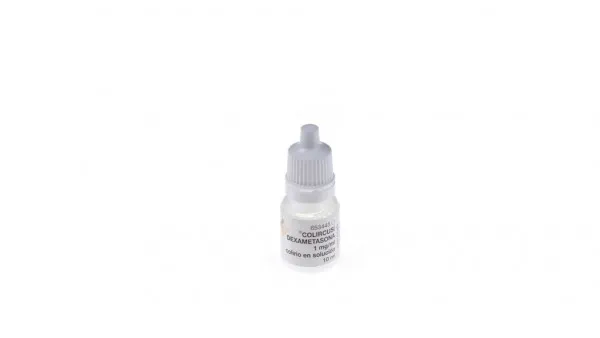
Table of Contents
- Package leaflet: Information for the user
- Introduction
- 1. What Dexamethasone POS is and what it is used for
- 2. What you need to know before using Dexamethasone POS
- 3. How to use Dexamethasone POS
- 4. Possible adverse effects
- 5. Storage of Dexamethasone POS
- 6. Package contents and additional information
Package leaflet: Information for the user
Introduction
Package leaflet: information for the patient
Dexametasona POS 1 mg/ml eye drops solution
Sodium metasulfobenzoate dexamethasone
Read the entire leaflet carefully before you start using this medicine, because it contains important information for you.
- Keep this leaflet, as you may need to read it again.
- If you have any questions, ask your doctor or pharmacist.
- This medicine has been prescribed for you only, and you should not give it to other people, even if they have the same symptoms as you, because it could harm them.
- If you experience any adverse effects, consult your doctor or pharmacist, even if they are adverse effects not listed in this leaflet. See section 4.
Contents of the leaflet
- What Dexametasona POS is and what it is used for
- What you need to know before using Dexametasona POS
- How to use Dexametasona POS
- Possible adverse effects
- How to store Dexametasona POS
- Contents of the pack and other information
1. What Dexamethasone POS is and what it is used for
Dexamethasone POS is a glucocorticoid for local treatment of the eye.
Dexamethasone POS is used to treat non-infectious inflammatory conditions of the eye that respond to corticosteroids, such as eye allergies, inflammatory disorders of the conjunctiva, corneal inflammations, and anterior segment inflammation; as well as postoperative irritations.
2. What you need to know before using Dexamethasone POS
Do not use Dexamethasone POS
- if you are allergic to dexamethasone sodium metasulfobenzoate or to any of the other ingredients of this medicine (listed in section 6),
- in case of acute herpes simplex (dendritic keratitis) and other viral eye infections,
- in case of bacterial and/or fungal eye infections without appropriate antibiotic therapy,
- in case of corneal injuries or ulcers,
- in case of narrow-angle glaucoma and open-angle glaucoma,
- in case of immunosuppression caused by diseases or medications.
Warnings and precautions
Consult your doctor or pharmacist before starting to use Dexamethasone POS.
If you have previously had a herpes simplex infection or eye surgery, this medicine should only be used under strict medical supervision.
When this medicine is used for 10 days or longer, your doctor should regularly examine your intraocular pressure and cornea.
To avoid possible systemic absorption, especially in young children, press your finger against the tear duct for 2 to 3 minutes after applying this medicine.
Talk to your doctor if you experience swelling and weight gain around the trunk and face, as these are usually the first signs of a condition called Cushing's syndrome. Suppression of adrenal gland function may develop after stopping prolonged or intensive treatment with this medicine. Speak with your doctor before stopping treatment on your own. These risks are particularly important in children and in patients taking a medicine called ritonavir or cobicistat.
Contact your doctor if you experience blurred vision or other visual disturbances.
Using Dexamethasone POS with other medicines
Inform your doctor or pharmacist if you are taking, have recently taken, or might need to take any other medicines.
Concomitant use of this medicine with certain drugs affecting the nervous system, such as atropine, may cause a further increase in intraocular pressure.
Inform your doctor if you are taking ritonavir or cobicistat, as this may increase the amount of dexamethasone in your blood.
Warning:
When treating concomitantly with other topical ophthalmic medicines, there should be a 15-minute interval between applications of the different products. Ointments should always be administered last.
Pregnancy and breastfeeding
If you are pregnant or breastfeeding, think you may be pregnant, or plan to become pregnant, consult your doctor or pharmacist before using this medicine.
There are no validated data on the use of this medicine during pregnancy. Since glucocorticoids may cause malformations in animal studies, this medicine should only be used during pregnancy if there is a strict medical indication.
It is unknown whether topical application of this medicine may lead to detectable levels of dexamethasone in breast milk via systemic absorption. With systemic administration of glucocorticoids, it is known that detectable amounts pass into breast milk and may cause growth disturbances in the infant. Therefore, this medicine should only be used during breastfeeding if there is a strict medical indication.
Driving and use of machines
Do not drive immediately after applying this medicine, as it reduces vision for a short period of time and therefore also reduces reaction time while driving. The use of electric tools or machinery is also temporarily not permitted.
Dexamethasone POS contains
This medicine contains dexamethasone sodium metasulfobenzoate as the active substance, which may cause allergic reactions. Inform your doctor accordingly if you have any allergies.
Remove your contact lenses before applying this medicine and wait at least 20 minutes before reinserting them.
3. How to use Dexamethasone POS
Follow exactly the instructions for administering this medicine as given by your doctor or pharmacist. If in doubt, consult your doctor or pharmacist again.
Unless otherwise instructed by your doctor, the recommended dose is:
1 drop into the conjunctival sac 3–5 times daily (more frequently in acute cases).
To ensure the therapeutic effect, treatment must not be stopped earlier than prescribed. Your doctor will determine the duration of treatment. If treatment lasts longer than 2 weeks, your eyes should be examined regularly by your doctor. In any case, prolonged treatment without medical supervision should be avoided.
How to use Dexamethasone POS
Wash your hands.
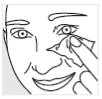
Step 1: Take a clean tissue and gently wipe away the tear fluid from the lower eyelid area.
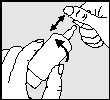
Step 2: Remove the cap before each application. Before the first application of Dexamethasone POS, hold the container vertically with the tip pointing downwards and press the base until the first drop appears at the nozzle. The container is now ready for use.
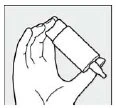
Step 3: Hold the container with the dropper pointing downwards, so that your thumb presses on the shoulder of the container and the other fingers are placed at the base.
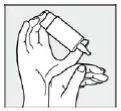
Step 4: Rest the hand holding the COMOD® container against your other hand, as shown.
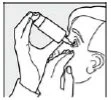
Step 5: Tilt your head slightly backwards, gently pull down the lower eyelid and firmly and quickly press the base of the container. This activates the mechanism to release one drop. Thanks to the special valve technology of the COMOD® system, the size and speed of the drop are identical regardless of the pressure applied. During application, avoid contact between the tip of the container and the eye or skin. Close your eyes slowly so that the liquid spreads evenly over the eye surface.
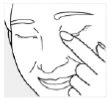
Step 6: After applying Dexamethasone POS, blink several times to distribute the drop over the entire ocular surface. Then remove any excess medication.
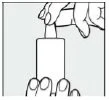
Step 7:
After application, immediately replace the cap. Check that the dropper tip is dry.
Repeat this procedure in the other eye.
Space the applications of Dexamethasone POS evenly throughout the day.
If you use more Dexamethasone POS than you should
To date, no symptoms of intoxication due to ocular overdose have been reported. In case of topical overdose, rinse the eye with water. If accidental oral ingestion of the medicine occurs (e.g., in children), drink water (½ glass) to dilute it. Normally, no further measures are required. However, in the case of young children, you should consult a doctor.
In case of overdose or accidental ingestion, contact your doctor or pharmacist immediately or call the Toxicology Information Service at telephone number 91 562 04 20, stating the name of the medicine and the amount ingested.
If you forget to use Dexamethasone POS
Do not use a double dose, but apply the same amount as soon as possible, following the frequency described above or as prescribed by your doctor.
If you have any further questions about the use of this medicine, ask your doctor or pharmacist.
4. Possible adverse effects
Like all medicines, this medicine may cause adverse effects, although not everyone experiences them.
The following frequency categories are defined for the assessment of adverse effects:
Very common: more than 1 in 10 patients treated
Common: 1 to 10 in 100 patients treated
Uncommon: 1 to 10 in 1,000 patients treated
Rare: 1 to 10 in 10,000 patients treated
Very rare: less than 1 in 10,000 patients treated
Frequency not known: cannot be estimated from available data
The frequency of the adverse effects listed below is not known.
Hormonal problems: increased body hair growth (particularly in women), muscle weakness and wasting, purple stretch marks on the skin, increased blood pressure, irregular or absent menstrual periods, changes in protein and calcium levels, stunted growth in children and adolescents, swelling and weight gain of the body and face (known as "Cushing's syndrome") (see section 2).
Eye disorders
Long-term treatment may cause increased intraocular pressure in patients with particular susceptibility. Therefore, regular monitoring of intraocular pressure is advisable. In addition, long-term treatment may lead to irreversible lens opacity (cataract).
A pre-existing infection may be masked or worsened. At the same time, the possibility of a secondary infection should be considered during long-term treatment, especially if signs of chronic infection persist despite treatment. In diseases causing corneal thinning, treatment may lead to perforations.
Cases of allergic reactions such as skin irritation with redness and itching of the eye (contact dermatitis, dermatoconjunctivitis, and eyelid eczema) have been reported.
Eye drops containing dexamethasone slow wound healing. If cortisone-containing eye drops are used after cataract surgery, wound healing may be delayed. Long-term treatment with this medicine may also delay wound healing.
After administration of glucocorticoid-containing eye drops, hypersensitivity reactions may develop, with inflammatory symptoms, corneal ulceration, pupillary dilation, accommodation disorders (focusing), and ptosis (drooping of the upper eyelid).
In addition, temporary eye burning and itching, eye irritation, blurred vision, sensation of foreign body, and allergic reactions may occur.
Reporting of adverse effects:
If you experience any adverse effect, consult your doctor, pharmacist, or nurse, even if they are possible adverse effects not listed in this leaflet. You may also report them directly via the Spanish Pharmacovigilance System for Human Medicines: https://www.notificaram.es. By reporting adverse effects, you can help provide more information on the safety of this medicine.
5. Storage of Dexamethasone POS
Keep this medicine out of the sight and reach of children.
Do not use this medicine after the expiry date stated on the packaging after EXP. The expiry date is the last day of the month indicated.
Do not store above 25 °C.
Information on the shelf life after first opening:
Dexamethasone POS can be used up to 4 weeks after first opening.
Medicines should not be disposed of via wastewater or household waste. Dispose of unused containers and medicines at the SIGRE point in your pharmacy. If in doubt, ask your pharmacist how to dispose of containers and medicines you no longer need. This will help protect the environment.
6. Package contents and additional information
Composition of Dexamethasone POS
- The active substance is dexamethasone metasulfobenzoate sodium 1.0 mg/mL.
- The other components are hypromellose, glycerol, and water for injections.
Appearance of the product and contents of the container
Dexamethasone POS is presented in a multidose container with an air-free pump system containing 5 mL of eye drops solution, clear and colourless. Each carton contains one container.
The filling of the container is carried out under regular control so that underfilling with a smaller amount of solution can be excluded.
Marketing Authorization Holder and Manufacturer
Marketing Authorization Holder
BRILL PHARMA, S.L.
C/ Munner, 8
08022, Barcelona
Spain
Manufacturer
URSAPHARM Arzneimittel GmbH
Industriestraße 35,
66129 Saarbrücken,
Germany
Date of the most recent revision of this leaflet: October 2019
Detailed and up-to-date information on this medicinal product is available on the website of the Spanish Agency of Medicines and Medical Devices (AEMPS) http://www.aemps.gob.es/