Desloratadine Sandoz 0.5 mg/1 ml oral solution EFG
Spain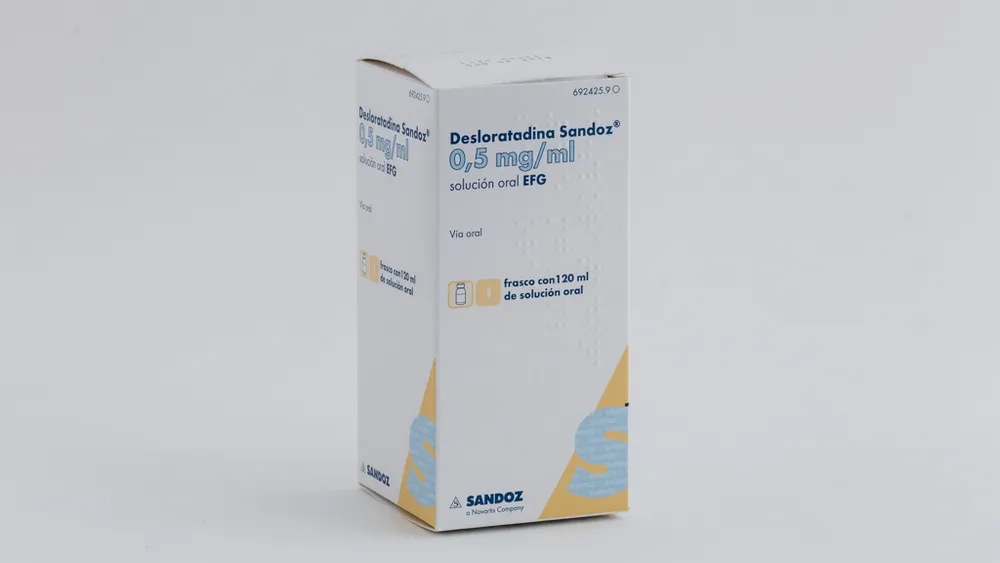
Table of Contents
- Package leaflet: Information for the user
- Introduction
- 1. What Desloratadine Sandoz is and what it is used for
- 2. What you need to know before starting to take Desloratadine Sandoz
- 3. How to take Desloratadine Sandoz
- 4. Possible adverse effects
- 5. Storage of Desloratadine Sandoz
- 6. Contents of the pack and other information
Package leaflet: Information for the user
Introduction
Package leaflet: information for the patient
Desloratadine Sandoz 0.5 mg/ml oral solution EFG
Read the entire leaflet carefully before you start taking this medicine, because it contains important information for you.
- Keep this leaflet; you may need to read it again.
- If you have any questions, ask your doctor, pharmacist or nurse.
- This medicine has been prescribed for you only, and you should not give it to other people, even if they have the same symptoms as you, because it could harm them.
- If you experience any adverse reactions, consult your doctor, pharmacist or nurse, even if they are adverse reactions not listed in this leaflet. See section 4.
Contents of the leaflet
- What Desloratadine Sandoz is and what it is used for
- What you need to know before taking Desloratadine Sandoz
- How to take Desloratadine Sandoz
- Possible side effects
- How to store Desloratadine Sandoz
- Contents of the pack and other information
1. What Desloratadine Sandoz is and what it is used for
What is Desloratadine Sandoz
Desloratadine Sandoz contains desloratadine, which is an antihistamine.
How Desloratadine Sandoz works
Desloratadine Sandoz oral solution is an antiallergy medicine that does not cause drowsiness. It helps control the allergic reaction and its symptoms.
When Desloratadine Sandoz should be used
Desloratadine Sandoz oral solution relieves symptoms associated with allergic rhinitis (inflammation of the nasal passages caused by an allergy, for example, hay fever or dust mite allergy) in adults, adolescents, and children from 1 year of age. These symptoms include sneezing, runny or itchy nose, itching of the palate, and eye itching, redness, or watering.
Desloratadine is also used to relieve symptoms associated with urticaria (a skin condition caused by an allergy). These symptoms include itching and skin rash (hives).
Relief from these symptoms lasts for a full day and helps you continue your daily activities and maintain normal sleep periods.
2. What you need to know before starting to take Desloratadine Sandoz
Do not take Desloratadine Sandoz
- if you are allergic to desloratadine or to any of the other ingredients of this medicine (listed in section 6) or to loratadine.
Warnings and precautions
Talk to your doctor, pharmacist, or nurse before taking Desloratadine Sandoz:
- if you or a family member has a history of seizures,
- if you have impaired kidney function.
Use in children and adolescents
Do not give this medicine to children under 1 year of age.
Taking Desloratadine Sandoz with other medicines
There are no known interactions between desloratadine and other medicines.
Tell your doctor or pharmacist if you are taking, have recently taken, or might need to take any other medicines.
Taking Desloratadine Sandoz with food, drinks, and alcohol
Desloratadine may be taken with or without food.
Be cautious when taking desloratadine with alcohol.
Pregnancy, breastfeeding, and fertility
If you are pregnant or breastfeeding, think you might be pregnant, or are planning to become pregnant, consult your doctor or pharmacist before using this medicine.
It is not recommended to take desloratadine if you are pregnant or breastfeeding.
Fertility
There are no data available regarding male or female fertility.
Driving and using machines
At the recommended dose, this medicine is not expected to affect your ability to drive or operate machinery. Although most people do not experience drowsiness, it is recommended not to perform activities requiring mental alertness, such as driving a car or operating machinery, until you have determined how you personally respond to the medicine.
Desloratadine Sandoz contains sorbitol, propylene glycol, and sodium
This medicine contains up to 97.5 mg of sorbitol per ml of oral solution. Sorbitol is a source of fructose. If your doctor has told you (or your child) that you have an intolerance to certain sugars, or if you (or your child) have been diagnosed with hereditary fructose intolerance (HFI), a rare genetic disorder in which the patient cannot break down fructose, consult your doctor before taking this medicine.
This medicine contains 102.3 mg of propylene glycol per ml of oral solution.
This medicine contains 3.85 mg of sodium (a main component of table/cooking salt) per ml of oral solution. This corresponds to 0.19% of the maximum daily intake of sodium recommended for an adult.
3. How to take Desloratadine Sandoz
Follow exactly the instructions for using this medicine as given by your doctor or pharmacist. If in doubt, consult your doctor or pharmacist again.
Children
Children aged 1 to 5 years:
The recommended dose is 2.5 ml (half a 5 ml spoonful) of oral solution once daily.
Children aged 6 to 11 years:
The recommended dose is 5 ml (one 5 ml spoonful) of oral solution once daily.
Adults and adolescents (12 years of age and older):
The recommended dose is 10 ml (two 5 ml spoonfuls) of oral solution once daily.
If the desloratadine oral solution bottle comes with an oral dosing syringe, you may alternatively use it to administer the appropriate amount of oral solution.
This medicine is for oral use.
Swallow the dose of oral solution, and then drink a little water. You may take this medicine with or without food.
How to measure the dose
This medicine comes with either a dosing spoon marked at 2.5 ml and 5 ml doses, or a 5 ml dosing syringe marked every 0.5 ml. To measure the dose of medicine, use the syringe as follows:
- Remove the cap and keep it in a safe place.
- Insert the dosing syringe into the bottle of solution.
- Pull back the syringe plunger to measure the required dose.
- Remove the dosing syringe from the bottle and recap it.
If you see air bubbles in the dosing syringe after withdrawing the required dose of oral solution, turn the syringe upside down with the tip pointing upwards. This way, the air will move to the tip of the syringe. Pull the plunger back slightly, then gently push it forward again to remove the bubbles. Do not worry if tiny bubbles remain.
Consult your doctor or pharmacist if you have any doubts about how to measure the correct amount of medicine.
Administering the medicine using the syringe
- Make sure the child is sitting upright.
- Carefully place the tip of the syringe into the child's mouth. Direct the tip of the syringe towards the inside of the cheek.
- Slowly push the syringe plunger: do not squirt the medicine out rapidly. The medicine should be released as a steady stream into the child's mouth.
- Allow the child time to swallow the medicine.
Regarding the duration of treatment, your doctor will determine the type of allergic rhinitis you have and how long you should take desloratadine oral solution.
- If your allergic rhinitis is intermittent (symptoms present for less than 4 days per week or for less than 4 weeks), your doctor will recommend a treatment regimen based on an assessment of your medical history.
- If your allergic rhinitis is persistent (symptoms present for 4 or more days per week and for more than 4 weeks), your doctor may recommend long-term treatment.
- For urticaria, the duration of treatment may vary from patient to patient, and you should therefore follow your doctor's instructions.
If you take more Desloratadine Sandoz than you should
Take Desloratadine Sandoz only as directed by your doctor. Accidental overdose is not expected to cause serious problems. If you have taken more desloratadine oral solution than you should, contact your doctor, pharmacist, or call the Toxicology Information Service at telephone number: 91 562 04 20, indicating the medicine and the amount taken.
If you forget to take Desloratadine Sandoz
If you forget to take your dose at the scheduled time, take it as soon as possible, and then continue with your usual dosing schedule.
Do not take a double dose to make up for forgotten doses.
If you stop treatment with Desloratadine Sandoz
If you have any further questions about the use of this medicine, ask your doctor, pharmacist, or nurse.
4. Possible adverse effects
Like all medicines, this medicine can cause adverse effects, although not everyone experiences them.
During the marketing of desloratadine, very rare cases of serious allergic reactions (difficulty breathing, wheezing, itching, hives, and swelling) have been reported. If you experience any of these serious adverse effects, stop taking this medicine immediately and see your doctor without delay.
In clinical trials involving most children and adults, adverse effects with desloratadine were approximately the same as with a solution or tablet containing no active ingredient. However, the frequent adverse effects in children under 2 years of age were diarrhea, fever, and insomnia, whereas in adults, fatigue, dry mouth, and headache were reported more frequently than with a tablet containing no active ingredient.
In clinical trials with desloratadine, the following adverse effects were reported as:
Children
Common in children under 2 years of age: may affect up to 1 in 10 children
- Diarrhea,
- fever,
- insomnia.
Adults
Common: may affect up to 1 in 10 people
- Fatigue,
- dry mouth,
- headache.
During the marketing of desloratadine, the following adverse effects have been reported as:
Adults
Very rare: may affect up to 1 in 10,000 people
- Serious allergic reactions,
- skin rash,
- strong or irregular heartbeats,
- rapid heartbeats,
- stomach pain,
- nausea,
- vomiting,
- upset stomach,
- diarrhea,
- dizziness,
- somnolence,
- difficulty sleeping,
- muscle pain,
- hallucinations,
- seizures,
- agitation with increased body movement,
- liver inflammation,
- abnormalities in liver function tests.
Frequency not known: frequency cannot be estimated from the available data.
- Abnormal behaviour,
- aggression,
- depressed mood,
- dry eyes,
- unusual weakness,
- yellowing of the skin and/or eyes,
- increased sensitivity of the skin to sunlight, even on cloudy days, and to ultraviolet light, for example, ultraviolet light from a sunbed,
- change in the way the heart beats,
- weight gain,
- increased appetite.
Children
Frequency not known: frequency cannot be estimated from the available data.
- Abnormal behaviour,
- aggression,
- slow heart rate,
- change in the way the heart beats,
- weight gain,
- increased appetite.
Reporting of adverse effects
If you experience any adverse effect, talk to your doctor, pharmacist, or nurse, even if it is a possible adverse effect not listed in this leaflet. You can also report them directly via the Spanish Pharmacovigilance System for Human Medicines: https:///www.notificaram.es. By reporting adverse effects, you can help provide more information on the safety of this medicine.
5. Storage of Desloratadine Sandoz
Keep this medicine out of sight and reach of children.
Do not use this oral medicine after the expiry date stated on the carton and on the bottle after EXP/CAD. The expiry date refers to the last day of the month indicated.
No special storage conditions are required.
Expiry after first opening of the bottle: 2 months.
If you notice any changes in the appearance of the oral solution, do not use this medicine.
Medicines must not be disposed of via wastewater or household waste. Dispose of containers and unused medicines at the SIGRE collection point at your pharmacy. If you have any doubts, ask your pharmacist how to dispose of unused containers and medicines. This will help protect the environment.
6. Contents of the pack and other information
Composition of Desloratadine Sandoz
- The active substance is desloratadine.
Each ml of oral solution contains 0.5 mg of desloratadine.
- The other components of the oral solution are: non-crystallizing liquid sorbitol (E-420), propylene glycol (E-1520), citric acid monohydrate, sodium citrate, hypromellose 2910, sucralose, disodium edetate, tutti-fruti flavour, and purified water.
Appearance of the product and contents of the container
Clear, colourless solution.
The oral solution is contained in amber glass type III bottles, closed with a polypropylene screw cap with child-resistant closure (C/R), which has multiple layers of polyethylene, and is included in a cardboard outer packaging.
All pack sizes include a CE 0373 measuring spoon with markings for 2.5 ml and 5 ml doses, or a CE 0373 dosing syringe with a 5 ml capacity, marked in 0.5 ml increments.
Pack sizes
50, 60, 100, 120 and 150 ml of oral solution.
Only some pack sizes may be commercially available.
Marketing Authorization Holder and Manufacturing Responsible Party
Marketing Authorization Holder
Sandoz Farmacéutica, S.A.
Centro Empresarial Parque Norte
Edificio Roble
C/ Serrano Galvache, 56
28033 Madrid
Spain
Manufacturing Responsible Party
Lek Pharmaceuticals d.d.
Verovskova 57,
1526 Ljubljana,
Slovenia
or
Salutas Pharma GmbH
Otto-von-Guericke-Allee 1,
39179 Barleben
Germany
or
Lek S.A.
Ul. Podlipie 16 C,
95 010 Strykow
Poland
or
S.C. Sandoz SRL
Str. Livezeni, 7A
RO-540472 Târgu Mureș
Romania
or
Salutas Pharma GmbH
Dieselstrasse, 5
Gerlingen-70839
Germany
or
Balkanpharma Troyan AD
1 Krayrechna Str.
Troyan 5600
Bulgaria
This medicinal product is authorized in the European Economic Area member states under the following names:
Denmark: Desloratadine Sandoz
Belgium: Desloratadin Sandoz 0.5 mg/ml drank
Cyprus: Desloratadine Sandoz
France: Desloratadine Sandoz 0.5 mg/ml solution buvable
Italy: Desloratadina Sandoz
Netherlands: Desloratadine Sandoz 0.5 mg/ml drank
Portugal: Desloratadina Sandoz
Romania: Desloratadina Sandoz 0.5 mg/ml solutie orala
Date of the most recent review of this leaflet: July 2022
Detailed and up-to-date information on this medicinal product is available on the website of the Spanish Agency of Medicines and Health Products (AEMPS) http://www.aemps.gob.es/