Dasselta 5 mg film-coated tablets EFG
Spain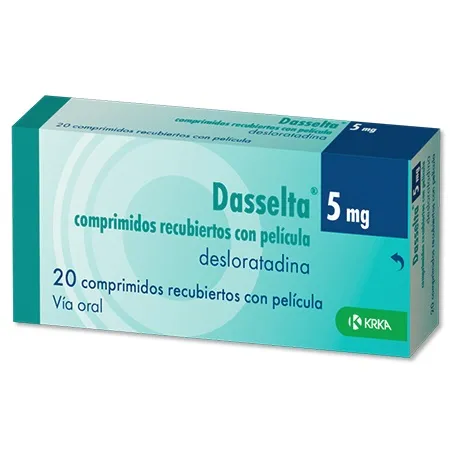
Table of Contents
Package leaflet: Information for the user
Introduction
Package leaflet: information for the user
Dasselta 5 mg film-coated tablets
desloratadine
Read the entire leaflet carefully before you start taking this medicine, because it contains important information for you.
- Keep this leaflet, as you may need to read it again.
- If you have any questions, ask your doctor or pharmacist.
- This medicine has been prescribed for you only, and you should not give it to other people, even if they have the same symptoms as you, because it may harm them.
- If you experience any adverse effects, consult your doctor or pharmacist, even if they are adverse effects not listed in this leaflet. See section 4.
Leaflet contents
- What Dasselta is and what it is used for
- What you need to know before taking Dasselta
- How to take Dasselta
- Possible side effects
- How to store Dasselta
- Contents of the pack and other information
1. What Dasselta is and what it is used for
What Dasselta is
Dasselta contains desloratadine, which is an antihistamine.
How Dasselta works
Dasselta is an antiallergic medicine that does not cause drowsiness. It helps control the allergic reaction and its symptoms.
When Dasselta should be used
Dasselta relieves symptoms associated with allergic rhinitis (inflammation of the nasal passages caused by an allergy, for example, hay fever or dust mite allergy) in adults and adolescents aged 12 years and older. These symptoms include sneezing, runny or itchy nose, itching of the palate, and itchy, red or watery eyes.
Dasselta is also used to relieve symptoms associated with urticaria (a skin condition caused by an allergy). These symptoms include itching and skin rashes.
Relief from these symptoms lasts for a full day, helping you continue your daily activities and maintain normal sleep periods.
2. What you need to know before starting to use Dasselta
Do not take Dasselta
- if you are allergic to desloratadine or to any of the other ingredients of this medicine (listed in section 6) or to loratadina.
Warnings and precautions
Talk to your doctor or pharmacist before starting to take Dasselta:
- if you have impaired renal function.
- if you have a personal or family history of seizures.
Children and adolescents
Do not give this medicine to children under 12 years of age.
Taking Dasselta with other medicines
There are no known interactions between Dasselta and other medicines.
Tell your doctor or pharmacist if you are taking, have recently taken, or might need to take any other medicines.
Taking Dasselta with food, drinks and alcohol
Dasselta can be taken regardless of meals.
Be cautious when taking Dasselta with alcohol.
Pregnancy, breastfeeding and fertility
If you are pregnant or breastfeeding, think you might be pregnant, or are planning to become pregnant, consult your doctor or pharmacist before using this medicine.
It is not recommended to take Dasselta if you are pregnant or breastfeeding.
Fertility
There are no data available regarding male and female fertility.
Driving and using machines
At the recommended dose, this medicine is not expected to affect your ability to drive or operate machinery. Although most people do not experience drowsiness, it is recommended not to perform activities requiring mental alertness, such as driving a car or operating machinery, until you have determined your individual response to the medicine.
Dasselta contains lactose and sodium
If your doctor has informed you of an intolerance to certain sugars, consult with him before taking this medicine.
This medicine contains less than 1 mmol of sodium (23 mg) per tablet; i.e., essentially "sodium-free".
3. How to take Dasselta
Follow exactly the instructions for use of this medicine provided by your doctor or pharmacist. If in doubt, consult your doctor or pharmacist again.
Adults and adolescents aged 12 years and older
The recommended dose is one tablet once daily with water, with or without food.
This medicine is for oral use.
Swallow the tablet whole.
Regarding the duration of treatment, your doctor will determine the type of allergic rhinitis you have and how long you should take Dasselta.
If you have intermittent allergic rhinitis (symptoms present for less than 4 days per week or for less than 4 weeks), your doctor will recommend a treatment regimen based on an assessment of your medical history.
If you have persistent allergic rhinitis (symptoms present for 4 or more days per week and for more than 4 weeks), your doctor may recommend long-term treatment.
For urticaria, the duration of treatment may vary from patient to patient, so you should follow your doctor's instructions.
If you take more Dasselta than you should
Take Dasselta only as directed by your doctor. Accidental overdose is not expected to cause serious adverse effects. However, if you take more Dasselta than prescribed, inform your doctor or pharmacist immediately.
If you forget to take Dasselta
If you forget to take your dose at the scheduled time, take it as soon as possible and then continue with your usual dosing schedule. Do not take a double dose to make up for missed doses.
If you have any further questions about the use of this medicine, ask your doctor or pharmacist.
4. Possible adverse effects
Like all medicines, this medicine can cause adverse effects, although not everyone will experience them.
During the marketing of desloratadine, very rare cases of serious allergic reactions (difficulty breathing, wheezing, itching, hives, and swelling) have been reported. If you experience any of these serious adverse effects, stop taking this medicine immediately and consult your doctor without delay.
In clinical trials in adults, adverse effects were approximately the same as with a placebo tablet. However, fatigue, dry mouth, and headache were reported more frequently than with a placebo tablet. In adolescents, headache was the most frequently reported adverse reaction.
In clinical trials with desloratadine, the following adverse effects were reported as:
Common: the following may affect up to 1 in 10 people
- fatigue
- dry mouth
- headache
Adults
During the marketing of desloratadine, the following adverse effects were reported as:
Very rare: the following may affect up to 1 in 10,000 people
- serious allergic reactions
- skin rash
- strong or irregular heartbeats
- rapid heartbeats
- stomach pain
- feeling sick (nausea)
- vomiting
- upset stomach
- diarrhoea
- dizziness
- somnolence
- difficulty sleeping
- muscle pain
- hallucinations
- seizures
- agitation with increased body movement
- liver inflammation
- abnormalities in liver function tests
Frequency not known: frequency cannot be estimated from the available data
- unusual weakness
- yellowing of the skin and/or eyes
- increased sensitivity of the skin to sunlight, even on cloudy days, and to ultraviolet light, for example, ultraviolet light from a sunbed
- changes in the way the heart beats
- abnormal behaviour
- aggression
- weight gain
- increased appetite
- depressed mood
- dry eyes
Children
Frequency not known: frequency cannot be estimated from the available data
- slow heartbeat
- change in the way the heart beats
- abnormal behaviour
- aggression
Reporting of adverse effects
If you experience any type of adverse effect, consult your doctor, pharmacist, or nurse, even if it is a possible adverse effect not listed in this leaflet. You can also report them directly through the national reporting system included in Appendix V. By reporting adverse effects, you can help provide more information on the safety of this medicine.
5. Storage of Dasselta
Keep this medicine out of the sight and reach of children.
Do not use this medicine after the expiry date stated on the packaging after "EXP". The expiry date is the last day of the month indicated.
Store in the original packaging to protect it from moisture.
Validity period after first opening of the tablet container: 3 months.
Medicines should not be disposed of via wastewater drains or household waste. Ask your pharmacist how to dispose of medicines and packaging that you no longer need. This will help protect the environment.
6. Contents of the pack and other information
Composition of Dasselta
- The active substance is desloratadine. Each film-coated tablet contains 5 mg of desloratadine.
- The other components in the tablet core are: microcrystalline cellulose (E460), hypromellose (E464), hydrochloric acid (E507) (for pH adjustment), sodium hydroxide (E524) (for pH adjustment), corn starch, lactose monohydrate (see section 2 “Dasselta contains lactose and sodium”), and talc (E553b).
- The other components of the tablet coating are: hypromellose (E464), macrogol, lactose monohydrate (see section 2 “Dasselta contains lactose and sodium”), titanium dioxide (E171), and indigo carmine (E132).
Appearance of the product and contents of the pack
Film-coated tablets, light blue, round, bevelled-edged (diameter: 6.5 mm, thickness: 2.3–3.5 mm).
Dasselta is available in cardboard boxes containing 7, 10, 20, 30, 50, 90 and 100 film-coated tablets in blisters, and in a container with 250 film-coated tablets.
Only certain pack sizes may be marketed.
Marketing Authorization Holder
KRKA, d.d., Novo mesto, Šmarješka cesta 6, 8501 Novo mesto, Slovenia
Manufacturer
KRKA, d.d., Novo mesto, Šmarješka cesta 6, 8501 Novo mesto, Slovenia
TAD Pharma GmbH, Heinz-Lohmann-Straße 5, 27472 Cuxhaven, Germany
For more information about this medicinal product, please contact the local representative of the Marketing Authorization Holder:
Belgium/Belgium/Belgium KRKA Belgium, SA. Tel/Tel: + 32 (0) 487 50 73 62 | Lithuania UAB KRKA Lietuva Tel: + 370 5 236 27 40 |
| Luxembourg/Luxembourg KRKA Belgium, SA. Tel/Tel: + 32 (0) 487 50 73 62 (BE) |
Czech Republic KRKA CR, s.r.o. Tel: + 420 (0) 221 115 150 | Hungary KRKA Magyarország Kereskedelmi Kft. Tel.: + 36 (1) 355 8490 |
Denmark KRKA Sverige AB Tlf: + 46 (0)8 643 67 66 (SE) | Malta
Tel: + 356 21 445 885 |
Germany TAD Pharma GmbH Tel: + 49 (0) 4721 606-0 | Netherlands KRKA Belgium, SA. Tel: + 32 (0) 487 50 73 62 (BE) |
Estonia KRKA, d.d., Novo mesto Estonia branch Tel: + 372 (0) 6 671 658 | Norway KRKA Sverige AB Tlf: + 46 (0)8 643 67 66 (SE) |
Greece KRKA ELLAS EPE Tel: + 30 2100101613 | Austria KRKA Pharma GmbH, Vienna Tel: + 43 (0)1 66 24 300 |
Spain KRKA Farmacéutica, S.L. Tel: + 34 911 61 03 80 | Poland KRKA-POLSKA Sp. z o.o. Tel.: + 48 (0)22 573 7500 |
France KRKA France Eurl Tel: + 33 (0)1 57 40 82 25 | Portugal KRKA Farmacêutica, Sociedade Unipessoal Lda. Tel: + 351 (0)21 46 43 650 |
Croatia KRKA - FARMA d.o.o. Tel: + 385 1 6312 100 | Romania KRKA Romania S.R.L., Bucharest Tel: + 4 021 310 66 05 |
Ireland KRKA Pharma Dublin, Ltd. Tel: + 353 1 413 3710 | Slovenia KRKA, d.d., Novo mesto Tel: + 386 (0) 1 47 51 100 |
Iceland LYFIS ehf. Tel: + 354 534 3500 | Slovakia KRKA Slovensko, s.r.o. Tel: + 421 (0) 2 571 04 501 |
Italy KRKA Farmaceutici Milano S.r.l. Tel: + 39 02 3300 8841 | Finland KRKA Finland Oy Puh/Tel: + 358 20 754 5330 |
Cyprus KI.PA. (PHARMACAL) LIMITED Tel: + 357 24 651 882 | Sweden KRKA Sverige AB Tel: + 46 (0)8 643 67 66 (SE) |
Latvia KRKA Latvija SIA Tel: + 371 6 733 86 10 | United Kingdom (Northern Ireland) KRKA Pharma Dublin, Ltd. Tel: + 353 1 413 3710 |
Date of the most recent review of this leaflet:
Detailed information on this medicine is available on the website of the European Medicines Agency: http://www.ema.europa.eu.