Daivonex 50 micrograms/g cream
Spain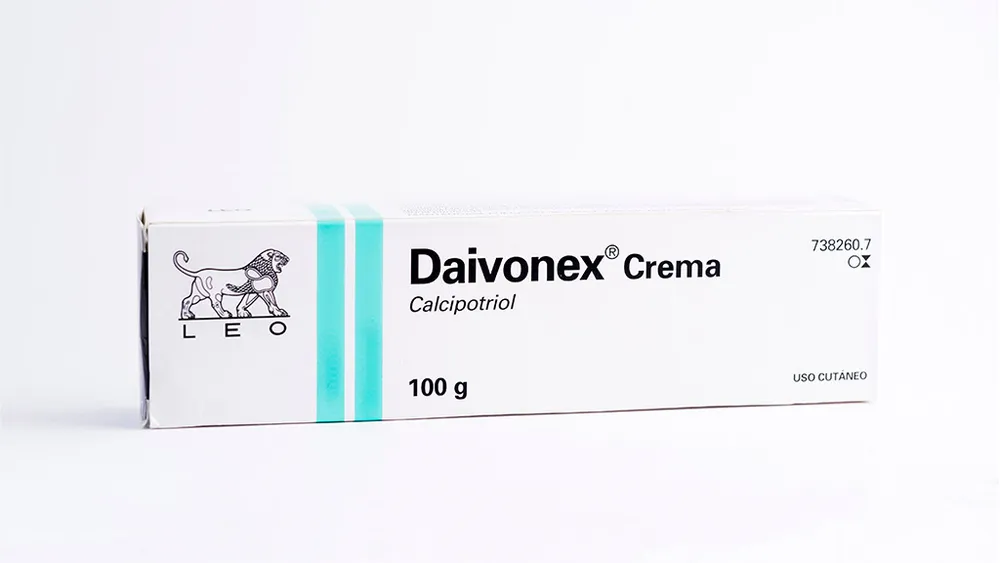
Table of Contents
Package leaflet: Information for the user
Introduction
Package leaflet: information for the user
Daivonex 50 micrograms/g cream
calcipotriol
Read the entire leaflet carefully before you start using this medicine, because it contains important information for you.
- Keep this leaflet, as you may need to read it again.
- If you have any questions, ask your doctor or pharmacist.
- This medicine has been prescribed for you only, and you should not give it to other people, even if they have the same symptoms as you, because it could harm them.
- If you experience any adverse effects, consult your doctor or pharmacist, even if they are adverse effects not listed in this leaflet. See section 4.
Leaflet contents
- What Daivonex cream is and what it is used for
- What you need to know before using Daivonex cream
- How to use Daivonex cream
- Possible adverse effects
- How to store Daivonex cream
Pack contents and other information
1. What Daivonex cream is and what it is used for
Daivonex cream belongs to a group of medicines called topical antipsoriatics.
Daivonex cream is a medicine indicated for the topical treatment of plaque psoriasis (psoriasis vulgaris).
Psoriasis is caused by excessively rapid production of skin cells. This leads to redness, scaling, and thickening of the skin.
Daivonex cream contains calcipotriol. Calcipotriol helps normalize the rate of skin cell growth.
2. What you need to know before using Daivonex cream
Do not use Daivonex cream:
- if you are allergic (hypersensitive) to calcipotriol or to any of the other ingredients of this medicine (listed in section 6).
- if you have problems with calcium levels in your blood (consult your doctor).
Warnings and precautions:
Talk to your doctor or pharmacist before starting to use Daivonex cream.
- Daivonex cream must not be used on the face.
- Wash your hands thoroughly after using Daivonex cream (unless you are treating your hands with the cream). This will help prevent accidental contact with other parts of your body, especially the face and eyes.
- Do not exceed the recommended maximum dose (see section 3) to minimize the risk of increased calcium levels in the blood.
During treatment with Daivonex cream, you should limit or avoid excessive exposure to natural sunlight or artificial UV light. Consult your doctor if you have any questions about this.
Other medicines and Daivonex cream
Inform your doctor or pharmacist if you are taking, have recently taken, or might need to take any other medicines.
Pregnancy and breastfeeding
If you are pregnant or breastfeeding, think you may be pregnant, or are planning to become pregnant, consult your doctor or pharmacist before using this medicine.
If your doctor agrees that you may breastfeed, take care not to apply Daivonex cream to the breast area.
Driving and using machines
This medicine does not affect your ability to drive or operate machinery.
Daivonex cream contains cetearyl alcohol and diazolidinyl urea
This medicine may cause local skin reactions (such as contact dermatitis) because it contains cetearyl alcohol and diazolidinyl urea, which releases formaldehyde.
3. How to use Daivonex cream
Follow exactly the instructions for administering this medicine as given by your doctor. If in doubt, consult your doctor or pharmacist.
Remember to apply your medication as prescribed.
Your doctor will advise you on the duration of your treatment with Daivonex cream.
Adults
Daivonex cream should be applied to the affected area twice daily. The application may be reduced to once daily when the severity of the lesions has improved.
Do not use more than 100 grams of cream per week. If your doctor has also prescribed other medications containing calcipotriol, the total weekly dose of all calcipotriol-containing medicines must not exceed 100 grams.
Daivonex cream may be used in combination with topical corticosteroids. In such cases, one should be applied in the morning and the other in the evening.
Apply the cream to clean skin in the affected area. Gently massage until the cream is completely absorbed. Wash your hands after applying the cream.
Use in children
The use of Daivonex cream is not recommended in children.
If you use more Daivonex cream than you should
If you have applied more Daivonex cream than you should, this may lead to an increased level of calcium in your blood. Blood calcium levels will return to normal within a few days after stopping treatment. In such a case, consult your doctor or pharmacist.
In case of overdose or accidental ingestion, you may also contact the Toxicology Information Service. Telephone: 91 562 04 20, stating the name of the medicine and the amount used.
If you forget to use Daivonex cream
Do not apply a double dose to make up for missed doses.
If you stop using Daivonex cream
Treatment with Daivonex cream should be discontinued as directed by your doctor. Do not stop treatment earlier, as the desired effects will not be achieved.
If you have any further questions about the use of this medicine, ask your doctor or pharmacist.
4. Possible adverse effects
Like all medicines, this medicine can cause adverse effects, although not everyone will experience them.
Daivonex cream may cause some adverse effects, such as:
Very common adverse effects (affecting more than 1 in 10 people):
- Skin irritation
Common adverse effects (affecting less than 1 in 10 people):
- Worsening of your psoriasis
- Skin rash (dermatitis)
- Redness of the skin
- Skin eruption
- Skin peeling
- Burning sensation
- Pruritus (itching)
- Pain at the application site
Uncommon adverse effects (affecting less than 1 in 100 people):
- Allergic reactions with swelling of the face or other parts of the body such as hands or feet. Swelling of mouth/throat and breathing difficulties may also occur.
- Levels of calcium in your blood or urine may increase to such an extent that you may experience symptoms. Symptoms include frequent need to urinate, constipation, muscle weakness, and confusion. When treatment is stopped, calcium levels return to normal.
- Skin sensitivity to light resulting in a skin rash
- Skin edema
- Seborrheic dermatitis
- Dry skin
Rare adverse effects (affecting less than 1 in 1,000 people):
- Urticaria
- Changes in skin color at the application site
Reporting of adverse effects
If you experience any kind of adverse effect, consult your doctor or pharmacist, even if it is a possible adverse effect not listed in this leaflet. You can also report them directly through the Spanish Pharmacovigilance System for Human Medicines: https://www.notificaram.es. By reporting adverse effects, you can help provide more information on the safety of this medicine.
5. Storage of Daivonex cream
Keep this medicine out of the sight and reach of children.
Do not use this medicine after the expiry date stated on the carton and tube following EXP. The expiry date refers to the last day of the month indicated.
Do not store above 25°C. Do not freeze.
The container should be discarded 6 months after first opening.
Medicines should not be disposed of via wastewater or household waste. Dispose of unused containers and medicines at the SIGRE collection point at your pharmacy. If you have any doubts, ask your pharmacist how to properly dispose of unused containers and medicines. This will help protect the environment.
6. Contents of the pack and other information
Composition of Daivonex cream
- The active substance is calcipotriol (as hydrate).
- One gram of cream contains 50 micrograms of calcipotriol (as hydrate).
The other components are disodium edetate, disodium hydrogen phosphate dihydrate, liquid paraffin, white soft paraffin, glycerol 85%, cetostearyl macrogol ether, cetostearyl alcohol, diazolidinyl urea, 2,4-dichlorobenzyl alcohol, all-rac-α-tocopherol, sodium hydroxide and purified water.
Appearance of the product and contents of the pack
Daivonex cream is a white cream.
Pack sizes: 30, 100 or 120 grams.
Only some pack sizes may be marketed.
Marketing Authorization Holder
LEO Pharma A/S, Industriparken 55, DK-2750 Ballerup (Denmark).
Manufacturer
LEO Laboratories Limited, Cashel Road, Dublin 12 (Ireland).
Date of the most recent revision of this summary: September 2018
Detailed and up-to-date information on this medicinal product is available on the website of the Spanish Agency of Medicines and Health Products (AEMPS) http://www.aemps.gob.es/.