Clarithromycin Alter 500 mg film-coated tablets EFG
Spain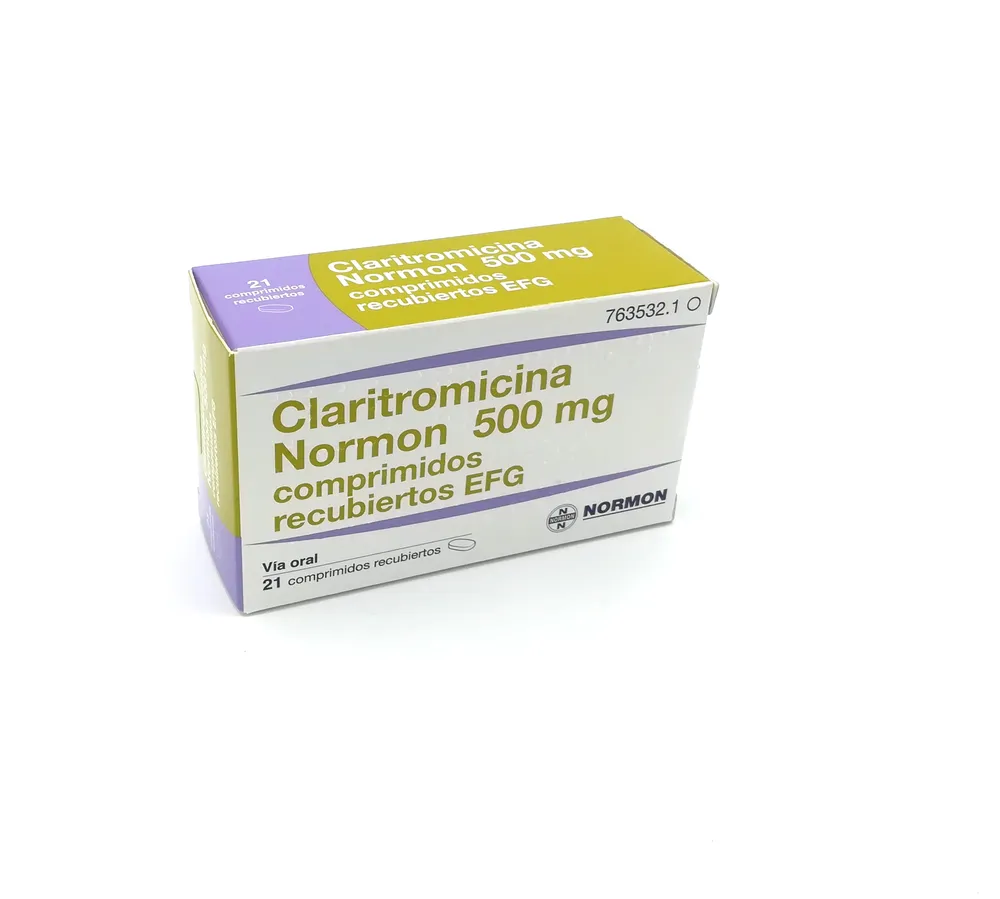
Table of Contents
- Package leaflet: Information for the user
- Introduction
- 1. What is Clarithromycin Alter and what is it used for
- 2. What you need to know before taking Claritromycin Alter
- **Driving and use of machines**
- 3. How to take Claritromycin Alter
- **If you forget to take Claritromycin Alter**
- 4. Possible adverse effects
- 5. Storage of Clarithromycin Alter
- 6. Contents of the pack and other information
Package leaflet: Information for the user
Introduction
Package leaflet: information for the user
Clarithromycin Alter 500 mg film-coated tablets EFG
Read the entire leaflet carefully before you start taking this medicine, because it contains important information for you.
- Keep this leaflet, as you may need to read it again.
- If you have any questions, ask your doctor or pharmacist.
- This medicine has been prescribed for you only, and you should not give it to others, even if they have the same symptoms as you, since it could harm them.
- If you experience any adverse effects, consult your doctor or pharmacist, even if they are adverse effects not listed in this leaflet. See section 4.
Leaflet contents:
- What Clarithromycin Alter is and what it is used for
- What you need to know before taking Clarithromycin Alter
- How to take Clarithromycin Alter
- Possible side effects
- How to store Clarithromycin Alter
- Contents of the pack and other information
1. What is Clarithromycin Alter and what is it used for
Clarithromycin is a medicine that belongs to the group of macrolide antibiotics.
Clarithromycin Alter is used for the treatment of infections caused by susceptible microorganisms in adults and adolescents (aged 12 to less than 18 years):
Adults:
- Upper respiratory tract infections, such as pharyngitis, tonsillitis and sinusitis.
- Lower respiratory tract infections, such as acute bronchitis, exacerbations of chronic bronchitis and bacterial pneumonias.
- Skin and soft tissue infections, such as folliculitis, cellulitis and erysipelas.
- Infections caused by mycobacteria (a type of bacteria).
- Eradication of the bacterium Helicobacter pylori in patients with gastric or duodenal ulcer.
Adolescents (aged 12 to less than 18 years):
- Upper respiratory tract infections, such as pharyngitis.
- Lower respiratory tract infections, such as bronchitis and bacterial pneumonias.
- Acute otitis media.
- Skin and soft tissue infections, such as impetigo, folliculitis, cellulitis and abscesses.
2. What you need to know before taking Claritromycin Alter
Do not take Claritromycin Alter:
- If you are allergic to clarithromycin, other macrolide antibiotics such as erythromycin or azithromycin, or to any of the other ingredients of this medicine (listed in section 6).
- If you are taking any of the following medicines: cisapride, pimozide, or terfenadine, as these may cause disturbances in heart rhythm when taken together with clarithromycin.
- If you are taking medications called ticagrelor, ivabradine, or ranolazine (for angina or to reduce the risk of myocardial infarction or stroke).
- If you are taking a medicine containing lomitapide.
- If you have abnormally low levels of potassium or magnesium in your blood (hypokalemia or hypomagnesemia).
Take special care with Claritromycin Alter:
- Since clarithromycin is eliminated via the liver and kidneys, caution should be exercised in patients with impaired liver function, moderate or severe renal insufficiency, and in elderly patients.
- If you develop severe or persistent diarrhea, you should consult your doctor immediately.
Taking other medicines
Inform your doctor or pharmacist if you are taking or have recently taken any other medicines, including those obtained without a prescription.
Claritromycin may interact with the following medicines, so your doctor will take precautions when administering them together with clarithromycin, and may even adjust their dosage:
- theophylline
- carbamazepine
- warfarin or other anticoagulants, for example dabigatran, rivaroxaban, apixaban, and edoxaban (to thin the blood)
- ergot alkaloids
- triazolam, midazolam
- lovastatin, simvastatin
- disopyramide
- phenytoin
- cyclosporine
- cisapride, pimozide, and terfenadine (see section "Do not take Claritromycin Alter")
This is also important if you are taking medicines called:
-
hydroxychloroquine or chloroquine (used to treat diseases such as rheumatoid arthritis, or to treat or prevent malaria). Taking these medicines together with clarithromycin may increase the risk of abnormal heart rhythms and other serious adverse effects affecting the heart.
-
corticosteroids administered orally, by injection, or by inhalation (used to suppress the immune system; this is useful in the treatment of a wide variety of diseases).
Pregnancy and breastfeeding
Consult your doctor or pharmacist before taking this medicine. The safety of clarithromycin during pregnancy has not been established, so your doctor must carefully weigh the benefits against the potential risks, especially during the first three months of pregnancy. Therefore, if you are pregnant or think you might be, you must inform your doctor before taking this medicine.
Claritromycin passes into breast milk, so breastfeeding should be discontinued during treatment with clarithromycin.
Driving and use of machines
Since clarithromycin may cause dizziness, caution must be exercised when driving or operating dangerous machinery during treatment with Clarithromycin Alter.
Important information about some of the components of Clarithromycin Alter
The starch present in this medicine contains very low levels of gluten, and it is highly unlikely to cause problems if you have coeliac disease.
One tablet contains no more than 189 micrograms of gluten.
If you are allergic to wheat (other than coeliac disease), you should not take this medicine.
3. How to take Claritromycin Alter
Follow exactly the instructions for use of this medicine as described in this leaflet or as directed by your doctor or pharmacist. If in doubt, consult your doctor or pharmacist again. Claritromycin Alter comes in tablets for oral administration. Take the tablets at the same time every day.
Your doctor will determine the duration of your treatment with Claritromycin Alter. Do not stop treatment prematurely, as even if you feel better, your illness may worsen or recur.
The recommended dose of clarithromycin is:
Adults and adolescents (aged 12 years to less than 18 years): The recommended dose is 250 mg twice daily. In more severe infections, the dose may be increased to 500 mg twice daily. The usual duration of treatment is 6 to 14 days.
Children under 12 years of age: The recommended dose is 7.5 mg/kg twice daily, up to a maximum of 500 mg twice daily. The usual duration of treatment is 5 to 10 days, depending on the type and severity of the infection.
This pharmaceutical form is not suitable for doses lower than 250 mg or for patients who have difficulty swallowing.
Patients with gastric or duodenal ulcer associated withHelicobacter pylori:**
The recommended dose of clarithromycin for eradication of Helicobacter pylori bacteria is 500 mg two or three times daily, in combination with omeprazole and another antibiotic, for 7 to 14 days.
Patients with renal impairment:
In patients with renal impairment, the dose of clarithromycin should be reduced by half.
If you think that the effect of Claritromycin Alter is too strong or too weak, inform your doctor or pharmacist.
If you take more Claritromycin Alter than you should
Contact your doctor or pharmacist immediately.
In case of overdose or accidental ingestion, contact the Toxicology Information Service at telephone number 91 562 04 20, indicating the medication and the amount ingested. It is recommended to bring the medicine’s packaging and leaflet to the healthcare professional.
The most frequent symptoms associated with overdose are gastrointestinal disturbances.
If you forget to take Claritromycin Alter
Do not take a double dose to make up for missed doses.
Take the tablet as soon as you remember, and then continue taking your doses at the usual 12-hour intervals.
4. Possible adverse effects
Like all medicines, this medicine may cause adverse effects, although not everyone experiences them.
The adverse effects that occur most frequently are related to the gastrointestinal system, such as nausea, gastric discomfort or indigestion, diarrhea, vomiting, and abdominal pain. Other adverse reactions include headache, taste disturbances, and transient increases in liver enzymes.
Less frequently, liver disorders (which are usually reversible), allergic reactions (ranging from itching and mild skin rashes to severe allergies), transient central nervous system effects (blurred vision, anxiety, insomnia, nightmares, confusion, hallucinations, and behavioral disturbances), hearing loss (usually reversible upon discontinuation of treatment), disturbances in smell (often accompanied by taste disturbances), gingival inflammation, superficial inflammation of the tongue, fungal infections in the mouth, discoloration of the tongue, and tooth discoloration (this discoloration usually disappears after professional dental cleaning) have been observed.
In rare cases, hypoglycemia (low blood sugar levels) has been reported, sometimes associated with the use of antidiabetic medications.
Very rarely, cases of decreased white blood cells or platelets, as well as increased blood creatinine levels, have been observed.
Rarely, disturbances in the electrocardiogram or cardiac rhythm have been reported.
Contact a doctor immediately if you experience a serious skin reaction: a red, scaly rash with bumps under the skin and blisters (exanthematous pustulosis). The frequency of this adverse effect is considered unknown (cannot be estimated from the available data).
Reporting of adverse effects
If you experience any type of adverse effect, consult your doctor or pharmacist, even if it is a possible adverse effect not listed in this leaflet. You may also report them directly through the Spanish Pharmacovigilance System for Human Medicines: https://www.notificaRAM.es. By reporting adverse effects, you can help provide more information on the safety of this medicine.
5. Storage of Clarithromycin Alter
Keep this medicine out of the sight and reach of children.
This medicine does not require any special storage conditions.
Do not use this medicine after the expiry date stated on the carton after EXP. The expiry date refers to the last day of the month indicated.
Medicines must not be disposed of via wastewater or household waste. Dispose of unused medicines and their packaging at the SIGRE Point in your pharmacy. If you are unsure, ask your pharmacist how to dispose of medicines and packaging you no longer need. This will help protect the environment.
6. Contents of the pack and other information
Composition of Claritromycin Alter
The active substance is clarithromycin. Each tablet contains 500 mg of clarithromycin.
The excipients are: Polysorbate 80, povidone, wheat starch, microcrystalline cellulose, sodium croscarmellose, anhydrous colloidal silica, stearic acid, magnesium stearate, hypromellose (E 464), titanium dioxide (E 171) and glyceryl triacetate.
Appearance of the product and contents of the pack
Claritromycin Alter 500 mg is available as film-coated tablets in packs containing 14 or 21 tablets.
Other presentations: Claritromycin Alter 250 mg is available in blister packs containing 14 tablets.
Marketing Authorization Holder and Manufacturer
Laboratorios Alter, S.A.
C/ Mateo Inurria, 30
28036 Madrid
Spain
Date of the latest revision of this leaflet: April 2021
Detailed and up-to-date information on this medicinal product is available on the website of the Spanish Agency for Medicines and Health Products (AEMPS) http://www.aemps.gob.es/