Clarelux 500 micrograms/g cutaneous foam in pressurised container.
Spain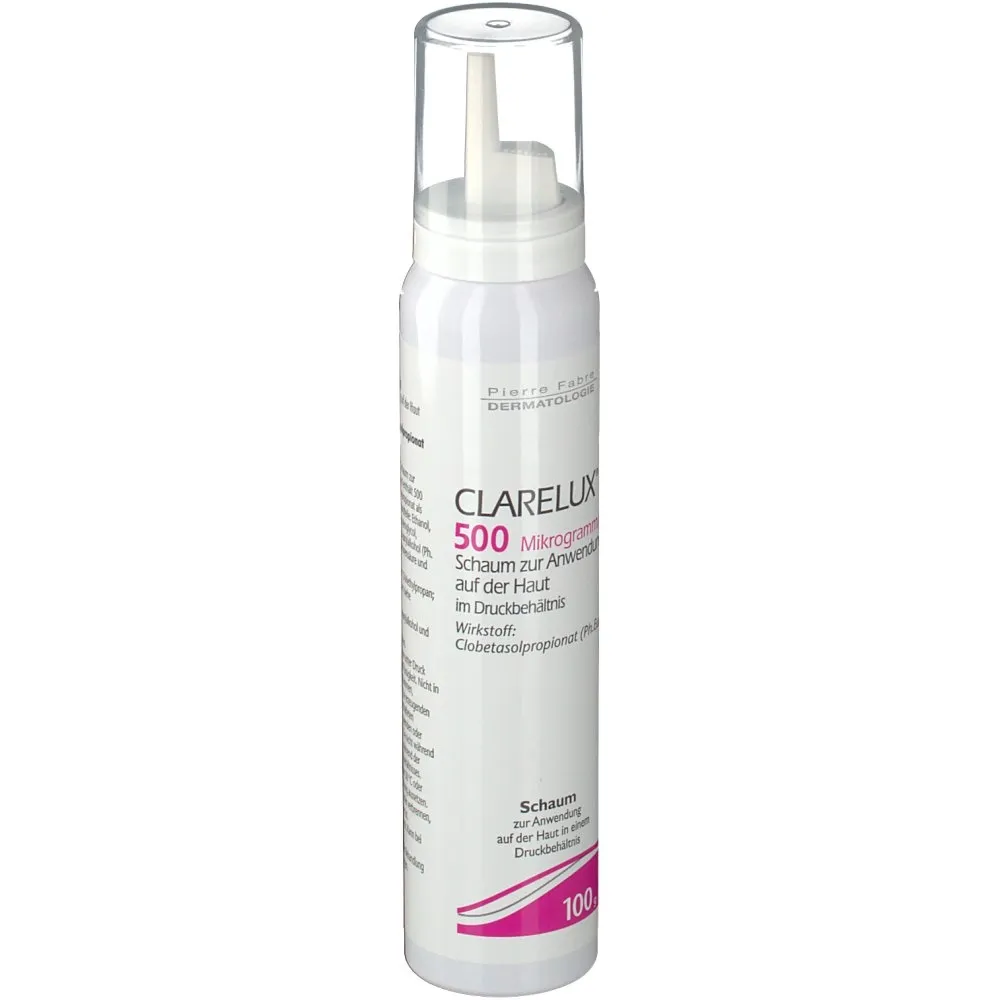
Table of Contents
Package leaflet: Information for the user
Introduction
Package leaflet: information for the user
CLARELUX 500 micrograms/g cutaneous foam in pressurised container
Clobetasol propionate
Read all of this leaflet carefully before you start using this medicine, because it contains important information for you.
- Keep this leaflet. You may need to read it again.
- If you have any questions, ask your doctor or pharmacist.
- This medicine has been prescribed for you only and must not be given to other people, even if they have the same symptoms as you, because it may harm them.
- If you experience any adverse effects, talk to your doctor or pharmacist, even if they are effects not listed in this leaflet. See section 4.
Contents of the leaflet
- What CLARELUX is and what it is used for
- What you need to know before using CLARELUX
- How to use CLARELUX
- Possible adverse effects
- How to store CLARELUX
- Contents of the pack and other information
1. What CLARELUX is and what it is used for
CLARELUX contains clobetasol propionate as the active substance and belongs to a group of medicines known as topical corticosteroids. Clobetasol propionate is a highly potent topical corticosteroid.
CLARELUX 500 micrograms/g cutaneous foam in pressurized container is a foam applied to the skin.
CLARELUX 500 micrograms/g cutaneous foam in pressurized container is used, in adult and adolescent patients aged 12 years and older, as a short-term treatment for steroid-responsive dermatoses of the scalp, such as psoriasis, which does not respond adequately to less potent corticosteroids.
2. What you need to know before using CLARELUX
Do not use CLARELUX:
- If you are allergic to clobetasol propionate, other corticosteroids, or any of the other ingredients of this medicine (listed in section 6).
- If you have infected skin lesions, whether viral (e.g. herpes simplex, herpes zoster, chickenpox…), bacterial (e.g. impetigo), fungal (caused by microscopic fungi), or parasitic.
- If you have burns, ulcerative lesions, or other skin disorders such as rosacea, acne, or perioral dermatitis.
- If you have itching around the anus or genitals.
- On other areas of the body or face (including eyelids) other than the scalp.
- When applying to the eyelids (risk of damage to the optic nerve (glaucoma) and lens opacity (cataracts)).
- In children under 2 years of age.
Warnings and precautions
Talk to your doctor or pharmacist before starting to use CLARELUX.
Inform your doctor if you have previously had an allergic reaction to corticosteroids and/or any component of this medicine.
You should consult your doctor and stop treatment immediately if your condition worsens during use, as you may be experiencing an allergic reaction. If you develop symptoms such as skin rash, itching, or painless tissue swelling (edema), if you have an infection, or if your condition requires a different treatment, seek medical advice.
Long-term treatment should be avoided.
If your condition recurs shortly after stopping treatment (within 2 weeks), do not restart using CLARELUX without consulting your doctor, unless your doctor has previously advised you to do so. If your condition has resolved and, in case of recurrence, redness spreads beyond the initial treatment area and you experience a burning sensation, consult a doctor before restarting treatment, as a rebound effect may be suspected (see section 4).
Due to impairment of the skin barrier, there is a risk of sudden appearance of painful, non-infectious fluid-filled pustules, which may be accompanied by fever (generalized pustular psoriasis), or local or systemic toxicity.
Avoid contact with the eyes or mucous membranes (nose, mouth).
Do not apply CLARELUX to the eyelids or face due to the risk of lens opacity (cataracts) and increased intraocular pressure (glaucoma), which can cause irreversible eye damage. Consult your doctor if you experience blurred vision or other visual disturbances.
Hands should be washed thoroughly after each application. Do not touch your eyes until you have washed your hands.
In case of accidental contact with the face or eyes, rinse thoroughly with plenty of water.
Unless supervised by a doctor, avoid applying CLARELUX over large surface areas or on bandaged or covered areas, due to the risk of some of the active ingredient passing into the bloodstream. Bacterial infection may occur, facilitated by heat and moisture under occlusive dressings. Do not use an occlusive dressing unless instructed by your doctor. In such cases, the skin should be cleaned before each dressing change.
Inform your doctor of any irritation or infection, as appropriate treatment should be administered if an infection occurs. If the infection spreads, treatment with CLARELUX should be discontinued and appropriate therapy initiated.
Like all corticosteroids, CLARELUX may be absorbed through the skin, with the risk that the active ingredient enters the bloodstream, causing adverse effects such as reduced hormone production by the adrenal glands (hypothalamic-pituitary-adrenal axis suppression) and Cushing's syndrome (see section 4 for all possible adverse effects). The risk of systemic absorption of this corticosteroid increases in the following situations:
- Prolonged treatment.
- Application over very large areas.
- Application on bandaged or covered areas, such as occlusive dressings.
- Application on damaged or injured skin, such as wounds or open sores (ulcerations).
- Application on thin skin areas such as the face.
- Increased skin hydration.
Inform your doctor if:
- You experience new-onset bone pain or worsening of previous bone symptoms during treatment with CLARELUX, especially if you have been using CLARELUX for a prolonged or repeated period.
- You are using another oral or topical medicine containing corticosteroids, or medicines to control your immune system (e.g. for autoimmune disease or after transplantation). Combining CLARELUX with these medicines may lead to serious infections.
- Your condition does not improve after 2 weeks of treatment.
- You develop an infection, as CLARELUX treatment should be discontinued and appropriate antimicrobial therapy administered.
Use in children and adolescents
Its use is not recommended in children under 12 years of age.
Other medicines and CLARELUX
Inform your doctor or pharmacist if you are currently using, have recently used, or might need to use any other medicines.
Use of CLARELUX with food, drinks, and alcohol
Not applicable
Pregnancy and breastfeeding
If you are pregnant or breastfeeding, think you may be pregnant, or are planning to become pregnant, consult your doctor or pharmacist before using this medicine.
Pregnancy
CLARELUX should not be used during pregnancy unless directed by your doctor.
Breastfeeding
CLARELUX should not be used during breastfeeding unless directed by your doctor.
Driving and using machines
CLARELUX is unlikely to affect your ability to drive or use machinery.
Important information about some of the ingredients of CLARELUX
This medicine contains:
-
2145 mg of alcohol (ethanol) per application, which may cause a burning sensation on damaged skin,
-
74 mg of propylene glycol (E 1520) per application,
-
cetyl alcohol and stearyl alcohol, which may cause local skin reactions (such as contact dermatitis),
-
polysorbate 60 (E 435), which may cause allergic reactions.
3. How to use CLARELUX
WARNING:
The container contains a flammable pressurized liquid.
Do not use or store near flame, ignition sources, any material that generates heat, or operating electrical equipment.
Do not smoke while using or handling the container.
Follow exactly the administration instructions for CLARELUX provided by your doctor. Consult your doctor or pharmacist if you have any doubts.
Use this medication only for the condition for which it was prescribed to you. CLARELUX should be applied only to the scalp and must not be swallowed.
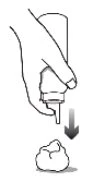
It is not recommended to dispense the foam directly into the hands, as the foam will begin to dissipate immediately upon contact with warm skin.
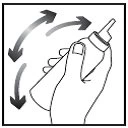
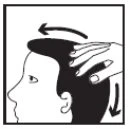
Apply CLARELUX to the affected area of the scalp twice daily, once in the morning and once at night, as indicated below:
Warning: For proper dispensing of the foam, it is important to keep the container inverted (upside down)!
|
|
CLARELUX should be applied as a thin layer, so you should use the minimum amount necessary when applying it to the affected area. The exact amount needed depends on the size of the affected area. Do not dispense the foam into your hands, as it will begin to dissolve immediately upon contact with warm skin. |
|
|
|
After applying CLARELUX, wash your hands and discard any unused amount of the medication.
Do not use CLARELUX on the face or eyelids. If foam accidentally gets into your eyes, nose, or mouth, rinse immediately with cold water. A stinging sensation may occur. Contact your doctor if pain persists.
Treated areas should not be bandaged or covered unless otherwise instructed by your doctor.
Do not wash or rinse the treated areas of the scalp immediately after application of CLARELUX.
Duration of treatment
Do not use more than 50 g of CLARELUX per week.
Treatment should not continue for longer than 2 weeks. After this, CLARELUX may be used occasionally if necessary. Alternatively, your doctor may prescribe a weaker steroid to control your condition.
If you use more CLARELUX than you should
Consult your doctor immediately if you have applied CLARELUX:
in larger amounts than prescribed or for a longer period than prescribed. In such cases, there is a risk that the active ingredient may be absorbed into the bloodstream, causing adverse effects such as symptoms of hypercorticoidism (weight gain, facial fat accumulation, high blood pressure). Use of CLARELUX should be discontinued gradually and under medical supervision, by reducing the frequency of application or switching to a less potent corticosteroid.
In case of overdose or accidental ingestion, contact your doctor or pharmacist immediately, or call the Toxicology Information Service at 91 562 04 20, indicating the medication and amount used.
If you forget to use CLARELUX
It should be used as soon as possible, then continue as before.
If you remember when applying the next dose, use a single dose and continue treatment as directed by your doctor (do not apply a double dose to make up for a missed dose). If you have missed several doses, inform your doctor.
If you stop treatment with CLARELUX
Do not stop treatment suddenly, as this may cause harm. Your doctor should discontinue treatment gradually, and regular check-ups should be performed.
If you have any further questions about the use of this product, ask your doctor or pharmacist.
4. Possible adverse effects
Like all medicines, this medicine can cause adverse effects, although not everyone experiences them.
Stop using CLARELUX 500 micrograms/g cutaneous foam in pressurised container and contact your doctor immediately if allergic reactions (hypersensitivity) occur, such as local irritation.
Adverse effects include:
Frequent (may affect less than 1 in 10, but more than 1 in 100 people):
- Sensation of skin stinging where CLARELUX is applied
- Other skin reactions at the site of CLARELUX application
Rare (may affect up to 1 in 1,000 people):
- Pustular psoriasis (chronic inflammation of the skin accompanied by pustules)
Very rare (may affect up to 1 in 10,000 people):
- Decreased hormone production by the adrenal glands (suppression of the hypothalamic-pituitary-adrenal system)
- Sensations of numbness, tingling, or pricking (paraesthesia)
- Eye irritation
- Swelling of blood vessels (vasodilation)
- Skin irritation, skin pain (tenderness), tightness of the skin
- Itchy skin rash (contact dermatitis), inflammation of the skin (dermatitis)
- Worsening of psoriasis
- Redness (erythema) at the site of application
- Itching (pruritus) at the site of application
- Pain
- Presence of blood, proteins, and nitrogen in urine
- Blood test abnormalities indicating that red blood cells are larger than average (increased mean corpuscular volume)
The following additional adverse effects may also occur, frequency not known (cannot be estimated from available data):
- Secondary infection may occur, especially if treatment is covered with an occlusive dressing or applied to skin folds (armpits, anal and genital areas). Signs of infection include skin redness, possibly accompanied by pain or itching
- Excessive hair growth (hypertrichosis)
- Changes in skin colour
- Inflammation of hair follicles (folliculitis)
- Rash around the mouth (perioral dermatitis)
- Redness and rashes on the face (rosacea-like dermatitis)
- Delayed wound healing
- Clouding of the eye's lens (cataracts), increased eye pressure (glaucoma)
- Blurred vision
Adverse effects due to prolonged use, frequency not known (cannot be estimated from available data):
- As with other topical corticosteroids, when CLARELUX is used in large amounts and for a long period of time, this may lead to Cushing's syndrome, characterised by signs such as weight gain, fat accumulation in the face, and bruising caused by excess corticosteroid hormone
- Topical corticosteroid withdrawal reaction (rebound effect): skin redness that may spread beyond the initially treated area, burning or stinging sensation, intense itching, skin peeling, oozing sores
- Local skin changes such as thinning (cutaneous atrophy) and fragility, discoloured bruises (ecchymoses), visible small blood vessels (telangiectasias), particularly on the face, and stretch marks affecting particularly the proximal limbs
Reporting of adverse effects
If you experience any type of adverse effect, consult your doctor or pharmacist, even if it is a possible adverse effect not listed in this leaflet. You may also report them directly via the Spanish Pharmacovigilance System for Human Medicines: https://www.notificaram.es. By reporting adverse effects, you can help provide more information on the safety of this medicine.
5. Storage of CLARLEUX
- The container contains a flammable pressurized liquid.
- Do not store near flames, sources of ignition, heat-generating materials, or operating electrical equipment.
- Do not expose to temperatures above 50°C or to direct sunlight.
- Do not pierce or burn the container, even if it is empty.
- After treatment is completed, dispose of the container safely.
Keep this medicine out of the sight and reach of children.
Do not use CLARELUX after the expiry date stated on the container after EXP. The expiry date refers to the last day of the month indicated.
Do not store above 25°C. Do not refrigerate. Store in an upright position.
Medicines should not be disposed of via wastewater drains or household waste. Dispose of unused containers and medicines at the SIGRE collection point at your pharmacy. If in doubt, ask your pharmacist how to properly dispose of unused containers and medicines. This will help protect the environment.
6. Contents of the container and other information
Composition of CLARELUX
The active substance is clobetasol propionate, and 1 g of cutaneous foam contains 500 micrograms of clobetasol propionate.
The other components are: anhydrous ethanol, purified water, propylene glycol (E 1520), cetyl alcohol, stearyl alcohol, polysorbate 60 (E 435), anhydrous citric acid, potassium citrate, and a propellant mixture of propane/n-butane/isobutane.
Appearance of the medicinal product and contents of the container
CLARELUX 500 micrograms/g cutaneous foam is a white cutaneous foam in a pressurized container. Each container holds 50 or 100 grams.
Not all pack sizes may be marketed.
Marketing Authorization Holder
PIERRE FABRE IBÉRICA, S.A.
C/ Ramón Trias Fargas, 7-11
08005 Barcelona - Spain
Manufacturer
Recipharm Uppsala AB
Björkgatan 30
751 82 Uppsala
Sweden
or
Farmol Health Care S.r.L.
Via del Maglio, 6
23868 Valmadrera (LC)
Italy
This medicinal product is authorized in the European Economic Area member states and in the United Kingdom (Northern Ireland) under the following names:
Germany and Austria: CLARELUX 500 Mikrogramm/g Schaum zur Anwendung auf der Haut im Druckbehältnis
Belgium and Luxembourg: CLARELUX 500 microgrammes/g mousse pour application cutanée en flacon pressurisé
Slovak Republic: CLARELUX 500 mikrogramov/g dermalna pena, v tlakovom obale
Czech Republic: CLARELUX 500 mikrogramu/g kožní pena
France: CLARELUX 500 microgrammes/g mousse pour application cutanée en flacon pressurisé
Greece: CLARELUX 500 μικρογραμμάρια/g δερματικός αφρός σε περιέκτη υπό πίεση
United Kingdom (Northern Ireland): CLARELUX 500 microgram/g cutaneous foam in pressurised container
Netherlands: CLARELUX 500 microgram/g schuim voor cutaan gebruik in spuitbus
Poland: Clarelux 500 mikrogramów/g, piana na skóre
Portugal: CLARELUX 500 microgramas/g espuma cutânea num recipiente pressurizado
Italy: OLUX 500 microgrammi/g schiuma cutanea
Date of the most recent review of this leaflet: May 2025
“Detailed and up-to-date information on this medicinal product is available on the website of the Spanish Agency for Medicines and Health Products (AEMPS) https://www.aemps.gob.es/”