Cinfamucol carbocisteine 750 mg oral solution in sachets
Spain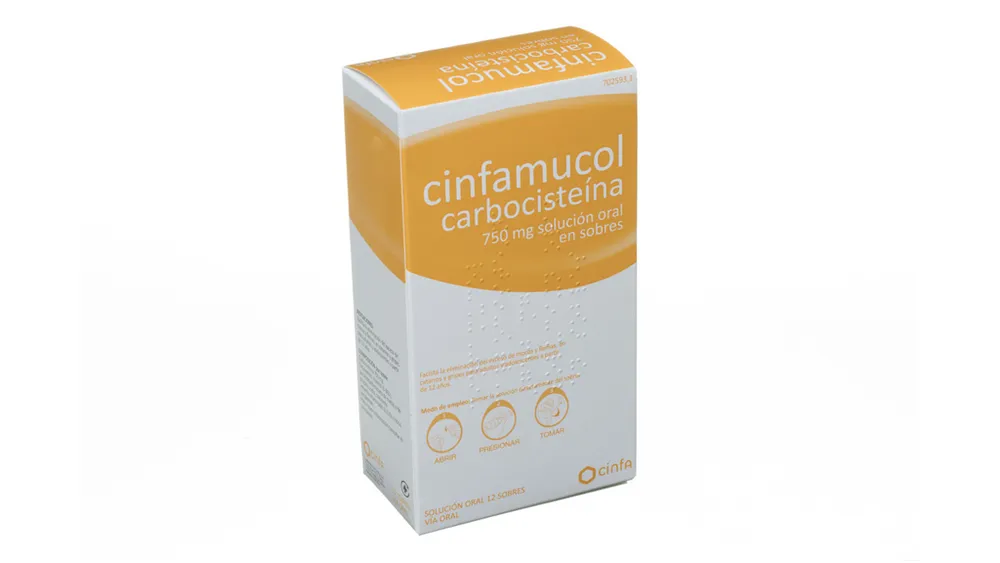
Table of Contents
- Package Leaflet: Information for the User
- Introduction
- 1. What is cinfamucol carbocisteine and what is it used for
- 2. What you need to know before starting to take cinfamucol carbocisteine
- 3. How to take cinfamucol carbocisteine
- 4. Possible adverse effects
- 5. Storage of CinfaMucol carbocysteine
- 6. Contents of the pack and other information
Package Leaflet: Information for the User
Introduction
Package leaflet: information for the user
cinfamucol carbocisteine 750 mg oral solution in sachets
Read this entire leaflet carefully before you start taking this medicine, because it contains important information for you.
Follow exactly the administration instructions contained in this leaflet or those indicated by your doctor or pharmacist.
- Keep this leaflet, as you may need to read it again.
- If you need advice or further information, consult your pharmacist.
- If you experience any adverse reactions, consult your doctor or pharmacist, even if they are adverse reactions not listed in this leaflet. See section 4.
- You should consult a doctor if you worsen or do not improve after 5 days of treatment.
Contents of the leaflet
- What cinfamucol carbocisteine is and what it is used for.
- What you need to know before taking cinfamucol carbocisteine.
- How to take cinfamucol carbocisteine.
- Possible side effects.
- How to store cinfamucol carbocisteine.
- Contents of the pack and other information.
1. What is cinfamucol carbocisteine and what is it used for
Carbocisteine, the active ingredient in this medicine, belongs to a group of medicines called mucolytics, which work by reducing the viscosity of mucus, making it thinner and easier to eliminate.
This medicine is indicated to help eliminate excess mucus and phlegm in colds and flu in adults and adolescents aged 12 years and older.
You should consult your doctor if your condition worsens or does not improve after 5 days of treatment.
2. What you need to know before starting to take cinfamucol carbocisteine
Do not take cinfamucol carbocisteine
If you are allergic to carbocisteine and its derivatives, or to any of the other ingredients of this medicine (listed in section 6)
Warnings and precautions
Consult your doctor or pharmacist before starting to take cinfamucol carbocisteine.
- If you have a stomach or duodenal ulcer, or any thyroid disease
- If you have asthma or any severe respiratory disease, as airway obstruction may increase.
During the first days of treatment, you may notice an increase in mucus and phlegm, which will gradually decrease during treatment.
Children
Do not give this medicine to children under 12 years of age.
Other medicines and cinfamucol carbocisteine
Inform your doctor or pharmacist if you are taking, have recently taken, or might need to take any other medicines.
Do not take this medicine with medications used to suppress non-productive cough (antitussives) or with medications that reduce bronchial secretions, as this may cause an accumulation of liquefied mucus.
Taking cinfamucol carbocisteine with food and drink
Take this medicine preferably before meals. See section 3. How to take cinfamucol carbocisteine.
Pregnancy and breastfeeding
If you are pregnant or breastfeeding, think you may be pregnant, or are planning to become pregnant, consult your doctor or pharmacist before using this medicine.
The use of this medicine is not recommended in pregnant or breastfeeding women.
Driving and using machines
The effect of cinfamucol carbocisteine on the ability to drive and use machines is none or negligible.
cinfamucol carbocisteine contains sunset yellow (E-110). This medicine may cause allergic reactions because it contains sunset yellow (E-110). It may provoke asthma, especially in patients allergic to acetylsalicylic acid.
cinfamucol carbocisteine contains methyl parahydroxybenzoate (E-219) and propyl parahydroxybenzoate (E-217). May cause allergic reactions (possibly delayed) because it contains methyl parahydroxybenzoate (sodium salt) (E-219) and propyl parahydroxybenzoate (sodium salt) (E-217).
cinfamucol carbocisteine contains sodium. This medicine contains 136.65 mg of sodium (main component of table/cooking salt) per sachet. This corresponds to 6.8% of the maximum daily recommended sodium intake for an adult.
cinfamucol carbocisteine contains maltitol. This medicine contains maltitol (E-965). If your doctor has diagnosed you with an intolerance to certain sugars, consult him before taking this medicine.
cinfamucol carbocisteine contains propylene glycol. This medicine contains 90 mg of propylene glycol per sachet.
3. How to take cinfamucol carbocisteine
Follow exactly the instructions for use provided in this leaflet or those indicated by your doctor or pharmacist. If in doubt, consult your doctor or pharmacist.
The recommended dose is:
Adults and adolescents from 12 years of age: 1 sachet every 8 hours. Do not take more than 3 sachets per day, divided into 3 doses. Once you notice improvement, you may reduce the dose to 2 sachets per 24 hours, divided into 2 doses. The dose up to 10 ml of oral solution (500 mg of carbocisteine) 3 times a day, meaning a maximum daily dose of 30 ml of oral solution (1.5 g of carbocisteine).
How to take
This medicine is taken orally.
Open the sachet and pour the contents directly into the mouth. It is recommended to drink a glass of water after each dose and plenty of fluids throughout the day.
If your condition worsens, or if symptoms persist after 5 days of treatment, or if you develop: fever, skin rashes, persistent headache, or sore throat, you should consult your doctor.
Use in children
Children under 12 years of age must not take this medicine.
If you take more cinfamucol carbocisteine than you should
If you have taken more cinfamucol carbocisteine than you should, you may experience stomach pain, nausea and diarrhea, itching, and skin rashes.
In case of overdose or accidental ingestion, contact your doctor or pharmacist immediately, or call the Toxicology Information Service at telephone number 91 562 04 20, indicating the medicine and the amount ingested.
If you forget to take cinfamucol carbocisteine
Do not take a double dose to make up for missed doses.
4. Possible adverse effects
Like all medicines, this medicine may cause adverse effects, although not everyone will experience them.
During the period of carbocysteine use, the following adverse effects have been observed, although their frequency cannot be precisely determined.
Nausea, gastric discomfort or diarrhoea may occasionally occur, which usually disappear when the dose is reduced.
Rarely, other reactions have been observed such as gastrointestinal bleeding, headache, itching, skin rashes and angioedema (swelling of certain areas of the skin).
In such cases, it is recommended to discontinue treatment and consult your doctor.
Reporting of adverse effects:
If you experience any type of adverse effect, consult your doctor or pharmacist, even if it is a possible adverse effect not listed in this leaflet. You may also report them directly through the Spanish Pharmacovigilance System for Human Medicines: https://www.notificaram.es. By reporting adverse effects, you can help provide more information on the safety of this medicine.
5. Storage of CinfaMucol carbocysteine
Keep this medicine out of the sight and reach of children.
Do not use this medicine after the expiry date stated on the packaging after EXP. The expiry date refers to the last day of the month indicated.
Do not store above 30°C.
Medicines must not be disposed of via wastewater or household waste. Dispose of empty containers and unused medicines at the SIGRE collection point at your pharmacy. If you are unsure, ask your pharmacist how to properly dispose of containers and unused medicines. This will help protect the environment.
6. Contents of the pack and other information
Composition of cinfamucol carbocysteine
-
Each sachet contains 750 mg of carbocysteine as the active substance.
-
The other components (excipients) are: liquid maltitol (E-965), sodium hydroxide (E-524), sodium citrate (E-331), propylene glycol (E-1520), hydroxyethylcellulose, citric acid monohydrate, methylparaben (sodium salt) (E-219), sodium saccharin, orange flavour (flavouring preparations, flavouring substances, natural flavouring substances, corn maltodextrin, gum arabic (E-414), ascorbic acid (E-300) and butylated hydroxyanisole (BHA) (E-320)), propylparaben (sodium salt) (E-217), orange yellow (E-110) and purified water.
Appearance of the product and contents of the pack
cinfamucol carbocysteine is a transparent oral solution with an orange odour. Each pack contains 12 sachets.
Marketing Authorisation Holder and Manufacturer
Laboratorios Cinfa, S.A
Carretera Olaz-Chipi, 10. Polígono Industrial Areta
31620 Huarte (Navarra) - Spain
Date of the most recent review of this leaflet: October 2021
Detailed information on this medicinal product is available on the website of the Spanish Agency of Medicines and Health Products (AEMPS) http://www.aemps.gob.es/