Captopril/hydrochlorothiazide Normon 50 mg/25 mg tablets EFG
Spain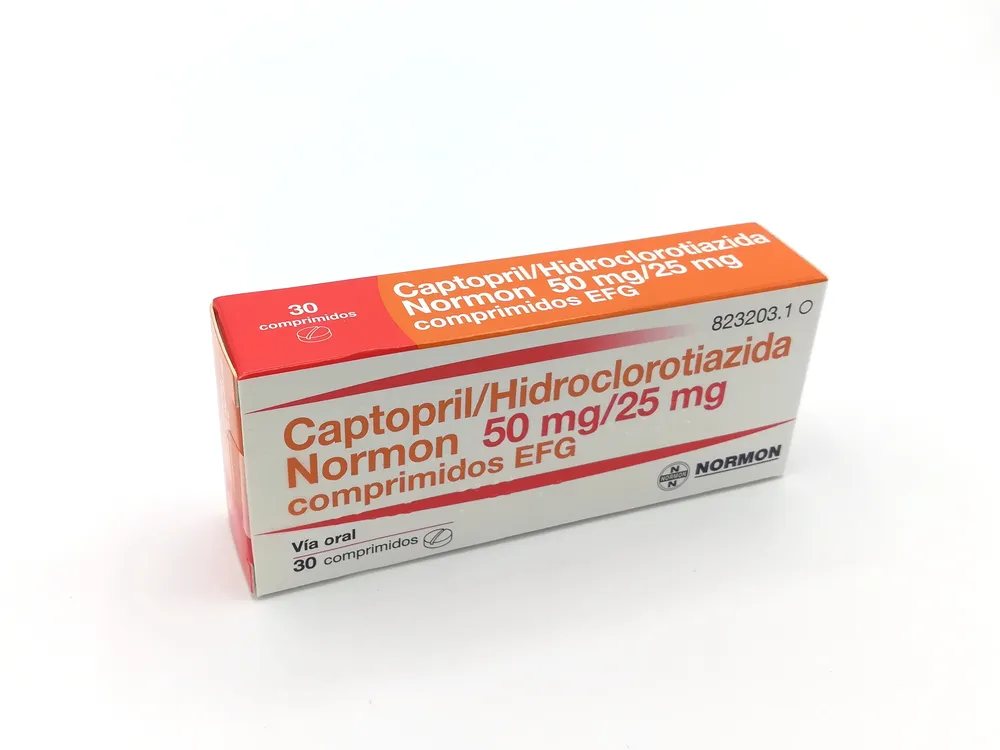
Table of Contents
- Package leaflet: Information for the user
- Introduction
- 1. What Captopril/Hydrochlorothiazide Normon is and what it is used for
- 2. What you need to know before starting to take Captopril/Hydrochlorothiazide Normon
- 3. How to take Captopril/Hydrochlorothiazide Normon
- 4. Possible adverse effects
- 5. Storage of Captopril/Hydrochlorothiazide Normon
- 6. Contents of the pack and other information
Package leaflet: Information for the user
Introduction
Package leaflet: information for the user
Captopril/Hydrochlorothiazide Normon 50 mg/25 mg tablets EFG
Captopril/Hydrochlorothiazide
Read the entire leaflet carefully before you start taking this medicine, as it contains important information for you.
- Keep this leaflet, as you may need to read it again.
- If you have any questions, ask your doctor or pharmacist.
- This medicine has been prescribed for you only, and you should not give it to others, even if they have the same symptoms as you, because it may harm them.
- If you experience any adverse effects, consult your doctor or pharmacist, even if they are adverse effects not listed in this leaflet. See section 4.
Leaflet contents
- What Captopril/Hydrochlorothiazide Normon is and what it is used for
- What you need to know before taking Captopril/Hydrochlorothiazide Normon
- How to take Captopril/Hydrochlorothiazide Normon
- Possible side effects
- How to store Captopril/Hydrochlorothiazide Normon
- Contents of the pack and other information
1. What Captopril/Hydrochlorothiazide Normon is and what it is used for
Captopril/Hydrochlorothiazide Normon is a medicine that contains a combination of two substances, captopril and hydrochlorothiazide.
Captopril is a substance that belongs to the group of medicines known as angiotensin-converting enzyme inhibitors (ACE inhibitors), which produce relaxation of blood vessels and reduce blood pressure.
Hydrochlorothiazide is a substance belonging to the group known as thiazide diuretics, which work by increasing urine output and thereby reducing blood pressure.
The two active substances in this medicine act together to achieve a reduction in blood pressure greater than that achieved with either component alone.
This medicine is indicated for the treatment of high blood pressure (essential hypertension) when blood pressure has not been adequately controlled with either of the individual components, captopril or hydrochlorothiazide, taken separately.
2. What you need to know before starting to take Captopril/Hydrochlorothiazide Normon
Please read the following section carefully. It contains important information that you and your doctor should consider before taking Captopril/Hydrochlorothiazide Normon.
Do not take Captopril/Hydrochlorothiazide Normon
- if you are allergic (hypersensitive) to captopril, to other ACE inhibitors, or to any of the other components of this medicine (listed in section 6).
- if you are allergic to hydrochlorothiazide or to any other sulfonamide-derived medicines.
- if you have previously been treated with medicines of the same class as this medicine (ACE inhibitors) and experienced allergic reactions causing swelling of the arms, legs, ankles, lips, tongue and/or throat, with difficulty swallowing or breathing (angioedema), or if any member of your family has had a similar reaction.
- if you have severe liver or kidney problems (consult your doctor if you have any doubts).
- if you have diabetes or renal insufficiency and are being treated with an antihypertensive medicine containing aliskiren.
- if you are more than 3 months pregnant. It is also advisable to avoid this medicine during the first months of pregnancy (see pregnancy section).
This medicine should not be given to children and adolescents (<18 years of age).
Warnings and precautions
Consult your doctor or pharmacist before starting to take Captopril/Hydrochlorothiazide Normon.
Take special care with this medicine:
- if you suffer from severe or persistent vomiting or diarrhea.
- if you follow a low-salt diet, use salt substitutes, or take potassium-containing supplements.
- if you have liver or kidney disorders (consult your doctor if you have any doubts).
- if you suffer from narrowing of the aorta (aortic stenosis) or of the renal artery (renal artery stenosis).
- if you have diabetes. This medicine may alter the effects of insulin or any other antidiabetic medicine. Please consult your doctor.
- if you are undergoing dialysis. Allergic reactions have been reported in patients treated with this medicine who used certain dialysis membranes (called high-flux hemodialysis membranes or dextran sulfate low-density lipoprotein apheresis). Consult your doctor before your next dialysis session.
- if you are undergoing, or are about to undergo, desensitization treatment for bee or wasp sting allergy. Allergic reactions have been reported in patients treated with this medicine who also received desensitization therapy. Consult your doctor before starting treatment.
- if you have lupus (an inflammatory disease that may affect various organs, including the skin) or lupus-like disorders.
- if you are taking any of the following medicines used to treat high blood pressure (hypertension):
- an angiotensin II receptor antagonist (ARA-II) (also known as "sartans" – e.g., valsartan, telmisartan, irbesartan), particularly if you have kidney problems related to diabetes.
- Aliskiren
- if you are taking any of the following medicines, the risk of angioedema (rapid swelling under the skin, such as in the throat) increases:
- sirolimus, everolimus, and other medicines of the mTOR inhibitor class (used to prevent rejection of transplanted organs).
- if you have had skin cancer or develop an unexpected skin lesion during treatment. Treatment with hydrochlorothiazide, particularly long-term use at high doses, may increase the risk of certain types of non-melanoma skin and lip cancer. Protect your skin from exposure to sunlight and UV rays while taking Captopril/Hydrochlorothiazide Normon.
- if you experience vision changes or eye pain, which could be symptoms of fluid accumulation in the vascular layer of the eye (choroidal effusion) or increased eye pressure, occurring within hours to one week after taking Captopril/Hydrochlorothiazide Normon. This may lead to permanent vision loss if not treated. If you previously had an allergy to penicillin or sulfonamides, you may have a higher risk of developing this condition.
- if you have had respiratory or pulmonary problems (such as inflammation or fluid in the lungs) after taking hydrochlorothiazide in the past. If you experience dyspnea or severe difficulty breathing after taking Captopril/Hydrochlorothiazide Normon, seek medical attention immediately.
Your doctor may monitor your kidney function, blood pressure, and blood electrolyte levels (e.g., potassium) at regular intervals.
See also the information under the heading “Do not take Captopril/Hydrochlorothiazide Normon”.
Inform your doctor if you are pregnant (or suspect you might be). Use of this medicine is not recommended during early pregnancy, and it must not be administered after the third month of pregnancy, as it may cause serious harm to your baby when used from that point onward (see pregnancy section).
Medicines containing lithium must not be administered together with this medicine without close monitoring by your doctor.
If you develop any of the following reactions, consult your doctor immediately
- swelling of the arms, legs, ankles, face, lips, tongue and/or throat with difficulty swallowing or breathing,
- any signs of infection (such as sore throat or fever) that do not respond quickly to usual treatment,
- dizziness or fainting,
- severe abdominal pain,
- unusually fast or irregular heartbeat,
- jaundice (yellowing of the eyes/skin),
- any sudden, unexplained rash, burning sensation, peeling or reddening of the skin.
Please inform the following people if you are taking Captopril/Hydrochlorothiazide Normon
- hospital staff, especially the anesthetist (if you are undergoing surgery) or if you are hospitalized.
- your dentist before undergoing a dental procedure requiring anesthesia.
If this is the first time you are taking this medicine, you may feel dizzy or lightheaded for a short period. In such cases, sitting or lying down may help. However, this is unlikely to occur once you take the tablets regularly. If you are concerned about this, consult your doctor.
Use in athletes:
This medicine contains hydrochlorothiazide, which may result in a positive doping test.
Taking Captopril/Hydrochlorothiazide Normon with other medicines
Inform your doctor or pharmacist if you are taking, have recently taken, or might need to take any other medicines, including over-the-counter products. This includes cold, cough, allergy, or sinus medicines, as they may increase your blood pressure.
It is very important that you inform your doctor if you are taking any of the following medicines:
- certain painkillers also known as anti-inflammatory drugs (e.g., indomethacin and ibuprofen),
- lithium (for the treatment of mental disorders),
- carbenoxolone (for the treatment of gastrointestinal ulcers),
- corticosteroids, corticotropin (ACTH),
- certain laxatives,
- antifungal injections (amphotericin),
- muscle relaxants (administered during surgery),
- cholestyramine, colestipol (to lower blood cholesterol),
- allopurinol (for the treatment of gout),
- procainamide, digoxin, and other cardiac glycosides (for the treatment of heart rhythm disorders),
- cytostatic or immunosuppressive agents (e.g., azathioprine and cyclophosphamide),
- calcium salts,
- medicines more commonly used to prevent rejection of transplanted organs (sirolimus, everolimus, and other mTOR inhibitor class medicines). See section “Warnings and precautions”.
- potassium supplements or potassium-containing salt substitutes, diuretics (particularly potassium-sparing diuretics), and other medicines that may increase potassium levels in your body (e.g., heparin and cotrimoxazole, also known as trimethoprim/sulfamethoxazole),
- medicines that lower blood pressure by dilating blood vessels (e.g., minoxidil),
- carbamazepine (for the treatment of epilepsy),
- medicines used in diabetes (insulin and other oral antidiabetics such as sulfonylureas),
- medicines used to treat psychotic disorders and some older antidepressants,
- any medicine used to treat high blood pressure.
Your doctor may need to adjust your dose and/or take other precautions:
If you are taking an angiotensin II receptor antagonist (ARA-II) or aliskiren (see also information under the headings “Do not take Captopril/Hydrochlorothiazide Normon” and “Warnings and precautions”).
Taking Captopril/Hydrochlorothiazide Normon with food and drinks
Captopril/Hydrochlorothiazide Normon may be taken with or without food.
Inform your doctor if you take potassium supplements or follow a potassium-rich diet.
Pregnancy, breastfeeding, and fertility
Pregnancy
Inform your doctor if you are pregnant (or suspect you might be). Your doctor will generally advise you to stop taking this medicine before becoming pregnant or as soon as you know you are pregnant, and will recommend an alternative medicine. Use of this medicine is not recommended during early pregnancy, and it must not be administered from the third month of pregnancy onward, as it may cause serious harm to your baby when used from that point onward.
Breastfeeding
Inform your doctor if you are breastfeeding or plan to breastfeed. Use of this medicine is not recommended during breastfeeding.
Driving and using machines
Exercise caution when driving or operating machinery if you experience adverse effects such as drowsiness, dizziness, or fatigue. These effects are particularly likely at the beginning of treatment, when the dose is changed, or after consuming alcohol.
Warnings about excipients:
This medicine contains lactose. If your doctor has informed you that you have an intolerance to certain sugars, consult him before taking this medicine.
This medicine may cause allergic reactions as it contains the colorant orange-yellow S (E-110).
This medicine contains less than 23 mg of sodium (1 mmol) per tablet, which means it is essentially "sodium-free".
3. How to take Captopril/Hydrochlorothiazide Normon
Follow exactly the instructions for use of this medicine as given by your doctor. Consult your doctor or pharmacist if you have any doubts.
Your doctor has prescribed this medicine because the previous treatment for high blood pressure did not provide adequate reduction in blood pressure. Your doctor will advise you on how to switch from previous treatments to this medicine.
Dosage
The usual dose is one tablet daily (corresponding to 50 mg of captopril and 25 mg of hydrochlorothiazide). The maximum daily dose must not be exceeded.
Method of administration
The tablets are for oral use only.
The tablets should be swallowed with sufficient liquid (for example, a glass of water). This medicine may be taken with or without food. You should try to take your daily dose at approximately the same time each day, preferably in the morning. It is important that you continue taking this medicine until your doctor advises otherwise.
Use in special populations
If you have moderate renal impairment, diabetes, or if you have reduced levels of salt or water in your body, your doctor may prescribe a lower dose of this medicine, for example half a tablet daily (corresponding to 25 mg of captopril and 12.5 mg of hydrochlorothiazide).
Elderly
Your doctor may prescribe a lower dose of this medicine, for example half a tablet daily (corresponding to 25 mg of captopril and 12.5 mg of hydrochlorothiazide).
If you feel that the effect of this medicine is too strong or too weak, inform your doctor or pharmacist.
If you take more Captopril/Hydrochlorothiazide Normon than you should
If you take more tablets than you should, you may experience the following: increased frequency of urination, changes in the levels of certain components in your blood, a significant drop in your blood pressure, loss of awareness of yourself or your surroundings (including coma), seizure, muscle weakness, irregular or slower heartbeat, or reduced kidney function.
If someone else has taken too many tablets and has fainted, lay them down and raise their feet above their head.
In case of overdose or accidental ingestion, contact your doctor or pharmacist immediately or call the Toxicology Information Service at 915 620 420, indicating the medicine and the amount ingested.
If you forget to take Captopril/Hydrochlorothiazide Normon
If you forget to take your medicine, take the dose as soon as you remember on the same day. If you miss a day, take your normal dose the next day. Do not take a double dose to make up for missed doses.
If you stop taking Captopril/Hydrochlorothiazide Normon
If you accidentally forget to take a dose, simply take your next dose at the usual time. Do not take a double dose to make up for missed doses.
If you have any further questions about the use of this product, ask your doctor or pharmacist.
4. Possible adverse effects
Like all medicines, this medicine can have adverse effects, although not everyone will experience them.
Stop treatment with this medicine and seek medical help immediately if you notice any of the following reactions:
- swelling of the arms, legs, ankles, face, lips, tongue and/or throat with difficulty swallowing or breathing, sore throat or fever,
- dizziness or fainting,
- severe abdominal pain,
- unusually fast or irregular heartbeat,
- jaundice (yellowing of eyes/skin),
- any sudden or unexplained rash or burning sensation, peeling or reddened skin.
The following adverse effects, observed with captopril and/or other ACE inhibitors, as well as those observed with hydrochlorothiazide, are listed below in decreasing order of severity.
The following adverse effects were frequently observed (in at least 1 out of 100 patients and less than 1 out of 10 patients) with captopril and other ACE inhibitors:
- sleep disturbances,
- altered taste, dizziness,
- dry, irritating cough, breathing difficulty,
- nausea, vomiting, gastric irritation, abdominal pain, diarrhoea, constipation, dry mouth,
- skin problems such as itching, skin rash, and hair loss.
The following adverse effects were infrequently observed (in at least 1 out of 1,000 patients and less than 1 out of 100 patients) with captopril and other ACE inhibitors:
- heart problems such as unusually fast or irregular heartbeat, chest pain (angina), awareness of heartbeat,
- low blood pressure, poor circulation in fingers (Raynaud's syndrome), skin redness or paleness,
- swelling of hands, face, lips, and tongue,
- chest pain, fatigue, malaise.
The following adverse effects were rarely observed (in at least 1 out of 10,000 patients and less than 1 out of 1,000 patients) with captopril and other ACE inhibitors:
- loss of appetite (anorexia),
- drowsiness, headache, abnormal skin sensations such as burning or itching,
- mouth lesions such as sores and blisters,
- gastrointestinal angioedema (an allergic reaction affecting the intestine causing severe pain),
- disturbances in kidney function, disturbances in urine elimination.
The following adverse effects were very rarely observed (in at least 1 out of 10,000 patients, including isolated cases) with captopril and other ACE inhibitors:
-
side effects affecting blood and its components, such as:
-
anaemia,
-
infection, sore throat or fever due to lack of white blood cells, or bleeding,
-
reduced ability of blood to clot (thrombocytopenia), which may cause bleeding or bruising,
-
confusion, depression,
-
collapse, fainting,
-
blurred vision,
-
heart attack,
-
respiratory disorders (including):
-
difficulty breathing or wheezing,
-
stuffy or runny nose, a type of pneumonia caused by changes in the blood or another condition causing cough, fever, shortness of breath or wheezing.
-
inflammation of the tongue, stomach ulcer, pancreatitis (inflammation of the pancreas causing stomach pain),
-
liver dysfunction, including jaundice causing yellowing of the skin and eyes, hepatitis,
-
severe skin reactions such as:
-
allergic reactions causing itching and redness of the skin (urticaria),
-
widespread rash (Stevens-Johnson syndrome),
-
allergic rash producing pink spots with a paler center (erythema multiforme),
-
photosensitivity,
-
redness of the skin (erythroderma),
-
a series of reactions that may cause fluid-filled blisters (pemphigoid reactions),
-
skin peeling (exfoliative dermatitis),
-
muscle and joint pain,
-
kidney problems,
-
impotence, excessive breast enlargement in men,
-
fever,
-
changes in laboratory test results.
The following adverse effects have been observed with hydrochlorothiazide, the second active substance in this medicine:
- inflammation of the salivary glands,
- side effects affecting blood and its components which may cause:
- reduced functionality,
- fatigue,
- infection,
- sore throat or fever due to lack of white blood cells,
- reduced ability of blood to clot, which may cause bleeding or bruising,
- loss of appetite (anorexia), glucose in urine, abnormal changes in blood components such as glucose, uric acid (gout), sodium, potassium, high cholesterol levels and other blood lipids,
- agitation, depression, and sleep disturbances,
- tingling and dizziness,
- eye and vision problems such as "yellow vision", blurred vision, decreased vision or eye pain due to elevated pressure [possible signs of fluid accumulation in the vascular layer of the eye (choroidal effusion) or acute angle-closure glaucoma],
- dizziness,
- low blood pressure, heart problems such as irregular pulse, circulation problems,
- circulatory problems such as inflammation of veins including those in the skin and other organs (angiitis),
- lung and respiratory problems such as breathing difficulty,
- gastric irritation, diarrhoea, constipation, pancreatitis,
- jaundice (yellowing of skin and eyes),
- severe skin reactions such as:
- photosensitivity,
- rash,
- a rash around the nose and cheeks with red, butterfly-shaped spots (lupus and lupus-like disorders),
- allergic reactions causing itching and redness of the skin (urticaria),
- an overreaction of the body's natural defences (hypersensitivity reactions),
- muscle spasms,
- kidney problems,
- fever, weakness,
- skin and lip cancer (non-melanoma skin cancer),
- acute breathing difficulty (symptoms include severe breathlessness, fever, weakness, and confusion) very rarely.
Reporting of adverse effects
If you experience any adverse effects, talk to your doctor, pharmacist, or nurse, even if they are possible side effects not listed in this leaflet. You can also report them directly via the Spanish Pharmacovigilance System for Human Medicines: https://www.notificaram.es. By reporting adverse effects, you can help provide more information on the safety of this medicine.
5. Storage of Captopril/Hydrochlorothiazide Normon
Keep out of the sight and reach of children.
Do not use this medicine after the expiry date stated on the packaging after "EXP". The expiry date refers to the last day of the month indicated.
Do not store above 30°C and keep in the original container to protect from light.
Medicines must not be disposed of via wastewater or household waste. Dispose of unused medicines and their containers at the SIGRE point located in your pharmacy. If you are in doubt, ask your pharmacist how to dispose of unused medicines and their containers. This will help protect the environment.
6. Contents of the pack and other information
Composition of Captopril/Hydrochlorothiazide Normon 50/25 mg tablets
The active substances in this medicine are captopril and hydrochlorothiazide. Each tablet contains 50 mg of captopril and 25 mg of hydrochlorothiazide.
The other components (excipients) are: microcrystalline cellulose, lactose monohydrate, sodium carboxymethyl starch (type A) (potato starch), orange yellow (E-110), and stearic acid.
Appearance of the product and pack contents
Captopril/Hydrochlorothiazide NORMON is presented as orange-colored, round, biconvex tablets, with a break line and marked with “C” and “H” on one side.
The tablet can be divided into two equal parts.
Each pack contains 30 tablets in a PVC-aluminum blister.
Marketing Authorization Holder and Manufacturer
LABORATORIOS NORMON, S.A.
Ronda de Valdecarrizo, 6 – 28760 Tres Cantos – Madrid (SPAIN)
Date of the most recent review of this leaflet: August 2022
Detailed and up-to-date information on this medicine is available on the website of the Spanish Agency for Medicines and Health Products (AEMPS) http://www.aemps.gob.es