Caduet 10 mg/10 mg film-coated tablets
Spain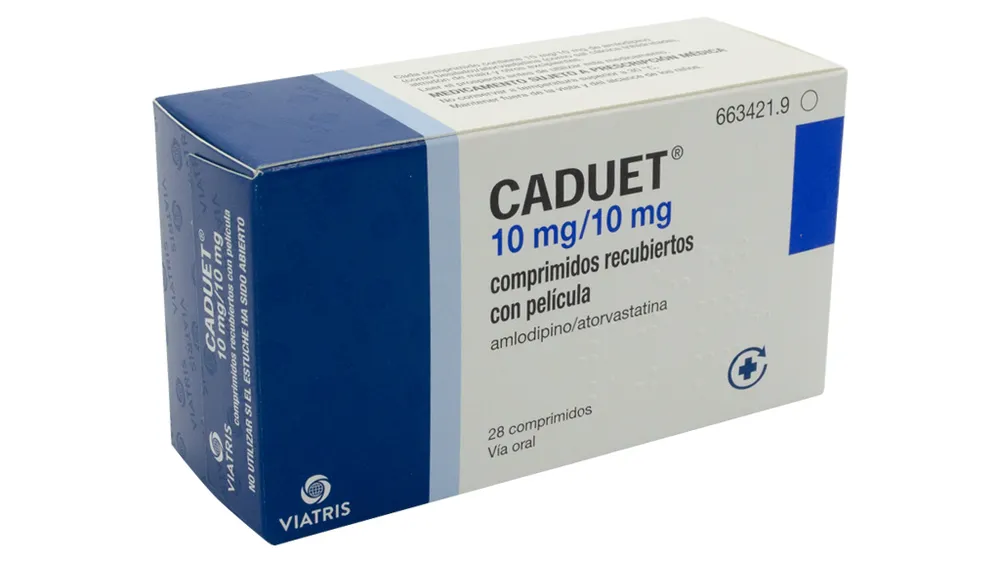
Table of Contents
- Package leaflet: Information for the user
- Introduction
- 1. What Caduet is and what it is used for
- 2. What you need to know before taking Caduet
- 3. How to take Caduet
- 4. Possible adverse effects
- 5. Storage of Caduet
- 6. Contents of the pack and other information
- **Manufacturer**
- o
- Pfizer Manufacturing Deutschland GmbH
Package leaflet: Information for the user
Introduction
Package leaflet: information for the user
Caduet 10mg/10mg film-coated tablets
amlodipine besylate/atorvastatin calcium trihydrate
Read all of this leaflet carefully before you start taking this medicine because it contains important information for you.
- Keep this leaflet. You may need to read it again.
- If you have any further questions, ask your doctor, pharmacist, or nurse.
- This medicine has been prescribed for you only. Do not pass it on to other people, even if they have the same symptoms as you, because it may harm them.
- If you get any side effects, talk to your doctor or pharmacist, even if it is a side effect not listed in this leaflet. See section 4.
Contents of the leaflet
- What Caduet is and what it is used for
- What you need to know before you take Caduet
- How to take Caduet
- Possible side effects
- How to store Caduet
- Contents of the pack and other information
1. What Caduet is and what it is used for
Caduet is used to prevent cardiovascular events (for example, chest pain due to angina, heart attack) in patients with high blood pressure who also have risk factors for cardiovascular disease, such as smoking, overweight, high blood cholesterol levels, family history of heart disease, or diabetes. The presence of these risk factors in combination with high blood pressure increases the risk of cardiovascular events.
Caduet is a product containing two active substances, amlodipine (a calcium antagonist) and atorvastatin (a statin), and is used when your doctor considers it appropriate to take both medicines. Amlodipine is used in the treatment of high blood pressure (hypertension), and atorvastatin reduces cholesterol levels.
High blood pressure (hypertension) is a condition in which blood pressure is persistently and abnormally elevated, and is one of the risk factors for cardiovascular events (angina, heart attack, stroke).
Cholesterol is a substance naturally present in the body and necessary for normal growth. However, if there is too much cholesterol in the blood, it may deposit in the walls of blood vessels, increasing the risk of blood clots and cardiovascular events. This is one of the most common causes of heart disease.
2. What you need to know before taking Caduet
Do not take Caduet
- if you are allergic (hypersensitive) to amlodipine or atorvastatin or to any other calcium channel blocker or to any of the other ingredients of this medicine (listed in section 6)
- if you currently have a liver disease (if you have previously had a liver disease, see below the section “Warnings and precautions”)
- if you have had unexplained abnormal results in blood tests assessing liver function
- if you are pregnant, trying to become pregnant, or during breastfeeding
- if you are taking any of the following medicines: ketoconazole, itraconazole (medicines used to treat fungal infections), telithromycin (an antibiotic)
- if you have low blood pressure (hypotension)
- if you have narrowing of the heart's aortic valve (aortic stenosis) or cardiogenic shock (a condition where the heart is unable to supply enough blood to the body)
- if you suffer from heart failure following myocardial infarction
- if you are using the combination of glecaprevir/pibrentasvir for the treatment of hepatitis C.
Warnings and precautions
Talk to your doctor, pharmacist, or nurse before starting Caduet
-
if you have severe respiratory failure
-
if you are taking or have taken within the last 7 days a medicine containing fusidic acid (used to treat bacterial infection), taken orally or by injection. The combination of fusidic acid and Caduet may cause serious muscle problems (rhabdomyolysis)
-
if you have kidney problems
-
if you have an underactive thyroid gland (hypothyroidism)
-
if you have recurrent or unexplained muscle pain, or personal or family history of inherited muscle disorders
-
if you previously had muscle problems during treatment with other cholesterol-lowering (lipid-lowering) medicines (e.g., medicines with “statins” or “fibrates”)
-
if you regularly drink large amounts of alcohol
-
if you have previously had a liver disease
-
if you are over 70 years old
-
if you have previously had a stroke with bleeding in the brain, or have small fluid-filled sacs in the brain due to previous strokes
-
if you have or have had myasthenia (a disease characterized by generalized muscle weakness, which in some cases affects the muscles used for breathing) or ocular myasthenia (a disease causing weakness of the eye muscles), as statins may sometimes worsen the condition or trigger the onset of myasthenia (see section 4).
In any of these cases, your doctor may advise blood tests before and possibly during treatment with Caduet to assess the risk of muscle-related adverse effects. The risk of experiencing muscle-related adverse effects, such as rhabdomyolysis, is known to increase when taken together with certain medicines (see section “Use of Caduet with other medicines”).
Also inform your doctor or pharmacist if you experience persistent muscle weakness. Additional tests and treatments may be needed to diagnose and manage this condition.
While taking this medicine, your doctor will monitor whether you have diabetes or are at risk of developing diabetes. This risk increases if you have high levels of sugar and fats in the blood, are overweight, or have high blood pressure.
Other medicines and Caduet
Tell your doctor or pharmacist if you are taking, have recently taken, or might need to take any other medicine.
Some medicines may interact with Caduet. This interaction may result in one or both medicines being less effective. It may also increase the risk or severity of adverse effects, including serious muscle damage known as rhabdomyolysis and myopathy (described in Section 4):
- Certain antibiotics, for example rifampicin, fusidic acid; or “macrolide antibiotics”, such as erythromycin, clarithromycin, telithromycin, or antifungal medicines, for example ketoconazole, itraconazole
- Medicines to control your lipid levels: fibrates such as gemfibrozil or colestipol
- Medicines to control your heart rhythm, for example amiodarone, diltiazem, and verapamil
- Anticonvulsants, for example carbamazepine, phenobarbital, phenytoin, fosphenytoin, primidone
- Medicines used to modify the function of your immune system, for example cyclosporine, tacrolimus, sirolimus, temsirolimus, and everolimus
- Medicines used in the treatment of HIV infection, for example ritonavir, lopinavir, atazanavir, indinavir, darunavir, tipranavir combined with ritonavir, etc., nelfinavir
- Certain medicines used for the treatment of hepatitis C, such as telaprevir, boceprevir, and the combination of elbasvir/grazoprevir, ledipasvir/sofosbuvir
- Letermovir, a medicine that helps prevent diseases caused by cytomegalovirus
- Medicines used to treat depression, for example nefazodone and imipramine
- Medicines used to treat mental disorders, for example antipsychotics (neuroleptics)
- Medicines for treating heart failure, for example beta-blockers
- Medicines for treating high blood pressure, for example angiotensin II receptor antagonists, ACE inhibitors, verapamil, and diuretics
- Alpha-blockers used to treat high blood pressure and prostate problems
- Other medicines known to interact with Caduet include ezetimibe (cholesterol-lowering), warfarin (reduces blood clotting), oral contraceptives, stiripentol (anticonvulsant for epilepsy), cimetidine (used for heartburn and peptic ulcer), phenazone (an analgesic), colchicine (used to treat gout), and antacids (indigestion remedies containing aluminium or magnesium)
- Amifostine (used in cancer treatment)
- Sildenafil (for erectile dysfunction)
- Dantrolene and baclofen (muscle relaxants)
- Steroids
- Over-the-counter medicines containing St John’s wort (Hypericum perforatum)
- If you need to take oral fusidic acid to treat a bacterial infection, you must stop taking this medicine. Your doctor will advise you when you can restart treatment with Caduet. Using Caduet with fusidic acid may cause muscle weakness, tenderness, or pain (rhabdomyolysis). For more information on rhabdomyolysis, see section 4.
- Daptomycin (a medicine used to treat complicated skin and skin structure infections and bacteremia).
Caduet may lower your blood pressure even more if you are already taking other medicines for high blood pressure.
Inform your doctor or pharmacist if you are using or have recently used any other medicines, including those obtained without a prescription.
Taking Caduet with food, drinks, and alcohol
Caduet can be taken at any time of day, with or without food.
Grapefruit juice
Do not drink more than one or two glasses of grapefruit juice per day, as large amounts may interfere with the effects of Caduet.
Alcohol
Avoid drinking large amounts of alcohol while taking Caduet. See details in the section “Warnings and precautions”.
Pregnancy, breastfeeding, and fertility
Do not take Caduet if you are pregnant, breastfeeding your child, or trying to become pregnant. Women of childbearing potential must use appropriate contraceptive measures when taking Caduet or any other medicine. Consult your doctor or pharmacist before using any medicine.
It has been shown that amlodipine passes into breast milk in small amounts.
Driving and using machines
Do not drive or operate machinery if you feel dizzy after taking this medicine.
Caduet contains sodium
This medicine contains less than 23 mg of sodium (1 mmol) per tablet, which is essentially “sodium-free”.
3. How to take Caduet
Follow exactly the instructions for the use of this medicine given by your doctor or pharmacist. If in doubt, consult your doctor or pharmacist again.
Adults
The usual starting dose of Caduet for adults is one 5 mg/10 mg tablet daily. If necessary, your doctor may increase the dose to one daily tablet of Caduet 10 mg/10 mg.
Caduet tablets should be swallowed whole with a little water. The tablets may be taken orally at any time of day, with or without food. However, try to take your tablet at the same time each day.
Follow your doctor's dietary recommendations, especially regarding dietary fat restriction, stopping smoking, and regular exercise.
If you think that the effect of Caduet tablets is too strong or too weak, inform your doctor or pharmacist.
Use in children and adolescents
This medicine is not recommended for children and adolescents.
If you take more Caduet than you should
If you accidentally take too many Caduet tablets (more than your usual daily dose), contact your doctor or the nearest hospital immediately or call the Toxicology Information Service at 91 562 04 20 (indicating the medicine and the amount taken). Bring any remaining tablets, the carton, and the full pack so that hospital staff can easily identify the medicine you have taken.
Excess fluid may accumulate in the lungs (pulmonary edema), causing difficulty in breathing, which may develop within 24–48 hours after ingestion.
If you forget to take Caduet
If you forget to take a dose, take the next scheduled dose at the correct time.
Do not take a double dose to make up for forgotten doses.
If you stop taking Caduet
Do not stop taking Caduet unless instructed by your doctor. If you have any further questions about using this medicine or wish to discontinue treatment, consult your doctor or pharmacist.
4. Possible adverse effects
Like all medicines, this medicine may cause adverse effects, although not everyone experiences them.
If any of the following occur, stop taking Caduet and contact your doctor immediately
- Swelling of the face, tongue, or airways, which may cause severe breathing difficulties.
- If you experience unexplained muscle weakness, muscle tenderness, muscle pain or breakdown, or brownish-red discoloration of the urine, especially if you also feel unwell or have a fever. (Very rarely, this combination of effects may lead to a serious, potentially life-threatening condition called rhabdomyolysis).
- Lupus-like syndrome (including rash, joint disorders, and effects on blood cells).
Very common: may affect more than 1 in 10 people
- Swelling of arms, hands, legs, joints, or feet
Common: may affect up to 1 in 10 people
- Allergic reaction
- Headache (especially at the beginning of treatment), dizziness, feeling of fatigue, drowsiness
- Irregular heartbeat, flushing
- Palpitations (abnormal awareness of heartbeat), difficulty breathing
- Nasal inflammation, sore throat, nosebleeds
- Feeling unwell, abdominal pain, indigestion, changes in bowel habits (including diarrhoea, constipation, and flatulence)
- Muscle and joint pain, muscle cramps and spasms, back pain, limb pain, muscle fatigue
- Increased blood sugar levels (if you have diabetes, you should continue to monitor your blood sugar levels carefully), increased blood creatine kinase, blood test results indicating possible abnormal liver function
- Vision problems (including double vision), blurred vision
Uncommon: may affect up to 1 in 100 people
- Hepatitis (inflammation of the liver)
- Runny nose, loss of appetite, decrease in blood sugar levels (if you have diabetes, you should continue to monitor your blood sugar levels carefully), weight gain or loss
- Difficulty sleeping, nightmares, mood changes (including anxiety), depression, tremor, sensory nerve disturbances (reduced sensitivity) in arms and legs, memory loss
- Ringing or buzzing in the ears, weakness, increased sweating, low blood pressure
- Dry mouth, taste disturbances, vomiting, burping
- Hair loss, bruising or small spots on the skin, skin discoloration, reduced skin sensitivity to touch or pain, numbness or tingling in fingers and toes, skin rash, hives, or itching
- Urinary disorders (including excessive urination at night and increased urinary frequency), impotence, abnormal breast development in men
- Feeling unwell, pancreatitis (inflammation of the pancreas causing stomach pain), pain, neck pain, chest pain
- Positive urine tests for white blood cells
- Abnormal heart rhythm
- Cough
Rare: may affect up to 1 in 1,000 people
- Unexpected bleeding or bruising
- Severe muscle inflammation, intense muscle pain or cramps, muscle breakdown, which rarely may lead to rhabdomyolysis (destruction of muscle cells) and abnormal muscle rupture. Abnormal muscle rupture may not resolve even after stopping Caduet and can be life-threatening, causing kidney problems
- Decrease in the number of platelets in the blood
- Liver disorders (yellowing of the skin and whites of the eyes)
- Serious allergic skin reactions, skin redness, blistering rash, skin peeling that may rapidly spread to other parts of the body, possibly starting with flu-like symptoms and high fever (toxic epidermal necrolysis)
- Deep layer skin inflammation – including swelling of lips, eyelids, and tongue
- Inflammation or swelling of skeletal muscle, blistering rashes, sudden and severe skin inflammation in an area
- Tendon inflammation, tendon injury
- Confusion
- Skin rash or mouth ulcers (drug-induced lichenoid reaction)
Very rare: may affect up to 1 in 10,000 people
- Allergic reaction – symptoms may include sudden wheezing, chest pain or tightness, swelling of eyelids, face, lips, mouth, tongue or throat, difficulty breathing, collapse
- Reduction in white blood cell count
- Increased muscle tone or stiffness
- Heart attack, inflammation of small blood vessels, stomach pain (gastritis)
- Gum overgrowth, bleeding gums
- Hearing loss, liver failure
- Photosensitivity (skin sensitivity to light)
Frequency not known: cannot be estimated from available data
- Persistent muscle weakness
- Sexual dysfunction
- Respiratory problems including persistent cough and/or difficulty breathing or fever
- Disorders combining stiffness, tremor, and/or movement disorders
- Diabetes. This is more likely if you have high levels of sugar and fats in the blood, are overweight, and have high blood pressure. Your doctor will monitor you while you are taking this medicine
- Myasthenia gravis (a disease causing generalized muscle weakness, which in some cases affects the muscles used for breathing)
Ocular myasthenia (a disease causing weakness of the eye muscles)
Consult your doctor if you experience worsening weakness in arms or legs after periods of activity, double vision or drooping eyelids, difficulty swallowing, or difficulty breathing.
Reporting of adverse effects
If you experience any adverse effects, talk to your doctor, pharmacist, or nurse, even if they are possible adverse effects not listed in this leaflet. You can also report them directly via the Spanish Pharmacovigilance System for Human Medicines: http://www.notificaram.es. By reporting adverse effects, you can help provide more information on the safety of this medicine.
5. Storage of Caduet
Keep this medicine out of the sight and reach of children.
Do not use this medicine after the expiry date stated on the pack, blister, and bottle after "EXP". The expiry date refers to the last day of the month indicated.
Do not store above 30°C.
Medicines should not be disposed of via wastewater or household waste. Dispose of containers and unused medicines at the SIGRE collection point at your pharmacy. Ask your pharmacist how to dispose of containers and medicines you no longer need. This helps protect the environment.
6. Contents of the pack and other information
Composition of Caduet
The active substances are amlodipine and atorvastatin. Caduet 10 mg/10 mg tablets contain 10 mg of amlodipine as amlodipine besylate and 10 mg of atorvastatin as atorvastatin calcium trihydrate.
The other components are: calcium carbonate, sodium croscarmellose, microcrystalline cellulose, pregelatinized corn starch (corn starch), polysorbate 80, hypromellose, colloidal silicon dioxide (anhydrous), and magnesium stearate.
The coating of Caduet 10 mg/10 mg tablets contains: Opadry II Blue 85F10919 (polyvinyl alcohol, titanium dioxide (E171), indigo carmine aluminium lake (E132), macrogol 3000, talc).
Nature of the product and pack contents
Caduet 10 mg/10 mg tablets are blue, oval-shaped, marked with "CDT 101" on one side and smooth on the other.
Caduet tablets are available in cartons with blister packs containing 7, 10, 14, 20, 28, 30, 50, 56, 60, 90, 100 or 200 tablets, or in bottles with child-resistant closures containing 30 or 90 tablets.
Only certain pack sizes may be marketed.
Marketing Authorization Holder and Manufacturer
Marketing Authorization Holder
Viatris Healthcare Limited
Damastown Industrial Park
Mulhuddart, Dublin 15
Dublin
Ireland
Manufacturer
Klocke Pharma-Service GmbH
Strassburger Strasse 77
Appenweier 77767
Germany
o
Pfizer Manufacturing Deutschland GmbH
Mooswaldallee 1
79108 Freiburg im Breisgau
Germany
or
Mylan Hungary Kft.
Mylan utca 1
Komárom, 2900
Hungary
You can request further information about this medicinal product by contacting the local representative of the marketing authorization holder:
Viatris Pharmaceuticals, S.L.U.
Calle General Aranaz, 86
28027 Madrid
Spain
This medicinal product is authorized in the Member States of the European Economic Area under the following names:
Austria Caduet
Czech Republic Caduet
France Caduet
Hungary Caduet
Latvia Caduet
Portugal Caduet
Spain Caduet
Date of latest review of this leaflet: 01/2026
Detailed information about this medicinal product is available on the website of the Spanish Agency of Medicines and Medical Devices (AEMPS) (http://www.aemps.gob.es/)