Cabazitaxel Zentiva 60 mg concentrate and solvent for infusion solution EFG
Spain
Table of Contents
- Patient Information Leaflet
- Introduction
- 1. What Cabazitaxel Zentiva is and what it is used for
- 2. What you need to know before using Cabazitaxel Zentiva
- 3. How to use Cabazitaxel Zentiva
- 4. Possible adverse effects
- 5. Storage of Cabazitaxel Zentiva
- 6. Contents of the container and other information
Patient Information Leaflet
Introduction
Package leaflet: Information for the patient
Cabazitaxel Zentiva 60 mg concentrate and solvent for solution for infusion EFG
Read all of this leaflet carefully before you start using this medicine because it contains important information for you.
- Keep this leaflet. You may need to read it again.
- If you have any questions, ask your doctor, pharmacist, or nurse.
- If you get any side effects, talk to your doctor, pharmacist, or nurse, even if the side effects are not listed in this leaflet. See section 4.
Leaflet contents
- What Cabazitaxel Zentiva is and what it is used for
- What you need to know before you are given Cabazitaxel Zentiva
- How to use Cabazitaxel Zentiva
- Possible side effects
- How to store Cabazitaxel Zentiva
- Contents of the pack and other information
1. What Cabazitaxel Zentiva is and what it is used for
Cabazitaxel Zentiva contains the active substance cabazitaxel, which belongs to a group of medicines called "taxanes" used to treat cancers.
Cabazitaxel is used to treat prostate cancer that has progressed after prior chemotherapy. It works by stopping the growth and multiplication of cancer cells.
As part of your treatment, you will also take an oral corticosteroid (prednisone or prednisolone) daily. Please consult your doctor for further information about this additional medicine.
2. What you need to know before using Cabazitaxel Zentiva
Do not use Cabazitaxel Zentiva:
- if you are allergic (hypersensitive) to cabazitaxel, to other taxanes, to polysorbate 80, or to any of the other ingredients of this medicine (listed in section 6),
- if your white blood cell count is very low (neutrophil count less than or equal to 1,500/mm³),
- if you have severe liver problems,
- if you have recently received or are scheduled to receive the yellow fever vaccine.
You must not receive Cabazitaxel Zentiva if any of the above apply to you. If you are unsure, consult your doctor before receiving Cabazitaxel Zentiva.
Warnings and precautions
Before starting treatment with Cabazitaxel Zentiva, you will have blood tests to ensure you have enough blood cells and that your kidneys and liver are functioning adequately to receive Cabazitaxel Zentiva.
Tell your doctor immediately if:
- you have a fever. During treatment with Cabazitaxel Zentiva, your white blood cell count is more likely to decrease. Your doctor will monitor your blood and general condition for signs of infection. You may be given other medicines to help maintain your blood cell counts. People with low blood cell counts may develop infections that could be life-threatening. Fever may be the first sign of infection, so inform your doctor immediately if you develop a fever.
- you have ever had any allergies. Severe allergic reactions may occur during treatment with Cabazitaxel Zentiva.
- you have severe or prolonged diarrhoea, feel unwell (nausea), or are vomiting. Any of these may lead to severe dehydration. Your doctor will need to treat you accordingly.
- you experience numbness, tingling, burning sensations, or reduced sensation in your hands and feet.
- you have intestinal bleeding, changes in the colour of your stools, or stomach pain. If bleeding or pain is severe, your doctor will stop your treatment with Cabazitaxel Zentiva. This is because Cabazitaxel Zentiva may increase the risk of bleeding or the development of perforations in the intestinal wall.
- you have kidney problems.
- you develop yellowing of the skin or eyes, dark urine, severe nausea (feeling unwell), or vomiting, as these may be signs or symptoms of liver problems.
- you notice a significant increase or decrease in your urine volume.
- you have blood in your urine.
If any of the above occur, inform your doctor immediately. Your doctor may reduce the dose of Cabazitaxel Zentiva or stop treatment.
Using Cabazitaxel Zentiva with other medicines
- Inform your doctor, pharmacist, or nurse if you are taking or have recently taken any other medicines, including those obtained without a prescription. This is because some medicines may affect the effectiveness of Cabazitaxel Zentiva or Cabazitaxel Zentiva may affect the effectiveness of other medicines. These medicines include:
- ketoconazole, rifampicin (for infections);
- carbamazepine, phenobarbital, or phenytoin (for seizures);
- St. John’s wort (Hypericum perforatum) (a herbal remedy used to treat depression and other conditions);
- statins (such as simvastatin, lovastatin, atorvastatin, rosuvastatin, or pravastatin) (to reduce cholesterol in your blood);
- valsartan (for high blood pressure);
- repaglinide (for diabetes).
While receiving treatment with Cabazitaxel Zentiva, consult your doctor before getting vaccinated.
Pregnancy, breastfeeding and fertility
Cabazitaxel Zentiva is not indicated for use in women.
Use condoms during sexual intercourse if your partner is or could be pregnant. Cabazitaxel may be present in your semen and could harm the fetus. It is recommended that you do not father a child during and for 4 months after treatment. You should also seek advice about sperm preservation before starting treatment, as Cabazitaxel Zentiva may impair male fertility.
Driving and using machines
During treatment with this medicine, you may feel tired or dizzy. If this occurs, do not drive or operate tools or machinery until you feel better.
Cabazitaxel Zentiva contains ethanol (alcohol)
This medicine contains 709.8 mg of alcohol (ethanol) in each vial of solvent. The amount in the dose of this medicine is equivalent to 14 ml of beer or 6 ml of wine. The small amount of alcohol in this medicine is not expected to produce any noticeable effect. If you are alcohol-dependent, have liver disease or epilepsy, consult your doctor or pharmacist before taking this medicine.
3. How to use Cabazitaxel Zentiva
Instructions for use
Before receiving cabazitaxel, you will be given antiallergic medications to reduce the risk of allergic reactions.
- Cabazitaxel will be administered by a doctor or nurse.
- Cabazitaxel must be prepared (diluted) before administration. This package leaflet provides practical information on the handling and administration of cabazitaxel for physicians, nurses, and pharmacists.
- Cabazitaxel will be administered in the hospital via an intravenous infusion (drip) into one of your veins over approximately 1 hour.
- As part of your treatment, you will also take an oral corticosteroid medication (prednisone or prednisolone) daily by mouth.
Dosage and frequency
- The usual dose depends on your body surface area. Your doctor will calculate your body surface area in square meters (m²) and determine the dose you should receive.
- You will usually receive one infusion every 3 weeks.
In case of overdose or accidental ingestion, consult your doctor or pharmacist, or call the Toxicology Information Service at telephone number: 91 562 04 20, indicating the medication and the amount ingested.
If you have any further questions about the use of this medicine, ask your doctor, pharmacist, or nurse.
4. Possible adverse effects
Like all medicines, Cabazitaxel Zentiva may cause adverse effects, although not everyone experiences them. Your doctor will discuss this with you and explain the potential risks and benefits of your treatment.
Contact your doctor immediately if you notice any of the following adverse effects:
- fever (high temperature). This is common (may affect up to 1 in 10 people).
- severe loss of body fluids (dehydration). This is common (may affect up to 1 in 10 people). This may occur if you have severe or prolonged diarrhea, fever, or if you have been vomiting.
- severe stomach pain or stomach pain that does not go away. This may happen if you have a perforation in the stomach, esophagus, or intestine (gastrointestinal perforation). This may be fatal.
If any of the above occur, inform your doctor immediately.
Other adverse effects include:
Very common (may affect more than 1 in 10 people):
- reduction in the number of red blood cells (anemia), or white blood cells (which are important for fighting infections)
- reduction in the number of platelets (which increases the risk of bleeding)
- loss of appetite (anorexia)
- stomach discomfort, including nausea, vomiting, diarrhea, or constipation
- back pain
- blood in the urine
- tiredness, weakness, or lack of energy
Common (may affect up to 1 in 10 people):
- altered taste
- shortness of breath
- cough
- abdominal pain
- short-term hair loss (in most cases, hair grows back normally)
- joint pain
- urinary tract infection
- low white blood cell count associated with fever and infections
- numbness, tingling, burning, or reduced sensation in hands and feet
- dizziness
- headache
- increased or decreased blood pressure
- stomach discomfort, heartburn, or burping
- stomach pain
- hemorrhoids
- muscle spasms
- frequent or painful urination
- urinary incontinence
- kidney problems or kidney dysfunction
- mouth or lip ulcers
- infections or increased risk of infections
- high blood sugar levels
- insomnia
- mental confusion
- feeling of anxiety
- unusual sensation or loss of sensation or pain in hands and feet
- balance problems
- rapid or irregular heartbeat
- blood clots in the legs or lungs
- skin flushing
- mouth or throat pain
- rectal bleeding
- discomfort, disturbances, weakness, or muscle pain
- swelling of feet or legs
- chills
- nail disorders (discoloration of nails; nails may fall off)
Uncommon (may affect up to 1 in 100 people):
- low blood potassium levels
- ringing in the ears
- sensation of warmth in the skin
- inflammation of the bladder, which may occur when the bladder has previously been exposed to radiotherapy (radiation recall cystitis)
Frequency not known (cannot be estimated from available data):
- interstitial lung disease (inflammation of the lungs causing cough and difficulty breathing)
Reporting of adverse effects:
If you experience any adverse effects, talk to your doctor, pharmacist, or nurse, even if they are possible adverse effects not listed in this leaflet. You can also report them directly through the Spanish Pharmacovigilance System for Human Medicines: https://www.notificaram.es. By reporting adverse effects, you can help provide more information on the safety of this medicine.
5. Storage of Cabazitaxel Zentiva
Keep this medicine out of the sight and reach of children.
Do not use this medicine after the expiry date stated on the packaging and on the label of the vials after EXP. The expiry date refers to the last day of the month indicated.
Do not refrigerate.
In the section "Practical information for physicians or healthcare professionals on the preparation, administration, and handling of Cabazitaxel Zentiva", information is provided regarding the storage and duration of use of Cabazitaxel Zentiva once it has been diluted and is ready for use.
Disposal of unused medicine must be carried out in accordance with local regulations. These measures will help protect the environment.
6. Contents of the container and other information
Composition of Cabazitaxel Zentiva
The active substance is cabazitaxel. One ml of concentrate contains 40 mg of cabazitaxel. One vial of concentrate contains 60 mg of cabazitaxel.
The other components are: polysorbate 80, citric acid and absolute ethanol in the concentrate, and 96% ethanol and water for injections in the solvent (see section 2 “Cabazitaxel Zentiva contains ethanol (alcohol)”).
Note: both the vial of the Cabazitaxel Zentiva 60 mg/1.5 ml concentrate (fill volume: 1.83 ml) and the solvent vial (fill volume: 5.67 ml) contain an overfill to compensate for liquid loss during preparation. This overfill ensures that, after dilution with the complete contents of the provided solvent, a solution containing 10 mg/ml of cabazitaxel for injection is obtained.
Nature of the product and contents of the pack
Cabazitaxel Zentiva is a concentrate and solvent for solution for infusion (sterile concentrate).
The concentrate is a viscous, clear, colourless to pale yellow solution.
The solvent is a clear, colourless solution.
One pack of Cabazitaxel Zentiva contains:
Concentrate: 1.5 ml of concentrate in a 15 ml clear tubular glass vial (type I), closed with a grey rubber elastomeric stopper, sealed with a flip-off aluminium seal with a yellow plastic disc. Each vial contains 60 mg of cabazitaxel in 1.5 ml (nominal volume).
Solvent: 5.67 ml in a 15 ml clear glass vial (type I), closed with a grey rubber elastomeric stopper, sealed with a flip-off aluminium seal with a dark blue plastic disc. Each vial contains 5.67 ml (nominal volume).
Marketing Authorisation Holder and Manufacturer
Marketing Authorisation Holder
Zentiva, k.s.,
U kabelovny 130,
Prague 10 – Dolní Mecholupy,
102 37 Czech Republic
Manufacturer
Tillomed Malta Limited,
Malta Life Sciences
Park, LS2.01.06
Industrial Estate,
San Gwann, SGN 3000,
Malta
For further information about this medicinal product, please contact the local representative of the Marketing Authorisation Holder:
Zentiva Spain S.L.U.
Avenida de Europa, 19, Edificio 3, Planta 1.
28224 Pozuelo de Alarcón, Madrid
Spain
This medicinal product is authorised in the Member States of the European Economic Area and in the United Kingdom (Northern Ireland) under the following names:
Country | Product Name |
Germany | Cabazitaxel Tillomed 60 mg concentrate and solvent for solution for infusion |
Spain | Cabazitaxel Zentiva 60 mg concentrate and solvent for perfusion solution EFG |
Italy | Cabazitaxel Tillomed |
France | Cabazitaxel Tillomed 60 mg solution to dilute and solvent for solution for infusion |
Date of the most recent review of this leaflet: July 2023
Detailed information on this medicine is available on the website of the Spanish Agency of Medicines and Health Products (AEMPS) http://www.aemps.gob.es/
<------------------------------------------------------------------------------------------------------>
The following information is intended for healthcare professionals only.
PRACTICAL INFORMATION FOR PHYSICIANS OR HEALTHCARE PROFESSIONALS ON THE PREPARATION, ADMINISTRATION, AND HANDLING OF Cabazitaxel Zentiva 60 mg CONCENTRATE AND SOLVENT FOR PERFUSION SOLUTION
This information complements sections 3 and 5 for the user.
It is important to read the entire content of this procedure before preparing the perfusion solution.
Incompatibilities
This medicinal product must not be mixed with other medicinal products except those used for dilution.
Shelf life and special storage precautions
For the Cabazitaxel Zentiva 60 mg concentrate and solvent container
Do not refrigerate.
After opening the vial
The concentrate and solvent vials should be used immediately. If not used immediately, the duration and conditions of storage are the responsibility of the user. From a microbiological standpoint, the two-step dilution process must be carried out under controlled and aseptic conditions (see below “Preparation and administration precautions”).
After initial dilution of Cabazitaxel Zentiva 60 mg concentrate with the complete contents of the solvent vial, chemical and physical in-use stability has been demonstrated for 1 hour at room temperature (15°C – 30°C).
After final dilution in the perfusion bag/bottle
Chemical and physical stability of the perfusion solution has been demonstrated for 8 hours at room temperature (15°C – 30°C), including 1 hour of infusion time, and for 48 hours under refrigeration (2°C – 8°C), including 1 hour of infusion time.
From a microbiological standpoint, the perfusion solution should be used immediately. If not used immediately, the duration and conditions of storage are the responsibility of the user and should normally not exceed 24 hours at 2°C – 8°C, unless the dilution has been carried out under controlled, validated aseptic conditions.
Preparation and administration precautions
As with other antineoplastic agents, caution should be exercised during the preparation and administration of cabazitaxel solutions, taking into account the use of safety devices, personal protective equipment (e.g., gloves), and preparation procedures.
If at any stage of preparation cabazitaxel comes into contact with the skin, wash immediately and thoroughly with soap and water. If contact occurs with mucous membranes, rinse immediately and thoroughly with water.
Cabazitaxel must only be prepared and administered by personnel trained in handling cytotoxic agents. Pregnant healthcare workers must not handle this product.
Always dilute the concentrate for perfusion solution with the complete solvent provided before adding it to perfusion solutions.
Steps of preparation
Carefully read ALL of this section before mixing and diluting. Cabazitaxel Zentiva requires TWO dilutions before administration. Follow the preparation instructions provided below.
Note: Both the vial of Cabazitaxel Zentiva 60 mg/1.5 ml concentrate (fill volume: 1.83 ml) and the solvent vial (fill volume: 5.67 ml) contain an overfill to compensate for liquid loss during preparation. This overfill ensures that, after dilution with the COMPLETE contents of the provided solvent, a solution containing 10 mg/ml of cabazitaxel is obtained.
To prepare the perfusion solution, the following dilution process must be performed aseptically in two steps.
Step 1: Initial dilution of the perfusion solution concentrate with the provided solvent.
Step 1.1 Inspect the vial of concentrate and the solvent provided. The concentrate solution and the solvent should be clear and transparent |
|
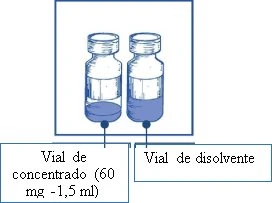
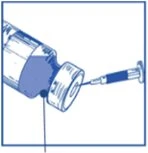
Step 1.2 Using a syringe equipped with a fixed needle, aseptically withdraw the entire contents of the provided solvent by partially inverting the vial. |
|
| |
Step 1.3 Inject the complete contents into the corresponding vial of concentrate. To minimize foam formation as much as possible when injecting the solvent, direct the needle against the inner wall of the concentrate vial and inject slowly. After reconstitution, the resulting solution contains 10 mg/mL of cabazitaxel. |
|
Step 1.4 Remove the syringe and needle and gently mix by repeated inversions until a clear and homogeneous solution is obtained. This may take approximately 45 seconds. |
|
| |
Step 1.5 Allow the solution to stand for approximately 5 minutes, then check that the solution is homogeneous and clear. It is normal for some foam to persist after this time. |
|

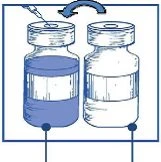
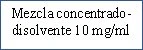
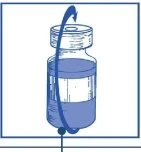

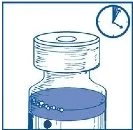

The resulting concentrate-solvent mixture contains 10 mg/mL of cabazitaxel (at least 6 mL of delivered volume). The second dilution must be performed immediately (within 1 hour) as detailed in Step 2.
More than one vial of concentrate-solvent mixture may be required to administer the prescribed dose.
Step 2: Final dilution for infusion
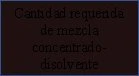
Step 2.1 Aseptically withdraw the required amount of the concentrate-solvent mixture (10 mg/mL of cabazitaxel) using a graduated syringe equipped with a fixed needle. For example, a 45 mg dose of Cabazitaxel Zentiva would require 4.5 mL of the mixture prepared in Step 1. Since foam may still adhere to the vial wall after the preparation described in Step 1, it is preferable to position the syringe needle in the middle of the solution during withdrawal. |
|
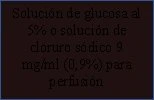
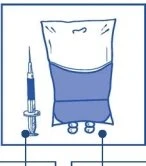
Step 2.2 Inject into a sterile, non-PVC container containing either 5% glucose solution or sodium chloride 9 mg/mL (0.9%) solution for infusion. The concentration of the infusion solution must be between 0.10 mg/mL and 0.26 mg/mL. |
|
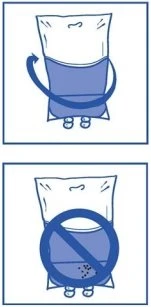
Step 2.3 Remove the syringe and mix the contents of the infusion bag or bottle manually by gentle swirling. Step 2.4 As with all parenteral products, the resulting infusion solution should be inspected visually prior to administration. Since the infusion solution is supersaturated, crystallization may occur over time. In such cases, the solution must not be used and should be discarded. |
|

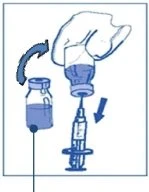
The infusion solution should be used immediately. However, the in-use storage time may be longer under the specific conditions mentioned in the section Shelf life and special precautions for storage.
Disposal of unused medicinal product and of all materials that have come into contact with it must be carried out in accordance with local regulations.
Method of administration
Cabazitaxel Zentiva is administered as a 1-hour infusion.
The use of an in-line filter with a nominal pore size of 0.22 micrometers (also referred to as 0.2 micrometers) is recommended during administration.
PVC infusion containers or polyurethane infusion sets must not be used for the preparation and administration of the infusion solution.