Bexsero suspension for injection in pre-filled syringe
Spain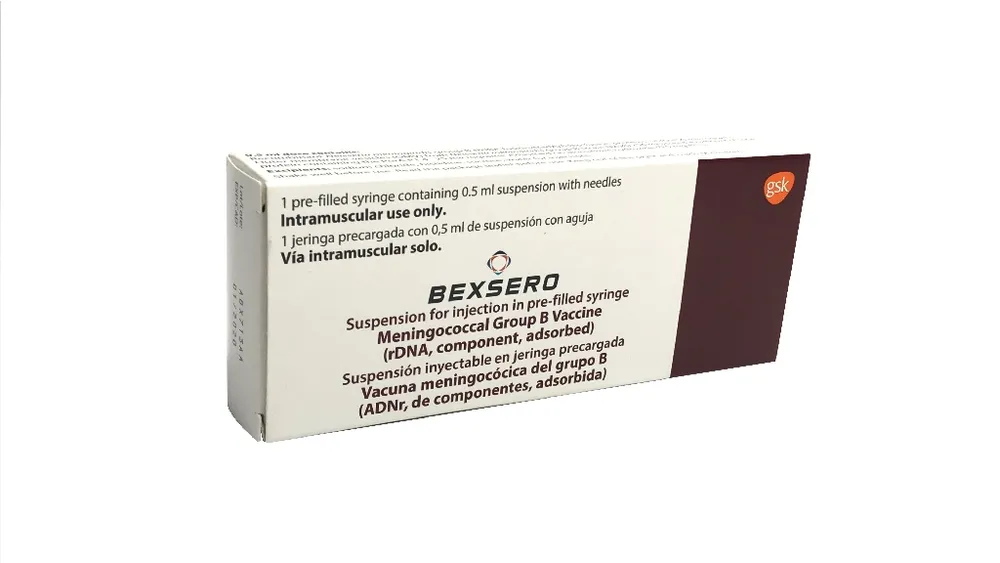
Table of Contents
Package leaflet: Information for the user
Introduction
Package leaflet: information for the user
Bexsero
Injectable suspension in a pre-filled syringe
Meningococcal group B vaccine (rDNA, component, adsorbed)
Read all of this leaflet carefully before you or your child are given this medicine because it contains important information for you or your child.
- Keep this leaflet as you may need to read it again.
- If you have any questions, ask your doctor or nurse.
- This vaccine has been prescribed only for you or your child.
- If you experience any adverse reactions, consult your doctor or nurse, even if they are not listed in this leaflet. See section 4.
Contents of this leaflet:
- What Bexsero is and what it is used for
- What you need to know before you or your child receive Bexsero
- How to use Bexsero
- Possible adverse reactions
- How to store Bexsero
- Contents of the pack and other information
1. What BEXSERO is and what it is used for
Bexsero is a group B meningococcal vaccine.
Bexsero contains four different components from the surface of the Neisseria meningitidis group B bacterium.
Bexsero is given to individuals from 2 months of age to help protect them against diseases caused by Neisseria meningitidis group B bacteria. These bacteria can cause serious infections that may sometimes be fatal, such as meningitis (inflammation of the membrane covering the brain and spinal cord) and sepsis (a systemic blood infection).
The vaccine works by specifically stimulating the vaccinated person's natural immune system, thereby producing protection against the disease.
2. What you need to know before you or your child receive BEXSERO
DO NOT use Bexsero
- If you or your child are allergic to the active substances or to any of the other components of this vaccine (listed in section 6).
Warnings and precautions
Talk to your doctor or nurse before you or your child receive Bexsero:
- If you or your child have a serious infection with high fever. In this case, vaccination will be postponed. A minor infection, such as a cold, is not a reason to delay vaccination, but consult your doctor or nurse first.
- If you or your child have haemophilia or other conditions that may affect blood clotting, such as treatment with anticoagulants. Consult your doctor or nurse first.
- If you or your child are receiving treatment that blocks part of the immune system known as complement activation, such as eculizumab. Even if you or your child have been vaccinated with Bexsero, you or your child still remain at increased risk of invasive disease caused by the bacterium Neisseria meningitidis group B.
- If your child was born prematurely (at 28 weeks of gestation or earlier), especially if they experienced breathing difficulties. Brief episodes of breathing cessation or irregular breathing may be more common during the first three days after vaccination in these infants and may require special monitoring.
- If you or your child are allergic to the antibiotic kanamycin. If so, the level of kanamycin in the vaccine is low. If you or your child may be allergic to kanamycin, consult your doctor or nurse first.
Fainting, feeling faint, or other stress-related reactions may occur in response to any needle injection. Inform your doctor or nurse if you have previously experienced such a reaction.
There are no data on the use of Bexsero in adults over 50 years of age. Data on the use of Bexsero in patients with chronic medical conditions or with weakened immune systems are limited. If you or your child have a weakened immune system (for example, due to immunosuppressive drugs, HIV infection, or congenital defects in the body's natural defense system), the effectiveness of Bexsero may be reduced.
Like any vaccine, Bexsero may not fully protect all vaccinated individuals.
Use of Bexsero with other medicines
Inform your doctor or nurse if you or your child are taking, have recently taken, or might need to take any other medicines, or if you or your child have recently received any other vaccine.
Bexsero can be administered simultaneously with any of the following vaccine components: diphtheria, tetanus, pertussis (whooping cough), Haemophilus influenzae type b, poliomyelitis, hepatitis B, pneumococcus, measles, mumps, rubella, varicella, and meningococcal A, C, W, Y. For more information, consult your doctor or nurse.
When administered simultaneously with other vaccines, Bexsero must be given at separate injection sites.
Your doctor or nurse may recommend that you give your child medications to reduce fever at the time of Bexsero administration and afterwards. This will help reduce adverse effects of Bexsero.
Pregnancy and breastfeeding
If you are pregnant or breastfeeding, think you may be pregnant, or plan to become pregnant, consult your doctor before receiving Bexsero. Your doctor may still recommend Bexsero if you are at risk of exposure to meningococcal infection.
Driving and use of machines
The influence of Bexsero on the ability to drive and use machines is negligible or none. However, some of the effects mentioned in section 4, “Possible side effects,” may temporarily affect the ability to drive or use machines.
Bexsero contains sodium chloride
This medicine contains less than 1 mmol of sodium (23 mg) per dose; essentially “sodium-free”.
3. How to use BEXSERO
Bexsero (0.5 ml) will be administered to you or your child by a doctor or nurse. It will be injected into a muscle, usually into the thigh in infants or into the upper arm in children, adolescents, and adults.
It is important that you follow the doctor's or nurse's instructions to complete the series of injections.
Infants from 2 months up to 5 months of age at the time of the first dose
Your child should receive an initial series of two or three vaccine injections followed by an additional injection (booster dose).
- The first injection must not be given before 2 months of age.
- If three initial doses are administered, the interval between injections should be at least 1 month.
- If two initial doses are administered, the interval between injections should be at least 2 months.
- A booster dose will be given between 12 and 15 months of age, with an interval of at least 6 months from the last injection of the primary series. In case of delayed administration, the booster dose should not be given later than 24 months of age.
Infants from 6 to 11 months of age at the time of the first dose
Infants between 6 and 11 months of age should receive two vaccine injections followed by an additional injection (booster dose).
- The interval between each injection should be at least 2 months.
- A booster dose will be administered during the second year of life, with an interval of at least 2 months from the second injection.
Children from 12 to 23 months of age at the time of the first dose
Children from 12 to 23 months of age should receive two vaccine injections followed by an additional injection (booster dose).
- The interval between each injection should be at least 2 months.
- A booster dose will be administered 12 to 23 months after the second injection.
Children from 2 to 10 years of age at the time of the first dose
Children from 2 to 10 years of age should receive two vaccine injections.
- The interval between each injection should be at least 1 month.
- Your child may receive an additional injection (booster).
Adolescents and adults from 11 years of age at the time of the first dose
Adolescents (from 11 years of age) and adults should receive two vaccine injections.
- The interval between each injection should be at least 1 month.
- You may receive an additional injection (booster).
Adults over 50 years of age
There are no data available for adults over 50 years of age. Ask your doctor whether administration of Bexsero would be beneficial for you.
If you have any further questions about Bexsero, ask your doctor or nurse.
4. Possible adverse reactions
Like all vaccines, this vaccine may cause adverse reactions, although not everyone will experience them.
When Bexsero is administered to you or your child, the following very common adverse reactions (may affect more than 1 in 10 people) may occur (observed in all age groups):
- Pain/tenderness at the injection site, redness of the skin at the injection site, swelling of the skin at the injection site, hardening of the skin at the injection site.
The following adverse reactions may also occur after receiving this vaccine.
Infants and children (up to 10 years of age)
Very common (may affect more than 1 in 10 people): fever (≥ 38 °C), loss of appetite, tenderness at the injection site (including intense pain at the injection site causing crying when moving the limb where the injection was administered), joint pain, skin rash (children aged 12 to 23 months) (uncommon after booster dose), sleepiness, irritability, unusual crying, vomiting (uncommon after booster dose), diarrhea, headache.
Common (may affect up to 1 in 10 people): skin rash (infants and children aged 2 to 10 years)
Uncommon (may affect up to 1 in 100 people): high fever (≥40 °C), seizures (including febrile seizures), dry skin, pallor (rare after booster dose)
Rare (may affect up to 1 in 1,000 people): Kawasaki disease, which may include symptoms such as fever lasting more than five days, associated with a rash on the trunk and, sometimes, followed by skin peeling on hands and fingers, swollen glands in the neck, and redness of eyes, lips, throat, and tongue. Itchy rash, skin rash.
Adolescents (from 11 years of age) and adults
Very common (may affect more than 1 in 10 people): pain at the injection site preventing normal daily activities, muscle and joint pain, nausea, general malaise, headache.
Adverse reactions reported during commercial use are:
Enlarged lymph nodes.
Allergic reactions, which may include severe swelling of the lips, mouth, throat (which may cause difficulty swallowing), difficulty breathing with wheezing (whistling sounds when breathing) or coughing, rash, loss of consciousness, and very low blood pressure.
Collapse (sudden onset of floppiness), reduced level of responsiveness or loss of consciousness, and pallor or bluish discoloration of the skin in young children.
Feeling of fainting or collapse.
Skin rash (adolescents from 11 years of age and adults).
Fever (adolescents from 11 years of age and adults).
Reactions at the injection site such as extensive swelling of the vaccinated limb, blisters at the injection site or surrounding area, and hard lump at the injection site (which may last for more than one month). Occasionally, shortly after vaccination, neck stiffness or excessive sensitivity to light (photophobia) indicative of meningeal irritation have been reported; these symptoms have been mild and transient in nature.
Reporting of adverse reactions
If you experience any type of adverse reaction, talk to your doctor, pharmacist, or nurse, even if it is a possible adverse reaction not listed in this leaflet. You may also report them directly through the national reporting system included in Appendix V. By reporting adverse reactions, you can help provide more information on the safety of this medicine.
5. Storage of BEXSERO
Keep this vaccine out of the sight and reach of children.
Do not use this vaccine after the expiry date stated on the carton and on the label of the pre-filled syringe after EXP. The expiry date refers to the last day of the month indicated.
Store in a refrigerator (between 2 °C and 8 °C). Do not freeze.
Keep in the original packaging to protect from light.
Medicines should not be disposed of via wastewater or household waste. Ask your doctor or nurse how to dispose of medicines and containers you no longer need. This will help protect the environment.
6. Contents of the pack and other information
Composition of Bexsero
One dose (0.5 ml) contains:
Active substances
Recombinant fusion protein NHBA of Neisseria meningitidis group B | 50 micrograms |
Recombinant protein NadA of Neisseria meningitidis group B | 50 micrograms |
Recombinant fusion protein fHbp of Neisseria meningitidis group B | 50 micrograms |
Outer membrane vesicles (OMV) of Neisseria meningitidis group B strain NZ98/254, expressed as total protein content containing PorA P1.4 | 25 micrograms |
1 produced in E. coli cells using recombinant DNA technology.
2 adsorbed on aluminium hydroxide (0.5 mg Al3+).
3 NHBA (Neisseria heparin binding antigen), NadA (Neisseria adhesin A), fHbp (factor H binding protein).
Other components:
Sodium chloride, histidine, sucrose and water for injections (see section 2 for more information on sodium).
Appearance of the medicinal product and content of the pack
Bexsero is a white opalescent suspension.
Bexsero is available in a pre-filled syringe with or without separate needles, in pack sizes of 1 and 10.
Only certain pack sizes may be marketed.
Marketing Authorization Holder:
GSK Vaccines S.r.l.
Via Fiorentina 15
53100 Siena
Italy
Manufacturer:
GSK Vaccines S.r.l.
Bellaria-Rosia
53018 Sovicille (Siena)
Italy
Further information on this medicinal product is available upon request by contacting the local representative of the Marketing Authorization Holder:
Belgium/Belgium/Belgien GlaxoSmithKline Pharmaceuticals SA/NV Tel/Tel: + 32 10 85 52 00 | Lithuania GSK Vaccines S.r.l. Tel: +370 80000334 |
Bulgaria GSK Vaccines S.r.l. Tel: +359 80018205 | Luxembourg/Luxembourg GlaxoSmithKline Pharmaceuticals SA/NV Tel/Tel: + 32 10 85 52 00 |
Czech Republic GlaxoSmithKline s.r.o. Tel: + 420 2 22 00 11 11 | Hungary GSK Vaccines S.r.l. Tel.: +36 80088309 |
Denmark GlaxoSmithKline Pharma A/S Tlf: + 45 36 35 91 00 | Malta GSK Vaccines S.r.l. Tel: +356 80065004 |
Germany GlaxoSmithKline GmbH & Co. KG Tel: +49 (0)89 36044 8701 | Netherlands GlaxoSmithKline BV Tel: + 31 (0)33 2081100 |
Estonia GSK Vaccines S.r.l. Tel: +372 8002640 | Norway GlaxoSmithKline AS Tlf: + 47 22 70 20 00 |
Greece GlaxoSmithKline Monoprosopi A.E.B.E Tel: + 30 210 68 82 100 | Austria GlaxoSmithKline Pharma GmbH. Tel: + 43 (0)1 97075 0 |
Spain GlaxoSmithKline, S.A. Tel: + 34 900 202 700 | Poland GSK Services Sp. z o.o. Tel.: + 48 (22) 576 9000 |
France Laboratoire GlaxoSmithKline Tél: + 33 (0) 1 39 17 84 44 | Portugal GlaxoSmithKline - Produtos Farmacêuticos, Lda. Tel: + 351 21 412 95 00 |
Croatia GSK Vaccines S.r.l. Tel.: +385 800787089 | Romania GSK Vaccines S.r.l. Tel: +40 800672524 |
Ireland GlaxoSmithKline (Ireland) Ltd Tel: + 353 (0)1 495 5000 | Slovenia GSK Vaccines S.r.l. Tel: +386 80688869 |
Iceland Vistor hf. Tel: +354 535 7000 | Slovakia GSK Vaccines S.r.l. Tel: +421 800500589 |
Italy GlaxoSmithKline S.p.A. Tel: +39 (0)45 7741 111 | Finland GlaxoSmithKline Oy Tel: + 358 10 30 30 30 |
Cyprus GSK Vaccines S.r.l. Tel: +357 80070017 | Sweden GlaxoSmithKline AB Tel: + 46 (0)8 638 93 00 |
Latvia GSK Vaccines S.r.l. Tel: +371 80205045 | United Kingdom (Northern Ireland) GSK Vaccines S.r.l. Tel: + 44(0) 800 221441 |
Date of the most recent review of this package leaflet:
Detailed information on this medicinal product is available on the European Medicines Agency website: http://www.ema.europa.eu.
This information is intended for healthcare professionals only:
During storage, a fine whitish deposit may be observed in the suspension within the pre-filled syringe.
Shake the vaccine well before use to obtain a homogeneous suspension.
The vaccine should be inspected visually for particulate matter or discoloration prior to administration.
If foreign particles or any change in physical appearance is observed, do not administer the vaccine. If the package contains two needles of different lengths, select the most appropriate one to ensure that the vaccine can be administered intramuscularly.
Do not freeze.
Bexsero must not be mixed with other vaccines in the same syringe.
If simultaneous administration with other vaccines is necessary, it must be given at separate injection sites.
Ensure that the vaccine is administered by intramuscular injection only.
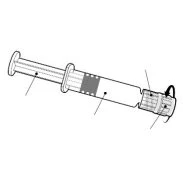
Instructions for the pre-filled sy游戏副本
| Hold the syringe by the barrel, not by the plunger. Unscrew the syringe cap by turning it counterclockwise. |
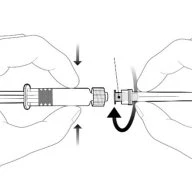
| To insert the needle, connect the base to the luer-lock adapter and turn it a quarter turn clockwise until you feel it lock into place. Do not remove the plunger from the syringe barrel. If this happens, do not administer the vaccine. |




Waste disposal
Disposal of unused medicinal product and all materials that have come into contact with it shall be carried out in accordance with local regulations.