Bemolan 800 mg oral gel
Spain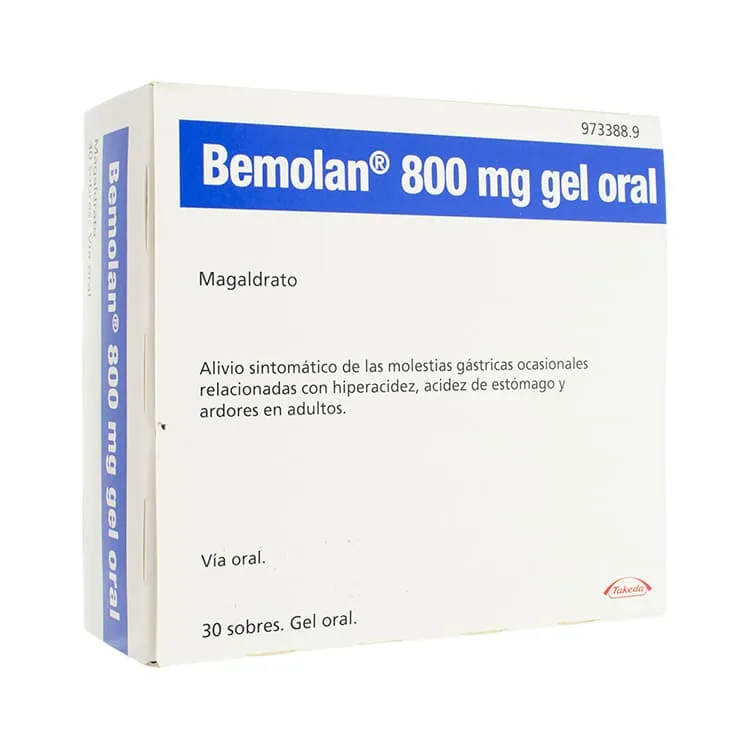
Table of Contents
Package leaflet: Information for the user
Introduction
Package leaflet: information for the user
Bemolan 800 mg oral gel
magaldrate
Read the entire leaflet carefully before starting to take this medicine, as it contains important information for you.
Follow exactly the instructions for use provided in this leaflet or those indicated by your doctor or pharmacist.
- Keep this leaflet, as you may need to read it again.
- If you need advice or more information, consult your pharmacist.
- If you experience any adverse effects, consult your doctor or pharmacist, even if they are effects not listed in this leaflet. See section 4.
- You should consult a doctor if your condition worsens or if you do not improve after 7 days of treatment.
Contents of the leaflet:
- What Bemolan is and what it is used for.
- What you need to know before taking Bemolan.
- How to take Bemolan.
- Possible side effects.
- How to store Bemolan.
- Contents of the pack and other information.
1. What Bemolan is and what it is used for
Bemolan belongs to a group of medicines called antacids. The active ingredient, magaldrate, is converted into aluminium and magnesium salts in the stomach, regulating gastric acidity.
It is indicated for the symptomatic relief of occasional gastric discomfort associated with hyperacidity, acid reflux, and heartburn in adults.
2. What you need to know before taking Bemolan
Do not take Bemolan:
- if you are allergic (hypersensitive) to magaldrate or any of the other components of this medicine (listed in section 6).
- if you have intestinal obstruction.
- if you have severe renal failure or low levels of phosphate in the blood (hypophosphatemia).
- if you have high levels of magnesium in the blood (hypermagnesemia).
Warnings and precautions
Consult your doctor or pharmacist before starting to take Bemolan.
Before starting treatment with Bemolan, you must inform your doctor if you currently have or have previously had any of the following conditions:
- Impaired kidney function: with very long-term treatment and high doses, signs of chronic aluminum and/or magnesium intoxication may occur.
- Osteoporosis (loss of bone density) and osteomalacia (softening of the bones): prolonged use and high doses of aluminum-containing antacids may worsen certain bone diseases due to reduced absorption of phosphate and calcium from food.
- Dementia (progressive deterioration of brain function): prolonged use and high doses of aluminum-containing antacids may worsen dementia in affected patients, as aluminum may accumulate in brain tissue.
Taking Bemolan with other medicines
Inform your doctor or pharmacist if you are taking, have recently taken, or might need to take any other medicines:
You should avoid simultaneous administration of Bemolan with the following medicines, as Bemolan may reduce their absorption:
- Tetracyclines and quinolone derivatives such as ciprofloxacin, ofloxacin, and norfloxacin (a group of antibiotics)
- Digoxin (used to treat heart problems)
- Benzodiazepines (used as sedatives and for sleep disorders)
- Coumarin derivatives such as acenocoumarol, warfarin (oral anticoagulants)
- Indometacin (anti-inflammatory)
- Cimetidine (antacid)
- Chenodeoxycholic and ursodeoxycholic acid (used for liver disorders)
- Iron supplements (used for anemia)
- Isoniazid (antitubercular)
- Chlorpromazine (neuroleptic)
For this reason, administration of the above-mentioned medicines should be taken at least 2–3 hours before or after taking Bemolan.
Taking Bemolan with food and drinks:
Take this medicine 1 to 2 hours after main meals.
Concomitant use of aluminum-containing antacids with acidic drinks (fruit juices, wine, etc.) may increase intestinal absorption of aluminum. The same applies to effervescent tablets containing citric or tartaric acid.
Pregnancy and breastfeeding:
If you are pregnant or breastfeeding, think you may be pregnant, or are planning to become pregnant, consult your doctor or pharmacist before using this medicine.
Driving and using machines:
The effect of Bemolan on the ability to drive and use machines is none or negligible.
Bemolan contains sodium:
This medicine contains less than 23 mg of sodium (1 mmol) per sachet; hence, it is essentially “sodium-free”.
3. How to take Bemolan
Follow exactly the administration instructions for this medicine provided in this leaflet or as directed by your doctor or pharmacist. If in doubt, consult your doctor or pharmacist.
The recommended dose is 800 mg to 2000 mg of gel (1 sachet of 800 mg or 1 sachet of 2000 mg) taken orally, depending on the severity of symptoms, one to two hours after main meals. In certain cases, an additional sachet may be taken before bedtime.
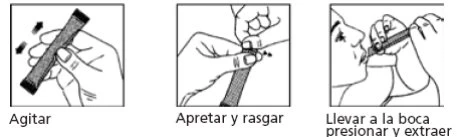
Before taking, it is important to properly knead the Bemolan sachet by pressing it in different directions before opening.
Refer to the following illustration for handling the sachet:
If symptoms worsen or persist after 7 days, consult your doctor.
If you take more Bemolan than you should:
It is recommended not to exceed a total daily amount of 8 grams of magaldrate.
Excessive doses or regular doses in patients on a phosphate-poor diet may lead to phosphorus loss, resulting in bone and calcium loss in urine, with a risk of osteomalacia (softening of the bones).
Cases of overdose have not been reported. In case of overdose or accidental ingestion, contact your doctor or pharmacist immediately or call the Toxicology Information Service at telephone number 91 562 04 20, indicating the medicine and the amount ingested.
4. Possible adverse effects
Like all medicines, this medicine may cause adverse effects, although not everyone experiences them.
The adverse effects of Bemolan are generally mild and transient. Especially at high doses, it may cause constipation and diarrhea. However, at the recommended dose, such manifestations are very rare.
Inform your doctor as soon as possible if you notice any of the following symptoms:
Very common side effects (may affect more than 1 in 10 patients):
- Soft stools
Very rare side effects (may affect up to 1 in 10,000 patients):
- Diarrhea and hypermagnesemia
Frequency not known (cannot be estimated from available data):
- Neurotoxicity, encephalopathy, constipation, nausea, vomiting, abdominal pain, and hypophosphatemia.
Reporting of adverse effects
If you experience any type of adverse effect, consult your doctor, pharmacist, or nurse, even if it is a possible adverse effect not listed in this leaflet. You can also report them directly through the Spanish Pharmacovigilance System for Human Medicines: www.notificaRAM.es. By reporting adverse effects, you can help provide more information on the safety of this medicine.
5. Storage of Bemolan
Keep this medicine out of the sight and reach of children.
Do not use this medicine after the expiry date stated on the packaging after EXP. The expiry date refers to the last day of the month indicated.
No special storage conditions are required.
Do not use Bemolan if you notice any signs of deterioration in the packaging or its contents.
Medicines must not be disposed of via wastewater drains or household waste. Dispose of unused medicines and their packaging at a SIGRE Point at your pharmacy. If you are in doubt, please ask your pharmacist how to dispose of medicines and packaging you no longer need. This will help protect the environment.
6. Contents of the pack and other information
Composition of Bemolan
The active substance is: magaldrate. One 10 ml sachet contains 800 mg of magaldrate.
The other components are: arabic gum, hypromellose, maltol, sodium cyclamate, calcium hypochlorite, sodium hypochlorite, simethicone, methylcellulose, sorbic acid, silver sulfate, chlorhexidine digluconate (20% aqueous solution), cream flavour, caramel flavour, purified water.
Appearance of the medicine and contents of the pack
Each sachet contains 10 ml of white or creamy gel with a caramel odour and taste.
Pack sizes: 30 sachets.
Only certain pack sizes may be marketed.
Marketing Authorization Holder and Manufacturer
Marketing Authorization Holder:
Takeda Farmacéutica España, S.A.
Calle Albacete, 5, 9th floor,
Edificio Los Cubos
28027 Madrid
Spain
Tel: +34 91 790 42 22
Manufacturer:
TAKEDA GMBH,
Robert Bosch Strasse, 8.
Singen, Germany
Date of the most recent revision of this leaflet: July 2024
Detailed and up-to-date information on this medicine is available on the website of the Spanish Agency for Medicines and Health Products (AEMPS) http://www.aemps.es/