Bactroban 20 mg/g ointment
Spain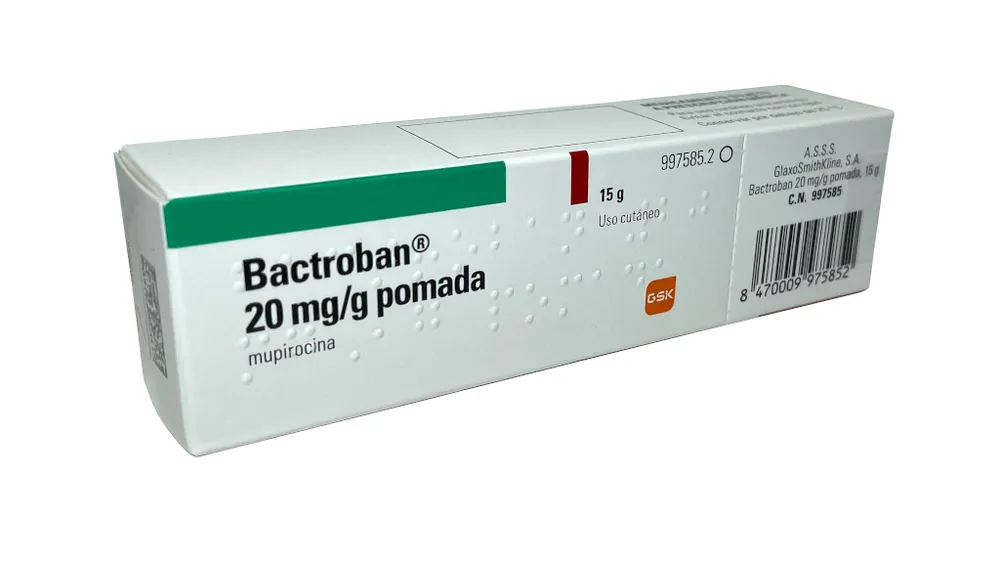
Table of Contents
- Package leaflet: Information for the user
- Introduction
- 1. What Bactroban ointment is and what it is used for
- 2. What you need to know before starting to use Bactroban ointment
- 3. How to use Bactroban ointment
- 4. Possible adverse effects
- 5. Storage of Bactroban ointment
- 6. Contents of the pack and other information
Package leaflet: Information for the user
Introduction
Package leaflet: information for the patient
Bactroban 20 mg/g ointment
mupirocin
Read the entire leaflet carefully before you start using this medicine, as it contains important information for you.
- Keep this leaflet, as you may need to read it again.
- If you have any questions, ask your doctor or pharmacist.
- This medicine has been prescribed for you only, and you should not give it to others, even if they have the same symptoms as you, because it may harm them.
- If you experience any adverse effects, consult your doctor or pharmacist, even if they are adverse effects not listed in this leaflet. See section 4.
Leaflet contents:
- What Bactroban ointment is and what it is used for
- What you need to know before using Bactroban ointment
- How to use Bactroban ointment
- Possible side effects
- How to store Bactroban ointment
- Contents of the pack and other information
1. What Bactroban ointment is and what it is used for
Bactroban ointment contains mupirocin, an antibiotic that works by eliminating the bacteria that cause infections.
Antibiotics are used to treat bacterial infections and are not effective against viral infections such as flu or the common cold.
It is important that you follow your doctor's instructions regarding dose, dosing interval, and duration of treatment.
Do not store or reuse this medicine. If you have any antibiotic left over after completing the treatment, return it to the pharmacy for proper disposal. Do not dispose of medicines by flushing down the toilet or throwing them in the household waste.
It is used to treat superficial skin infections when their extent is limited.
2. What you need to know before starting to use Bactroban ointment
Do not use Bactroban ointment:
- If you are allergic to mupirocin or to any of the other ingredients of this medicine (listed in section 6)
- Do not use intranasally or ophthalmically
- Do not use with cannulas or near intravenous catheters
Warnings and precautions
Talk to your doctor or pharmacist before starting to use Bactroban ointment.
Bactroban ointment may cause skin irritation and allergic reactions. See section 4.
- Keep the ointment away from the eyes. If the ointment accidentally comes into contact with the eyes, rinse thoroughly with water.
Bactroban ointment contains an ingredient (excipient) called polyethylene glycol, which when applied to damaged skin may be absorbed into the body, especially in cases of extensive lesions or open wounds, potentially worsening kidney function.
Using Bactroban ointment with other medicines
Inform your doctor or pharmacist if you are using, have recently used, or might need to use any other medicines, including those obtained without a prescription.
You should not use this medicine simultaneously with other products intended for treatment of the same application area.
Pregnancy and breastfeeding
If you are pregnant or breastfeeding, think you might be pregnant, or are planning to become pregnant, consult your doctor or pharmacist before using this medicine.
Information on the safety of this medicine in pregnant women is limited.
Bactroban ointment should not be given to pregnant women unless the benefits outweigh the potential risks of treatment.
It is unknown whether mupirocin passes into breast milk. If you are breastfeeding, you should consult your doctor before using this medicine.
If this medicine is used to treat cracked nipples, the breast should be thoroughly washed to remove any residue of the product before breastfeeding.
Driving and using machines
This medicine does not affect the ability to drive or operate machinery.
3. How to use Bactroban ointment
Follow exactly the instructions for use of this medicine as given by your doctor. If in doubt, consult your doctor or pharmacist again.
For cutaneous use only. For external use only.
Adults and children
Apply the ointment 2–3 times a day, for up to a maximum of 10 days. Your doctor will assess the treatment after 5 days of therapy to review its progress.
Patients with renal impairment
Your doctor will evaluate the use of this medicine in cases where there is a risk of polyethylene glycol absorption when applied to damaged skin.
Elderly patients
Dosage adjustment is not necessary unless there is evidence of moderate or severe renal impairment.
Instructions for use:
- Before application, wash your hands and the area to be treated.
- Using a cotton ball or swab, apply a small amount of ointment to the entire affected area.
- After applying the ointment, you may cover the treated area with a bandage or gauze, unless your doctor instructs you to leave the area uncovered.
If there is no improvement after five days of treatment, consult your doctor.
If you use more Bactroban ointment than you should
If you have applied more ointment than recommended, carefully remove the excess.
If you accidentally ingest this medicine, consult your doctor or pharmacist.
In case of overdose or accidental ingestion, contact your doctor or pharmacist immediately, or call the Toxicology Information Service at telephone number: 91 562 04 20, indicating the medicine and the amount ingested.
If you forget to use Bactroban ointment
If you forget to apply a dose, apply the next one as soon as possible and continue treatment as before.
Do not apply a double dose to make up for missed doses.
Do not stop treatment earlier than instructed by your doctor, even if you feel better. Doing so may cause the infection to recur.
If you have any further questions about the use of this medicine, ask your doctor or pharmacist.
4. Possible adverse effects
Like all medicines, this medicine can cause adverse effects, although not everyone experiences them.
Situations you need to monitor:
Serious allergic reactions
These reactions occur very rarely in people using Bactroban ointment. Signs include:
-
itchy skin rash
-
swelling, sometimes of the face or mouth, causing difficulty breathing
-
collapse or loss of consciousness.
-
If you experience any of these symptoms, contact your doctor immediately. Stop using Bactroban ointment.
Bactroban ointment may cause skin irritation.
- If you experience skin irritation, stop using Bactroban ointment. Remove any remaining medicine and consult your doctor as soon as possible.
Occasionally, medicines such as Bactroban ointment (due to containing an antibiotic) may cause inflammation of the colon (large intestine), resulting in diarrhoea, usually with blood and mucus, stomach pain, and fever (pseudomembranous colitis).
- If you experience any of these symptoms, consult your doctor as soon as possible.
Frequent adverse effects
May affect up to 1 in every 10 people:
- burning sensation at the application site.
Uncommon adverse effects
May affect up to 1 in every 100 people:
- itching, redness, stinging, and/or local dryness at the application site.
Very rare adverse effects
May affect up to 1 in every 10,000 people:
- allergic reactions.
Reporting of adverse effects
If you experience any adverse effect, consult your doctor or pharmacist, even if it is a possible adverse effect not listed in this leaflet. You may also report them directly via the Spanish Pharmacovigilance System for Human Medicines: www.notificaRAM.es. By reporting adverse effects, you can help provide more information on the safety of this medicine.
5. Storage of Bactroban ointment
Keep this medicine out of sight and reach of children.
Store below 25 ºC.
Do not use this medicine after the expiry date stated on the packaging and tube. The expiry date refers to the last day of the month indicated.
After opening, the shelf life of this medicine is 10 days.
Do not use this medicine if you notice that the ointment is not white or almost white.
Dispose of any remaining product.
Medicines must not be disposed of via wastewater or household waste. Return unused medicines and their packaging to the SIGRE point at your pharmacy. If in doubt, ask your pharmacist how to dispose of medicines and packaging you no longer need. This will help protect the environment.
6. Contents of the pack and other information
Composition of Bactroban ointment
- The active substance is mupirocin. Each gram of ointment contains 20 mg of mupirocin.
- The other components are polyethylene glycol 400 and polyethylene glycol 3350.
Appearance of the product and contents of the pack
Bactroban is supplied in an aluminium tube with nozzle and cap, containing 15 or 30 grams of ointment.
Marketing Authorization Holder
GlaxoSmithKline, S.A.
P.T.M.C/Severo Ochoa, 2
28760 Tres Cantos
Madrid
Tel. 900 20 27 00
Manufacturer
GlaxoSmithKline Trading Services Limited
12 Riverwalk
Citywest Business Campus
Dublin 24
Ireland
or
Delpharm Poznan Spólka Akcyjna
ul. Grunwaldzka 189
60-322 Poznan
Poland
Date of the most recent review of this leaflet: March 2020.
Detailed and up-to-date information on this medicinal product is available on the website of the Spanish Agency for Medicines and Health Products (AEMPS) http://www.aemps.gob.es