Atorvastatin Zentiva Lab 40 mg film-coated tablets EFG
Spain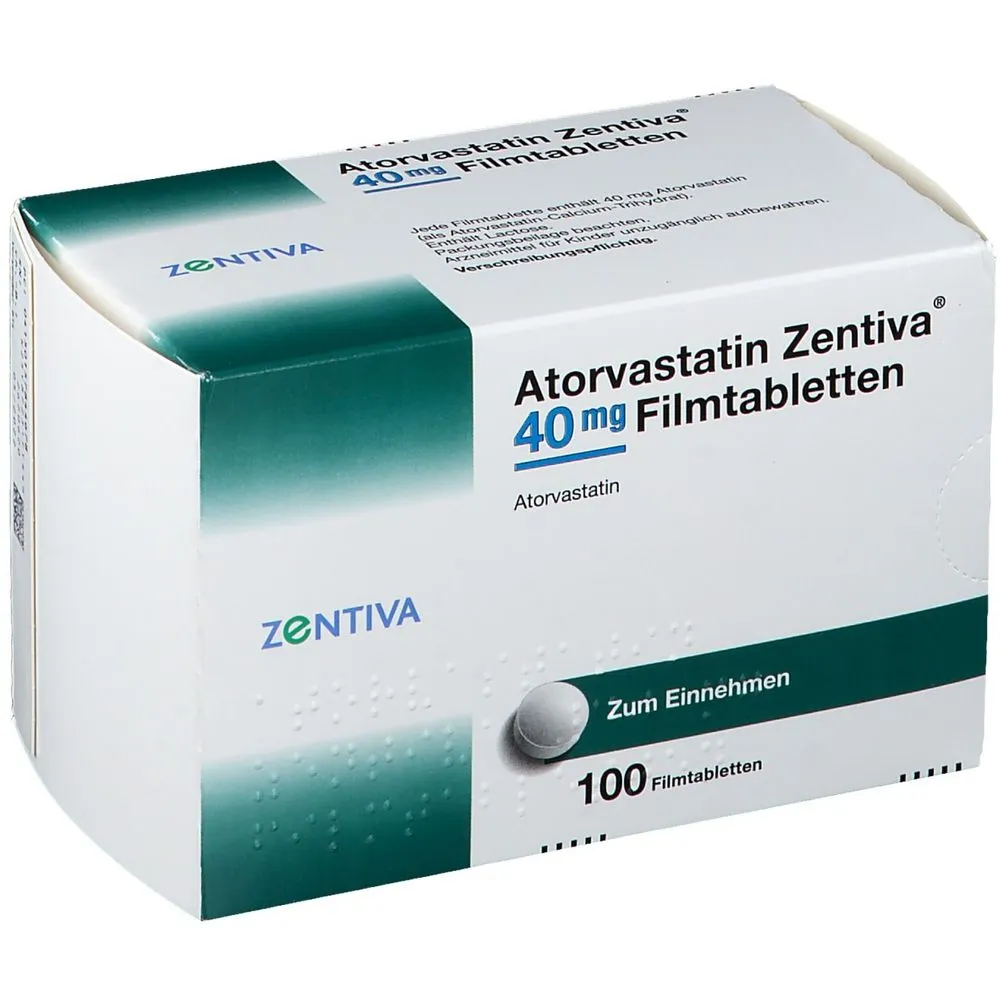
Table of Contents
- Package leaflet: Information for the user
- Introduction
- 1. What Atorvastatina Zentiva Lab is and what it is used for
- 2. What you need to know before taking Atorvastatina Zentiva Lab
- 3. How to take Atorvastatina Zentiva Lab
- 4. Possible adverse effects
- 5. Storage of Atorvastatin Zentiva Lab
- 6. Contents of the pack and other information
Package leaflet: Information for the user
Introduction
Package leaflet: Information for the user
Atorvastatina Zentiva Lab 40 mg film-coated tablets EFG
Read all of this leaflet carefully before you start taking this medicine, because it contains important information for you.
- Keep this leaflet. You may need to read it again.
- If you have any questions, ask your doctor or pharmacist.
- This medicine has been prescribed for you only. Do not give it to other people, even if they have the same symptoms as you, because it may harm them.
- If you experience any adverse effects, talk to your doctor or pharmacist, even if the adverse effects are not listed in this leaflet. See section 4.
Contents of this leaflet:
- What Atorvastatina Zentiva Lab is and what it is used for
- What you need to know before taking Atorvastatina Zentiva Lab
- How to take Atorvastatina Zentiva Lab
- Possible side effects
- How to store Atorvastatina Zentiva Lab
- Contents of the pack and other information
1. What Atorvastatina Zentiva Lab is and what it is used for
Atorvastatina Zentiva Lab belongs to a group of medicines known as statins, which are drugs that regulate lipids (fats).
Atorvastatina Zentiva Lab is used to reduce lipids such as cholesterol and triglycerides in the blood when a low-fat diet and lifestyle changes alone have failed. If you are at high risk of heart disease, Atorvastatina Zentiva Lab may also be used to reduce this risk even if your cholesterol levels are normal. A standard low-cholesterol diet should be followed during treatment.
2. What you need to know before taking Atorvastatina Zentiva Lab
Do not take Atorvastatina Zentiva Lab
- if you are allergic to atorvastatin or to any of the other ingredients of this medicine (listed in section 6).
- if you have or have had any liver disease.
- if you have or have had unexplained abnormal results in liver function blood tests.
- if you are using the combination of glecaprevir/pibrentasvir for the treatment of hepatitis C.
- if you are a woman of childbearing age and are not using adequate contraceptive measures.
- if you are pregnant or trying to become pregnant.
- if you are breastfeeding.
Warnings and precautions
Talk to your doctor or pharmacist before starting to take Atorvastatina Zentiva Lab:
- if you have severe respiratory failure.
- if you are taking or have taken within the last 7 days an oral or injectable medicine called fusidic acid (a medicine used to treat bacterial infections). The combination of fusidic acid and Atorvastatina Zentiva Lab may cause serious muscle problems (rhabdomyolysis).
- if you have previously had a stroke with bleeding in the brain, or have small fluid-filled sacs in the brain due to previous strokes.
- if you have kidney problems.
- if you have an underactive thyroid gland (hypothyroidism).
- if you have repeated or unexplained muscle pain, or personal or family history of muscle disorders.
- if you have previously experienced muscle problems while being treated with other lipid-lowering medicines (e.g., with another statin or fibrates).
- if you have or have had myasthenia (a disease characterized by generalized muscle weakness, which in some cases affects the muscles used for breathing) or ocular myasthenia (a disease causing weakness of the eye muscles), as statins may sometimes worsen the condition or trigger the onset of myasthenia (see section 4).
- if you regularly drink large amounts of alcohol.
- if you have a history of liver problems.
- if you are over 70 years of age.
In any of these cases, your doctor may decide whether you need blood tests before and possibly during treatment with Atorvastatina Zentiva Lab to assess the risk of muscle-related adverse effects. It is known that the risk of muscle-related adverse effects (e.g., rhabdomyolysis) increases when certain medicines are taken concomitantly (see section 2 "Use of Atorvastatina Zentiva Lab with other medicines").
Also inform your doctor or pharmacist if you experience persistent muscle weakness. Additional tests and treatments may be needed to diagnose and manage this condition.
While taking this medicine, your doctor will monitor you for diabetes or risk of developing diabetes. This risk is higher if you have high levels of sugar and fats in the blood, are overweight, or have high blood pressure.
Use of Atorvastatina Zentiva Lab with other medicines
Tell your doctor or pharmacist if you are taking, have recently taken, or might need to take any other medicines.
Some medicines may interfere with the proper functioning of Atorvastatina Zentiva Lab, or the effects of these medicines may be altered by Atorvastatina Zentiva Lab. Such interactions may reduce the effectiveness of one or both medicines. Alternatively, taking them together may increase the risk or severity of adverse effects, including serious muscle damage known as rhabdomyolysis, described in section 4:
- Medicines used to modify the function of your immune system, for example, cyclosporine.
- Certain antibiotics or antifungal medicines, for example, erythromycin, clarithromycin, telithromycin, ketoconazole, itraconazole, voriconazole, fluconazole, posaconazole, rifampicin, fusidic acid.
- Other lipid-regulating medicines, for example, gemfibrozil, other fibrates, colestipol.
- Certain calcium channel blockers used to treat angina or high blood pressure, for example, amlodipine, diltiazem; medicines to regulate heart rhythm, for example, digoxin, verapamil, amiodarone.
- Letermovir, a medicine used to prevent cytomegalovirus infections.
- Medicines used in the treatment of HIV/AIDS, for example, ritonavir, lopinavir, atazanavir, indinavir, darunavir, tipranavir combined with ritonavir, etc.
- Some medicines used for the treatment of hepatitis C, such as telaprevir, boceprevir, and the combination of elbasvir/grazoprevir, ledipasvir/sofosbuvir.
- Other medicines known to interact with Atorvastatina Zentiva Lab include ezetimibe (a cholesterol-lowering agent), warfarin (a blood thinner), oral contraceptives, stiripentol (an anticonvulsant for epilepsy), cimetidine (used for heartburn and peptic ulcer), phenazone (an analgesic), colchicine (used to treat gout), and antacids (indigestion remedies containing aluminium or magnesium).
- Over-the-counter medicines: St. John’s wort.
- If you need to take oral fusidic acid to treat a bacterial infection, you must temporarily stop taking this medicine. Your doctor will advise you when it is safe to restart treatment with Atorvastatina Zentiva Lab. Taking Atorvastatina Zentiva Lab together with fusidic acid may rarely cause muscle weakness, tenderness, or pain (rhabdomyolysis). For more information on rhabdomyolysis, see section 4.
- Daptomycin (a medicine used to treat complicated skin and skin structure infections and bloodstream infections caused by bacteria).
Taking Atorvastatina Zentiva Lab with food, drinks, and alcohol
See section 3 for instructions on how to take Atorvastatina Zentiva Lab. Please note the following:
Grapefruit juice
Do not drink more than one or two small glasses of grapefruit juice per day, as large amounts of grapefruit juice may alter the effects of Atorvastatina Zentiva Lab.
Alcohol
Avoid drinking large amounts of alcohol while taking this medicine. See details in section 2 “Warnings and precautions”.
Pregnancy, breastfeeding, and fertility
Do not take Atorvastatina Zentiva Lab if you are pregnant or trying to become pregnant.
Do not take Atorvastatina Zentiva Lab if you are of childbearing age unless you are using adequate contraceptive measures.
Do not take Atorvastatina Zentiva Lab if you are breastfeeding.
The safety of Atorvastatina Zentiva Lab during pregnancy and breastfeeding has not been established.
Consult your doctor or pharmacist before using any medicine.
Driving and using machines
This medicine usually does not affect your ability to drive or operate machinery. However, do not drive if this medicine affects your ability to do so safely. Do not operate tools or machines if this medicine impairs your ability to handle them.
Atorvastatina Zentiva Lab contains lactose monohydrate.
This medicine contains lactose. If your doctor has informed you of an intolerance to certain sugars, consult with your doctor before taking this medicine.
3. How to take Atorvastatina Zentiva Lab
Follow exactly the instructions for administering this medicine as given by your doctor or pharmacist. If you are unsure, consult your doctor or pharmacist again.
Before starting treatment, your doctor will prescribe a low-cholesterol diet, which you must continue to follow during treatment with Atorvastatina Zentiva Lab.
The usual starting dose of Atorvastatina Zentiva Lab is 10 mg once daily in adults and children aged 10 years and older. Your doctor may increase this dose if necessary to reach the dose appropriate for you. Your doctor will adjust the dose at intervals of 4 weeks or more. The maximum dose of Atorvastatina Zentiva Lab is 80 mg once daily.
Atorvastatina Zentiva Lab tablets should be swallowed whole with a glass of water and may be taken at any time of day, with or without food. However, try to take your tablet at the same time every day.
Your doctor will decide the duration of treatment with Atorvastatina Zentiva Lab.
Ask your doctor if you think the effect of Atorvastatina Zentiva Lab is too strong or too weak.
If you take more Atorvastatina Zentiva Lab than you should
If you accidentally take too many Atorvastatina Zentiva Lab tablets (more than your usual daily dose), consult your doctor or the nearest hospital, or call the Toxicology Information Service at telephone number 91 562 04 20, indicating the medicine and the amount ingested.
If you forget to take Atorvastatina Zentiva Lab
If you forget to take a dose, take the next scheduled dose at the correct time.
Do not take a double dose to make up for missed doses.
If you stop taking Atorvastatina Zentiva Lab
If you have any further questions about using this medicine or wish to stop treatment, ask your doctor or pharmacist.
4. Possible adverse effects
Like all medicines, this medicine can cause adverse effects, although not everyone will experience them.
If you experience any of the following serious adverse effects or symptoms, stop taking your tablets immediately and contact your doctor or go to the nearest hospital emergency department.
Rare (may affect up to 1 in 1,000 people):
- Severe allergic reaction causing swelling of the face, tongue, and throat, which may cause severe difficulty breathing.
- Serious illness with severe skin peeling and inflammation, blisters on the skin, mouth, eyes, and genitals, and fever. Skin rash with pink-red spots, especially on the palms of the hands or soles of the feet, which may develop into blisters.
- Muscle weakness, tenderness, pain, muscle breakdown, or change in urine color to red-brown, especially if accompanied by malaise or high fever, may be due to abnormal muscle breakdown (rhabdomyolysis). Abnormal muscle breakdown does not always resolve, even after stopping atorvastatin, and can be life-threatening and cause kidney problems.
Very rare (may affect up to 1 in 10,000 people):
- Lupus-like syndrome (including skin rash, joint disorders, and effects on blood cells).
- If you experience problems with unexpected or unusual bleeding or bruising, this may indicate a liver problem. You should consult your doctor as soon as possible.
Other possible adverse effects with Atorvastatina Zentiva Lab:
Common (may affect up to 1 in 10 people):
- Nasal inflammation, sore throat, nosebleeds
- Allergic reactions
- Increased blood sugar levels (if you are diabetic, monitor your blood sugar levels), increased creatine kinase in blood
- Headache
- Nausea, constipation, gas, indigestion, diarrhea
- Joint pain, joint swelling, muscle pain, muscle spasms, pain in arms and legs, and back pain
- Blood test results that may show abnormal liver function
Uncommon (may affect up to 1 in 100 people):
- Anorexia (loss of appetite), weight gain, decreased blood sugar levels (if you are diabetic, continue to monitor your blood sugar levels carefully)
- Nightmares, insomnia
- Dizziness, numbness or tingling in fingers and toes, reduced sensitivity to pain or touch, changes in taste sensation, memory loss
- Blurred vision
- Ringing in the ears and/or head
- Vomiting, belching, upper and lower abdominal pain, pancreatitis (inflammation of the pancreas causing stomach pain)
- Hepatitis (inflammation of the liver)
- Rash, skin rash and itching, hives, hair loss
- Neck pain, muscle fatigue
- Fatigue, feeling unwell, weakness, chest pain, swelling, especially in the ankles (edema), increased body temperature
- Urine tests positive for white blood cells
Rare (may affect up to 1 in 1,000 people):
- Vision disturbances
- Unexpected bleeding or bruising
- Cholestasis (yellowing of the skin and whites of the eyes)
- Tendon injury
- Skin rash or mouth ulcers (drug-induced lichenoid reaction)
- Purple-colored skin lesions (signs of blood vessel inflammation, vasculitis)
Very rare (may affect up to 1 in 10,000 people):
- Allergic reaction – symptoms may include sudden wheezing, chest pain or tightness, swelling of the eyelids, face, lips, mouth, tongue, or throat, difficulty breathing, collapse
- Hearing loss
- Gynecomastia (enlargement of the breasts in men and women)
Frequency not known (cannot be estimated from available data):
- Persistent muscle weakness
- Myasthenia gravis (a disease causing generalized muscle weakness, which in some cases affects the muscles used for breathing)
- Ocular myasthenia (a disease causing weakness of the eye muscles)
Consult your doctor if you develop arm or leg weakness that worsens after periods of activity, double vision or drooping eyelids, difficulty swallowing, or difficulty breathing.
Possible side effects of some statins (medicines of the same type):
- Sexual difficulties
- Depression
- Respiratory problems such as persistent cough and/or difficulty breathing or fever
- Diabetes. This is more likely if you have high levels of sugar and fats in the blood, are overweight, and have high blood pressure. Your doctor will monitor you while you are taking this medicine.
Reporting of adverse effects
If you experience any adverse effect, talk to your doctor or pharmacist, even if it is a side effect not listed in this leaflet. You can also report them directly via the Spanish Pharmacovigilance System for Human Medicines: https://www.notificaram.es. By reporting adverse effects, you can help provide more information on the safety of this medicine.
5. Storage of Atorvastatin Zentiva Lab
Keep this medicine out of the sight and reach of children.
Do not use this medicine after the expiry date stated on the packaging after EXP. The expiry date refers to the last day of the month indicated.
This medicine does not require any special storage conditions.
Do not use this medicine if you notice any visible signs of deterioration.
Medicines should not be disposed of via wastewater or household waste. Dispose of empty containers and unused medicines at the SIGRE Point located at your pharmacy. If in doubt, ask your pharmacist how to properly dispose of unused medicines and their packaging. This will help protect the environment.
6. Contents of the pack and other information
Composition of Atorvastatin Zentiva Lab
The active substance in Atorvastatin Zentiva Lab is atorvastatin.
Each film-coated tablet contains 40 mg of atorvastatin (as atorvastatin calcium trihydrate).
The other components are:
Core: calcium carbonate, microcrystalline cellulose (E460), lactose monohydrate, low-substituted hydroxypropylcellulose, povidone K12, colloidal anhydrous silica, magnesium stearate.
Coating: hypromellose (E464), macrogol 6000, titanium dioxide (E171), talc, yellow iron oxide (E172), lactose monohydrate.
Appearance of the product and contents of the pack
The film-coated tablets of Atorvastatin Zentiva Lab 40 mg are orange-yellow to yellow-orange in colour, round and biconvex. The tablet diameter is approximately 10 mm.
Pack sizes: 7, 10, 14, 28, 30, 50, 56, 60, 90, 98, 100 or 200 film-coated tablets.
Only some pack sizes may be marketed.
Marketing Authorisation Holder and Manufacturer
Zentiva, k.s.
U Kabelovny 130
102 37 Prague 10
Czech Republic
For further information about this medicinal product, please contact the local representative of the Marketing Authorisation Holder:
Zentiva Spain S.L.U.
Avenida de Europa, 19, Edificio 3, Planta 1
28224 Pozuelo de Alarcón, Madrid
Spain
This medicinal product is authorised in the Member States of the European Economic Area and in the United Kingdom (Northern Ireland) under the following names:
Bulgaria | ????????? ??????? |
Czech Republic | Torvacard Neo |
Cyprus, Greece, Poland | Torvacard neo |
Estonia, Latvia, Lithuania | Atorvastatin Zentiva |
France | Atorvastatine Zentiva |
Hungary | Torvacard Zentiva |
Italy | Atorvastatina Zentiva Italia |
Portugal | Atorvastatina Zentiva |
Romania | TORVACARD |
Slovakia | Torvacard Novum |
Spain | Atorvastatina Zentiva Lab |
United Kingdom (Northern Ireland) | Atorvastatin |
Date of the last revision of this leaflet: October 2024
The detailed and up-to-date information about this medicine is available on the website of the Spanish Agency of Medicines and Medical Devices (AEMPS) http://www.aemps.gob.es/